AI & Automation
AI automation services for B2B product teams: workflows, LLM integrations, RAG systems, AI dashboards, and operational a...
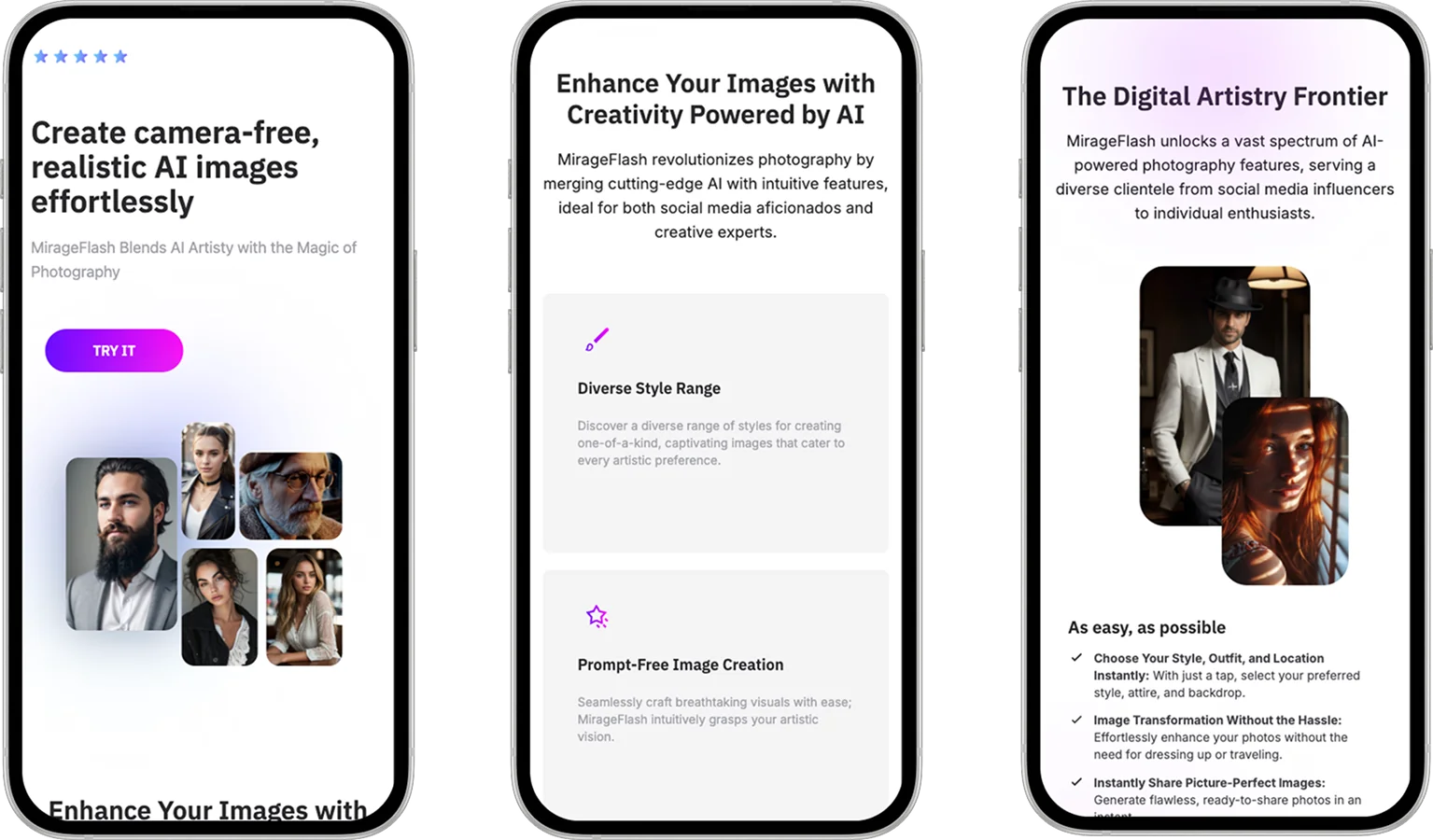
Learn more →How we built a fast, scalable web experience for an AI-powered image generation platform.
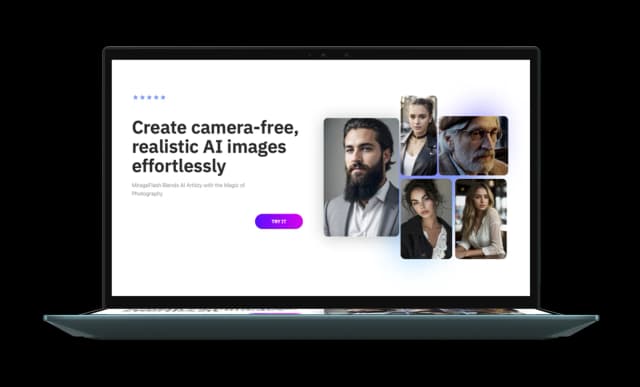
H-Studio's role: build a fast, scalable web experience that embodies the product's creativity, aimed at providing a smooth and intuitive user experience, and sets a strong brand foundation for growth.
This project addressed a trust and perception challenge typical for AI-driven creative products.
AI-powered image generation platforms often struggle with credibility at first contact: users need to trust both the quality of output and the reliability of the system behind it. A visually impressive product experience without strong performance and stability can quickly undermine confidence — especially for creators who expect immediate feedback and share-ready results.
Key considerations at the decision stage:
The objective was therefore to design a creative-first web experience grounded in strong engineering fundamentals — ensuring that speed, stability, and clarity reinforced trust in the underlying AI product.
The central question was: How do you translate a disruptive concept – "camera-free image generation" – into a digital experience that feels premium, reliable and intuitive?
In short: a creative product needed an equally creative yet technically robust platform.
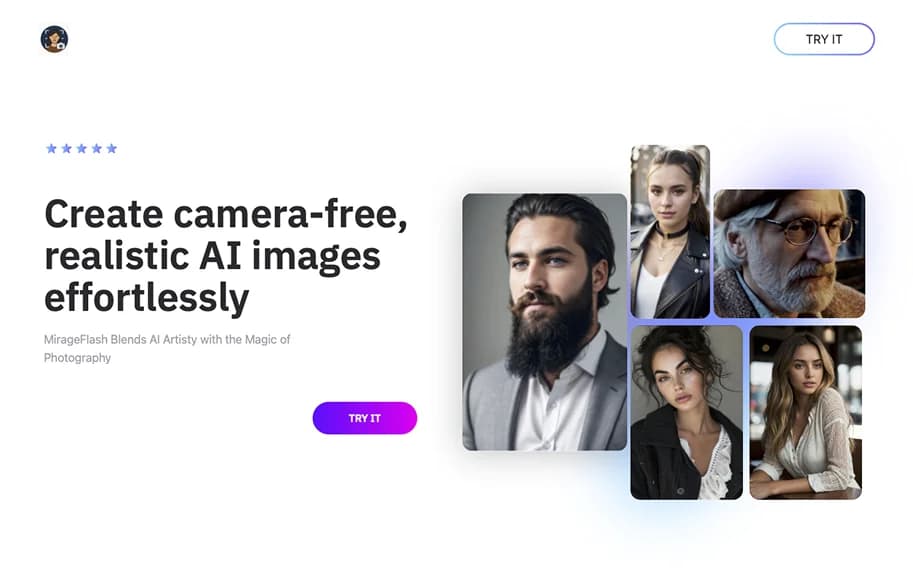
We developed MirageFlash on a performant, scalable and modern foundation:
This architecture was designed to support high performance and stability under typical growth and usage scenarios.
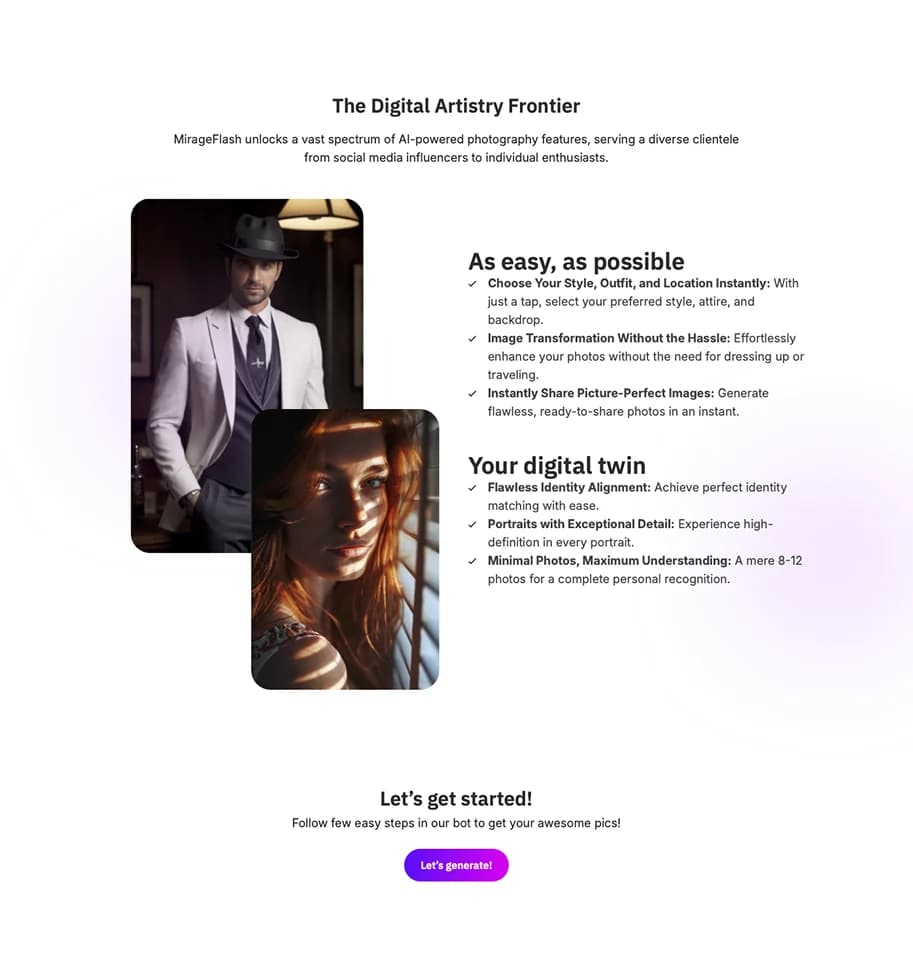
The experience was designed to put AI images at the center:
The UX framework conveys what MirageFlash promises technically: speed, clarity and creativity.
To make the journey measurable and optimizable, we set up a complete tracking and conversion system:
The platform was deliberately designed to be used virally and share-oriented.
Performance metrics and user growth depend on device capabilities, network conditions and user behavior. Past results do not guarantee future outcomes.
Next.js 14.2.5 · React: Next.js 14.2.5 · React
Webpack: Webpack
Vercel: Vercel
HSTS: HSTS
Static Generation · Optimized Web Performance: Static Generation · Optimized Web Performance
Explore our services that helped deliver this project.
AI automation services for B2B product teams: workflows, LLM integrations, RAG systems, AI dashboards, and operational a...
Learn more →Platform engineering services for internal developer platforms, CI/CD automation, and self-service infrastructure.
Learn more →Framework-level SEO for Next.js: crawlability, indexability, canonicals, hreflang, metadata architecture, and structured...
Learn more →MVP development for startups and founder teams: validation-focused V1 delivery, launch scope, release planning.
Learn more →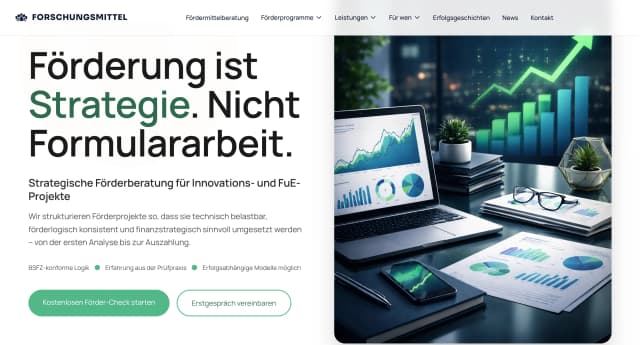
B2B funding website and connected product platform with client dashboard, team workspace, document workflow, and operational command center.
Inspection & Asset Management Platform - Internal survey and compliance system for facilities management with mobile inspection app and web-based admin platform.

How we built the backend architecture for Telegram's fastest-growing gaming platform.

Custom-built criminal defense platform with public authority site, digital intake, secure client portal, internal case operations, billing, and audit-ready workflow logic.
Real-Time Data Streaming Platform - High-performance data-streaming platform capable of processing millions of financial messages per second.
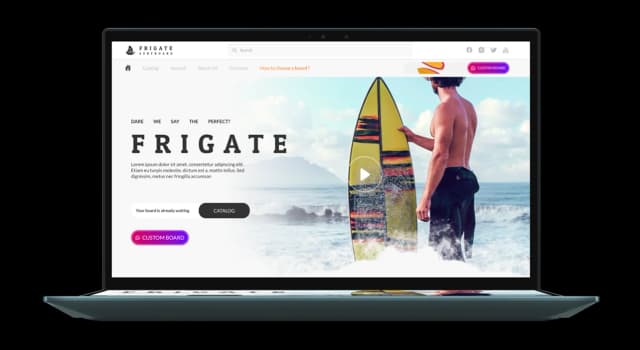
E-Commerce Platform for a Premium Surf Brand - Bringing craftsmanship and storytelling online.

Personalized Advertising & Credit Service Platform - Advanced financial services with real-time personalization.
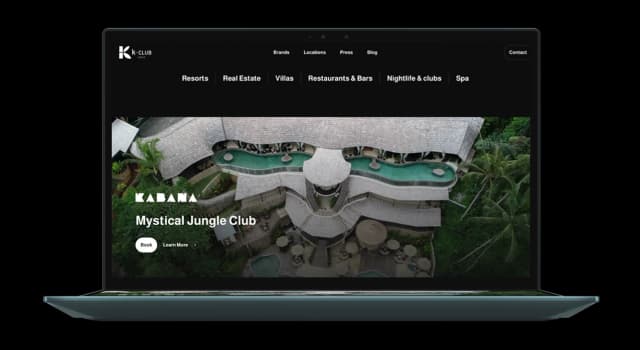
Digital Platform for Barefoot Luxury Experiences - From place to platform.

Enterprise Data Analytics Platform - Comprehensive data processing and analytics solution for Russia's largest bank.

Event Management & Payment Processing Platform - Scalable event ticketing and payment processing system.

Building an intelligent platform that connects AI models with real-world applications.
Digital Experience for Earth-Conscious Development - Transforming a premium property concept into a conversion-driven digital platform.

Revolutionizing textile industry with IoT sensors and data analytics.