H-Studio logo
Start a project

SEO Migration & Relaunch

SEO-safe website migrations and relaunches without avoidable ranking loss. Designed to preserve existing SEO value and reduce technical risk during system changes.

Overview

Website migrations are one of the highest-risk operations in SEO. Many ranking losses are not caused by algorithm updates, but by poorly executed relaunches: broken redirects, changed URL structures, lost metadata, missing canonicals, hreflang errors, rendering issues or damaged internal links.

H-Studio handles SEO migrations as controlled engineering changes, not cosmetic redesigns. We map what exists, protect what already ranks, define the new information architecture, implement redirect and canonical logic, validate crawlable output and monitor the index transition after launch. The goal is simple: preserve as much existing SEO value as possible, reduce avoidable ranking loss and give the new site a cleaner technical foundation for growth.

02  ·  When it fits

When you need SEO migration services

  • 01Website relaunch or redesign
  • 02Tech stack change, for example WordPress, Webflow or SPA to Next.js
  • 03CMS migration or headless CMS rebuild
  • 04Domain, URL structure or slug changes
  • 05Language expansion, for example DE ↔ EN
  • 06Performance rebuild or Core Web Vitals project
  • 07Recovery after a failed relaunch
03  ·  Approach

Our approach: migration as controlled engineering

01

Pre-migration SEO & architecture audit

Before anything changes, we analyse: · Current URL and ranking inventory · Indexed pages and crawl state · Internal link graph · Structured data and entity IDs · Traffic by page type and intent cluster · Crawl depth and canonical structure · Hreflang and language setup · Rendering behaviour in SSR, SPA or JavaScript-heavy pages · Nothing is migrated blindly.
02

Migration strategy & mapping blueprint

We define: · Old → new URL mapping · Redirect strategy with no unnecessary chains · Permanent redirects where appropriate · Canonical preservation · Hreflang continuity · Sitemap transition plan · Structured data continuity · Metadata and heading preservation where needed · Phased or atomic rollout strategy · The blueprint is reviewed before launch, not improvised during launch.

03

SEO-safe implementation

We support migrations across: · WordPress → Next.js / headless · Webflow → custom stack · React / SPA → SSR or hybrid rendering · CMS rebuilds · Domain or URL structure changes · Multilingual architecture changes · Next.js App Router or Pages Router projects · Crawlable HTML output · Metadata and canonical tags · Structured data · Internal links · Hreflang · Sitemap logic · Redirect rules · Core Web Vitals-sensitive frontend changes

04

Launch control & index transition

At launch we monitor: · Redirect accuracy · Crawl errors · Canonical resolution · Googlebot behaviour where visible · Index coverage signals · Sitemap processing · Structured data validation · Core Web Vitals and rendering issues · Critical anomalies are triaged and corrected quickly.

05

Post-migration stabilisation

After launch we review: · Search Console coverage and crawl data · Ranking and traffic comparison · Redirect performance · Sitemap and index cleanup · Internal linking corrections · Canonical and hreflang issues · Pages that unexpectedly lost visibility · The first goal is stability. Growth comes after the migration has settled.

04  ·  What we migrate

What we migrate safely

01

What we migrate safely

  • B2B websites
  • SaaS marketing sites
  • Lead-generation websites
  • High-value content hubs
  • Multi-language sites
  • Next.js / React websites
  • WordPress, Webflow or CMS rebuilds
  • SEO-critical service and location pages
05  ·  Why migrations fail

Why SEO migrations fail

  • Broken or incomplete URL mapping
  • Missing, wrong or chained redirects
  • Changed internal link graph
  • Lost metadata or structured data
  • Canonical conflicts
  • Hreflang errors, especially on DE/EN sites
  • JavaScript rendering issues
  • Important pages accidentally noindexed
  • Sitemap and robots mistakes
  • Index bloat after filter or parameter pages go live
Featured cases

Founder-relevant case studies

Full case library
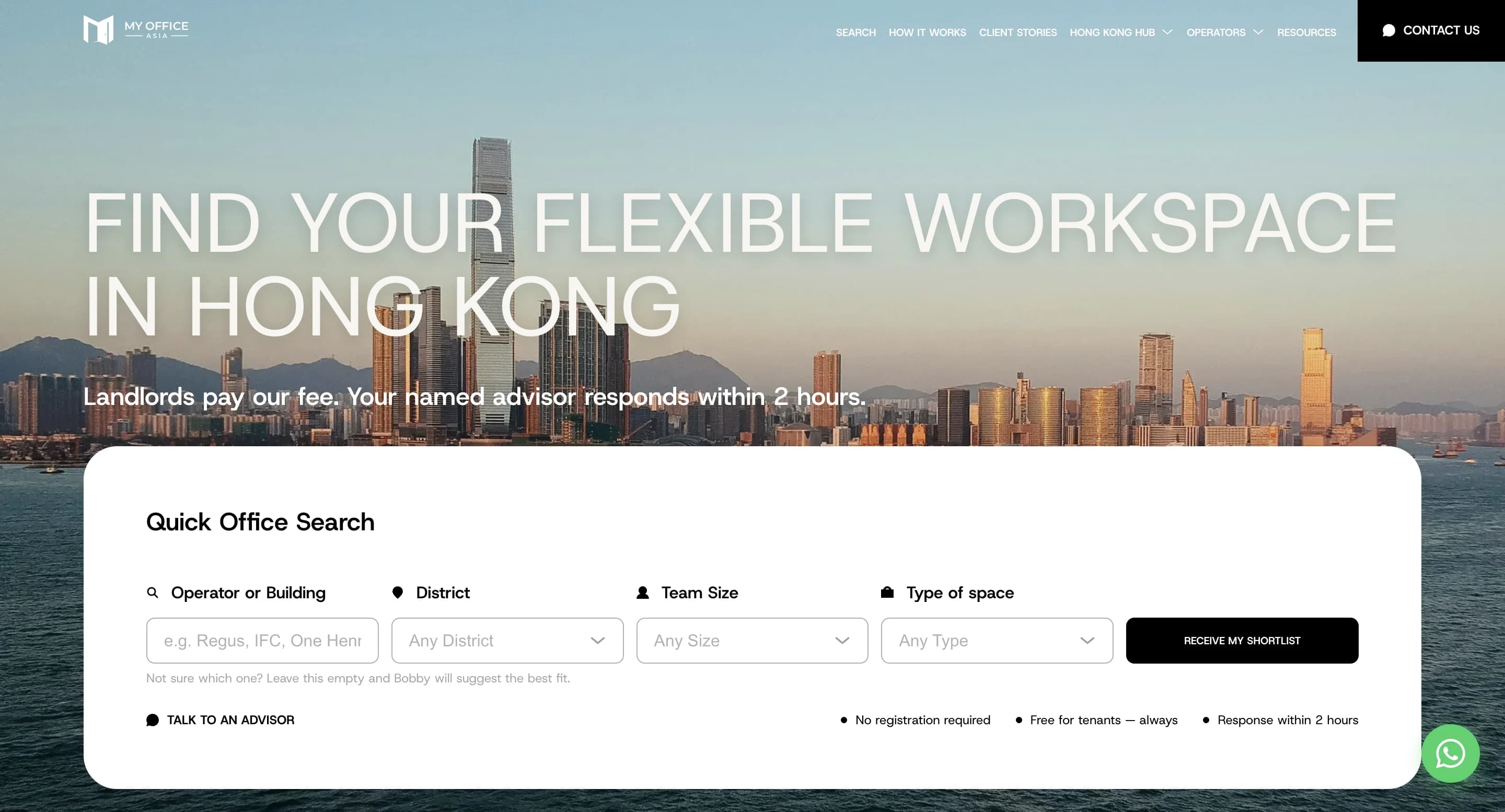
  1. 01My Office Asia  -  Flex Workspace Brokerage with Admin CMSDigital Experience & Brand SystemsMy Office Asia - Flex Workspace Brokerage with Admin CMSBrokerage platform for Hong Kong's flex-office market with editorial catalogue, advisor positioning, white-label-ready architecture and a custom admin with AI-assisted editorial helper.Read plate
  2. 02Forschungsmittel.comDigital Experience & Brand SystemsForschungsmittel.comB2B funding website and connected product platform with client dashboard, team workspace, document workflow, and operational command center.Read plate
  3. 03Benjamin C. Wenzel - Legal-Tech Criminal Defense PlatformDigital Experience & Brand SystemsBenjamin C. Wenzel - Legal-Tech Criminal Defense PlatformCustom-built criminal defense platform with public authority site, digital intake, secure client portal, internal case operations, billing, and audit-ready workflow logic.Read plate
  4. 04Vulken FMEnterprise-Grade FoundationsVulken FMFacilities management platform for mobile inspections, asset records, compliance checks, and internal operational reporting — combining a field app with a web-based admin system.Read plate
FAQ

FAQ

  1. No one can guarantee that rankings will not move after a migration, because search engines re-evaluate the new site. What we can do is reduce avoidable ranking loss: preserve valuable URLs where possible, map redirects carefully, keep metadata and structured data intact, protect internal linking, validate crawlable output and monitor Search Console after launch.

  2. Yes, Next.js can be excellent for SEO when implemented correctly. The key is to ensure crawlable HTML output, stable metadata, correct canonicals, structured data, sitemap logic, internal links, Core Web Vitals and no accidental client-only rendering for important pages.

  3. We map each language version separately, preserve or rebuild hreflang, define canonical logic, check language-specific sitemaps and ensure that translated pages keep a clear relationship to their alternates. Multi-language migrations need URL discipline; otherwise pages compete with or disappear from the wrong index.

  4. We can run a post-relaunch recovery audit. That usually includes redirect checks, lost URL analysis, Search Console review, sitemap and indexation checks, internal link review, canonical and hreflang debugging, and comparison of old versus new page types. The goal is to identify what was lost and what can still be recovered.

  5. A small migration can often be planned in 1–2 weeks. A larger relaunch with many URLs, languages, CMS changes or a new tech stack usually needs 3–6+ weeks of preparation before launch, plus post-launch monitoring. The risky part is not the launch day; it is the preparation that happens before it.

  6. No responsible SEO migration partner should guarantee zero ranking loss. Rankings are controlled by search engines and can move after any major change. Our role is to reduce avoidable technical mistakes and preserve as much existing SEO value as possible.

Adjacent plates

Related services

  1. 01Lead Generation WebsitesSEO-ready websites connected to CRM, analytics and editorial workflows.Open
  2. 02Custom Platforms & Business AppsCustom platforms, portals and internal systems behind the website.Open
  3. 03Frontend DevelopmentReact, Next.js and TypeScript frontends with crawlable output and Core Web Vitals discipline.Open
  4. 04DevOps & Cloud EngineeringHosting, deployment and infrastructure foundations for relaunched sites.Open
  5. 05CRM Integration & Lead SystemsForms, routing and reporting that survive the relaunch.Open
Related articles

Keep reading from the blog.

More insights and best practices on this topic.

View all articles
S
12 Jan 2026

SSR, Edge, Streaming: What Google Actually Sees

And why many 'modern' setups silently hurt SEO. Google doesn't just rank promises—it ranks what it can reliably see, render, and evaluate. Learn how SSR, Edge, and Streaming affect indexing and what Google really sees.

Read
T
21 Jan 2026

The SEO Cost of JavaScript Frameworks: Myth vs Reality

What actually hurts rankings—and what doesn't. JavaScript frameworks don't kill SEO, but undisciplined use does. Learn where the real SEO cost comes from: complexity, rendering uncertainty, and performance volatility.

Read
S
29 Oct 2025

SEO Has Changed. Many Approaches Haven't.

Why modern search visibility is no longer a marketing-only discipline. Over the last few years, many companies have come to the same conclusion: 'SEO doesn't work like it used to.' In reality, SEO has fundamentally changed—but much of the market has not fully adapted.

Read
D
07 Feb 2026

Do We Need Separate Websites, or Should Everything Live on One Site?

Multiple sites only make sense when positioning truly differs. Otherwise, one strong, well-structured domain wins.

Read

H-Studio provides SEO migration and relaunch support for B2B websites, SaaS marketing sites, lead-generation systems and content-heavy platforms. We focus on URL mapping, redirects, canonicals, hreflang, structured data, crawlable rendering, sitemap logic and post-launch monitoring — so website changes are handled as controlled technical migrations, not risky redesign launches.