Client
Forschungsmittel.com B2B funding advisory platform Germany
Status
Public website and authenticated workspaces in active use
Context
Client: Forschungsmittel.com — B2B funding advisory platform in Germany. Industry: B2B consulting, public funding, innovation. Scope: connected product system — public website, client dashboard, internal team workspace, document workflows and operations command center.
We built Forschungsmittel.com as more than a public website: a conversion-focused B2B platform connected to a client dashboard, internal team workspace, document workflows and operational command center.
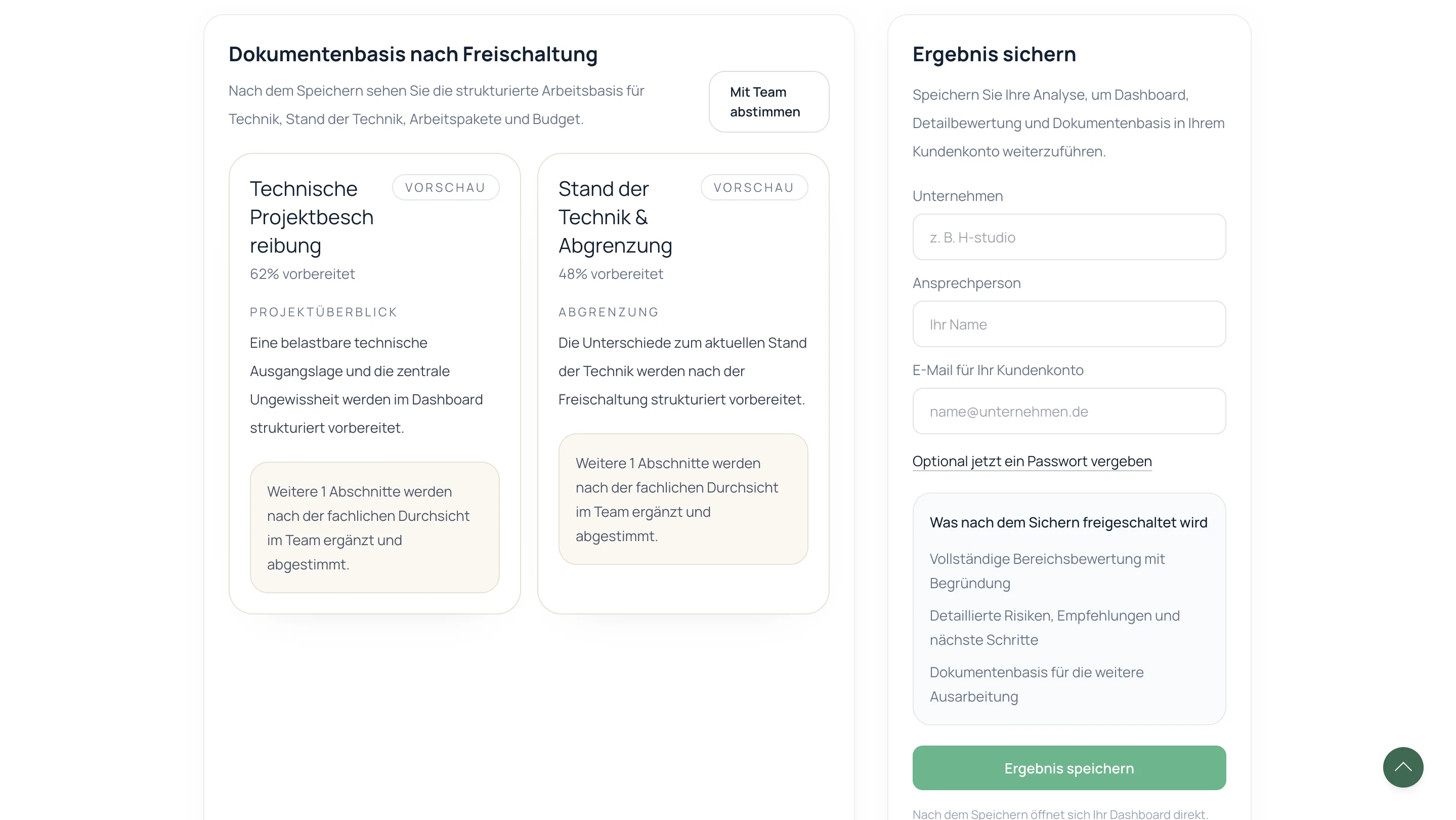
The platform helps the business turn website enquiries into structured funding projects — with client access, project status, document requests, internal notes, team responsibilities and operational priorities managed in one place.
- Public website and product logic were designed together, not as separate disconnected phases
- B2B focus: funding analysis, qualification, project handling, and next-step orchestration
- Operational scope: website + project product layer + team control center
1. Public Website
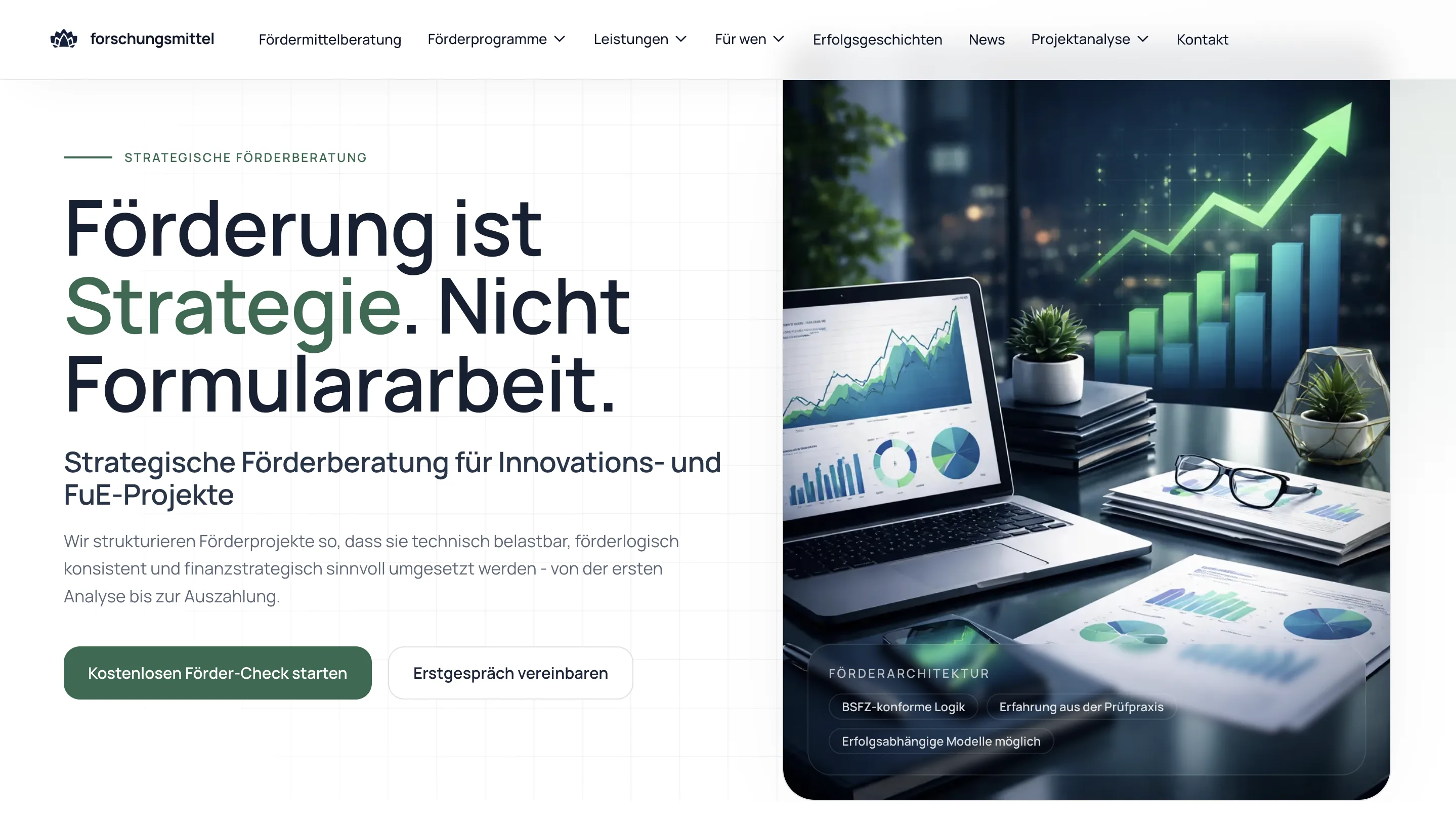
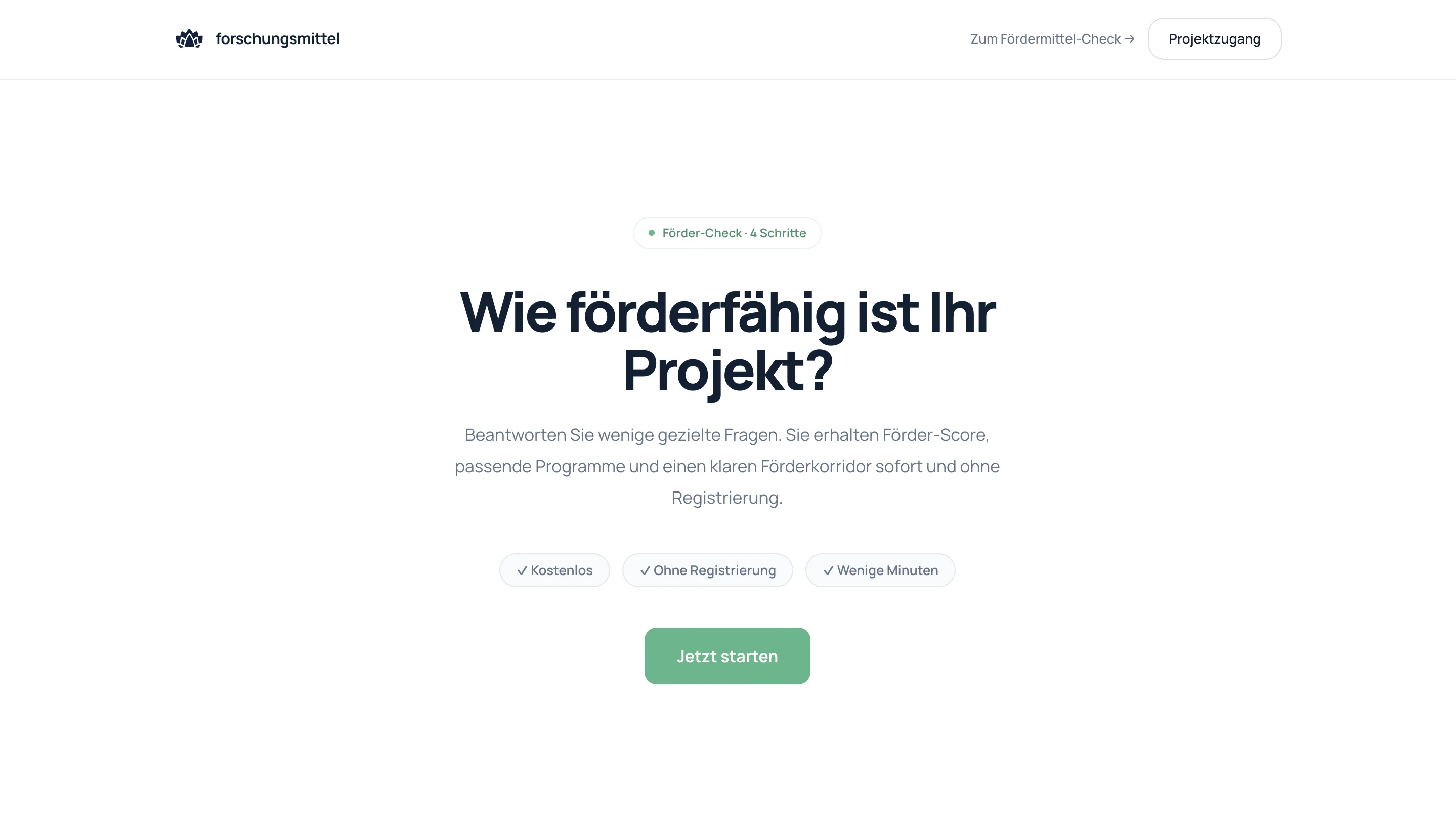
The public-facing website was designed as a B2B platform for trust, clarity and conversion — not just as a brochure site. It supports:
01
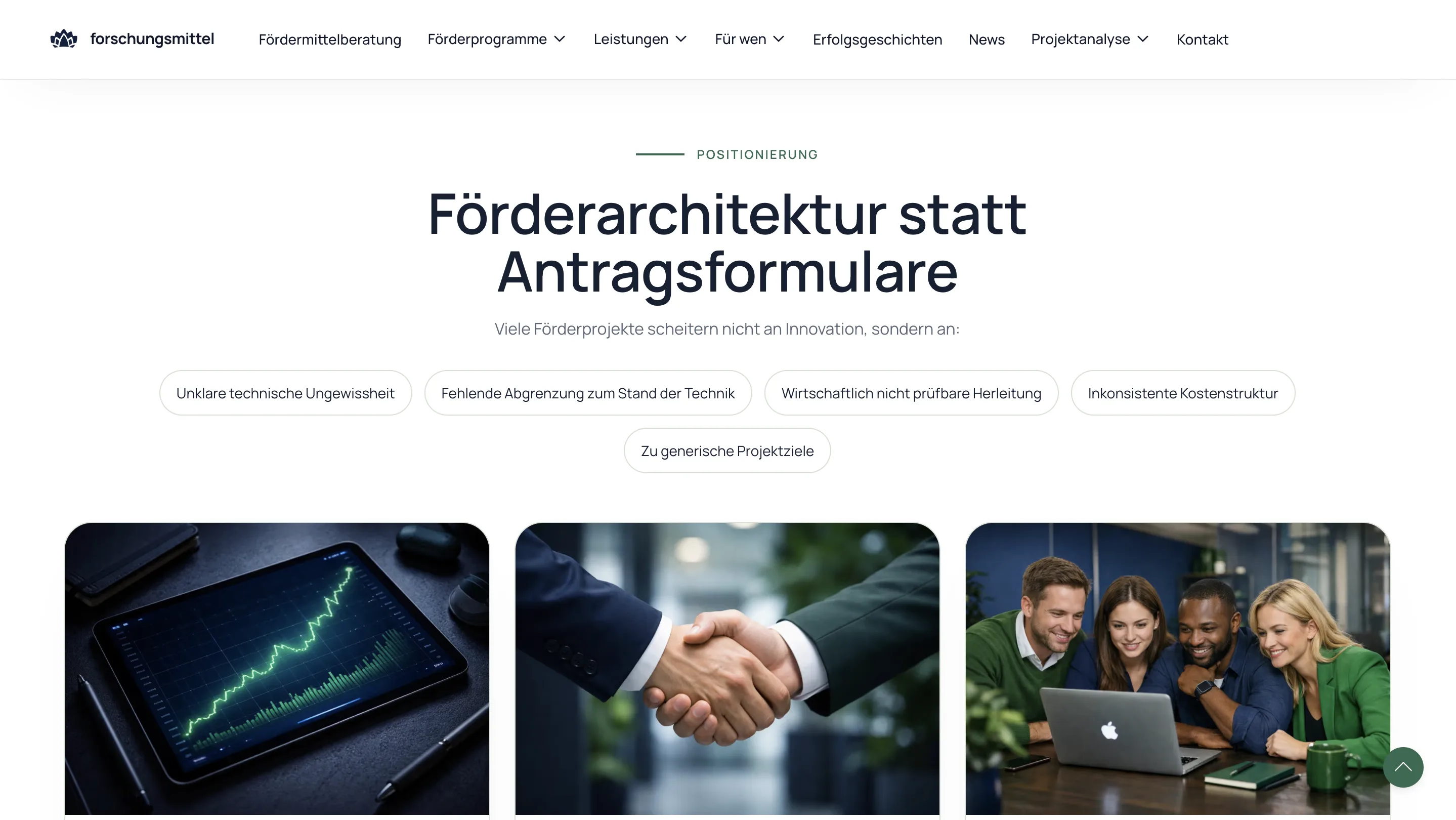
Clear positioning for funding advisory and project qualification
02
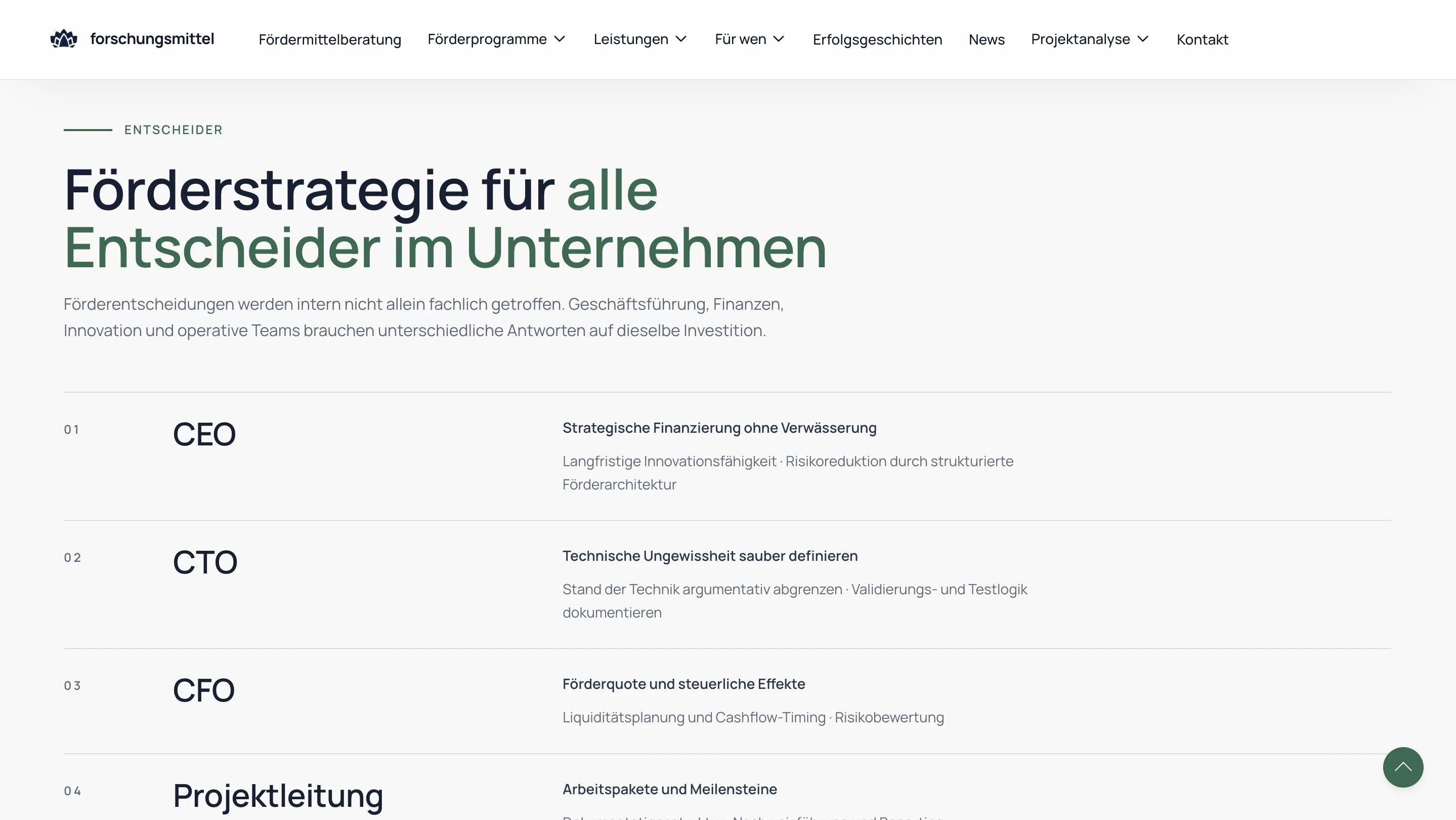
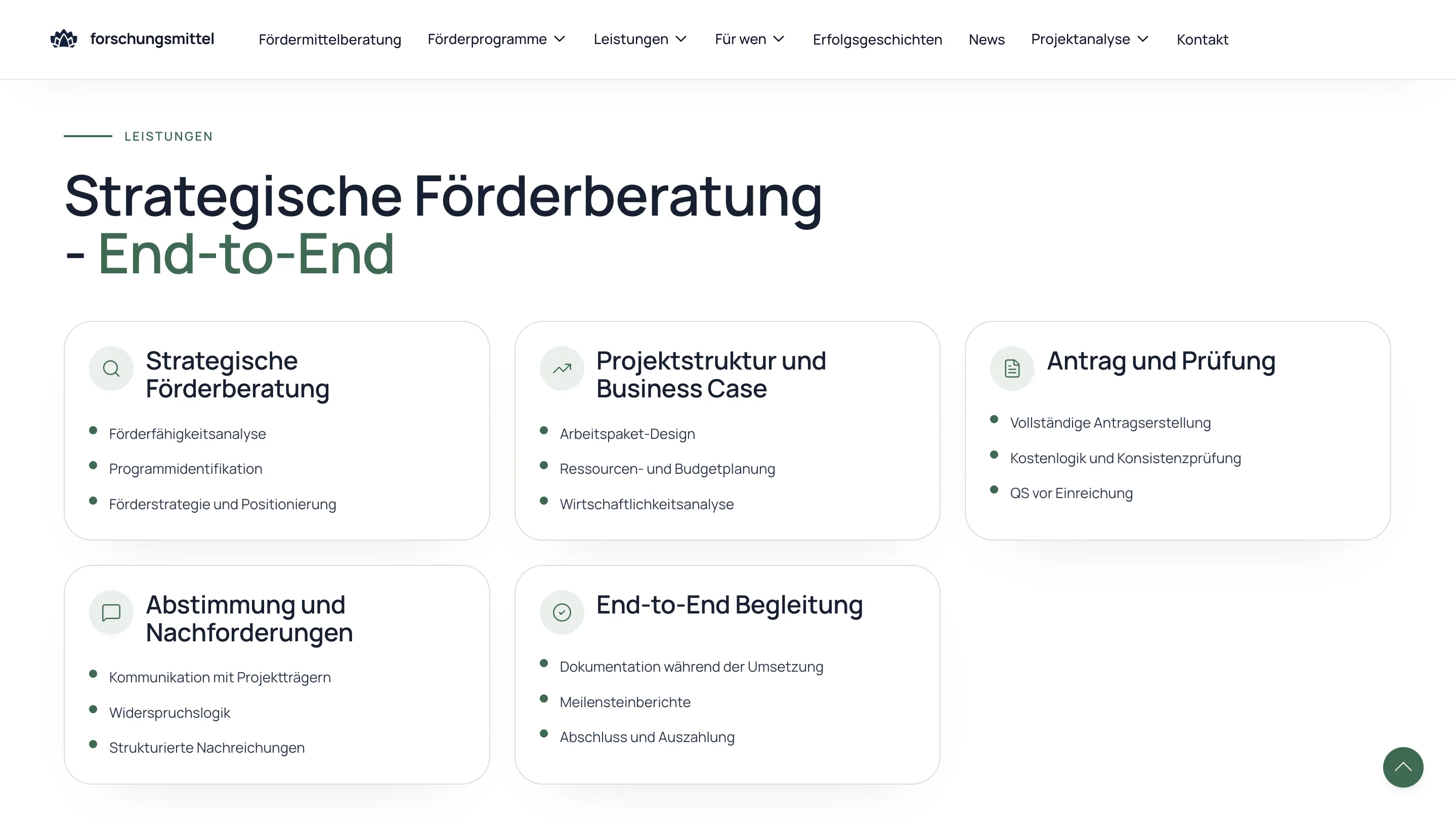
Structured content architecture for complex funding information
03
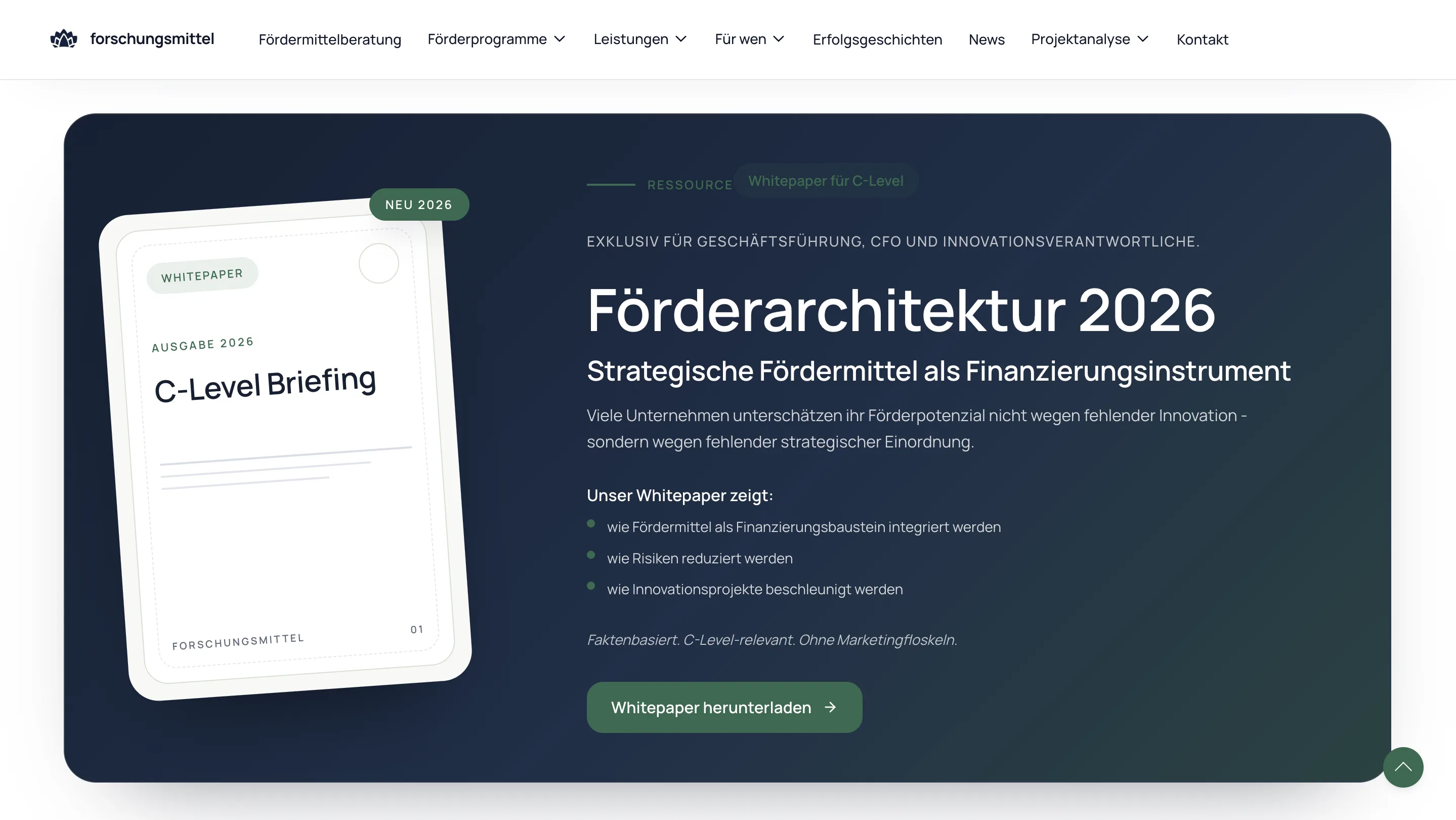
Conversion paths into the funding check and qualification analysis flow
04
A visual system that works across both marketing pages and authenticated product screens
05
SEO-ready page structure for funding-related search intent
06
Website and product layer designed as one connected brand and design language
The website creates the entry point. The responsible advisory team then reviews whether an enquiry can move into an active project.
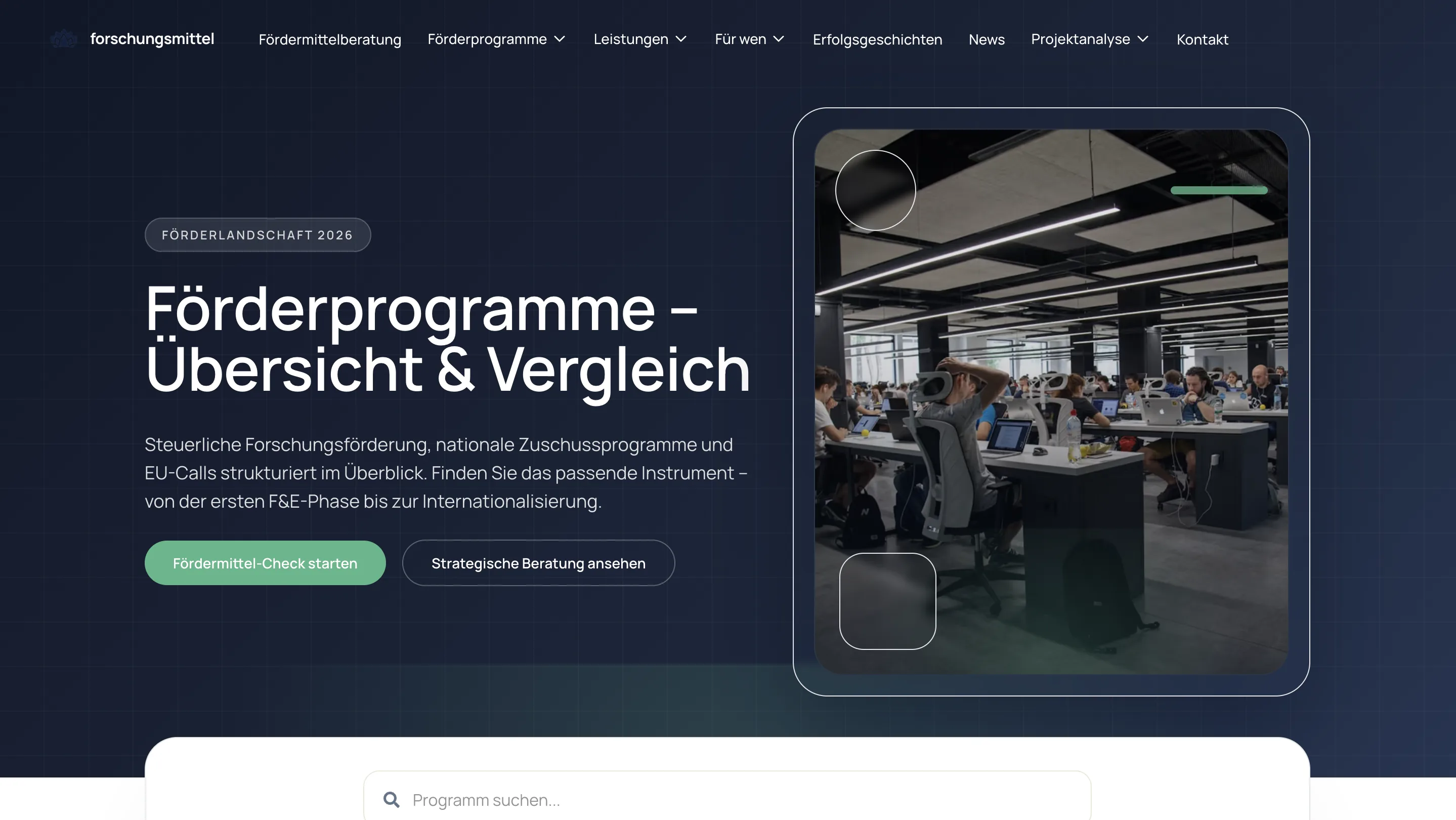
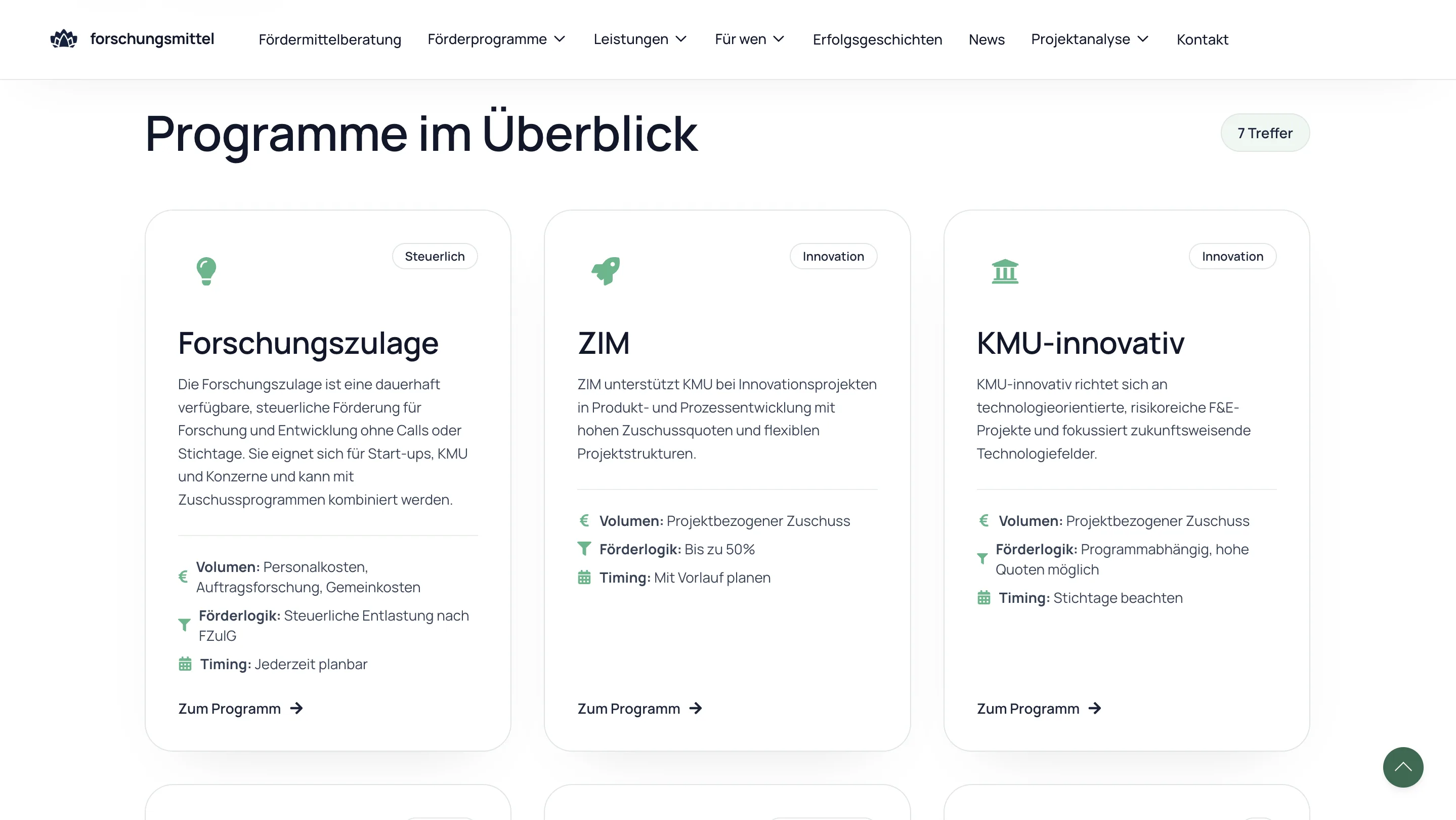
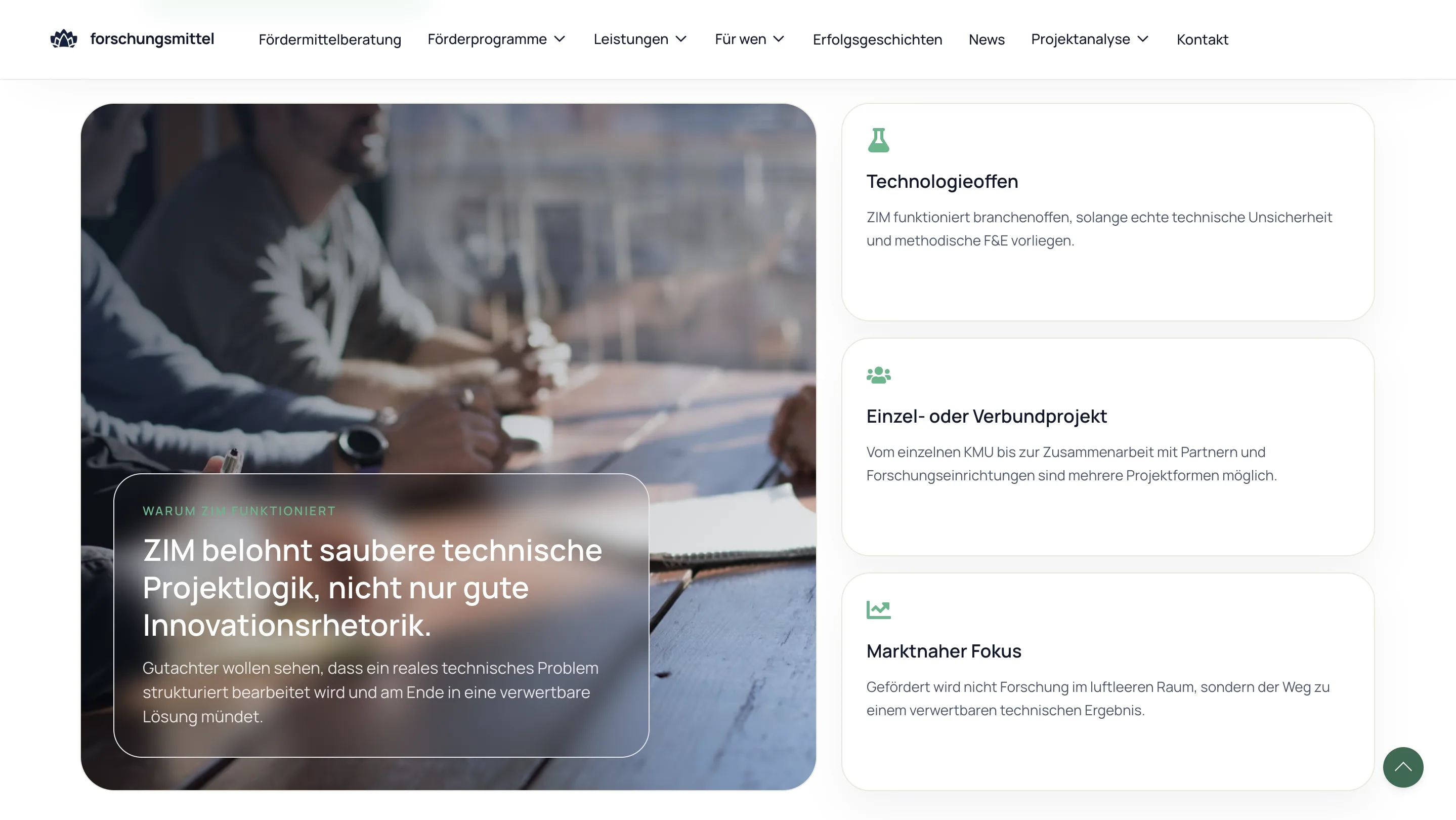
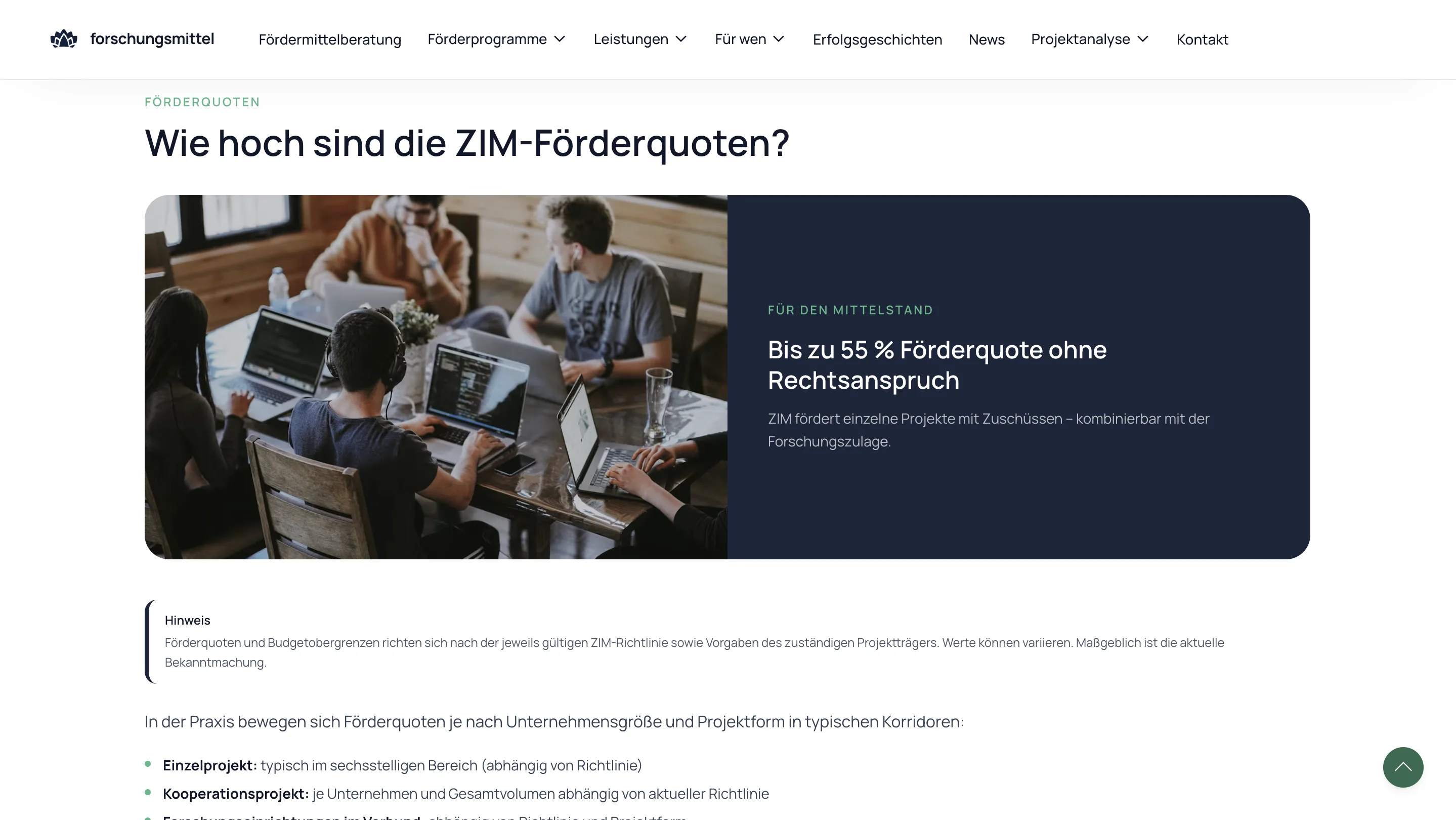
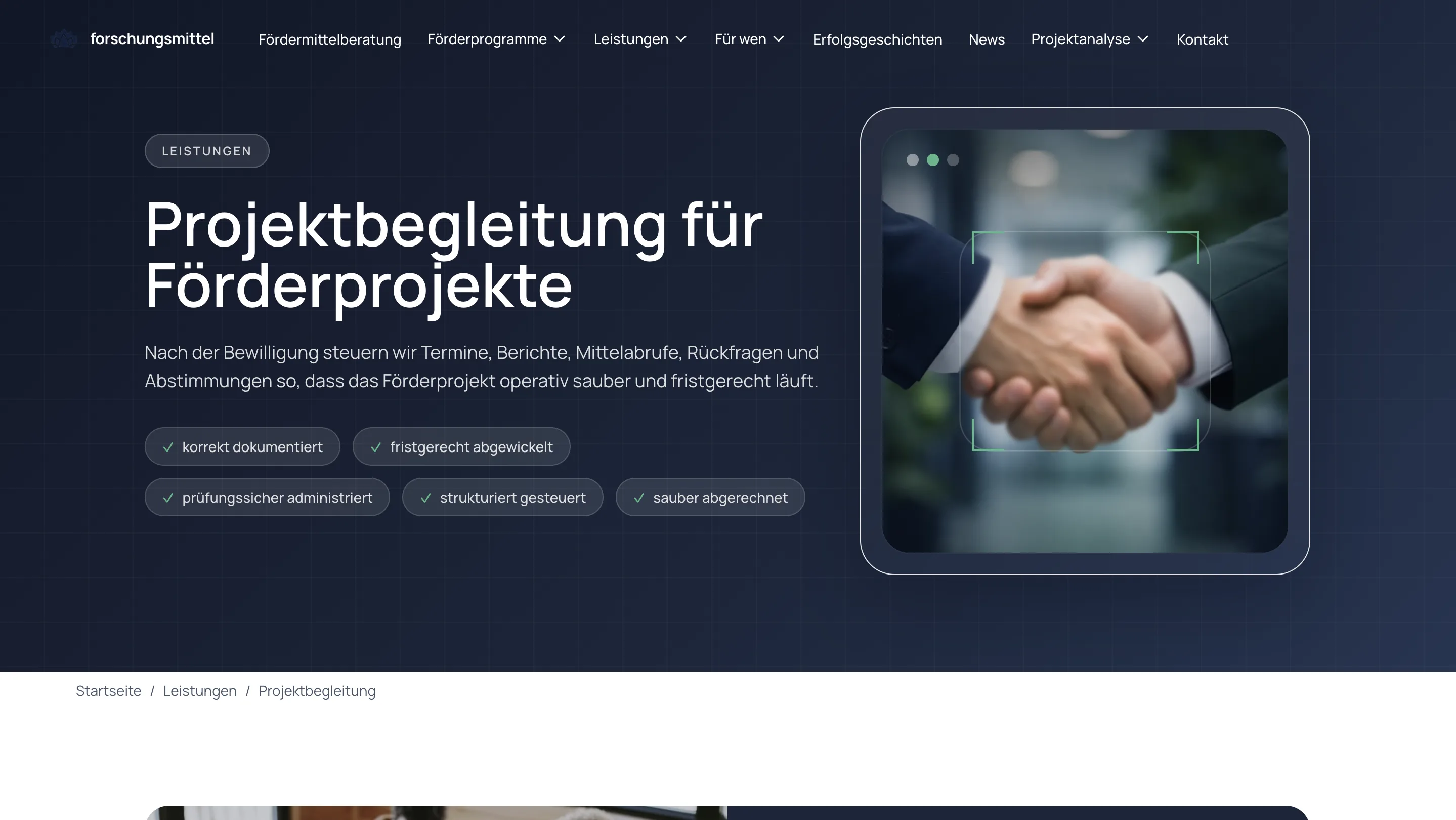
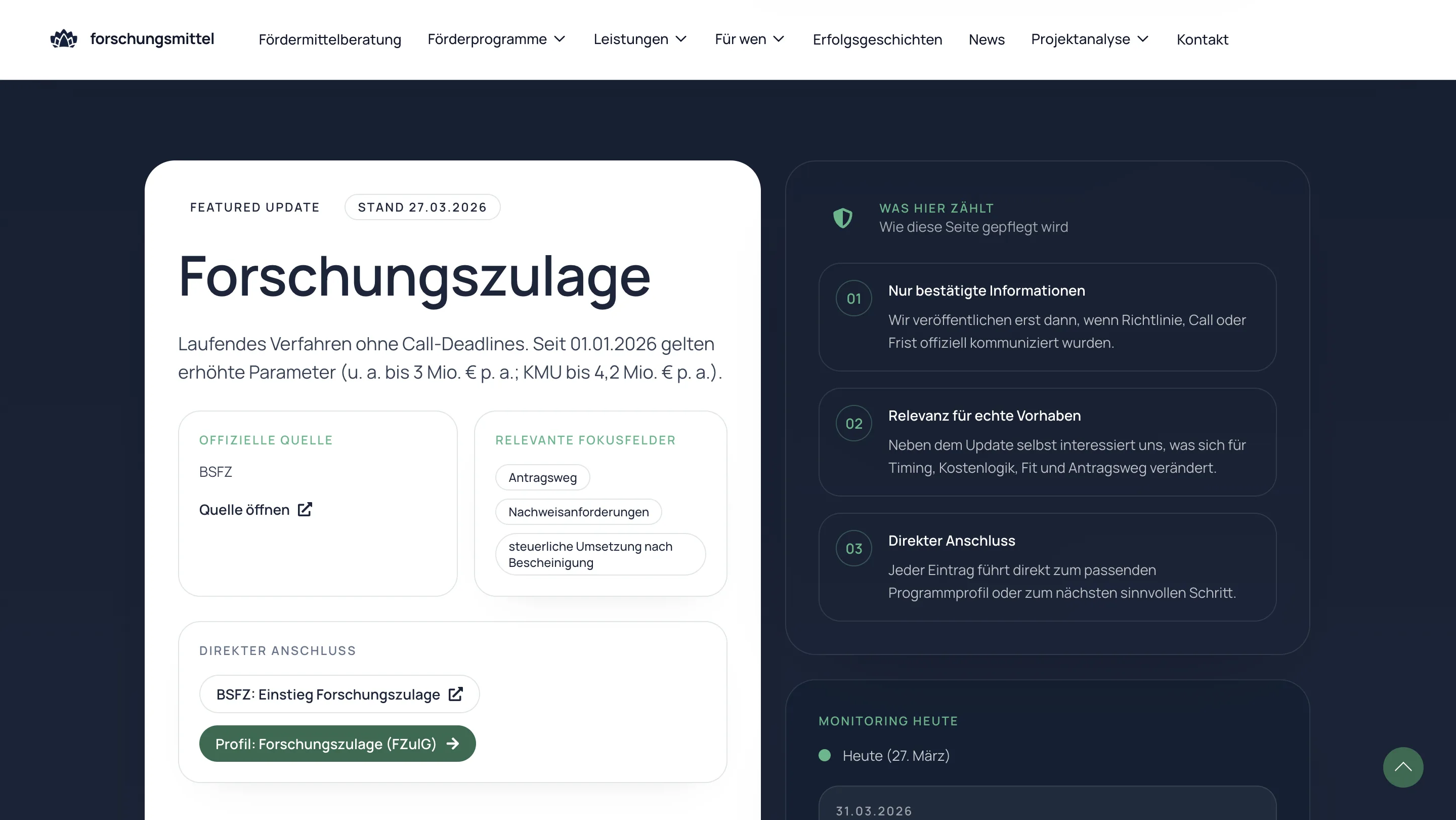
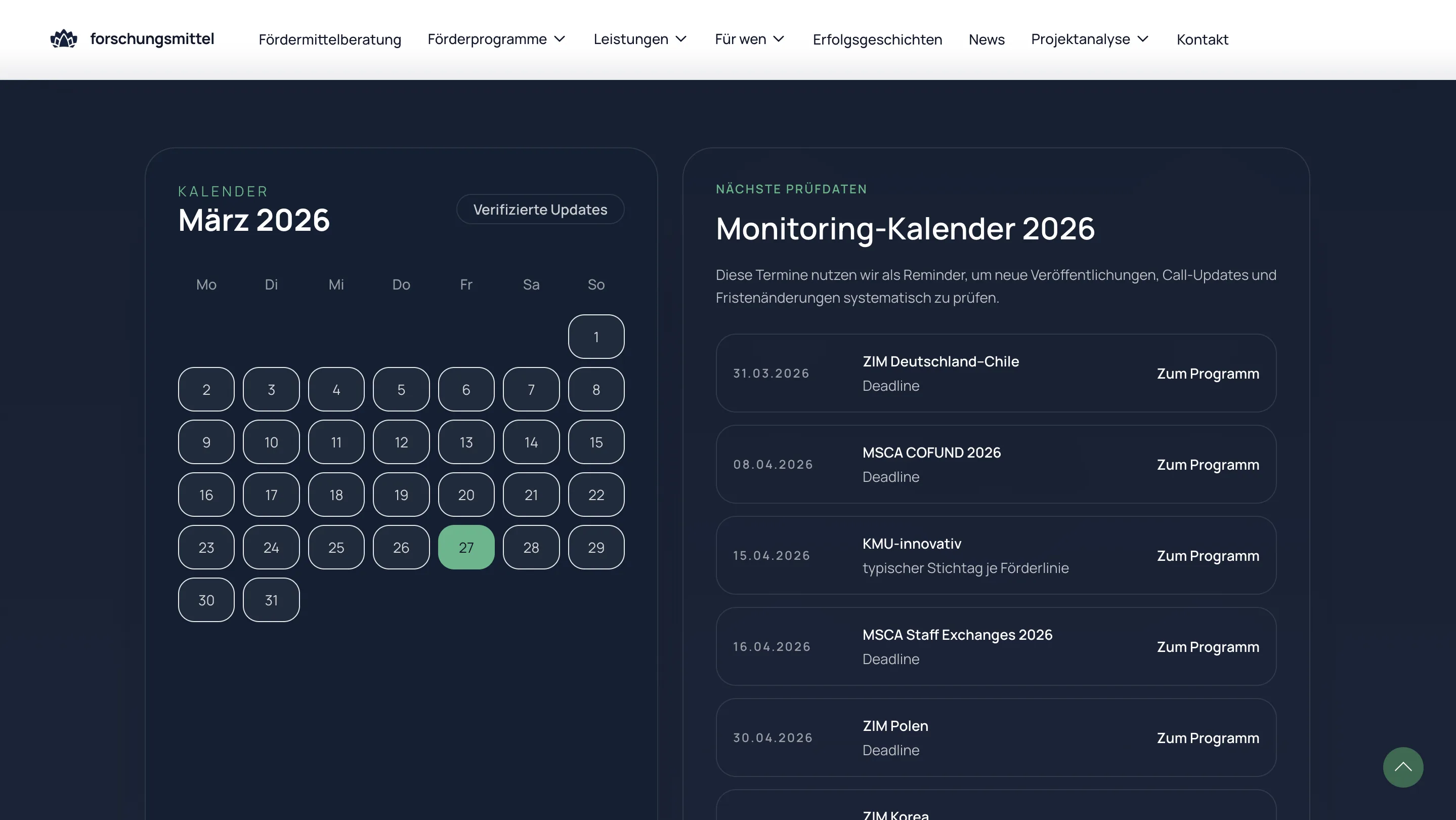
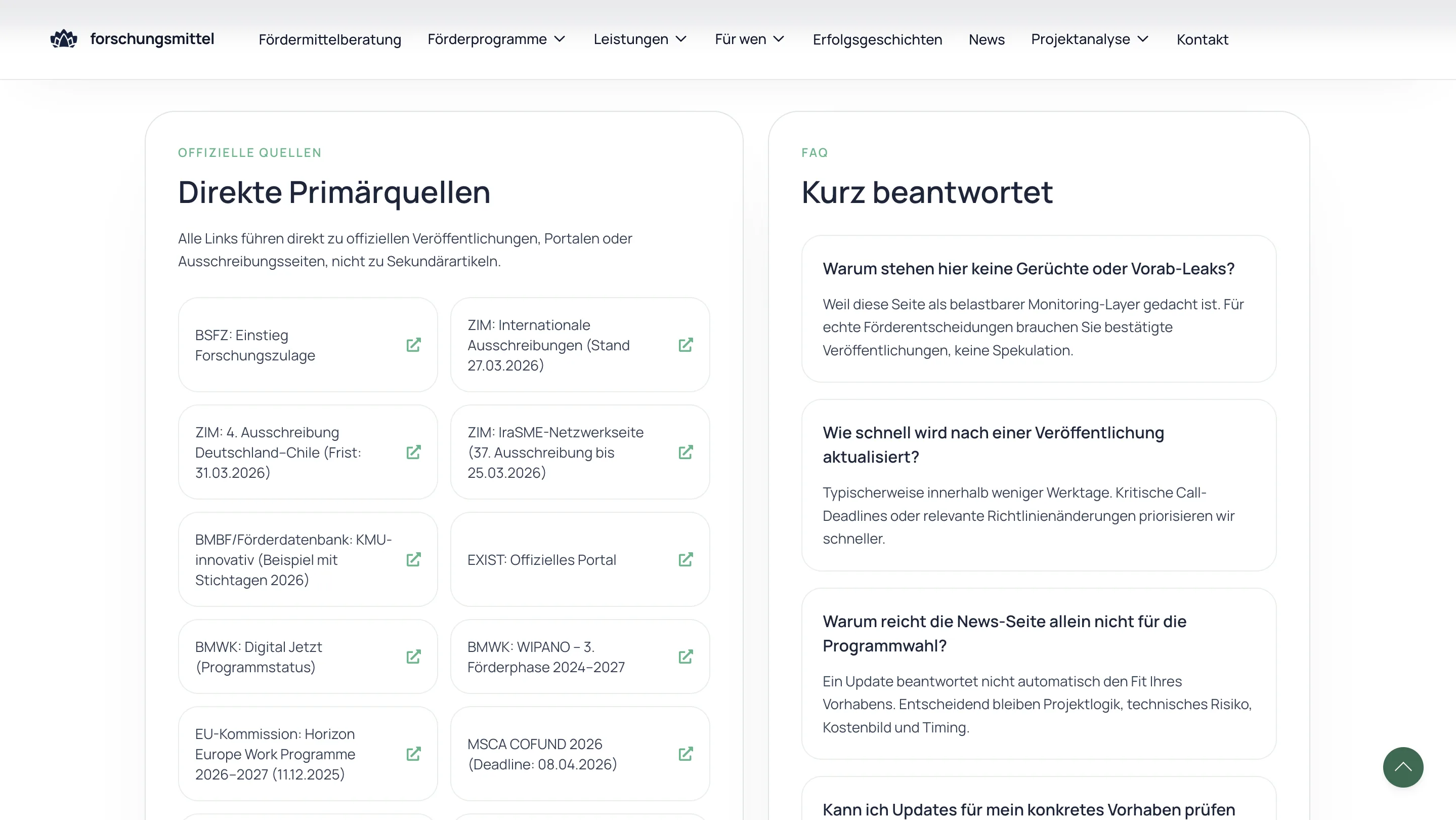
Website Layer Screens
Selected screens from the public B2B website layer, which handles positioning, information architecture, credibility, and conversion into the funding process.
2. Client Portal and Internal Workspace
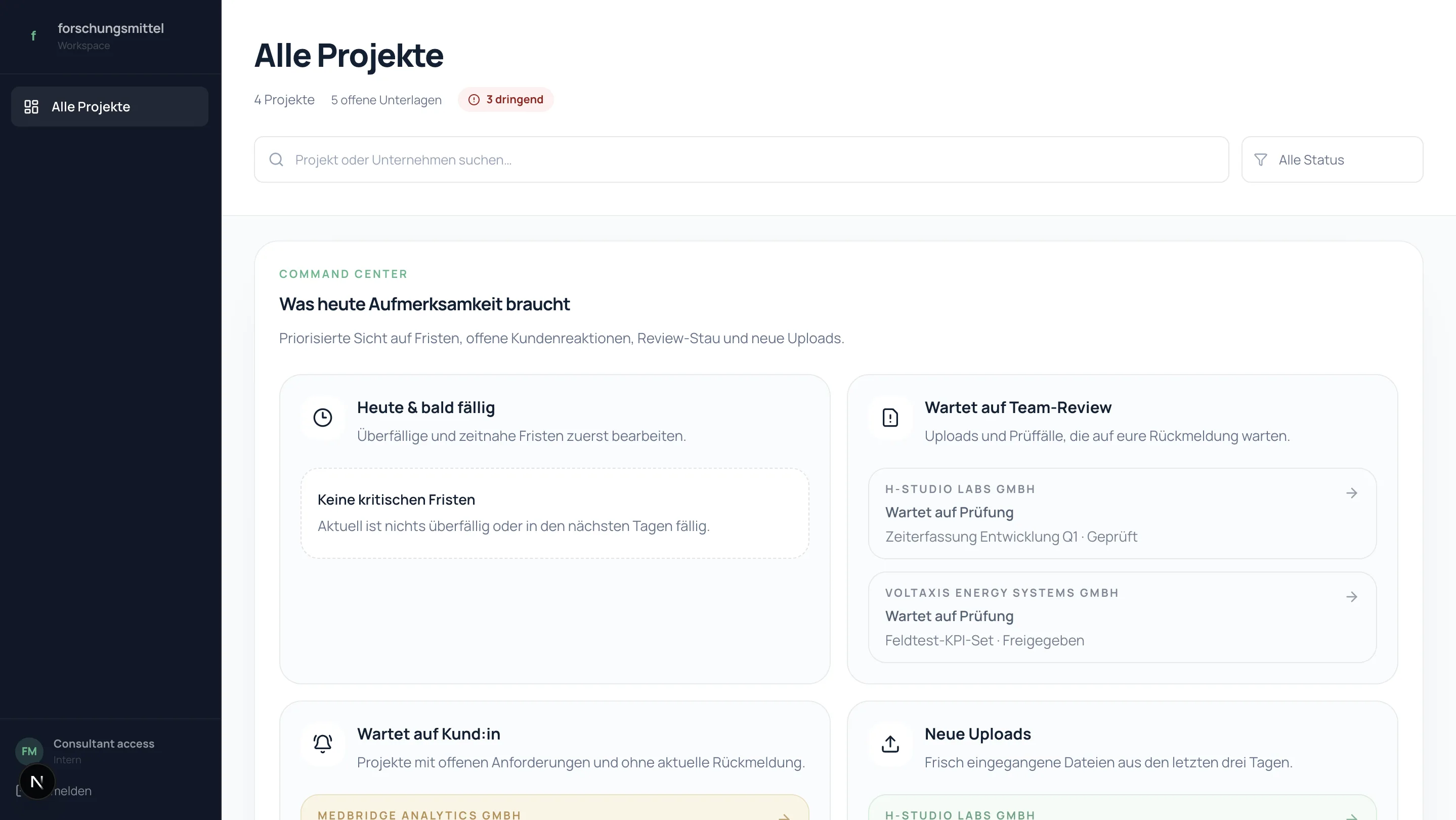
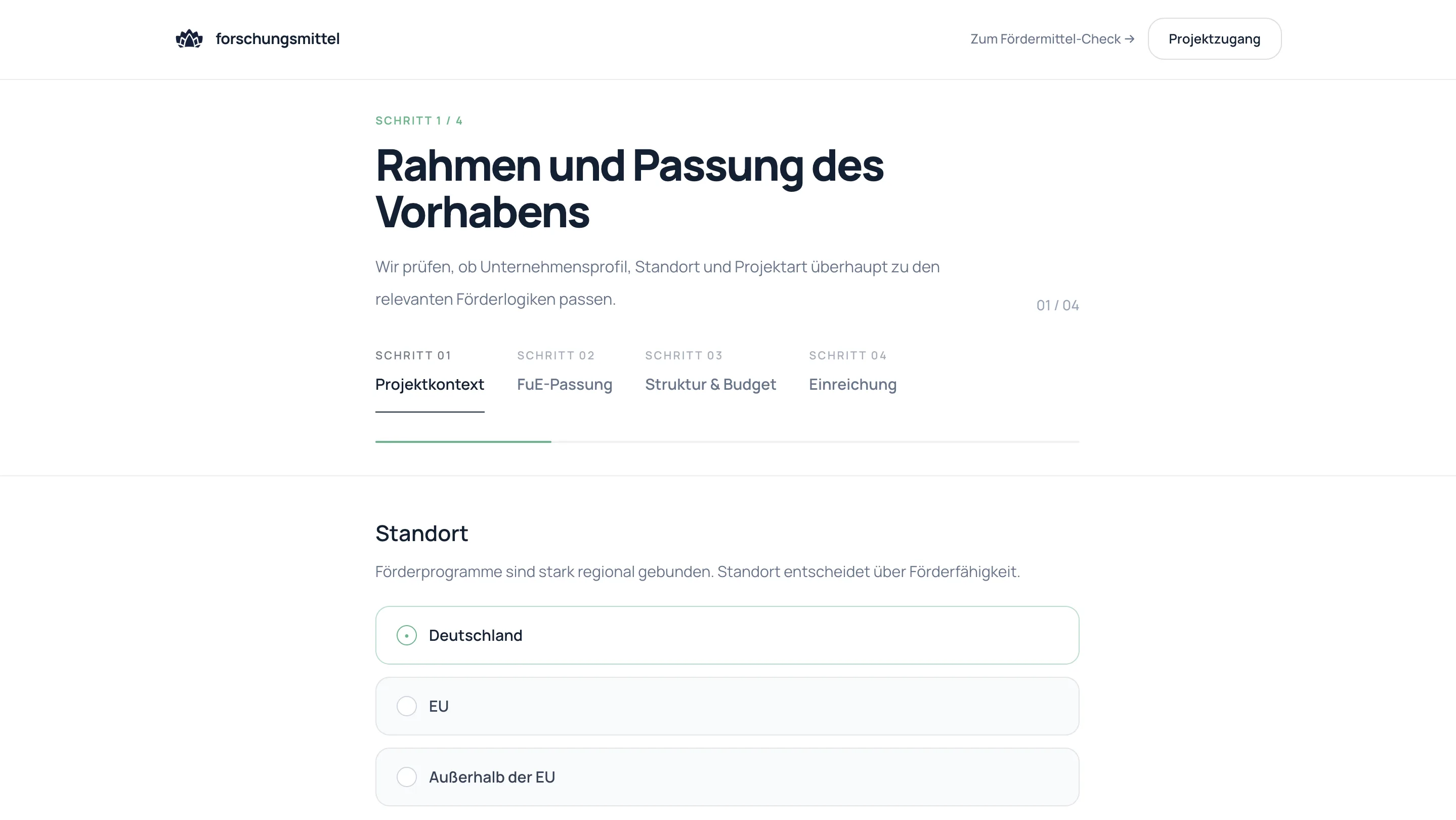
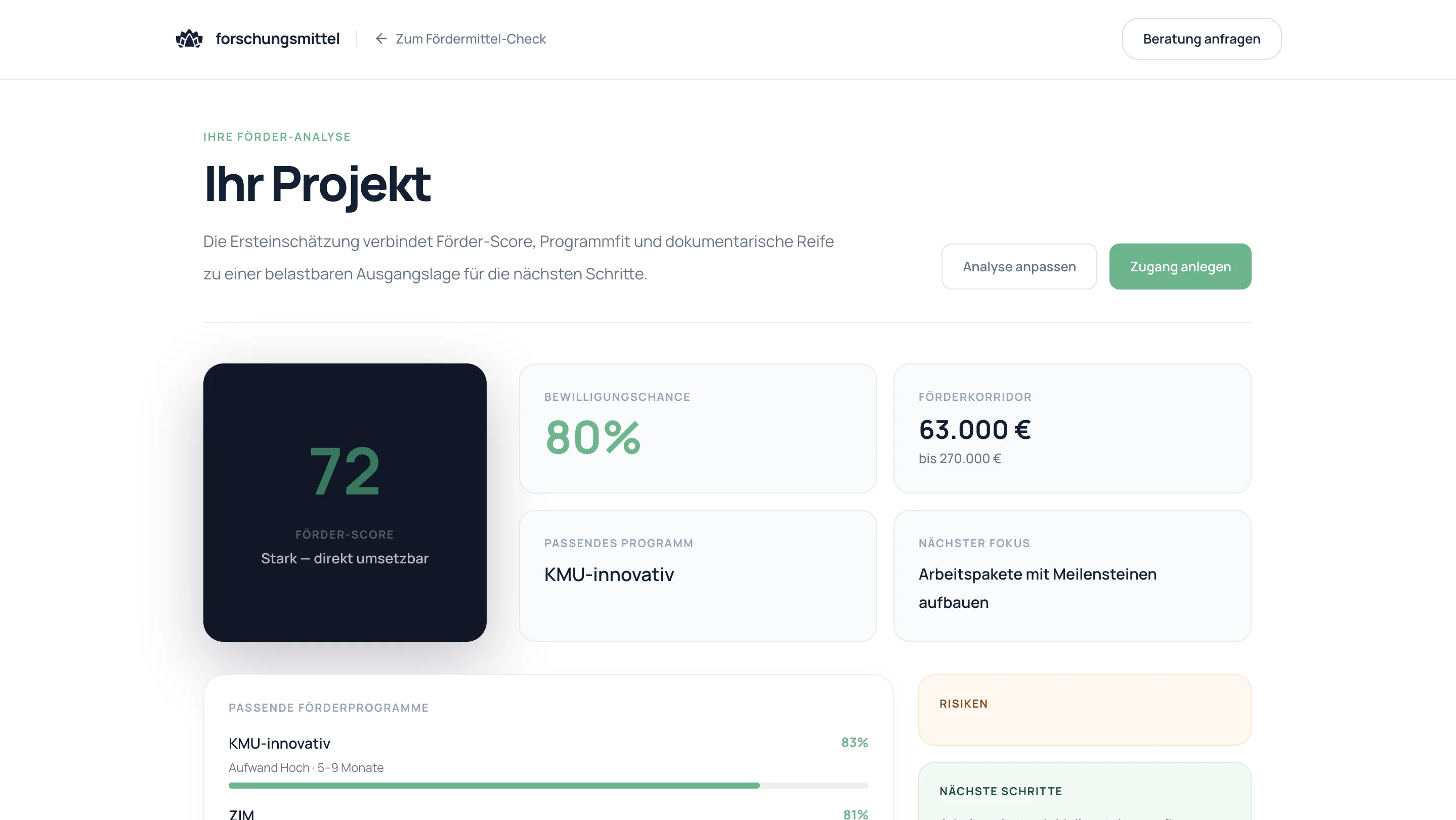
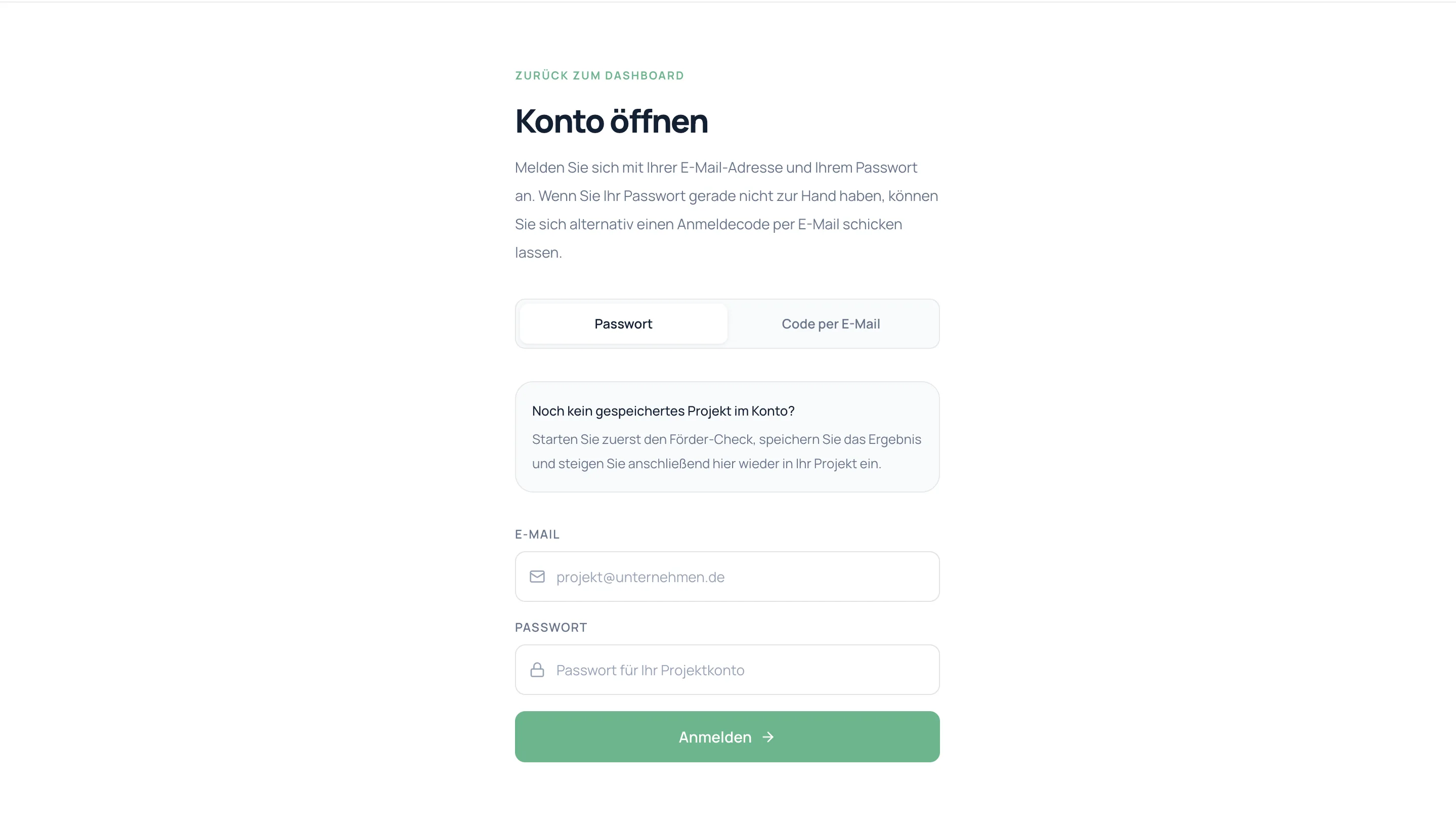
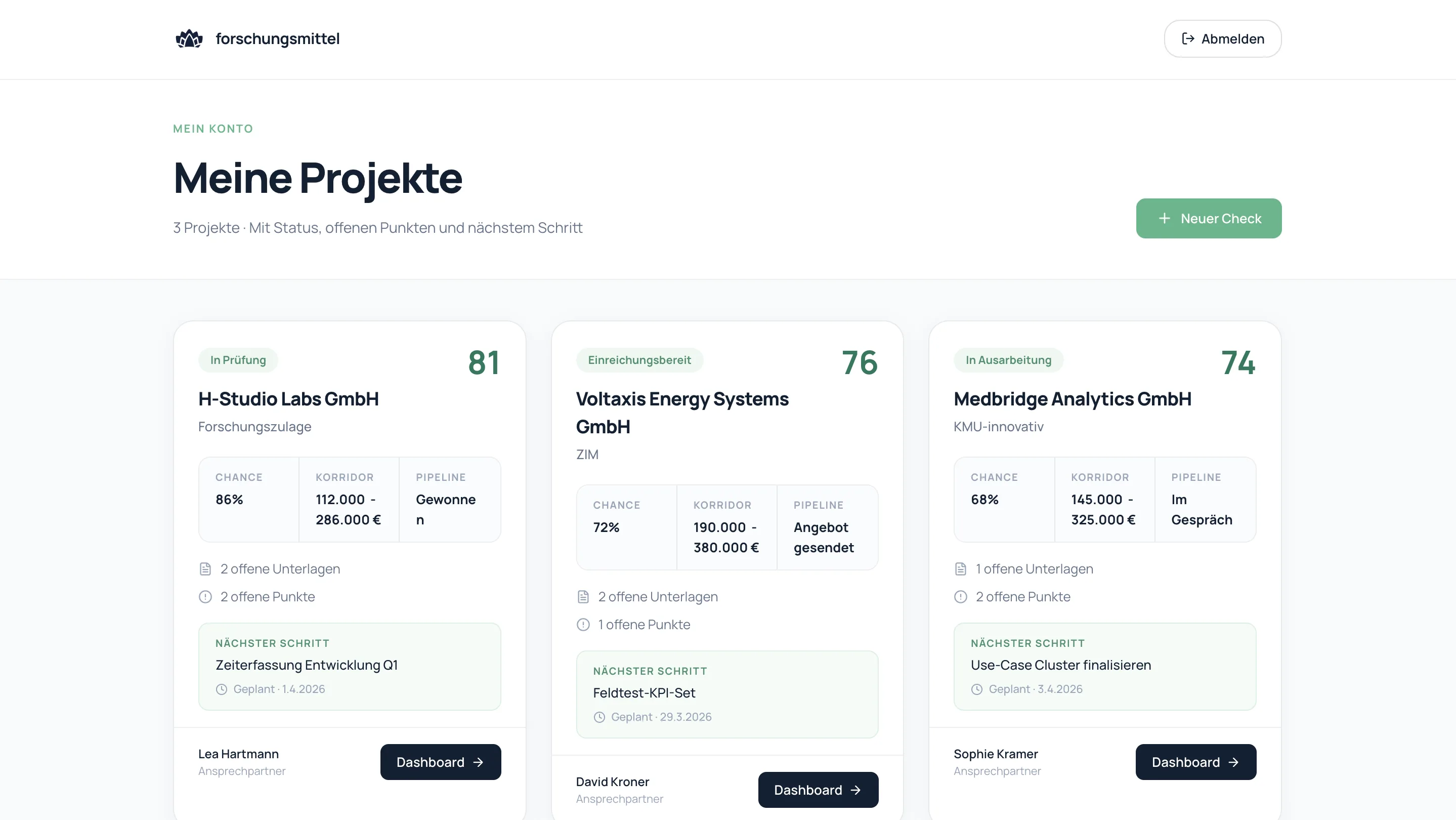
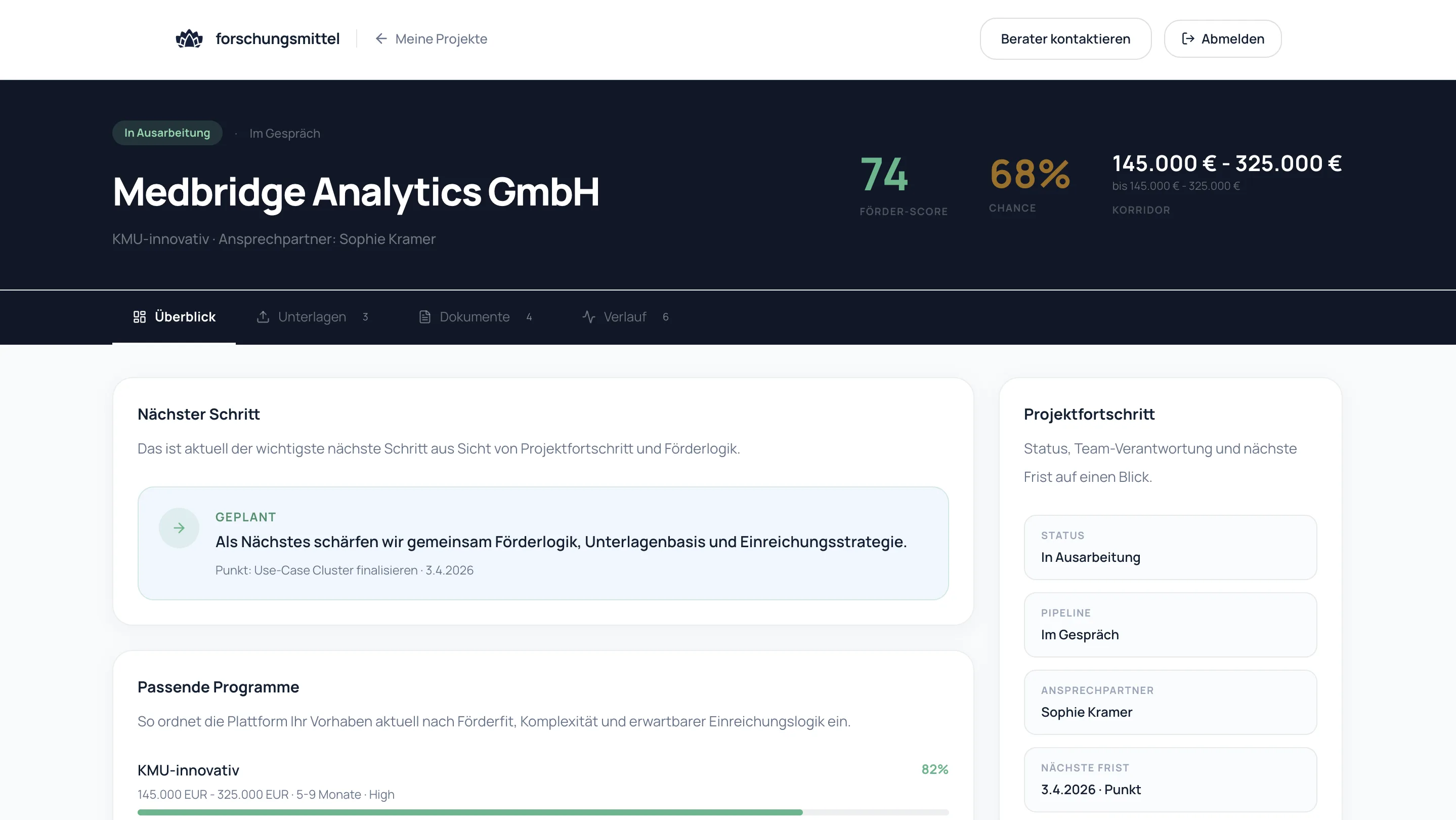
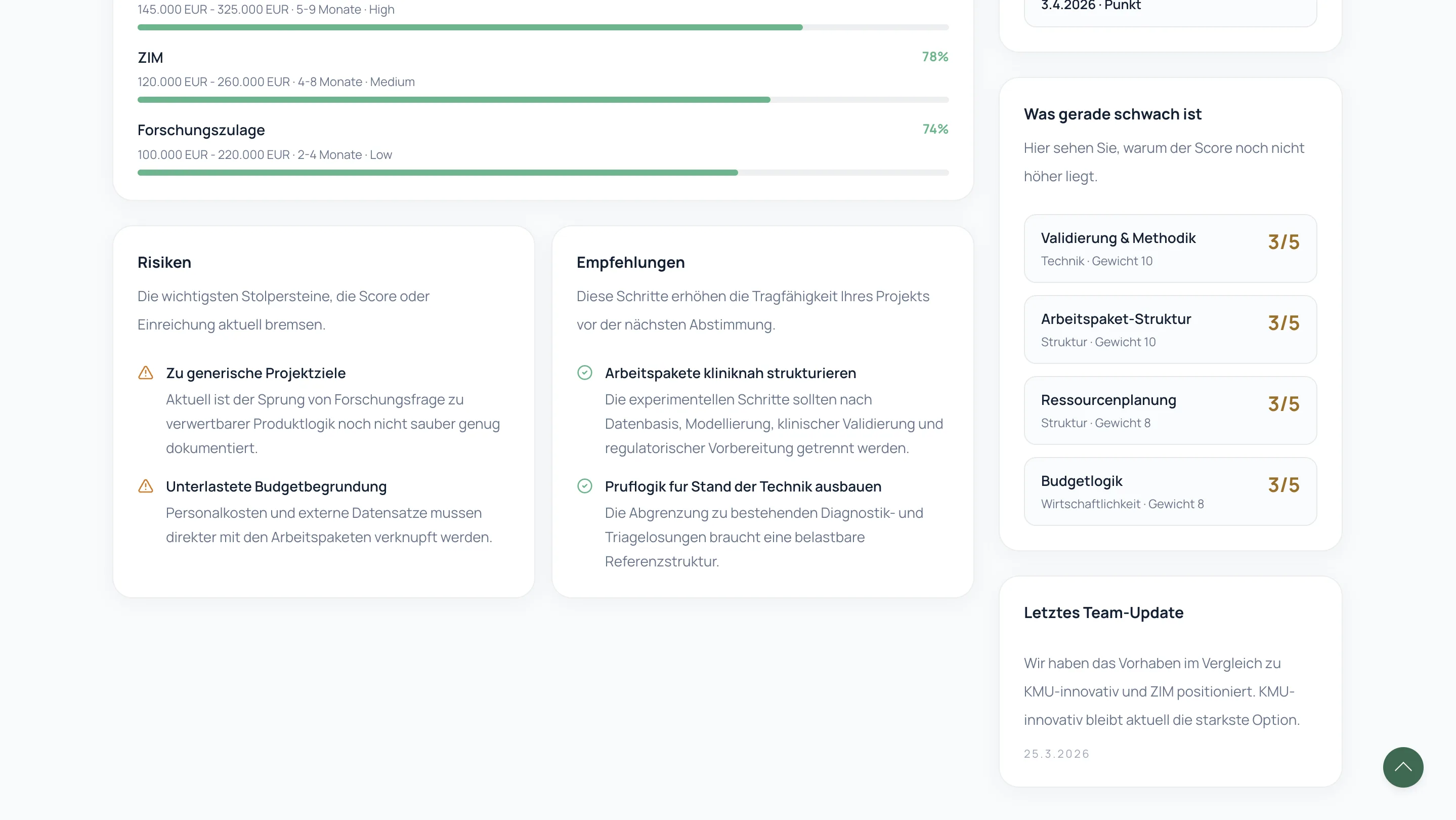
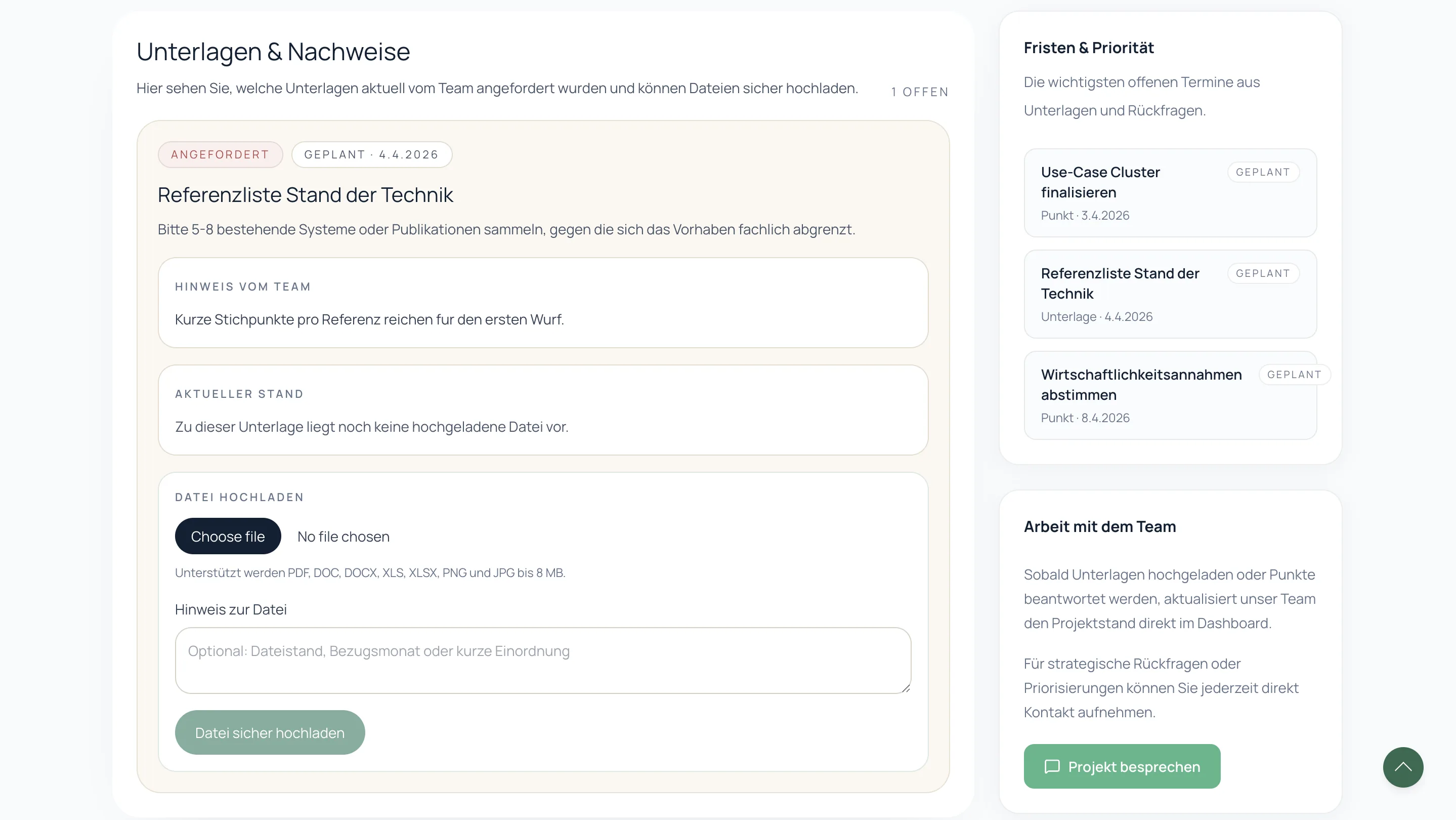
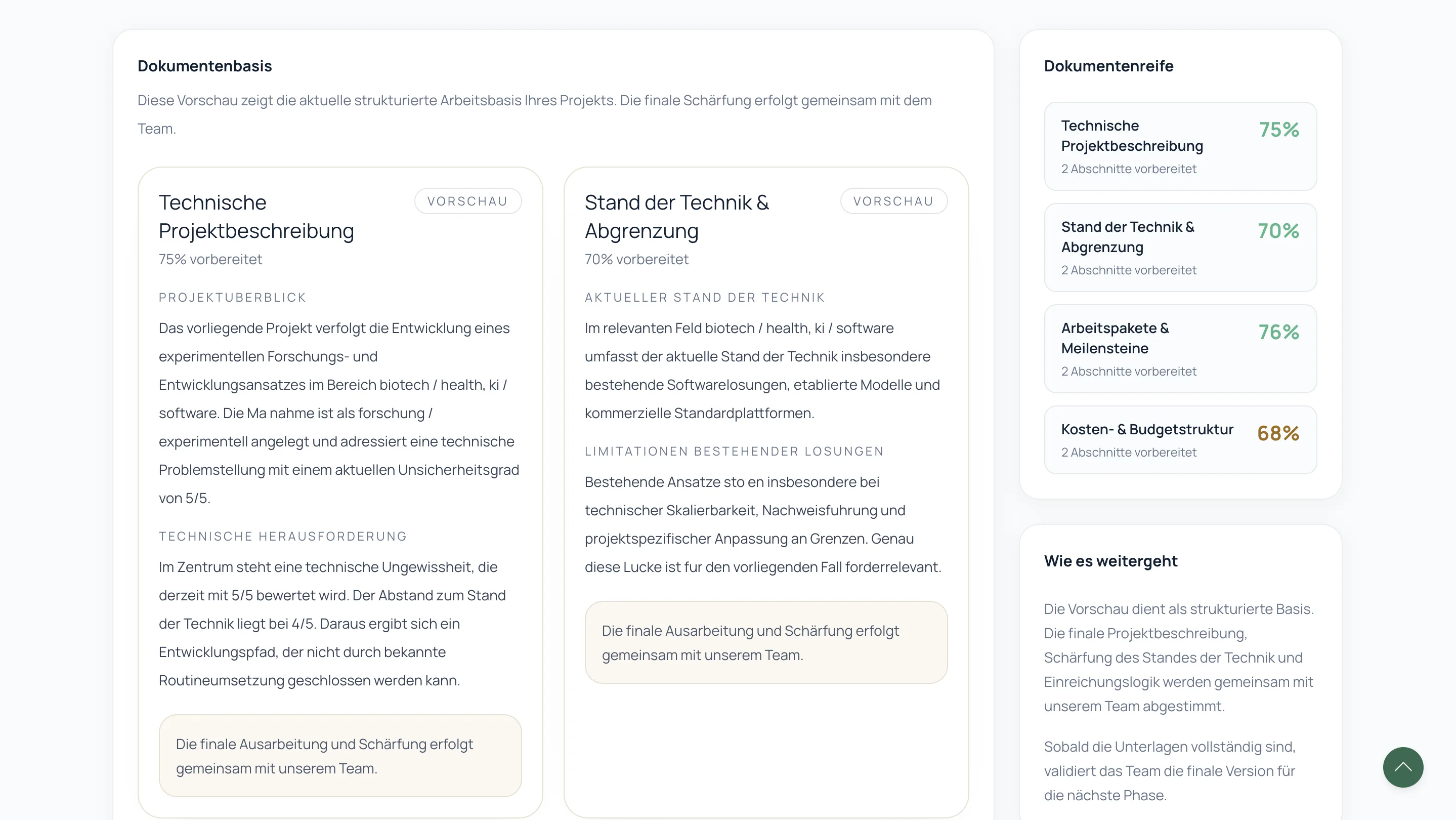
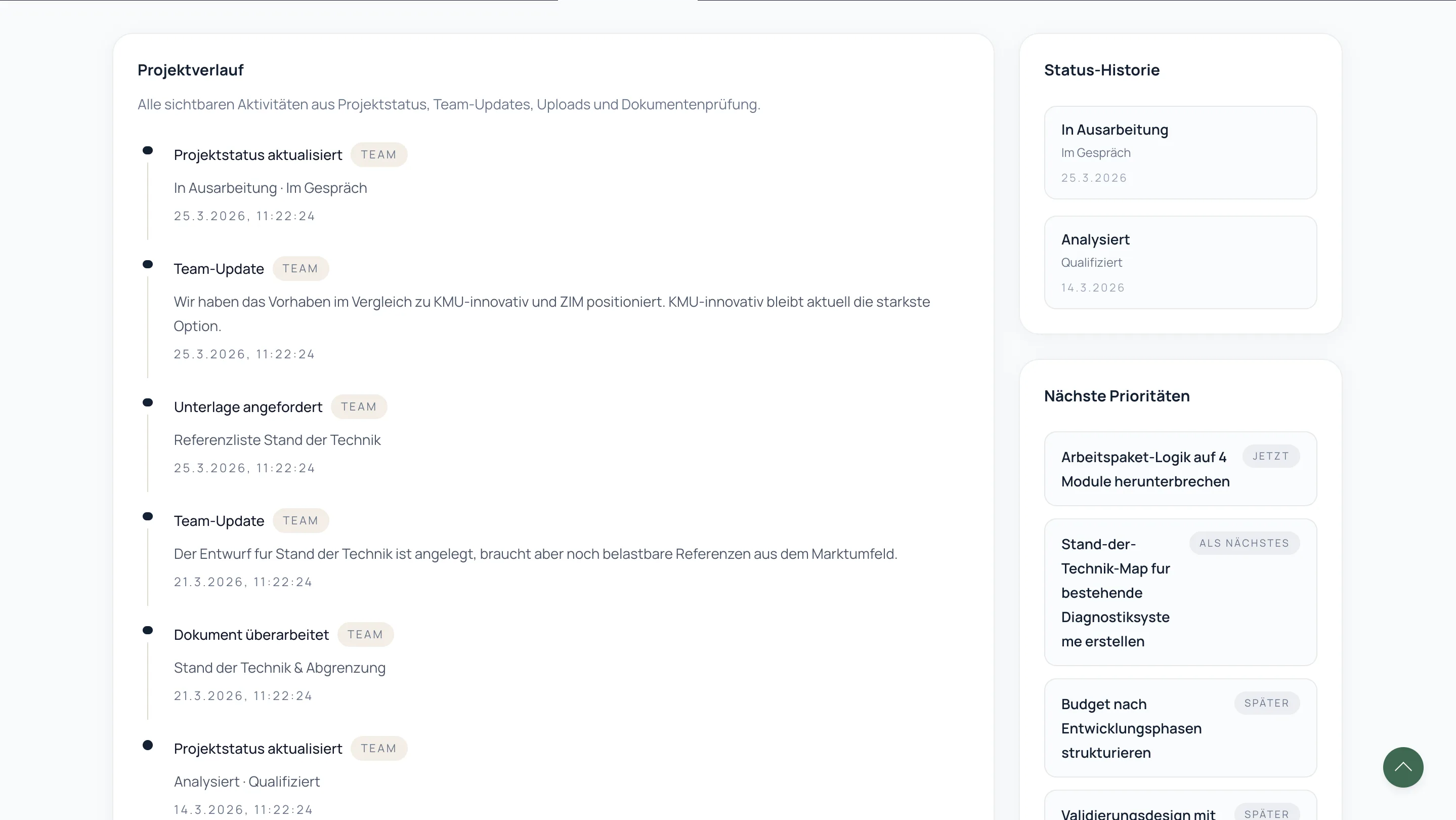
The client portal brings together project status, a preliminary fit assessment, requested next steps, document requirements, upload areas and activity history. Automated or rules-based indications support preparation; they do not replace professional review or constitute a funding decision. The internal team works with:
01
Pipeline stage and project ownership
02
Internal notes and document review status
03
Client tasks and team updates
04
Activity events and reminder logic
05
A unified workspace instead of scattered admin tools
3. Operations Overview
Instead of forcing the team to search through individual projects, the overview surfaces what needs attention now:
01
Upcoming and overdue deadlines
02
Projects waiting on client action
03
Cases requiring internal review
04
Newly uploaded documents
05
Open document requests
06
Tasks and operational priorities
This turns the platform from passive project storage into an active execution tool for the team.
4. Technical Architecture
The platform logic is centralised around real project data rather than page-level state. The public website, client dashboard and internal workspace all resolve into the same product system, with Neon/Postgres as the central data layer. Core architecture elements: • Centralised project data model in Neon/Postgres • Role-based access for clients and internal team members • Structured project records, notes, activity feed and status history • Document request, upload and review workflows • SMTP communication flows for access and notifications • Reminder and priority logic for internal operations • Unified product logic instead of disconnected forms and ad-hoc admin panels
01
Centralized project data model in Neon/Postgres
02
Role-based access for clients and the internal team
03
Structured project records, notes, activity feed, status history, and reminder logic
04
SMTP communication flows for access and notifications
05
Unified product logic instead of disconnected pages and ad-hoc admin panels
The important architectural point is not only the stack itself, but that website conversion, project qualification, and internal operations all resolve into the same product system.
What the System Actually Supports
The platform is used in day-to-day work and supports project handling beyond initial lead capture.
01
Client dashboard with authenticated project access
02
Internal workspace for the team
03
Live project state: statuses, pipeline, responsibilities, notes
04
Document request/upload/review workflow
05
Activity feed and audit logging
06
Overview of operational priorities
07
Email communication and service notifications
08
Centralized project storage in Neon
Product Layer Screens
Selected screens from the client dashboard, team workspace, and command-center layer used for daily project operations.
Outcome
Forschungsmittel.com connects a public B2B website with an operational platform for clients and the internal team.
The public website explains the offer and structures the initial enquiry. The authenticated workspaces support subsequent review, communication and project handling. Together they form one connected product rather than a website with disconnected back-office tools.
- A public B2B website that explains the offer and brings clients into the qualification flow
- A client portal with visibility into project status, preliminary assessment and requested next steps
- An internal team workspace for structured handling of documents, responsibilities, deadlines and next steps
- An operations overview that surfaces what needs attention now
- Activity history and traceable internal events across every project
- One connected product system instead of a website plus manual back office
The website and authenticated workspaces were designed as parts of the same product. The platform supports the advisory process; it does not make funding decisions or replace review by the responsible authorities.
Partnership today
After delivery, Forschungsmittel became our partner for clients exploring the Forschungszulage R&D tax credit. We build and document the R&D component; Forschungsmittel handles the BSFZ application and tax-side coordination.
See how the partnership works →