Project Overview
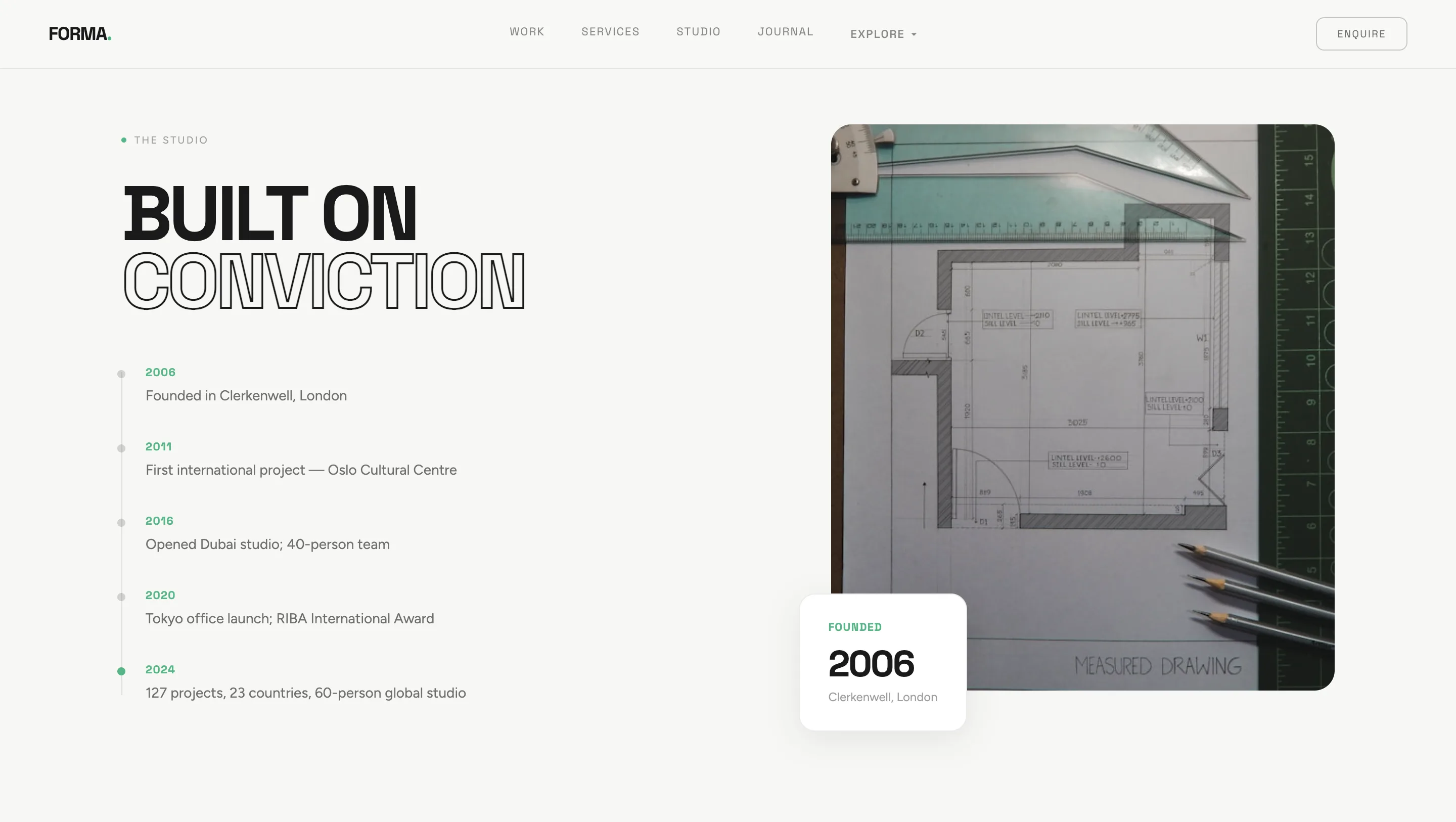
This is a self-initiated H-Studio reference build — a speculative concept study for an architecture-studio site, not a delivered client engagement and not associated with any real architecture practice named FORMA. Brand, project photography and visuals are illustrative only.
An illustrative concept built around a fictional architecture studio called 'FORMA', imagined as an international design practice working across residential architecture, boutique hospitality, cultural buildings and urban planning.
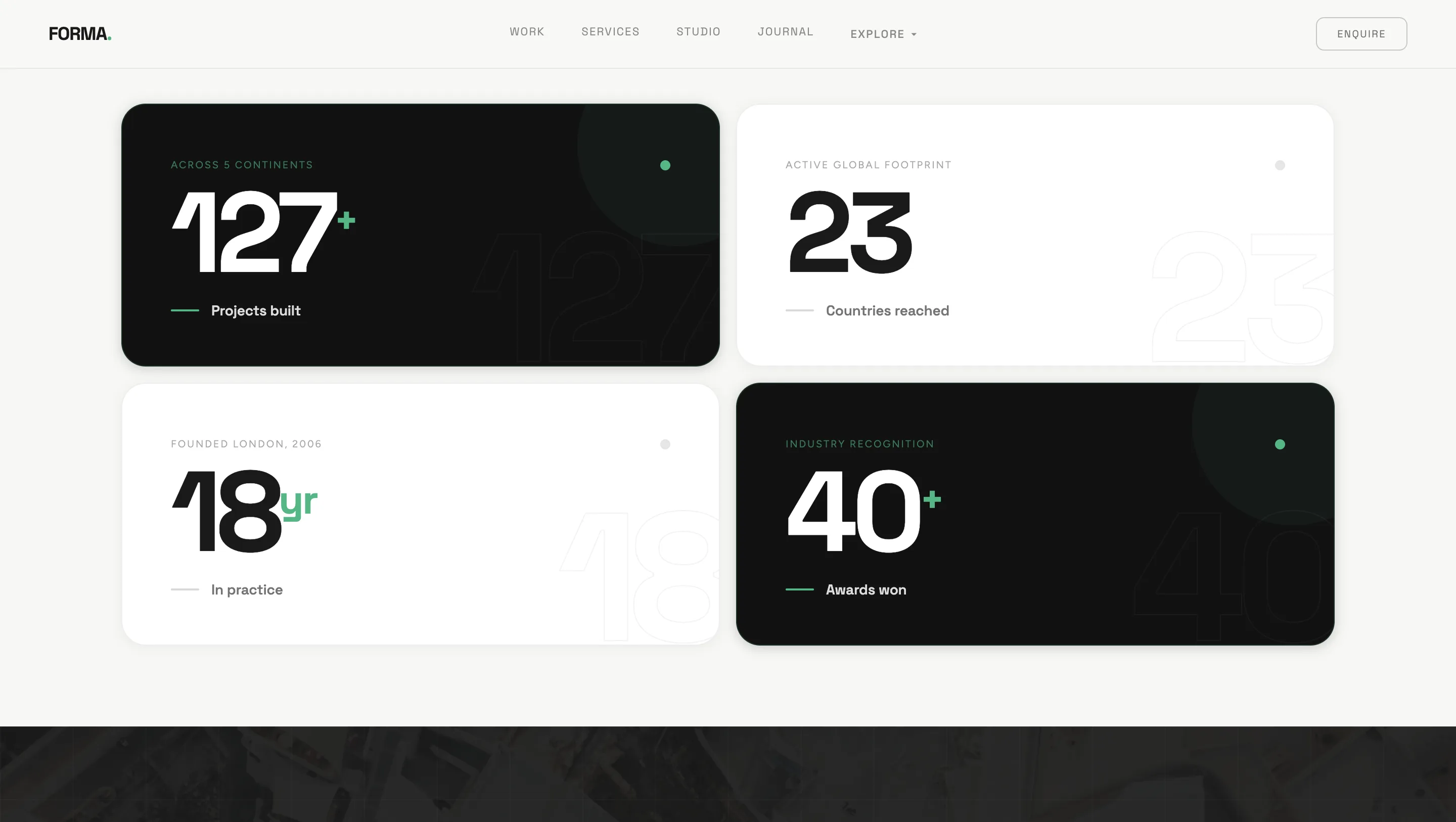
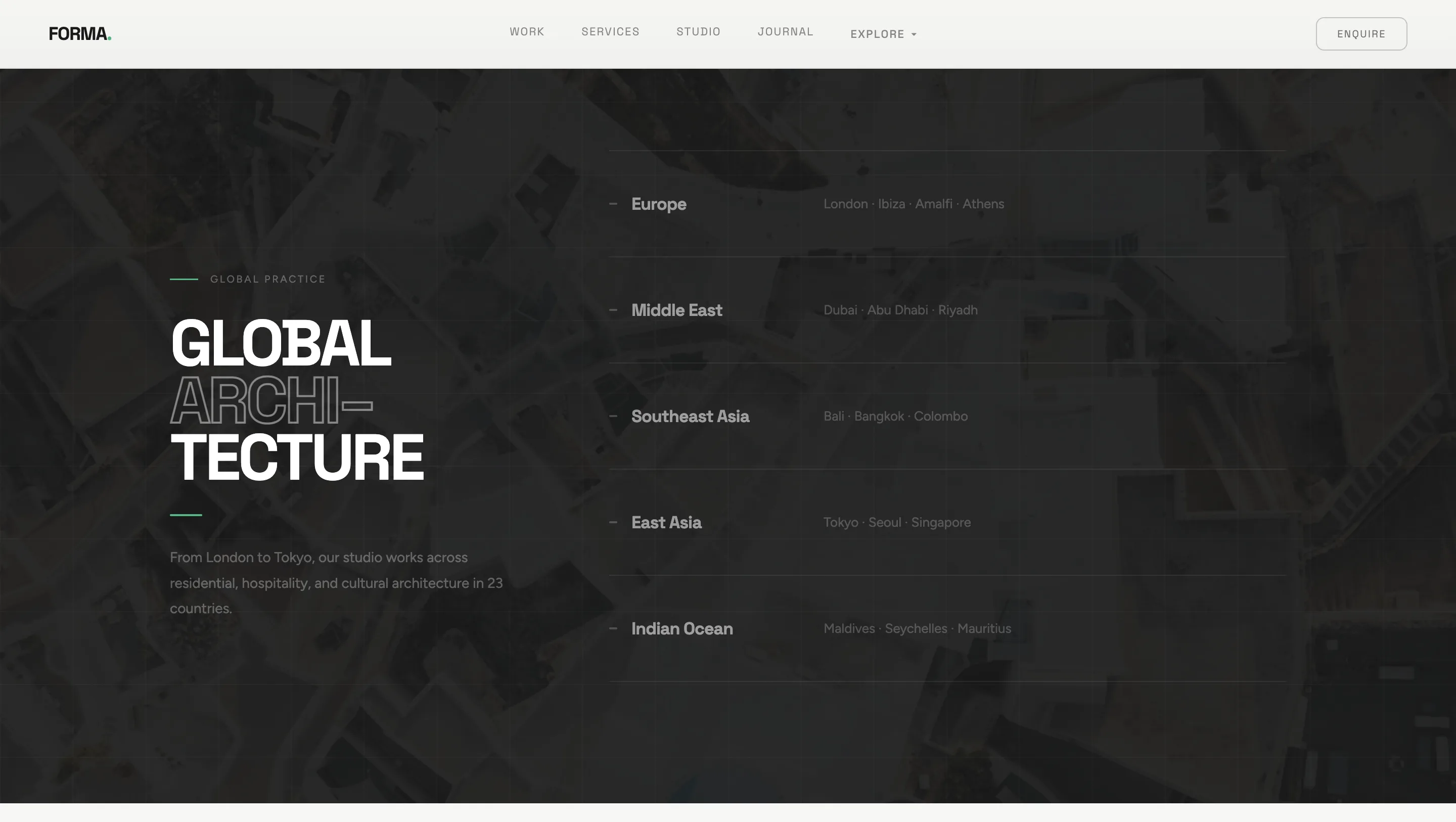
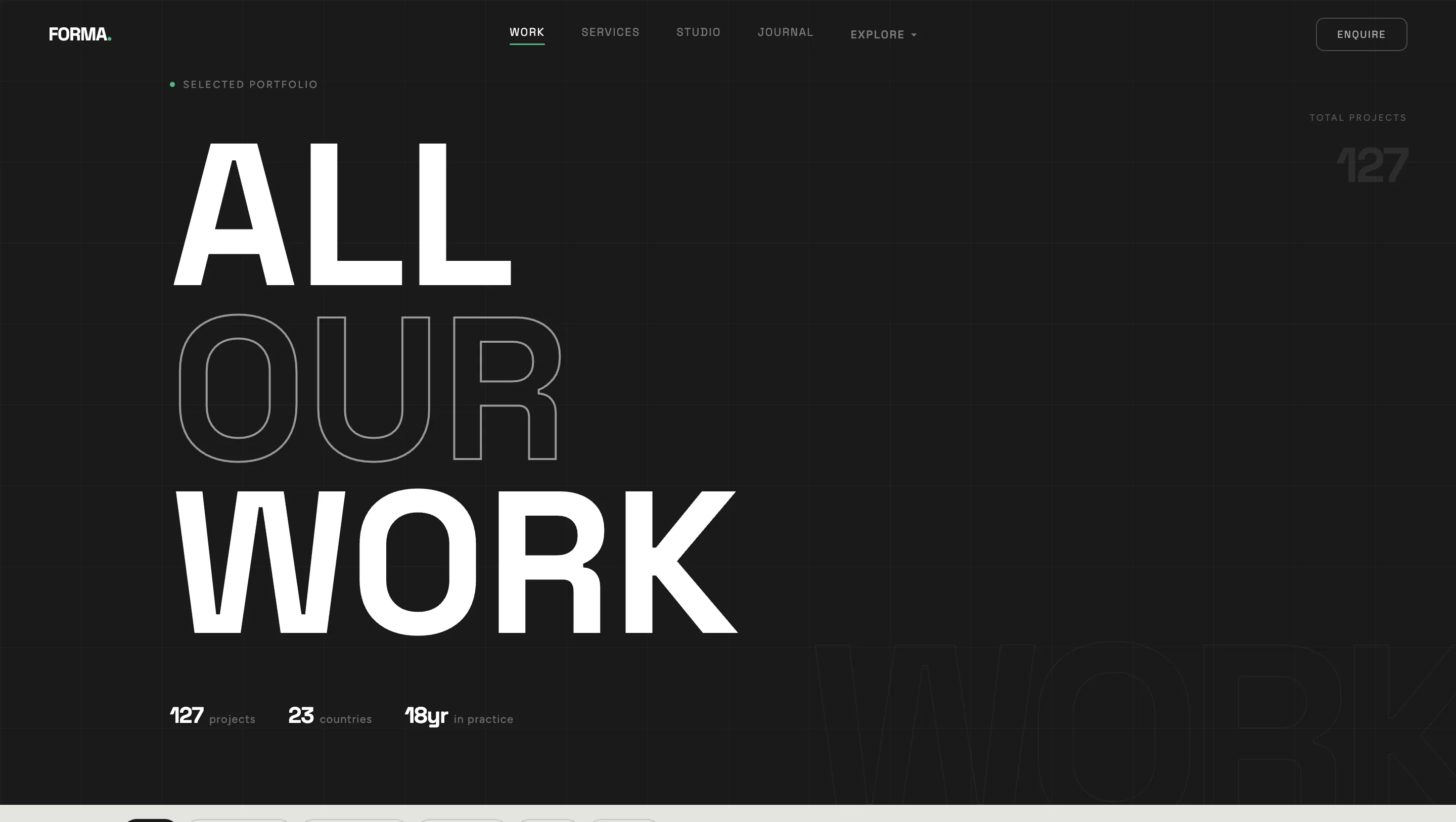
The purpose of the study is to explore how an editorial website and structured content architecture could be assembled for long-term growth, international positioning and organic discovery — using a hypothetical portfolio of around 127 projects across 23 countries as a working scenario.
Scenario Framing
The concept study is framed around a set of hypothetical pain points typical of mid-to-large architecture practices.
Fragmented portfolio structure
A scenario in which projects are difficult to navigate and lack contextual storytelling.
No editorial content architecture
Insights and research exist as raw material, but with no structured publishing system for essays, articles and guides.
Limited SEO visibility
Discovery around luxury villas, hospitality architecture or tropical design is assumed to be weak in the starting state.
International audience
A platform brief that has to read as credible to a global audience, not just a local market.
The Concept Direction
The study proposes a structured digital platform combining portfolio presentation, editorial storytelling and search-focused expertise pages.
Portfolio Layer
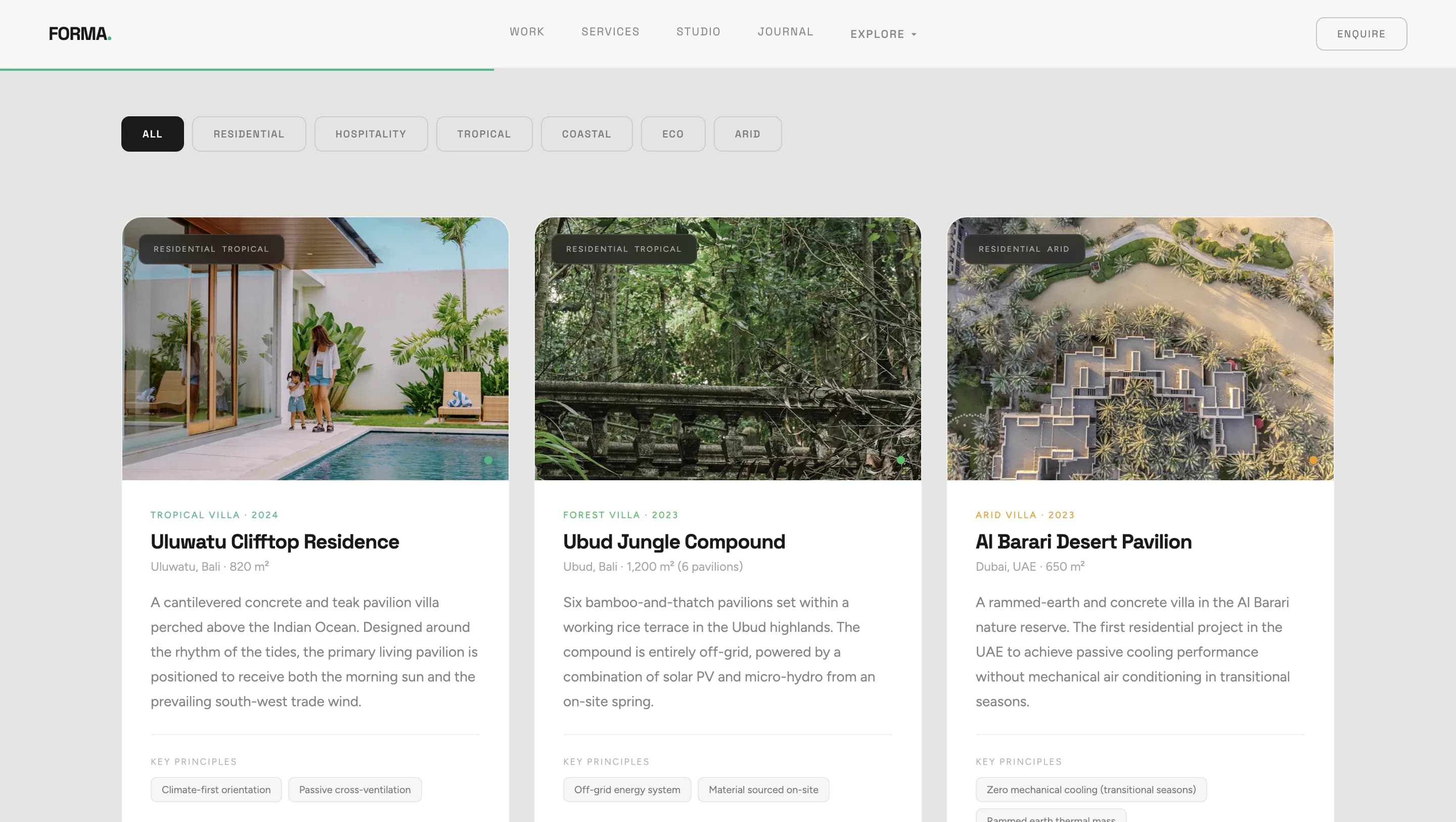
Project pages for hypothetical architecture work across regions and typologies.
Editorial Layer
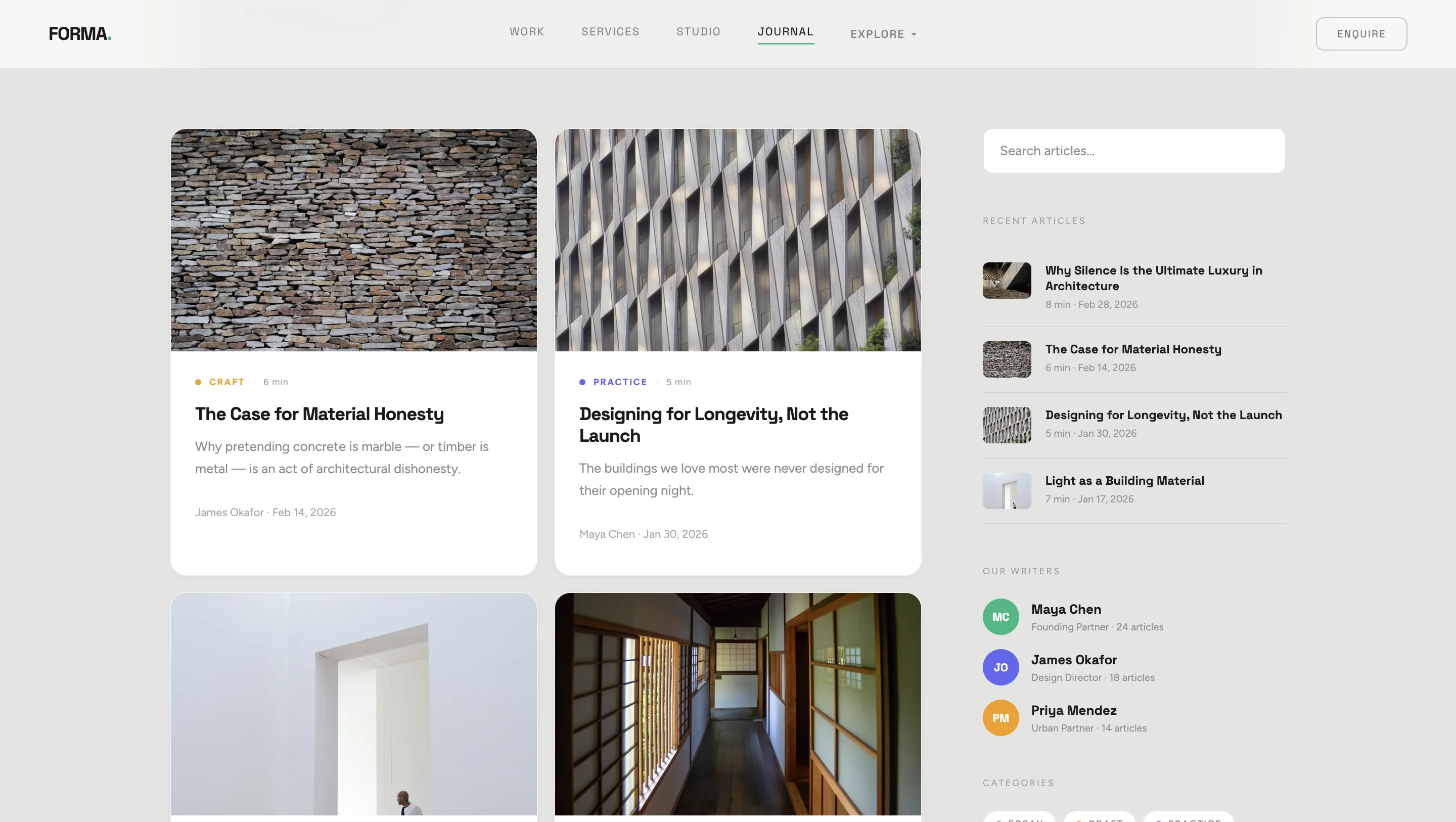
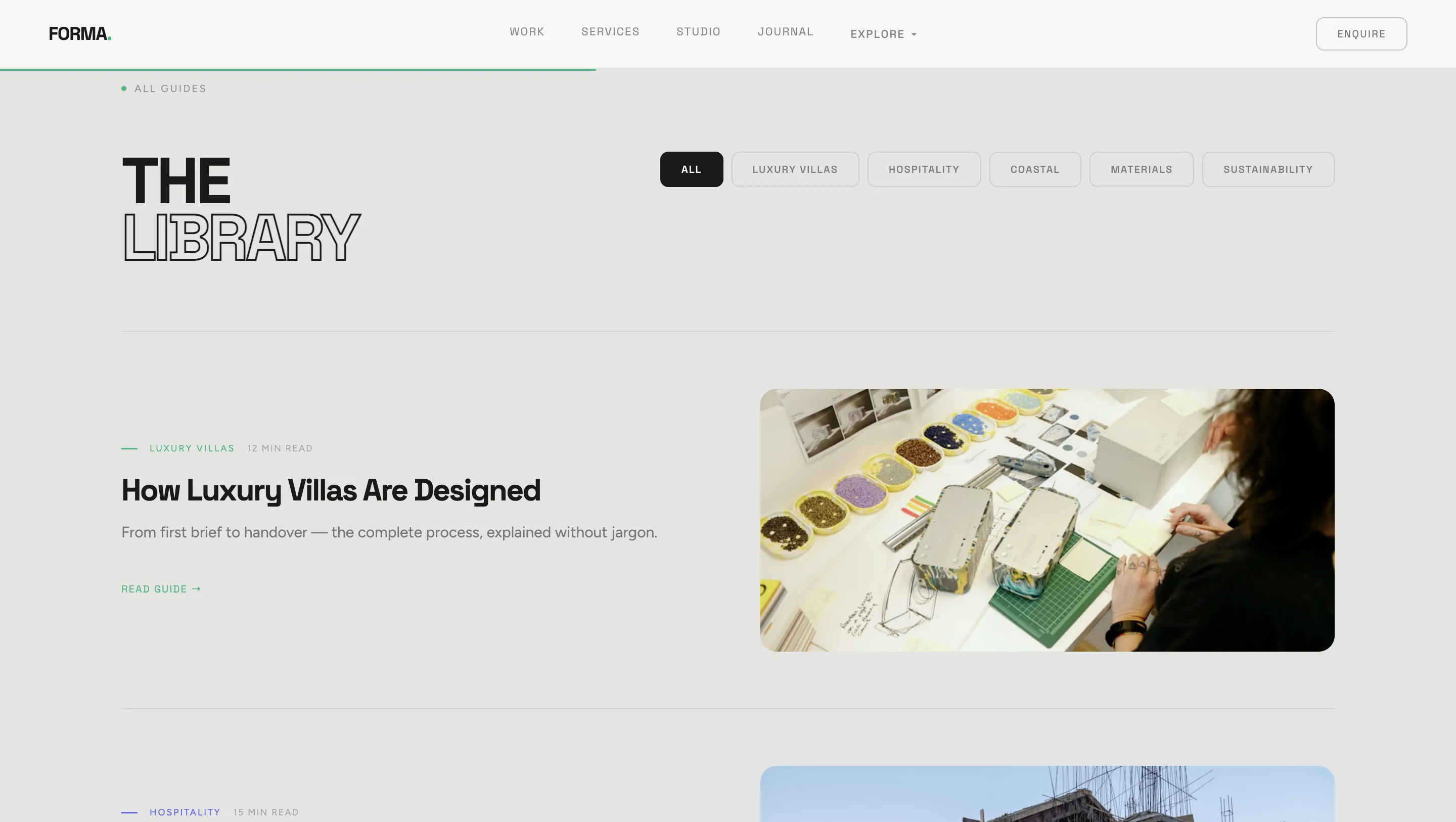
A journal for essays, field notes and studio insights.
Expertise Layer
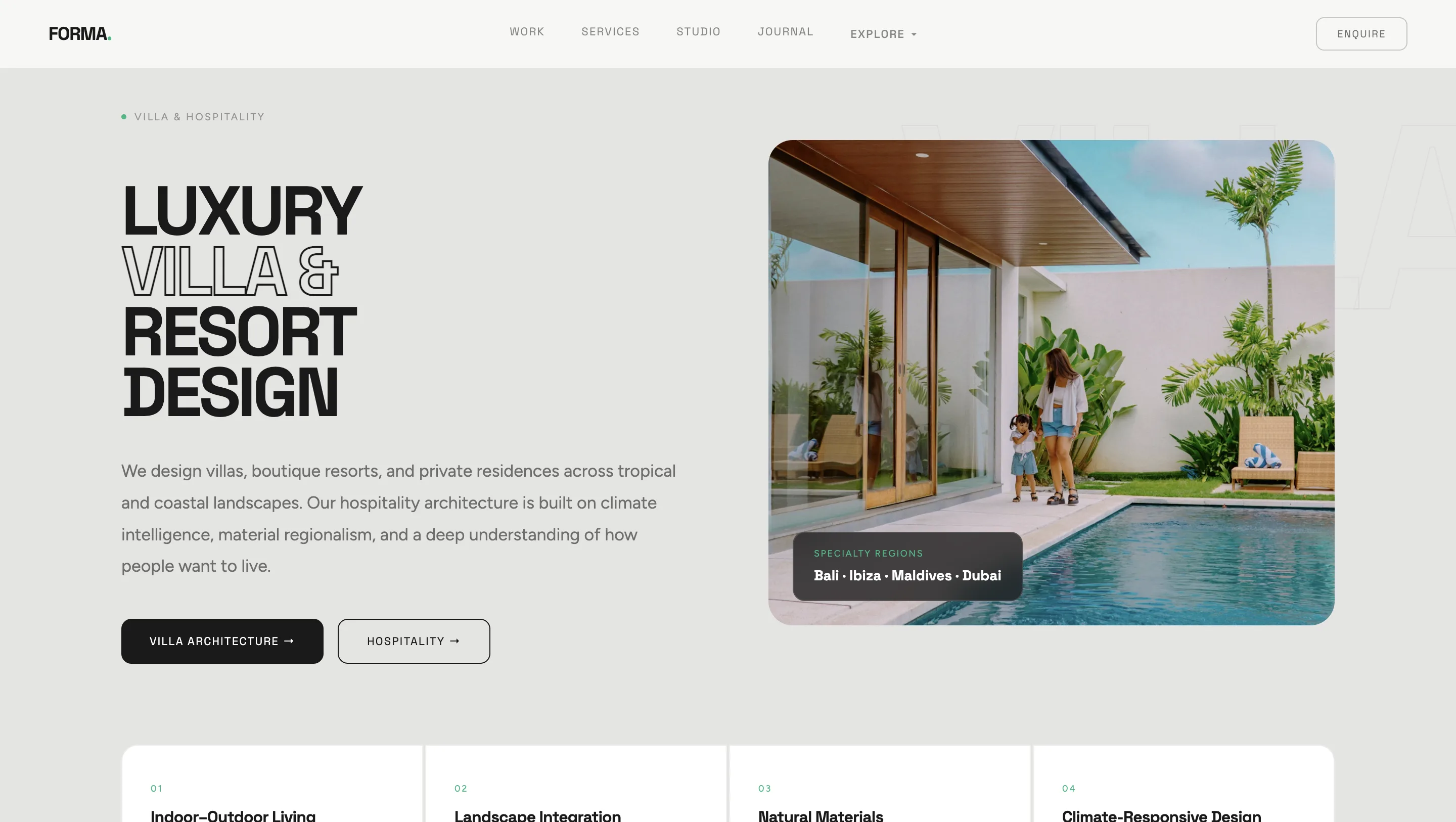
SEO-led pages for topics such as luxury villas, hospitality architecture and tropical design.
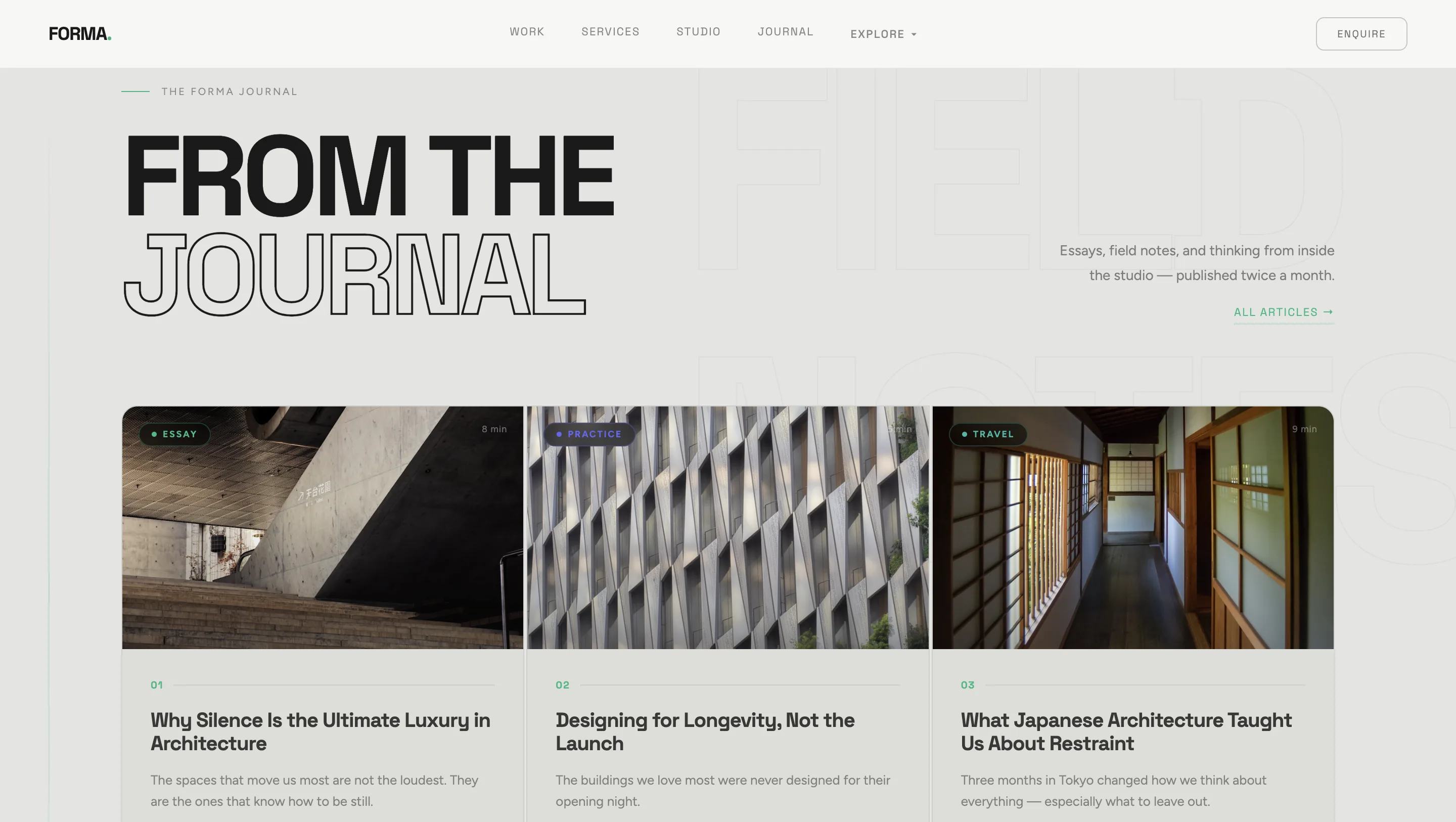
Platform Architecture
The prototype was assembled with Next.js and TypeScript, using modular components and a scalable editorial architecture pattern.
- Component-based UI architecture
- Centralized design tokens system
- Dynamic content routing for projects and articles
- Scalable SEO page structure
- Performance-optimized media loading
The study materialises as an approximately 20-route reference structure combining portfolio navigation, editorial publishing and specialised landing pages.
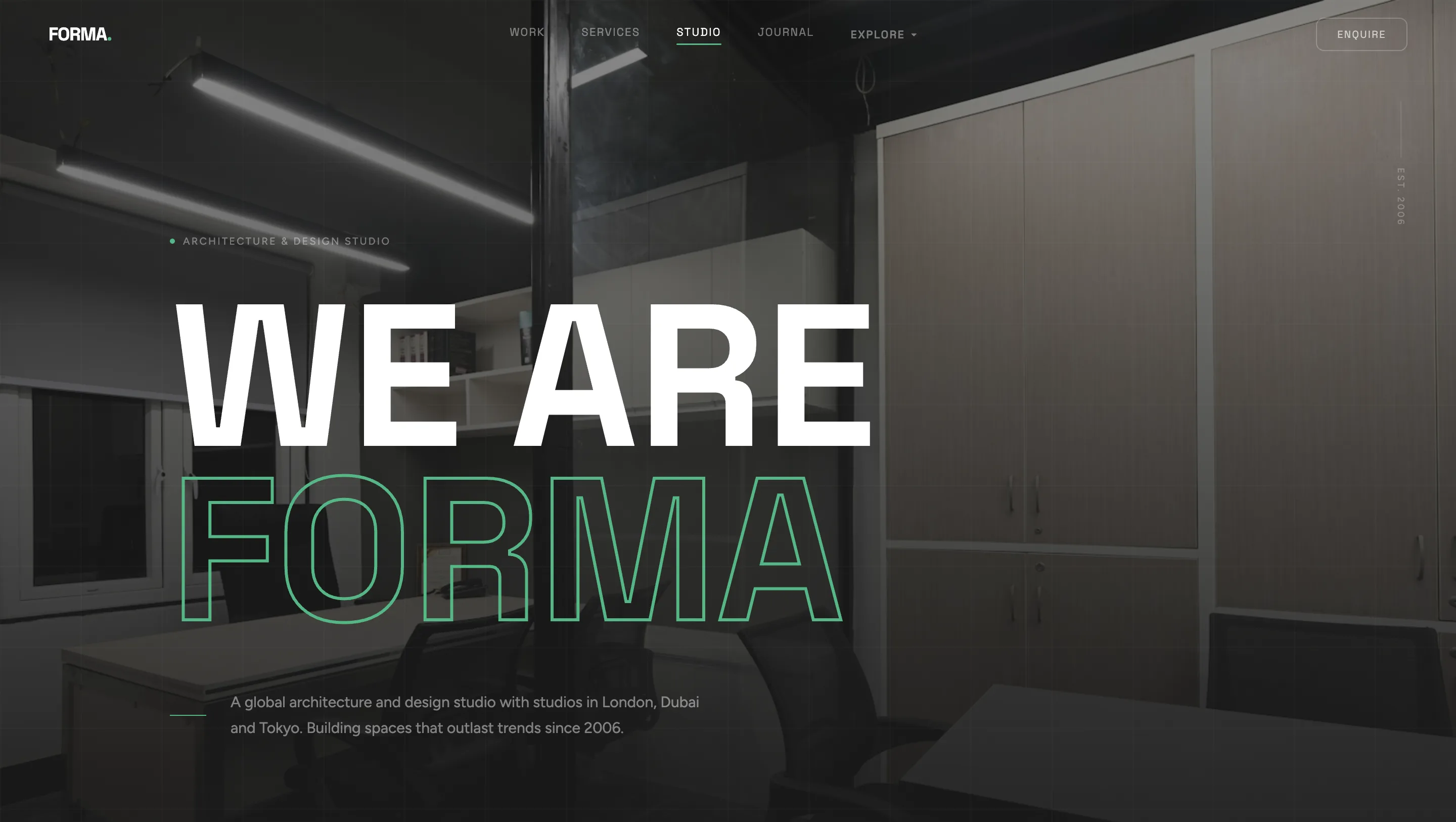
Information Architecture
The site structure was sketched to support both discovery and storytelling in parallel.
Core Pages
- Home
- Work
- All Projects
- Services
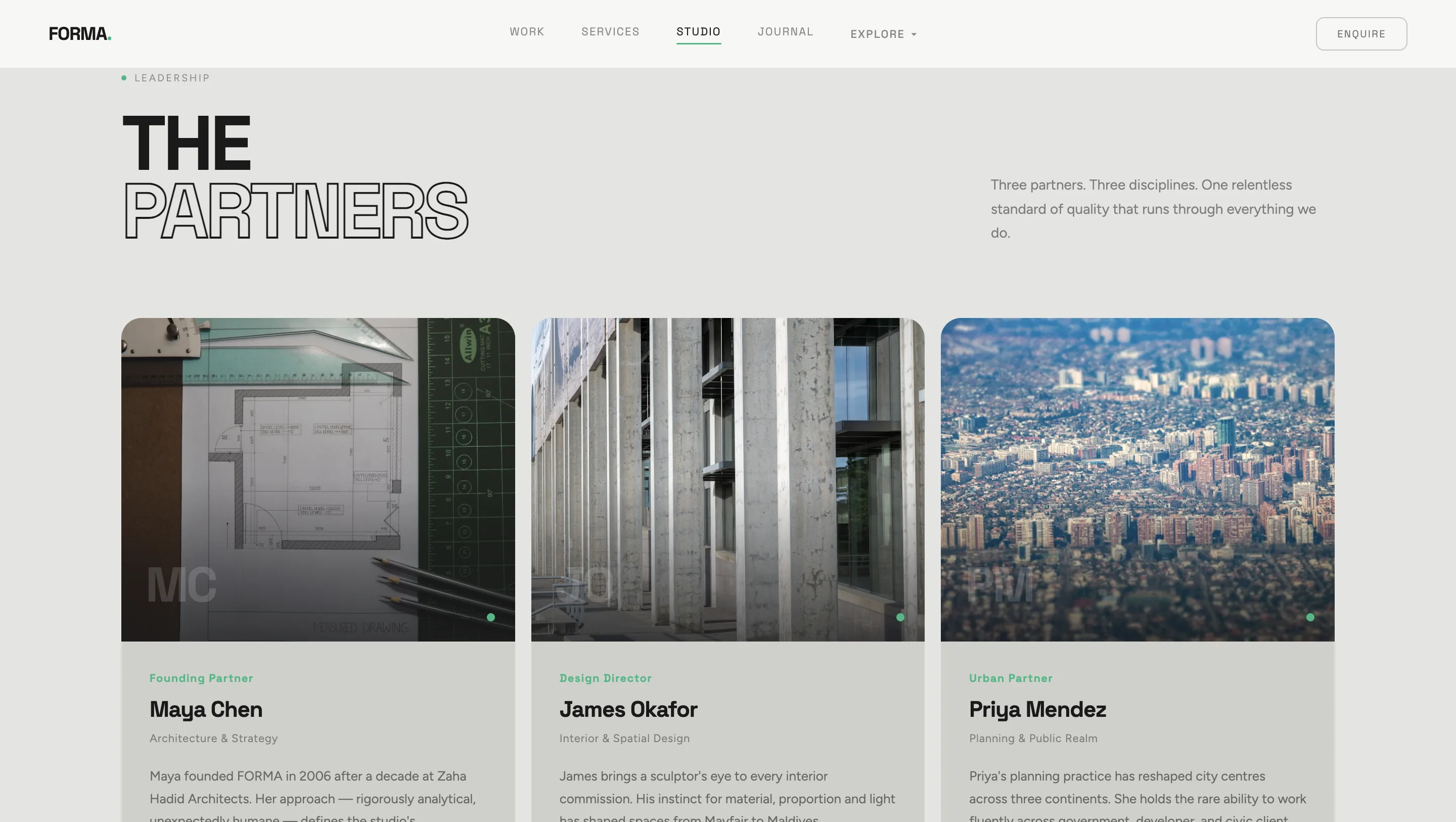
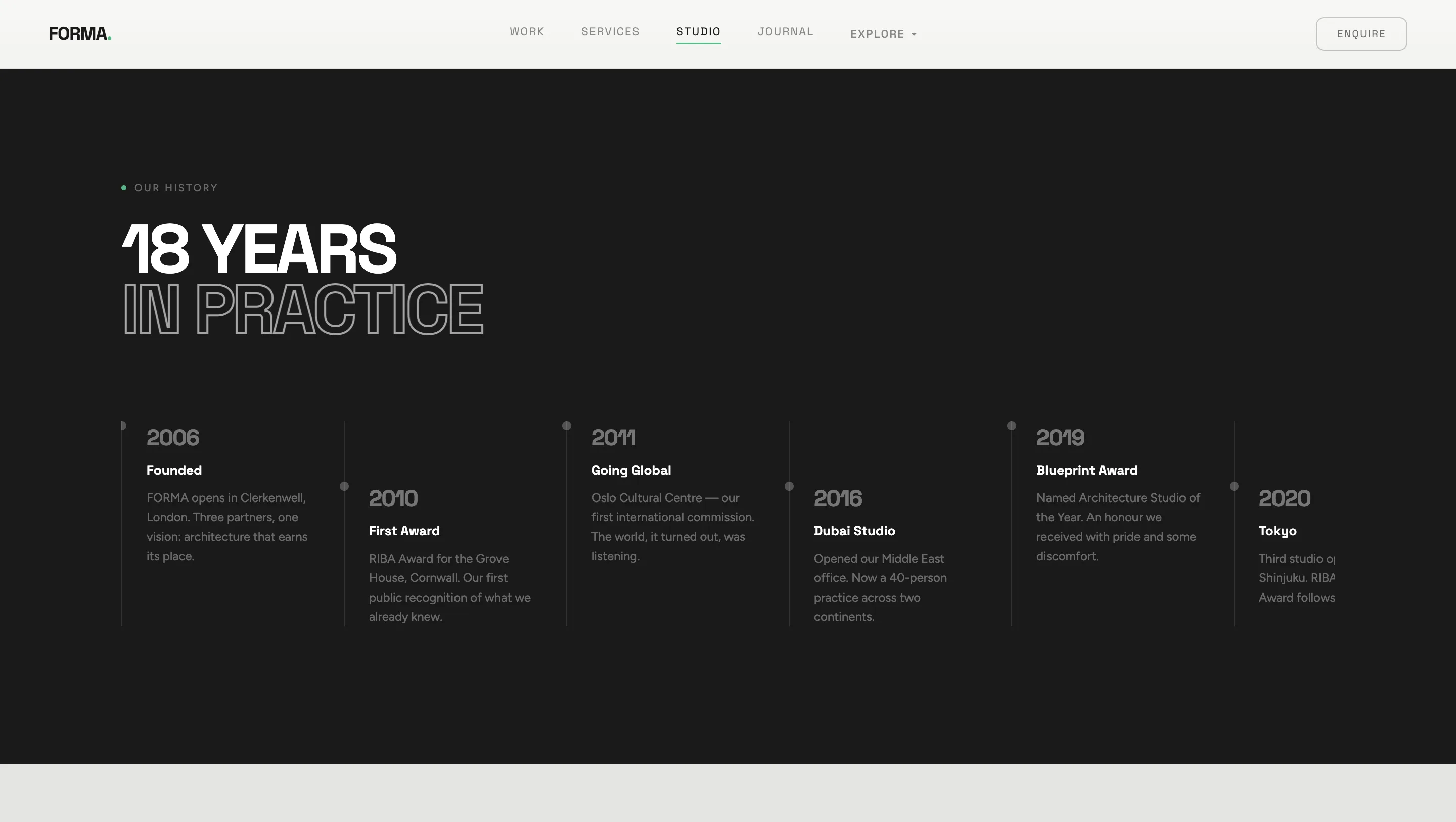
- Studio
- Contact
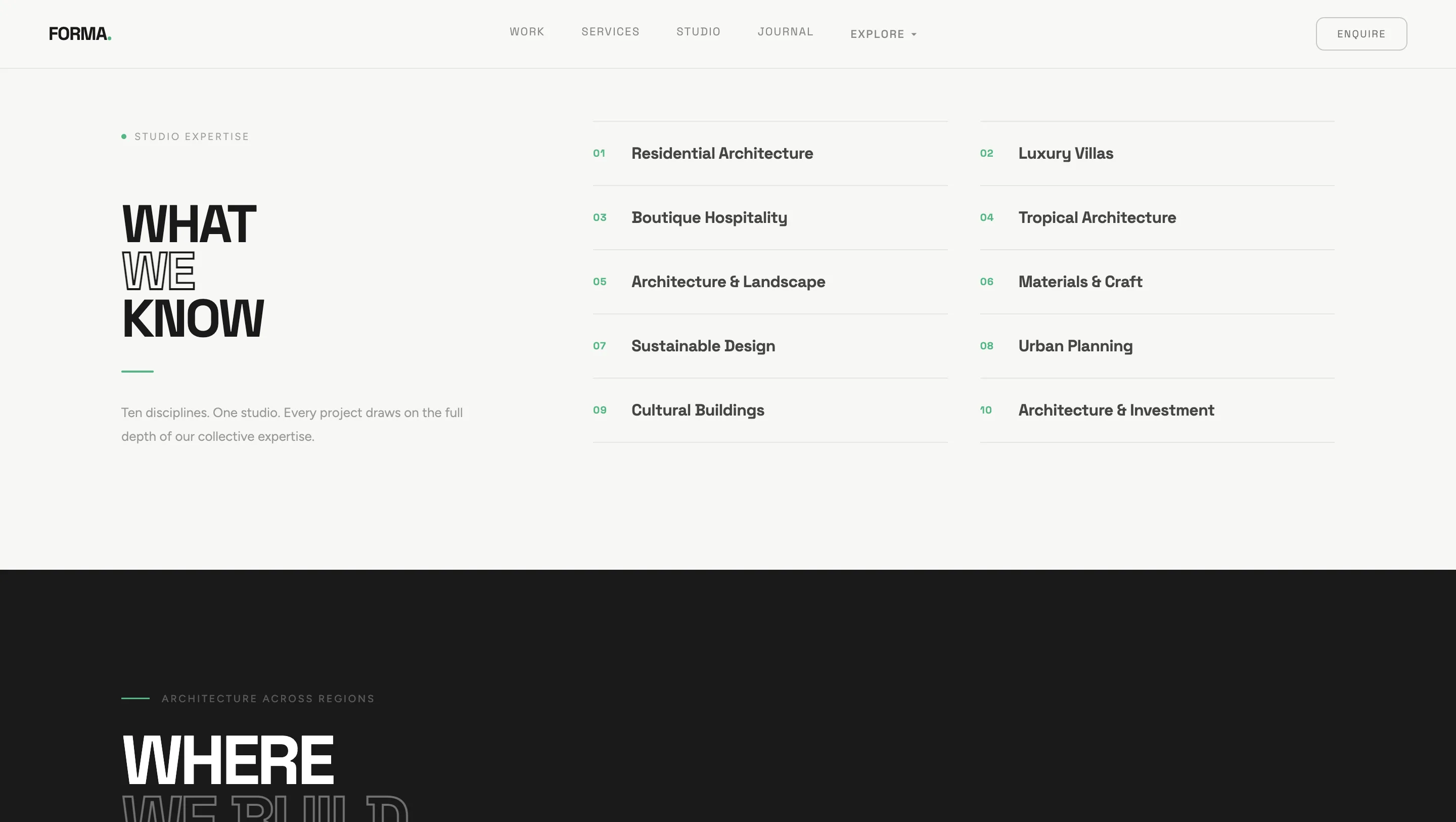
SEO Expertise Pages
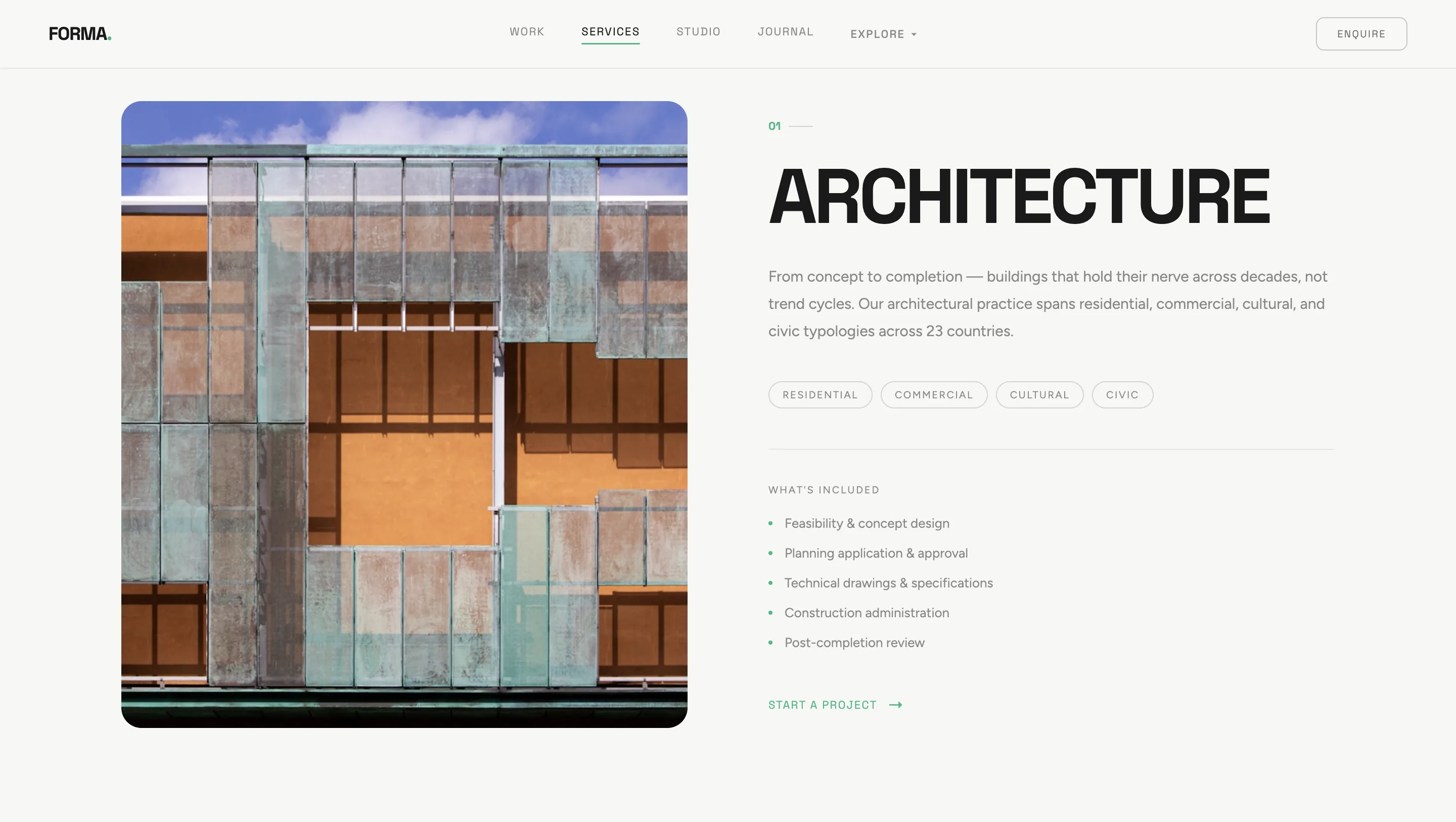
- Architecture
- Luxury Villas
- Hospitality Architecture
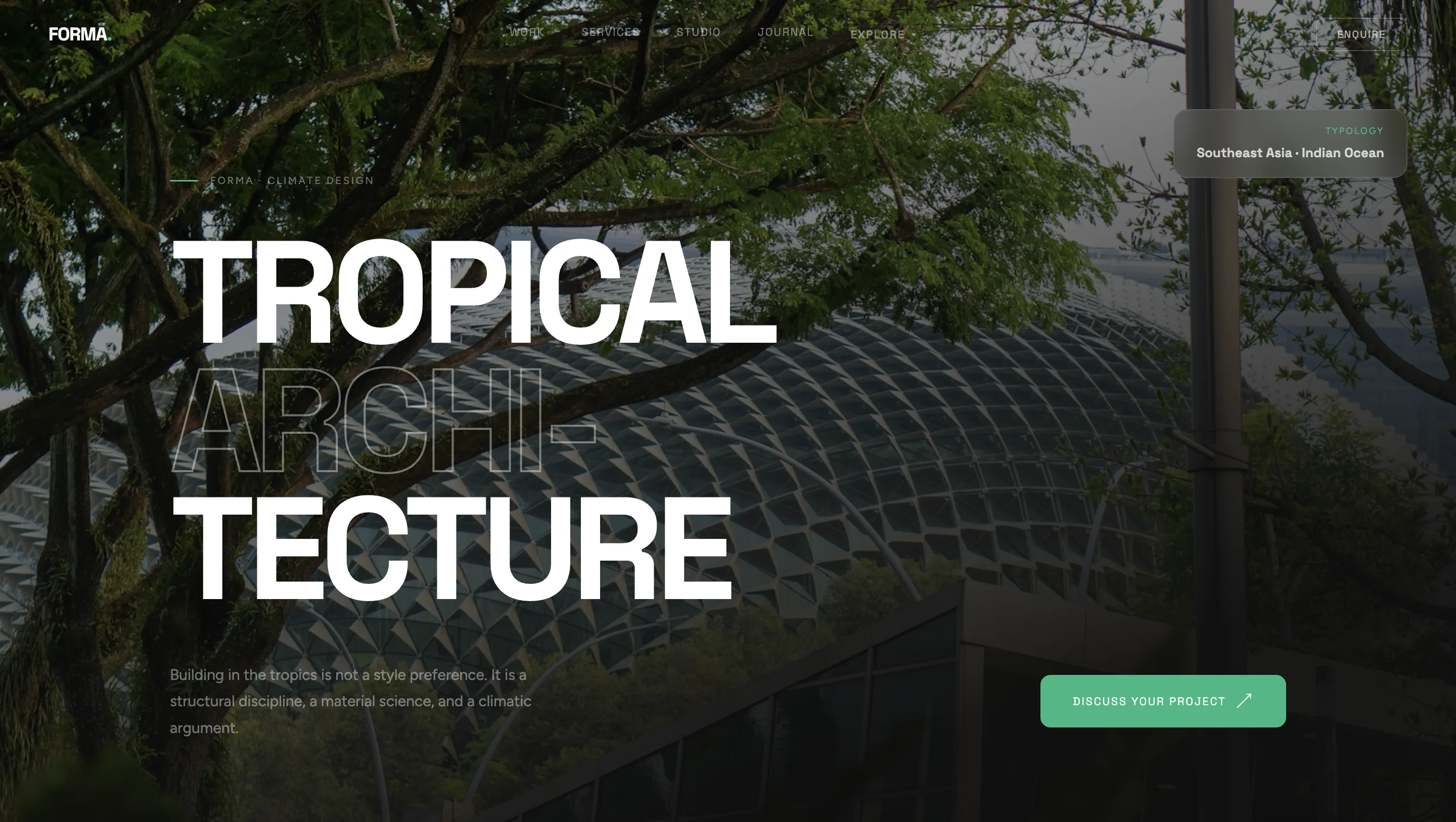
- Tropical Architecture
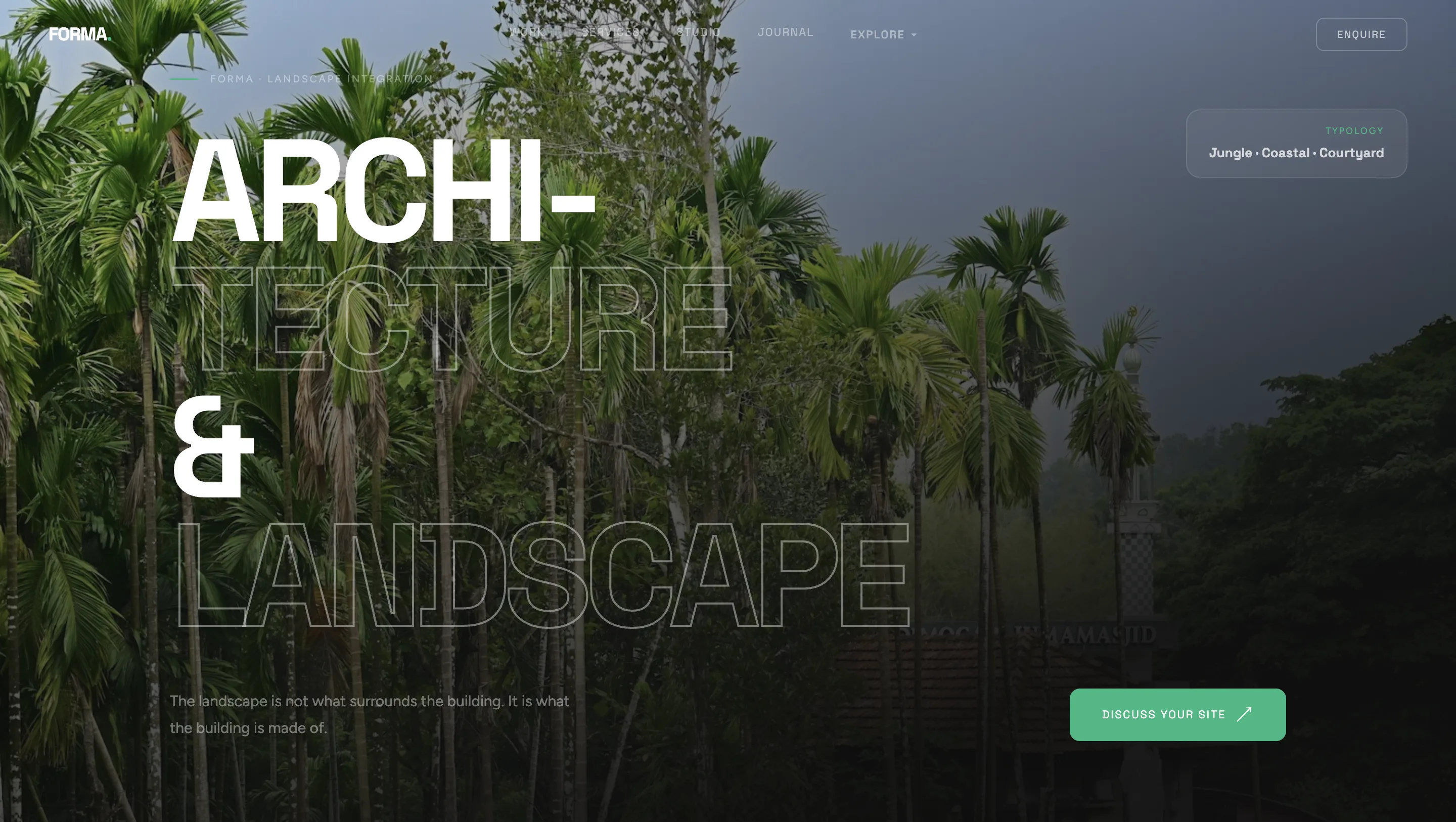
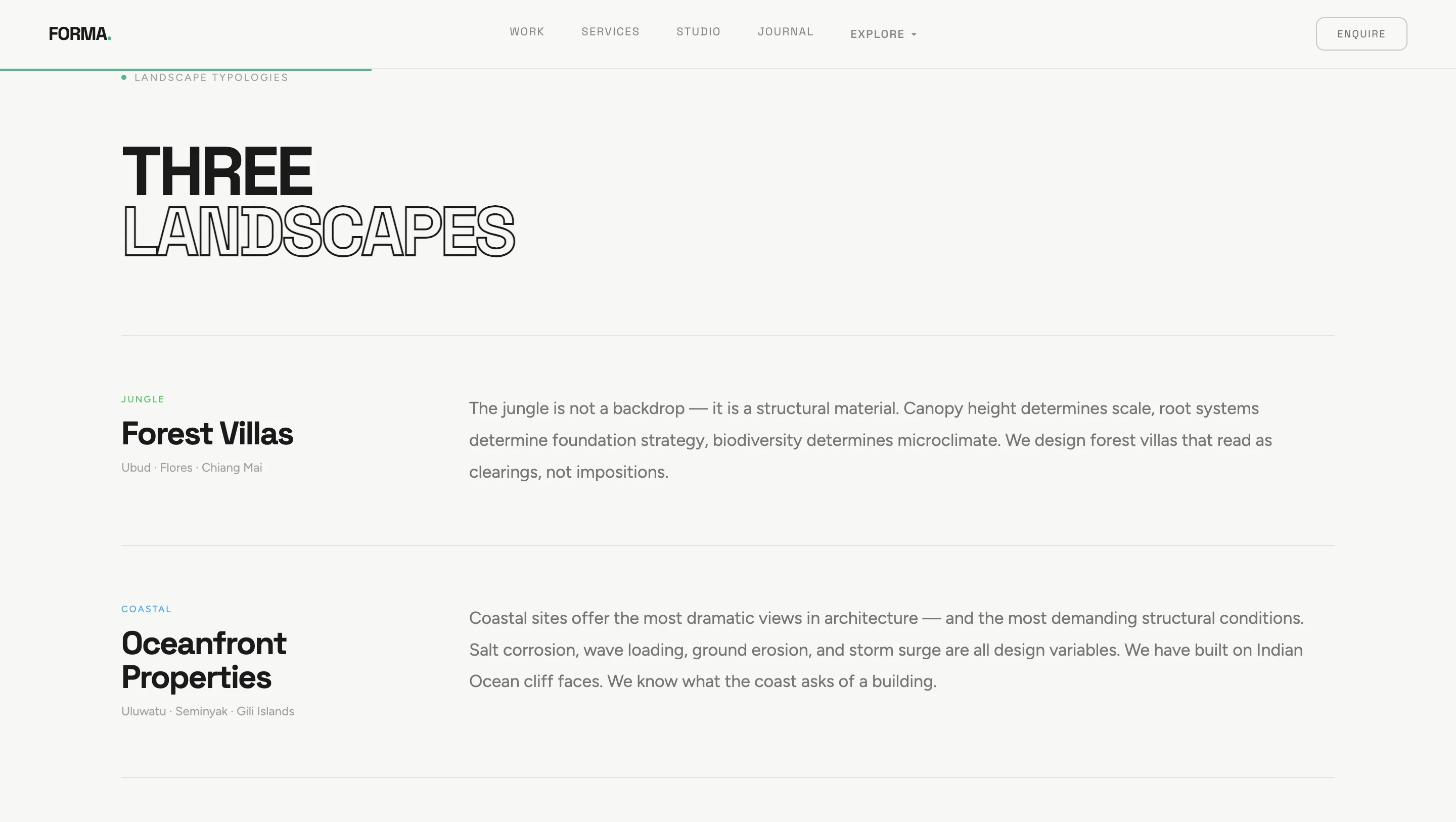
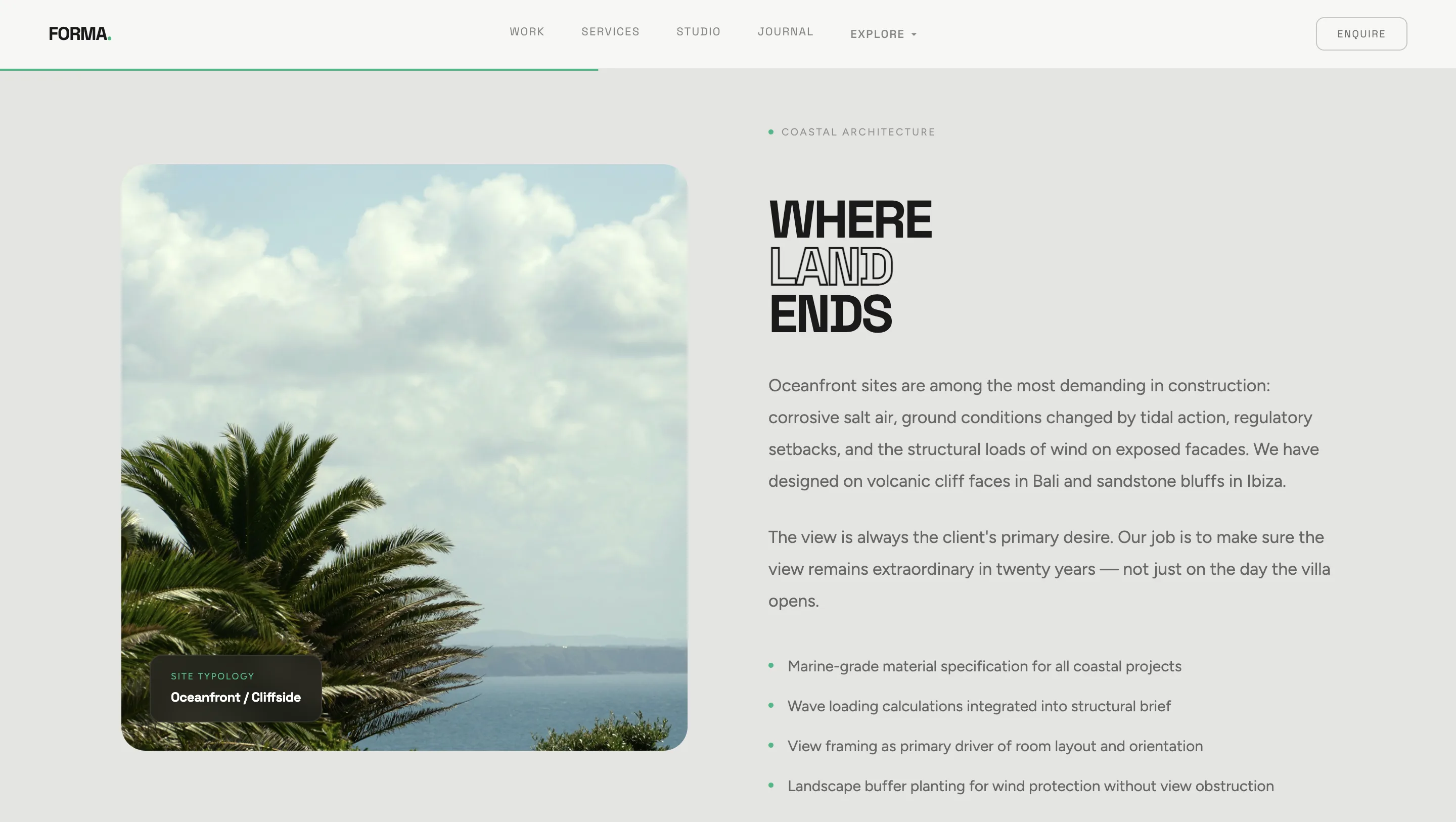
- Landscape Design
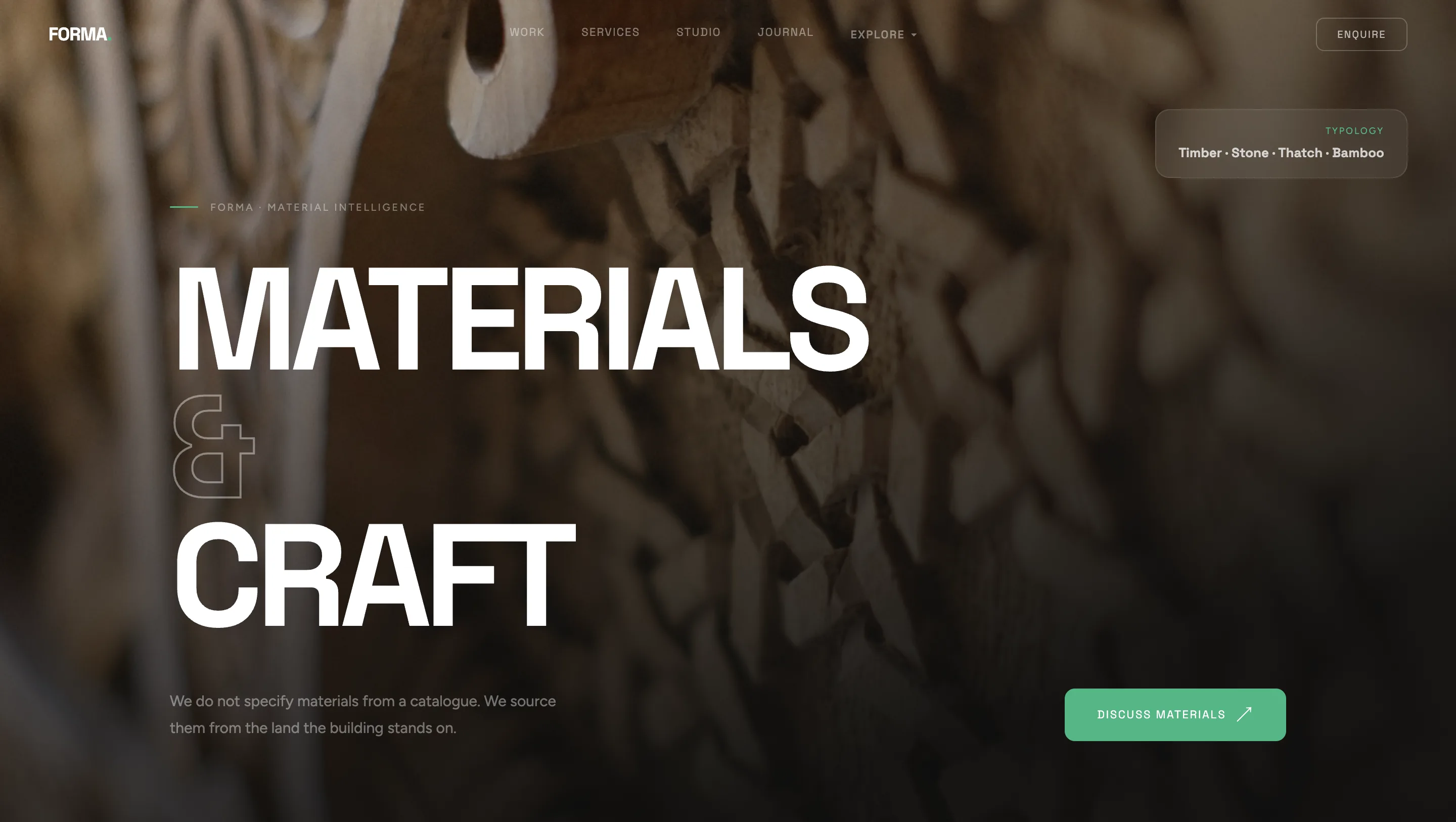
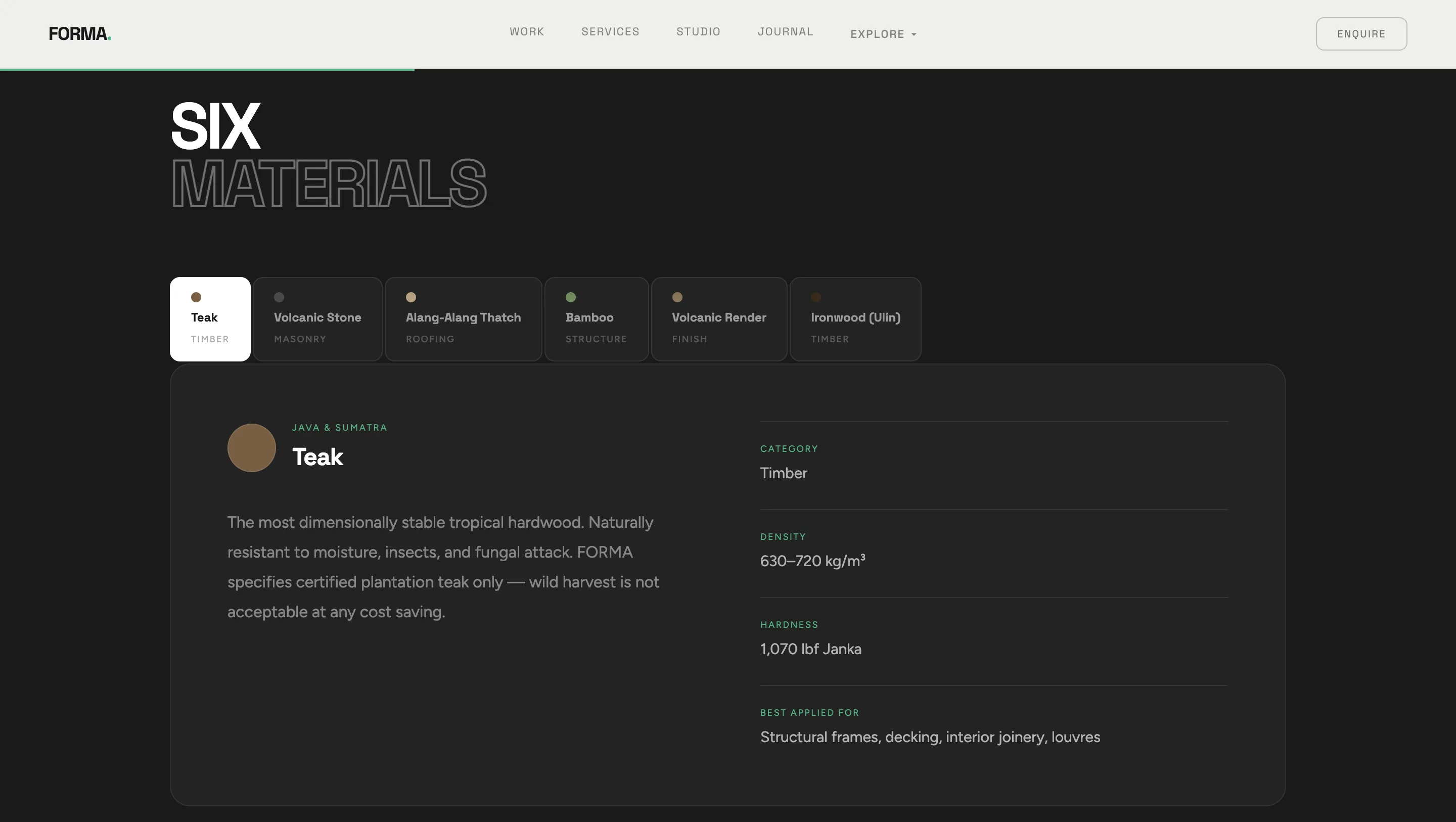
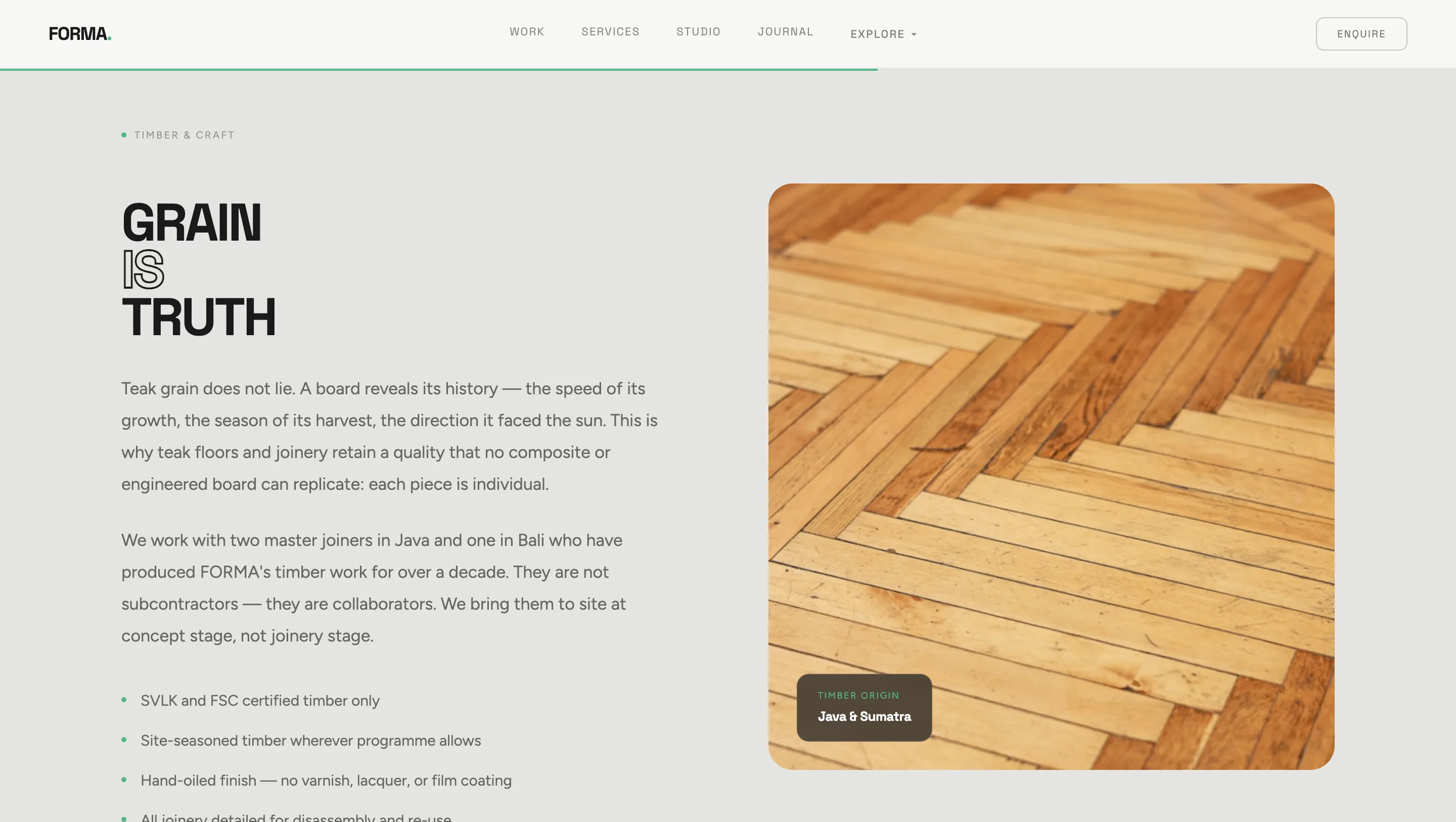
- Materials & Craft
- Sustainability
- Interiors
- Urban Planning
- Architecture & Investment
Reference Editorial-Publishing Architecture
- Blog / Journal
- Case Studies
- Guides
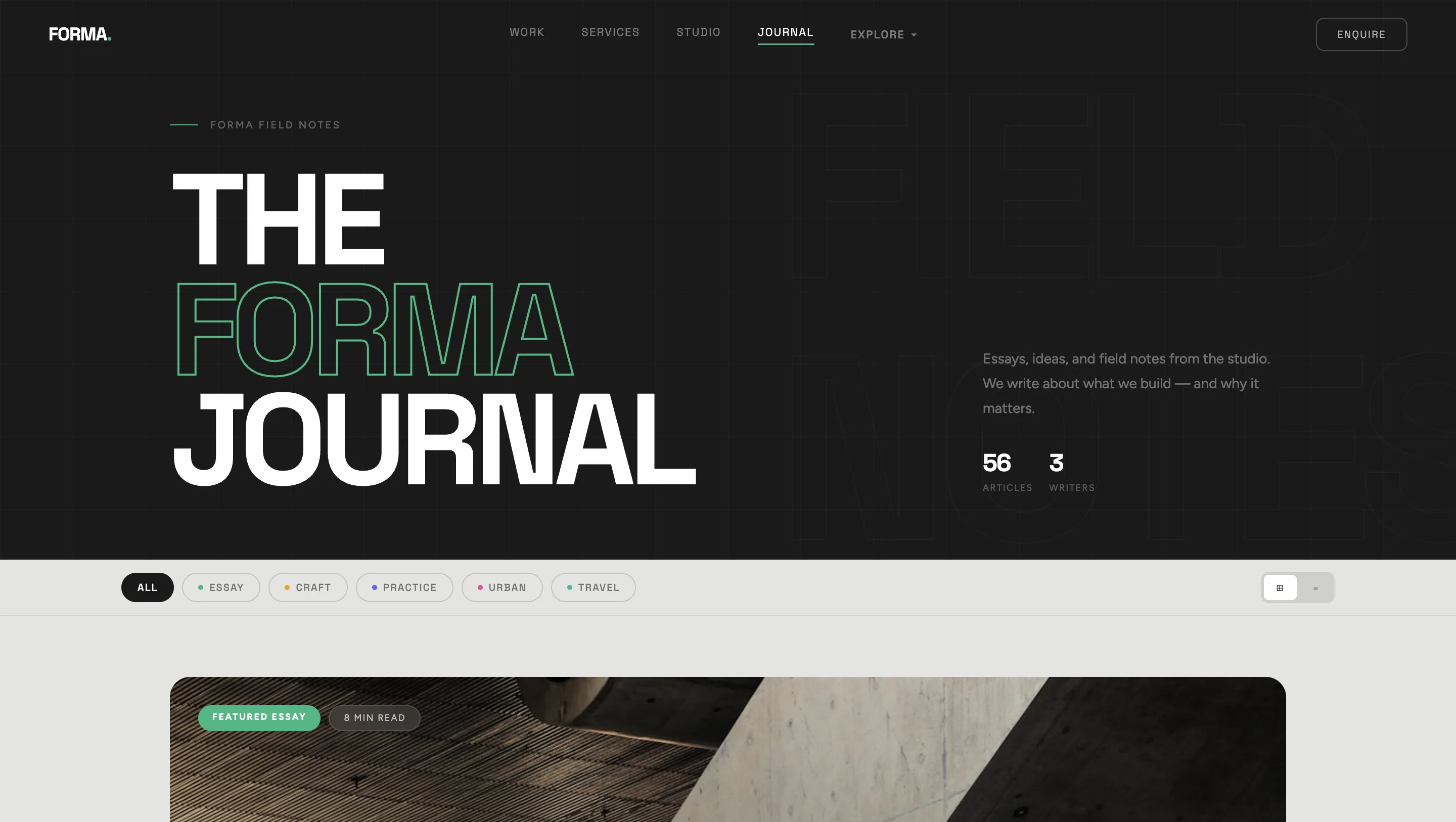
Design Approach
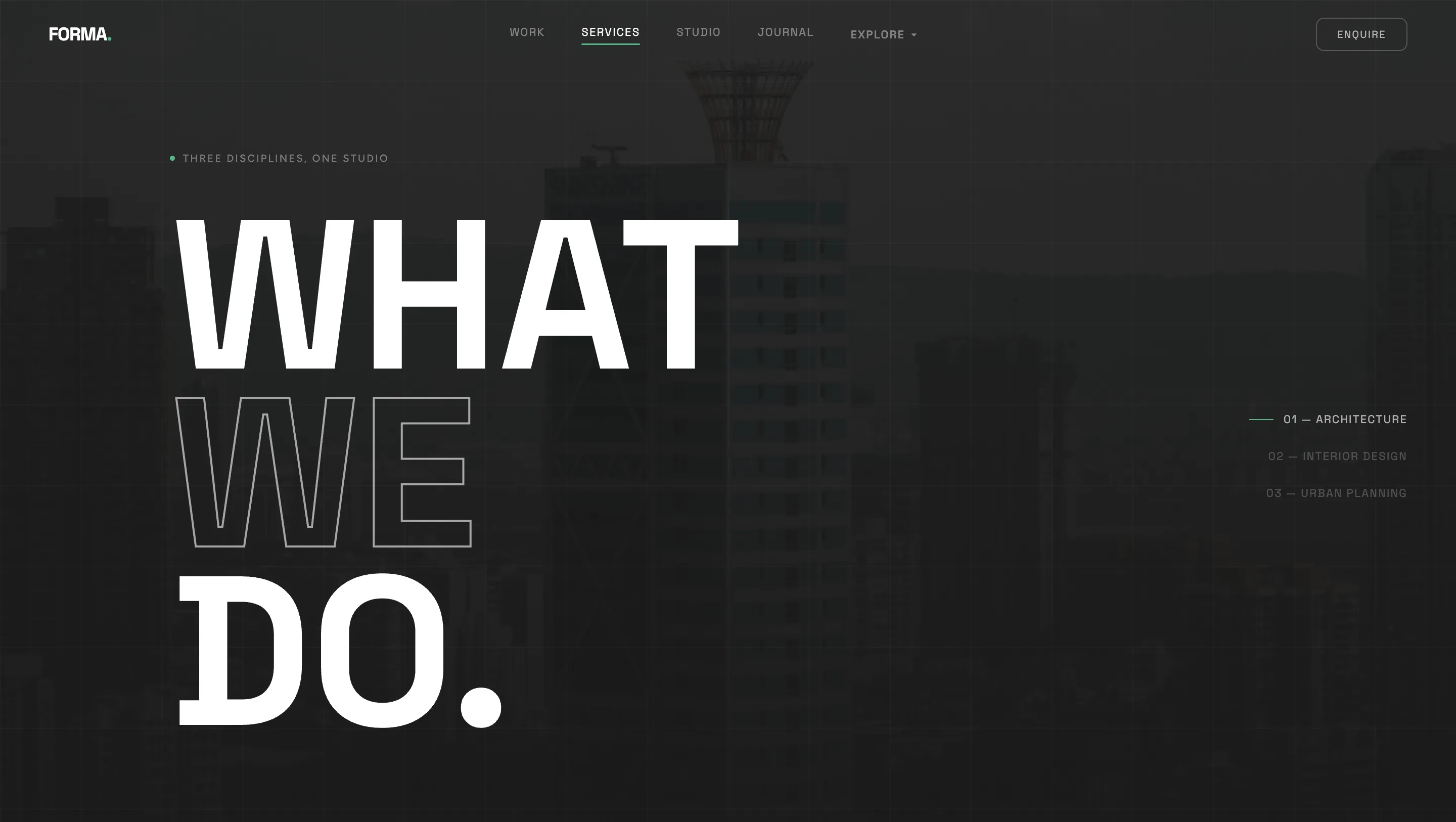
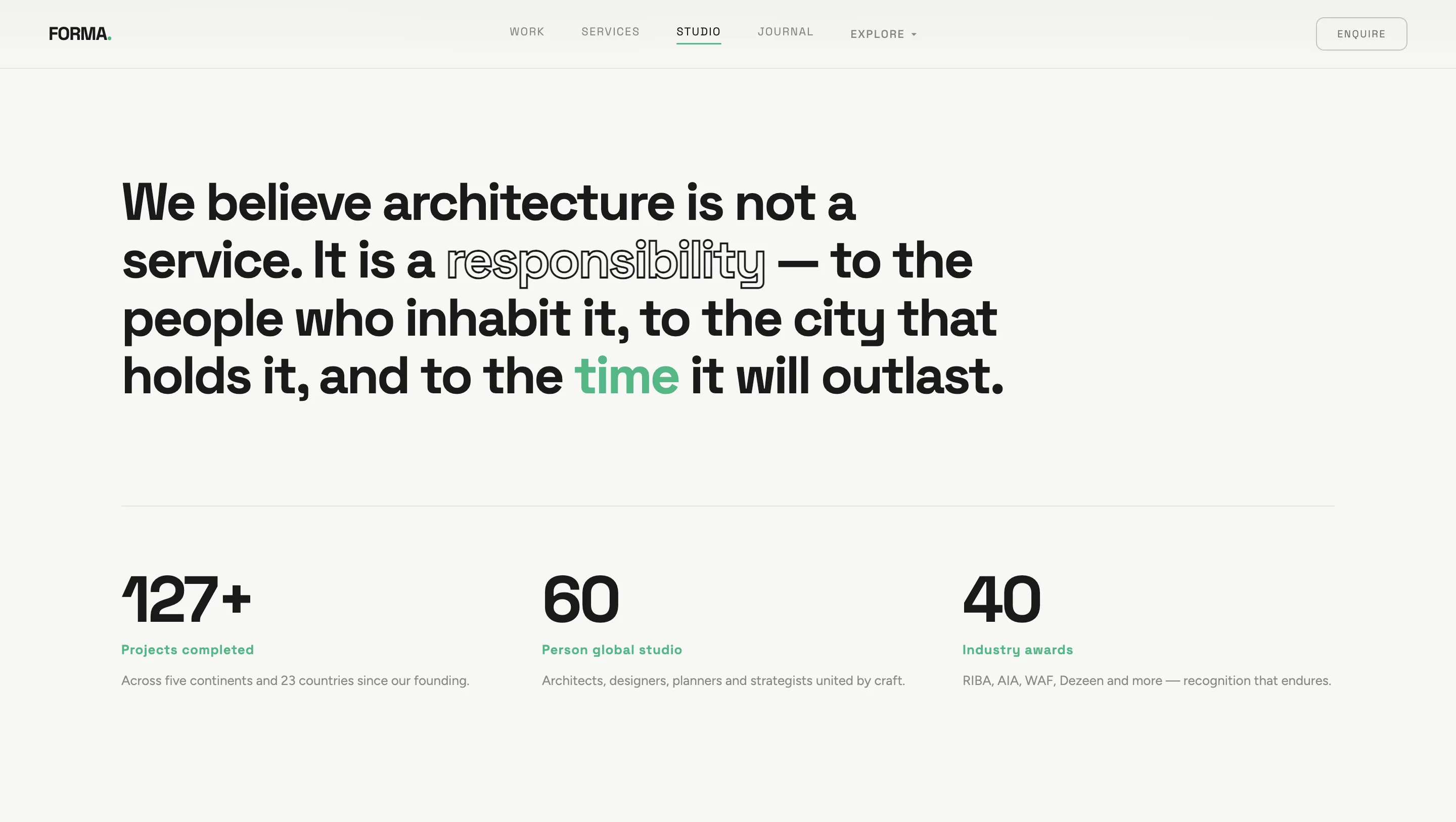
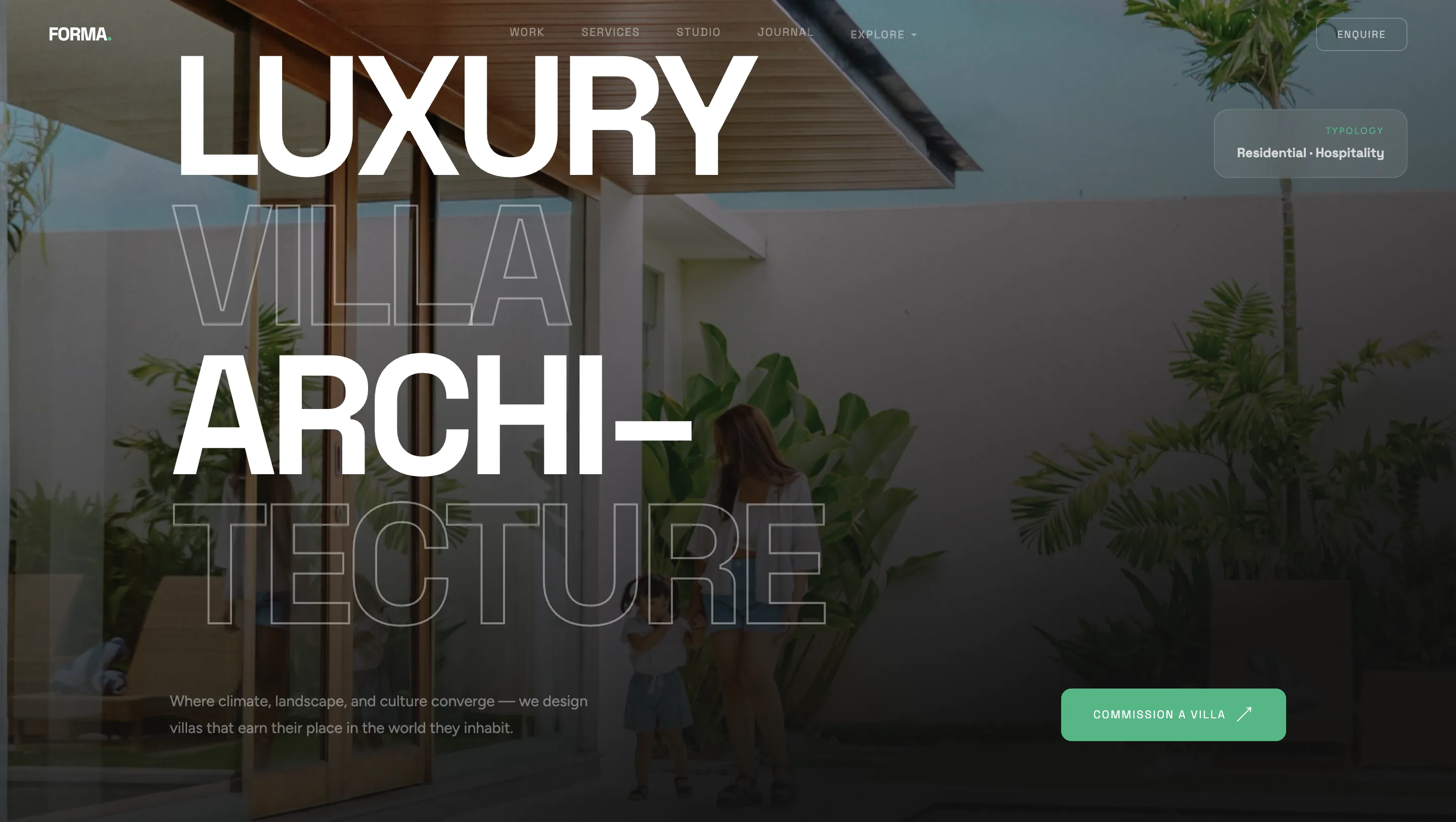
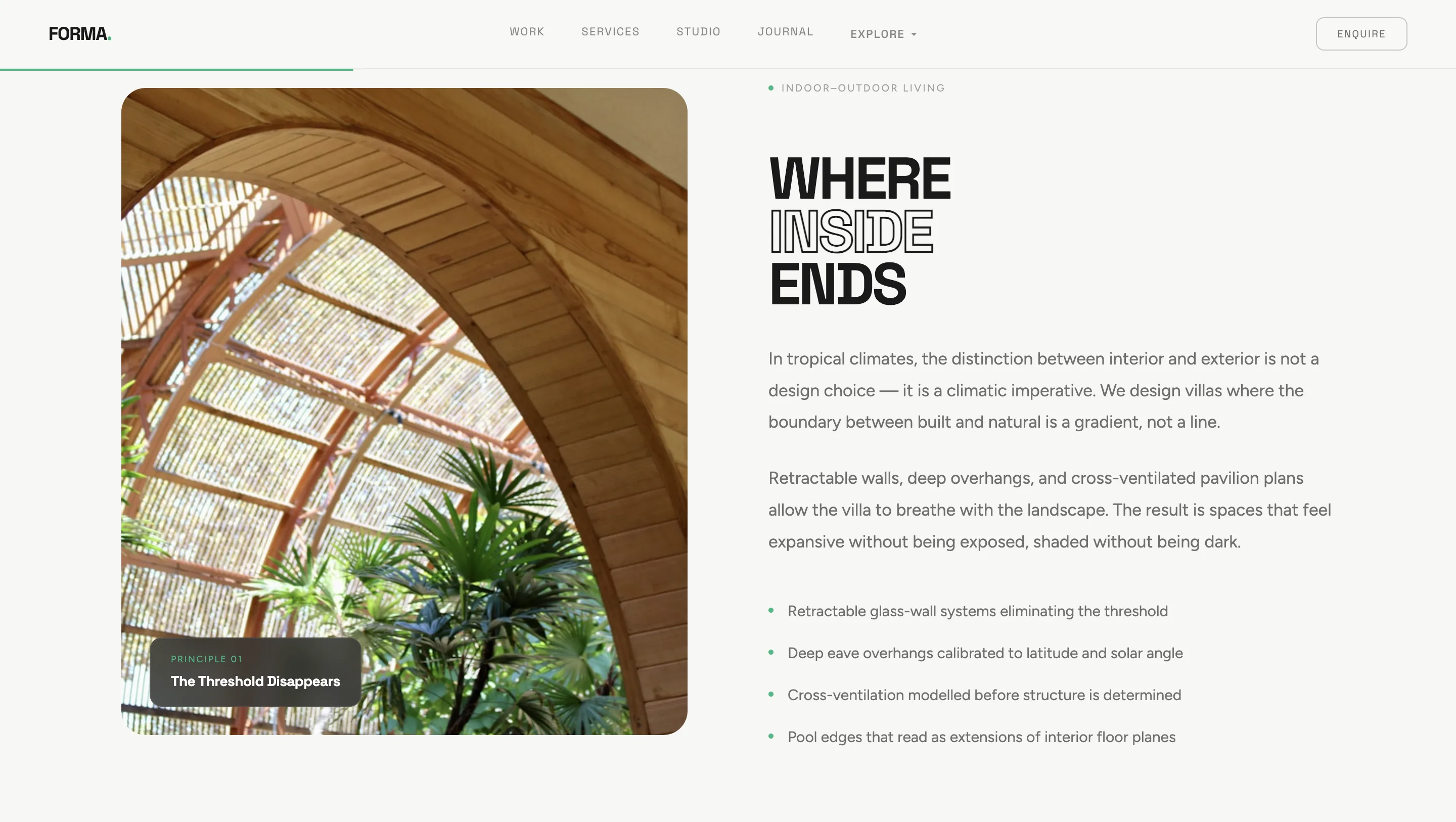
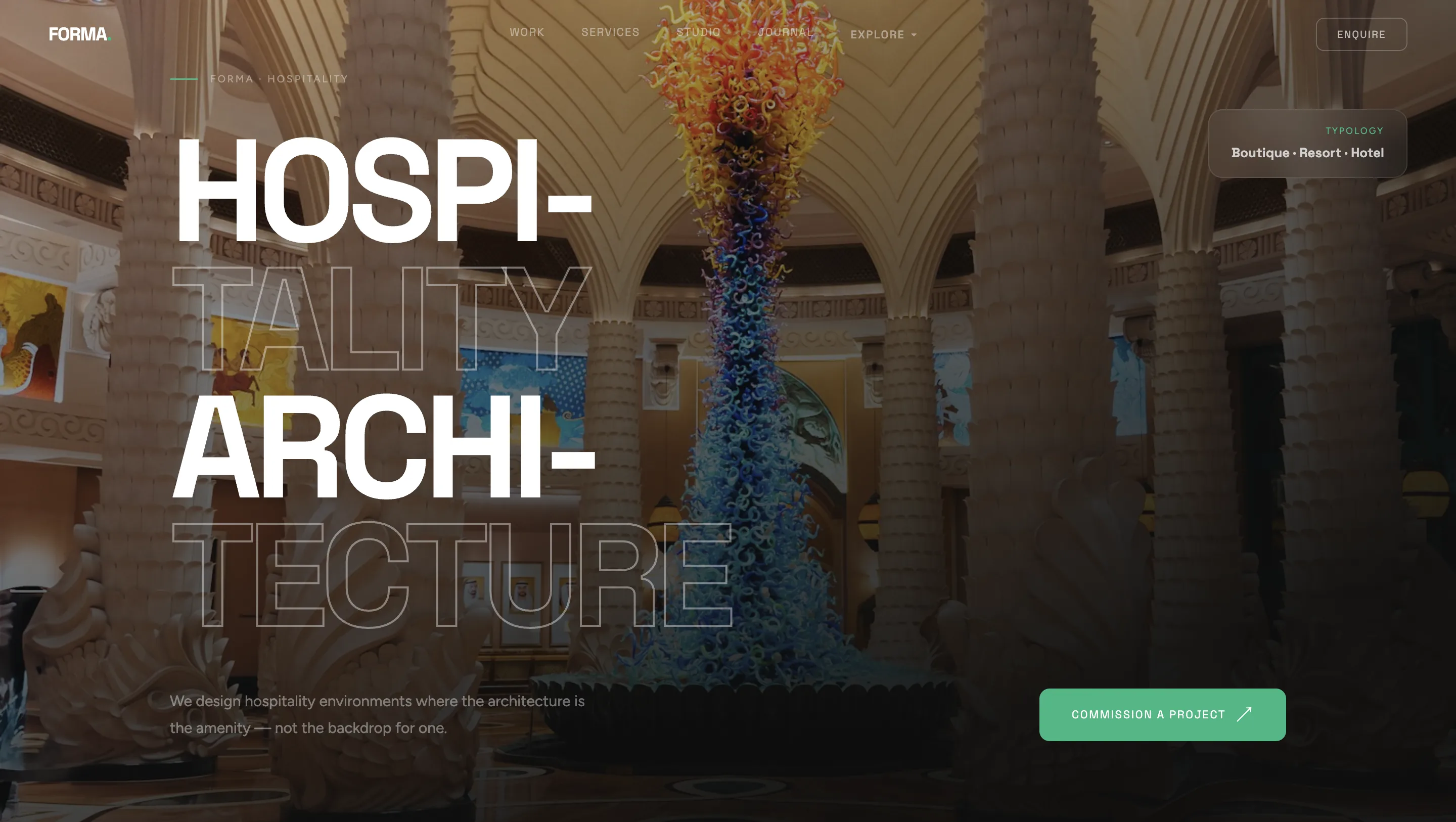
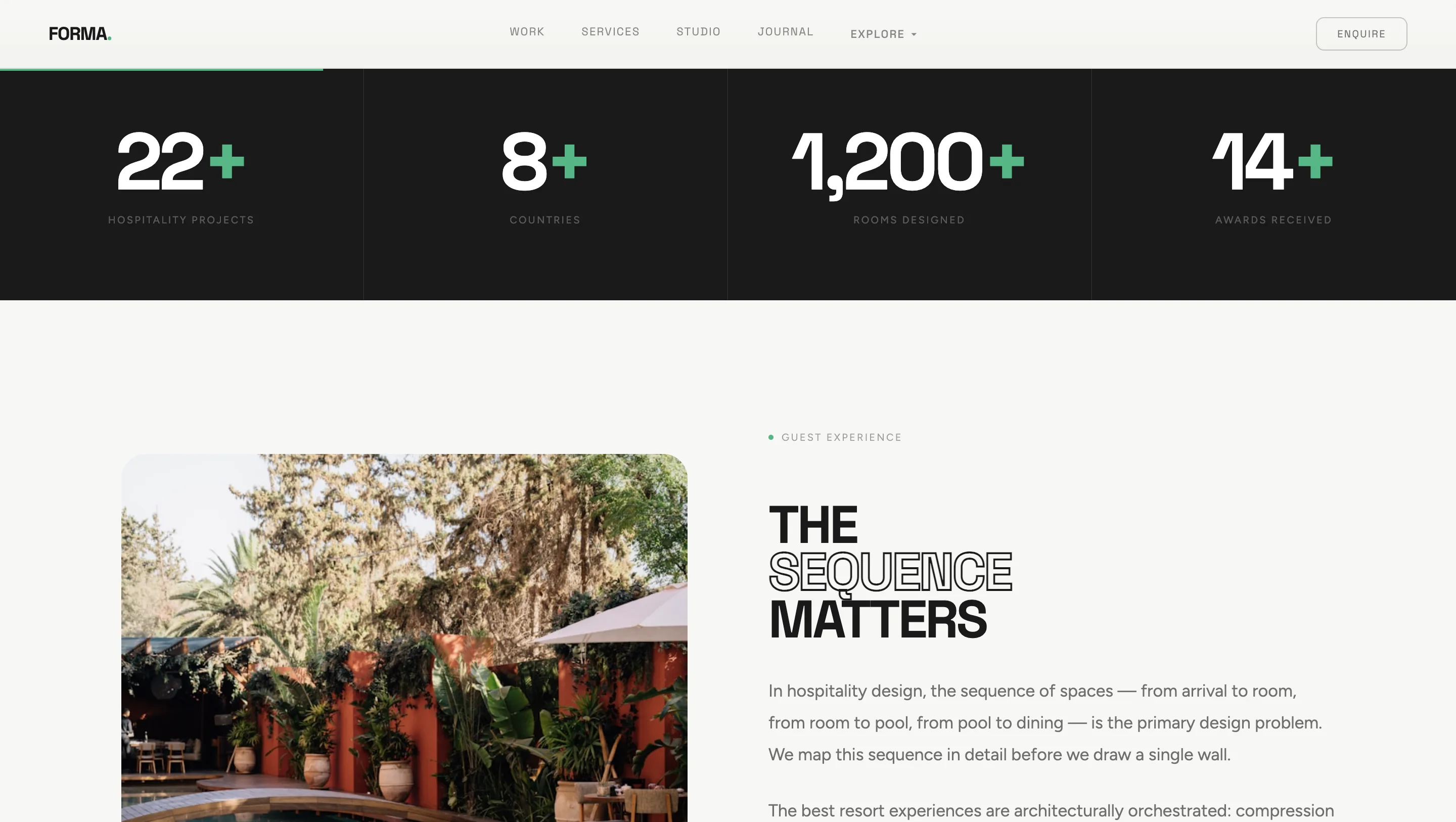
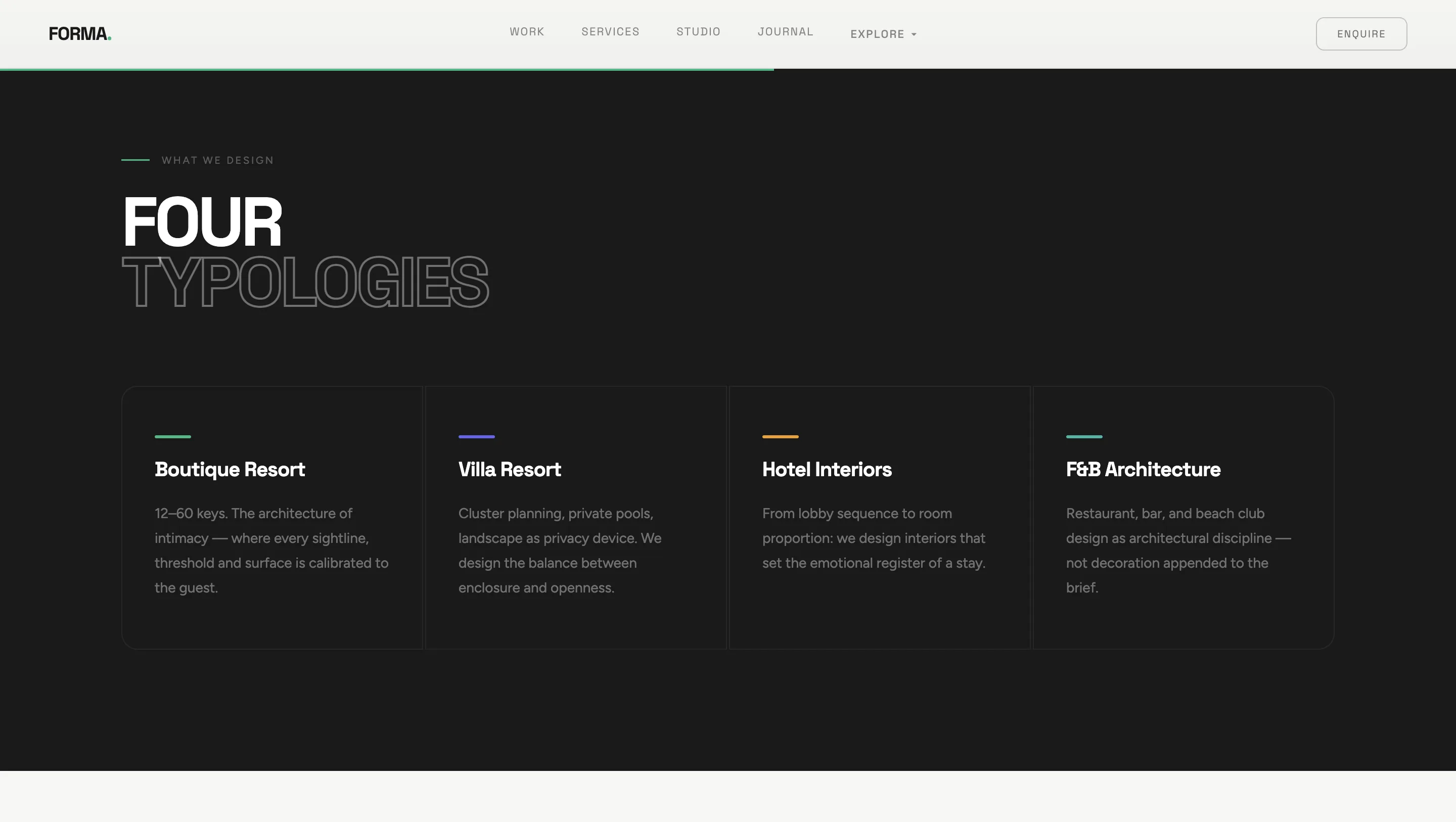
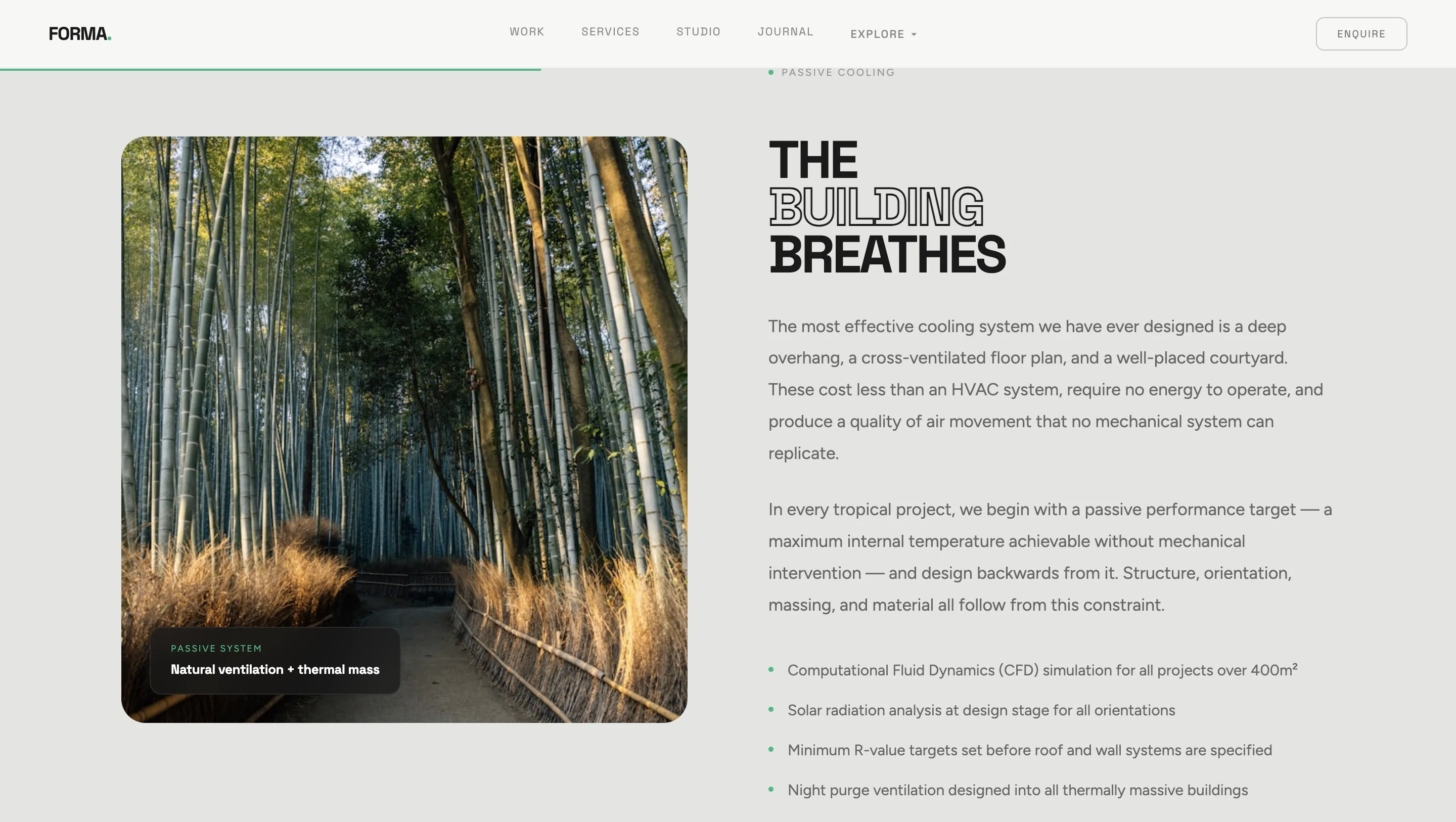
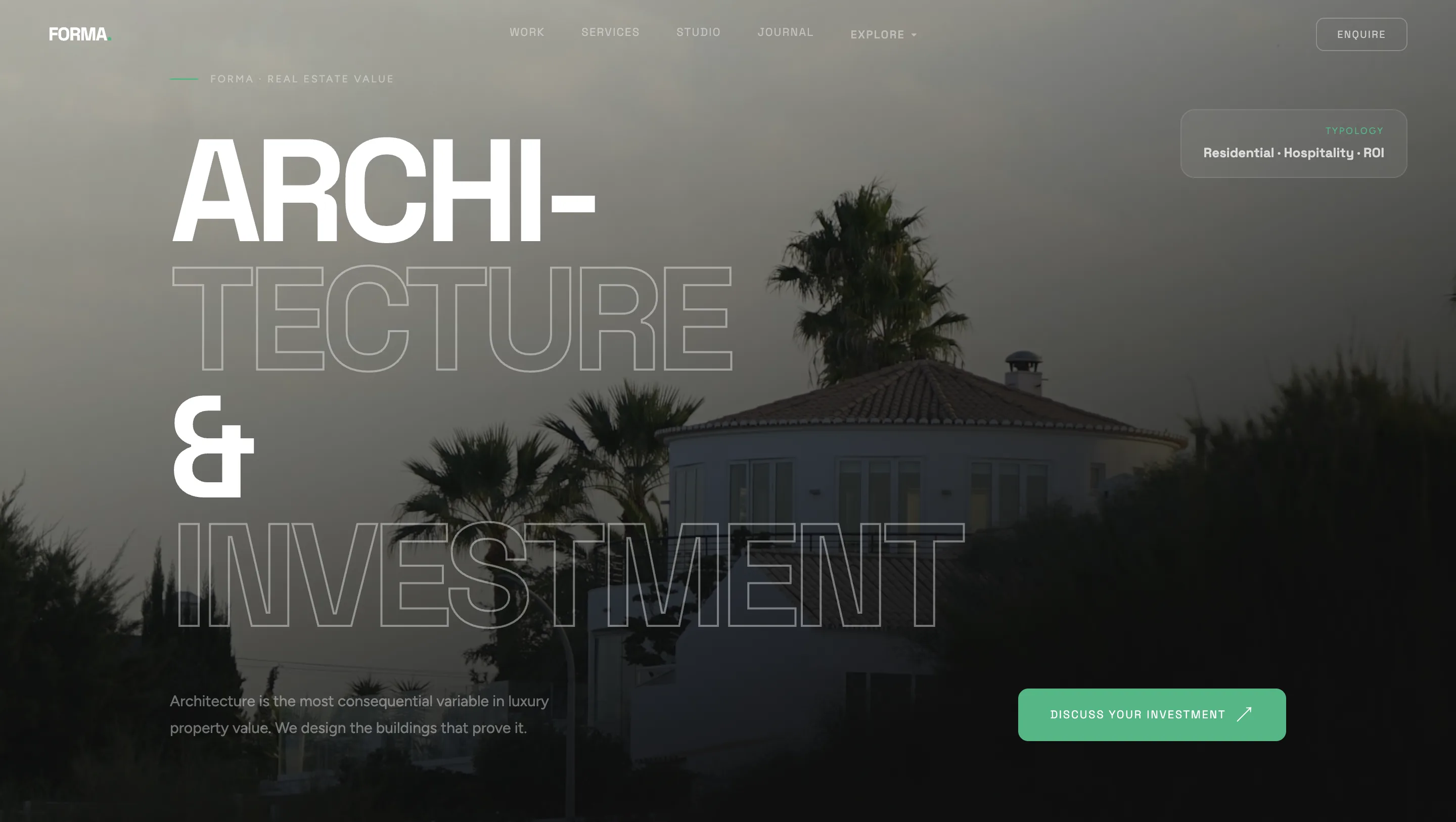
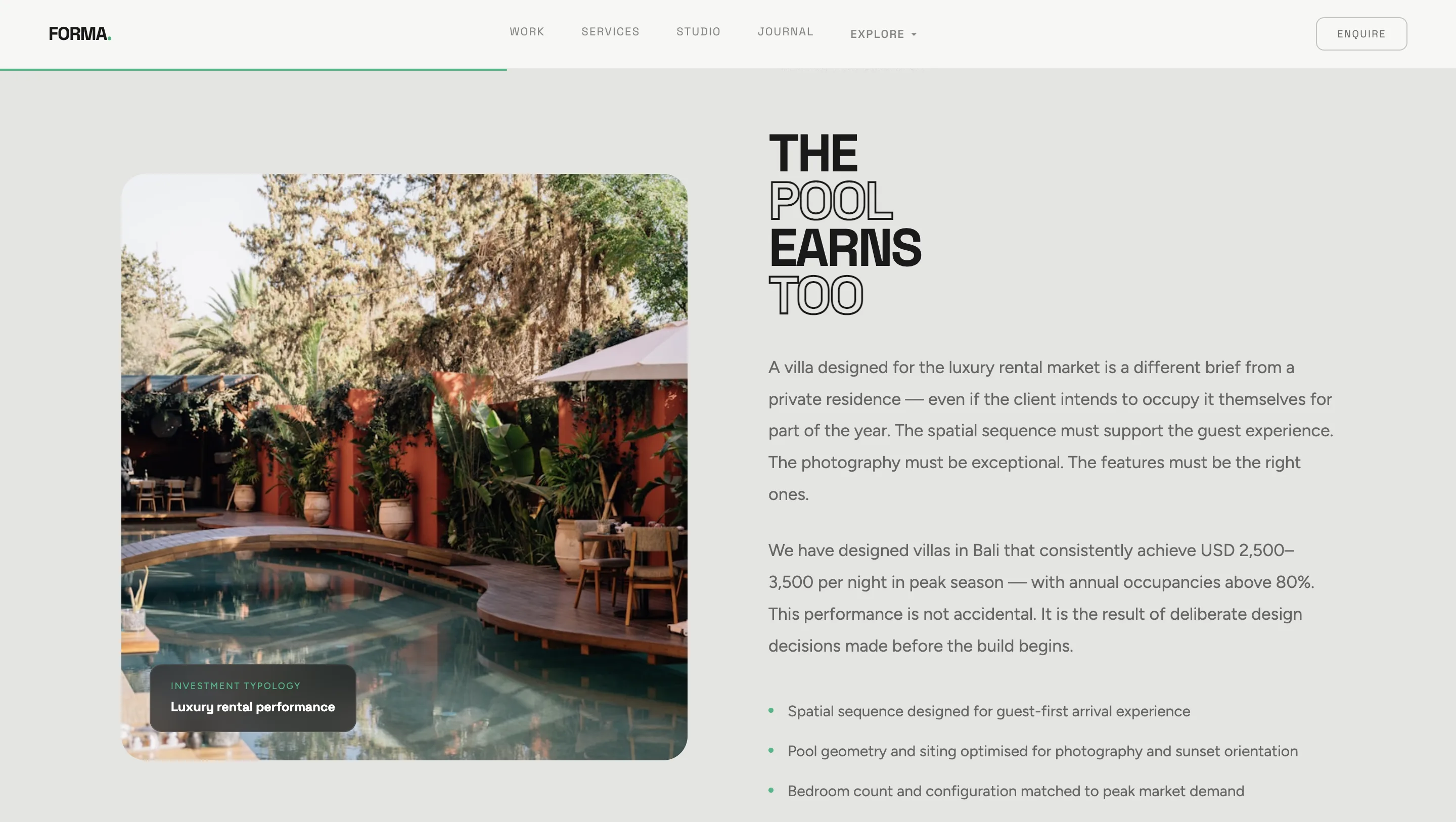
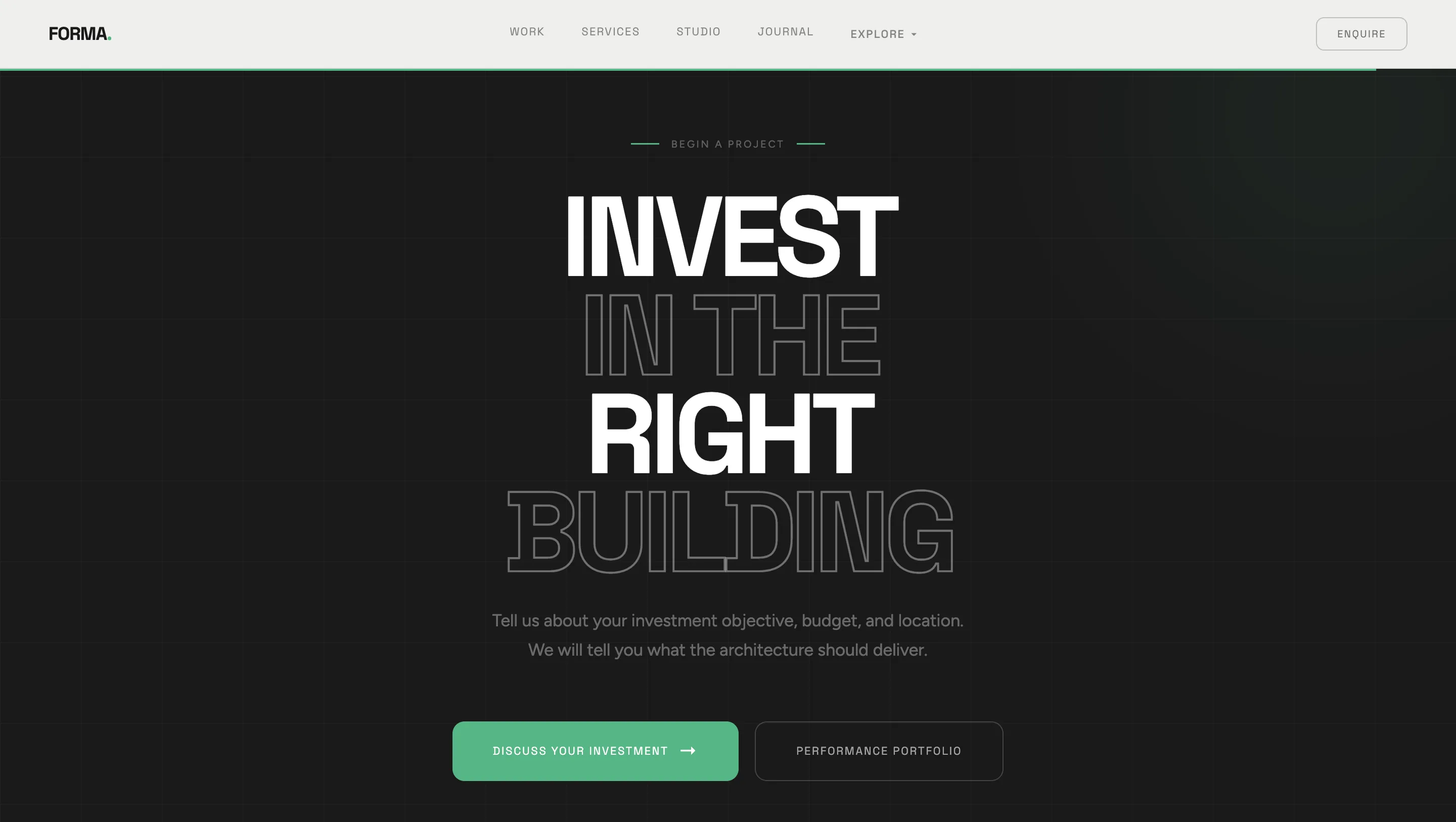
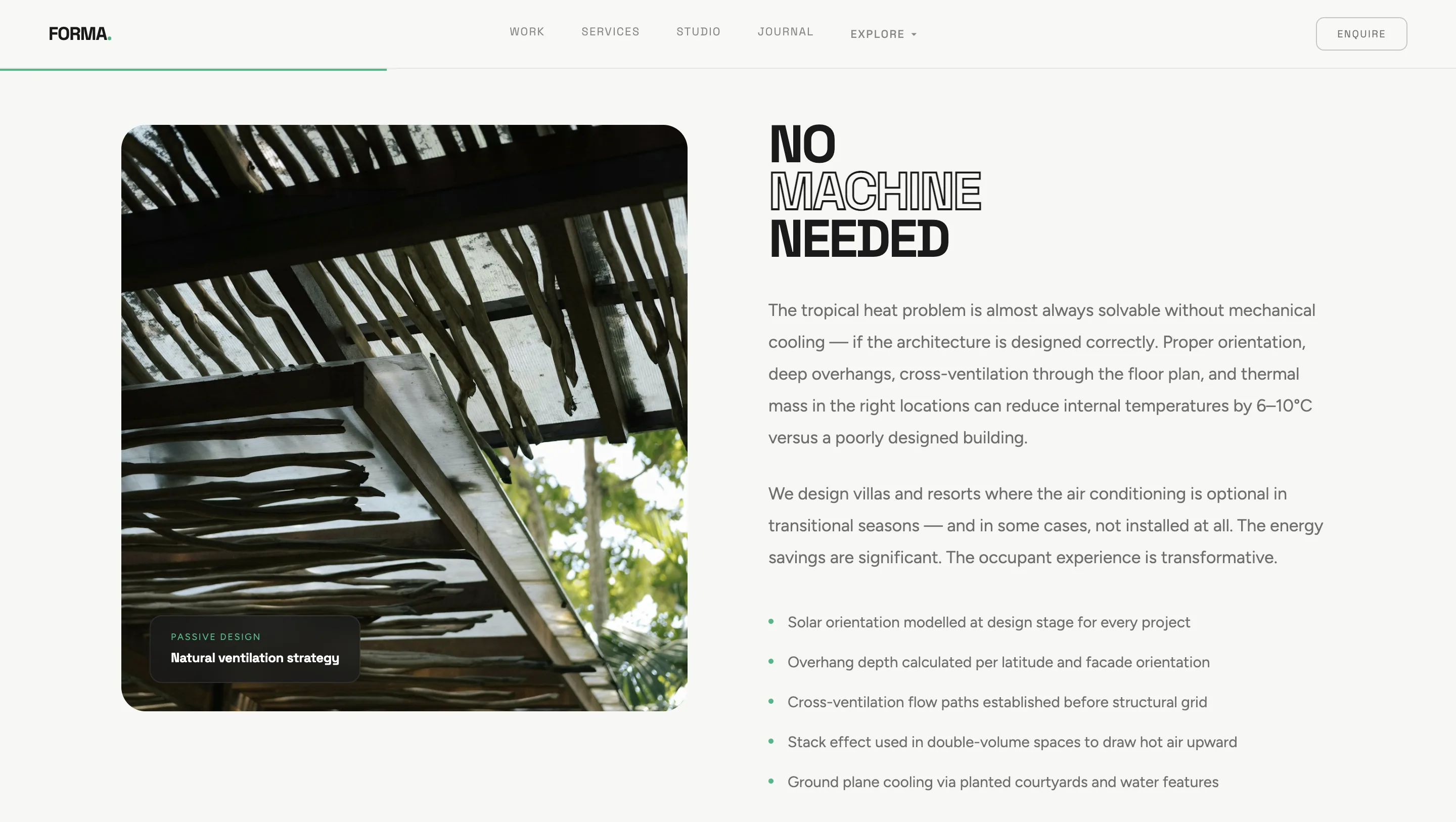
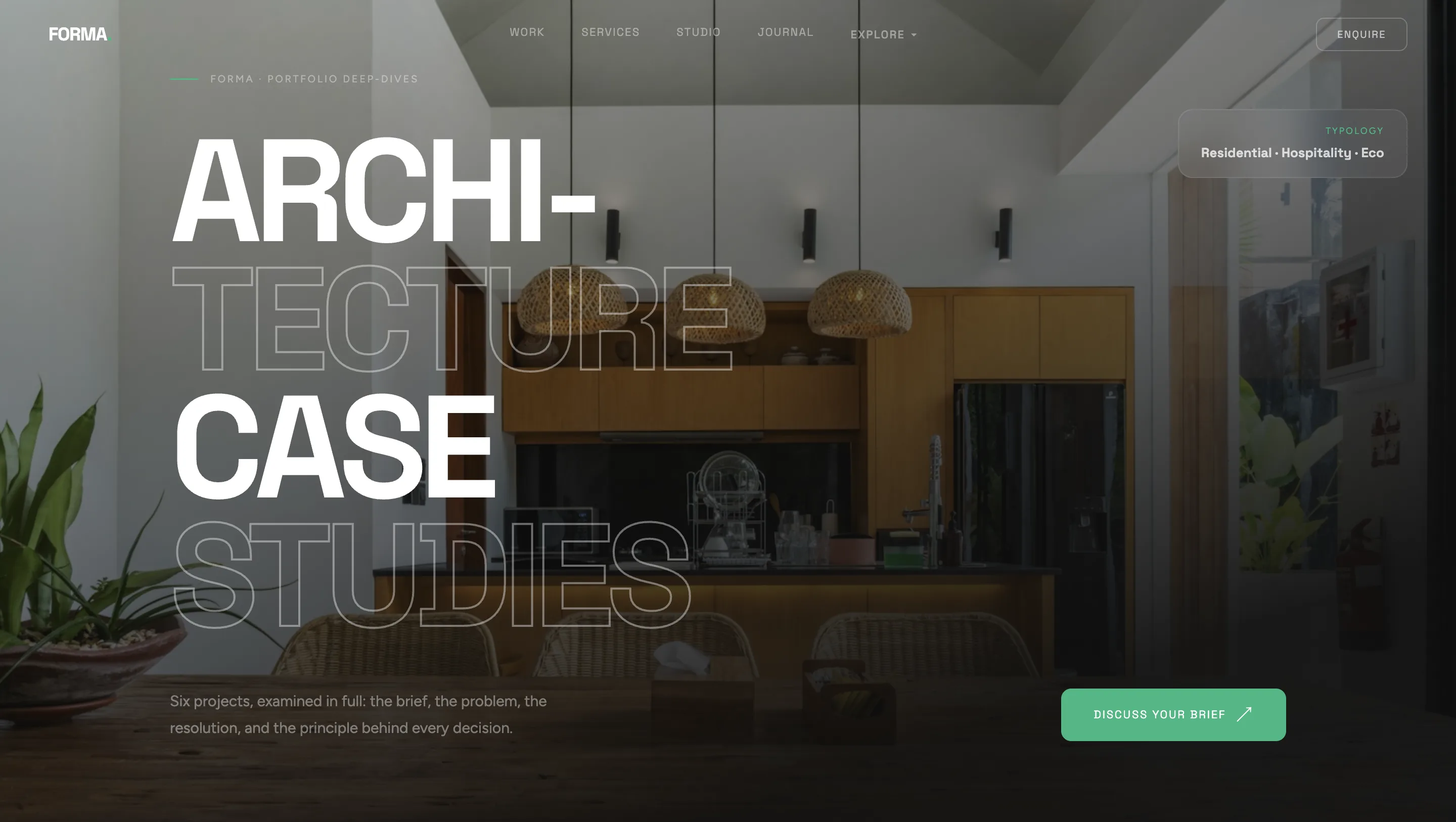
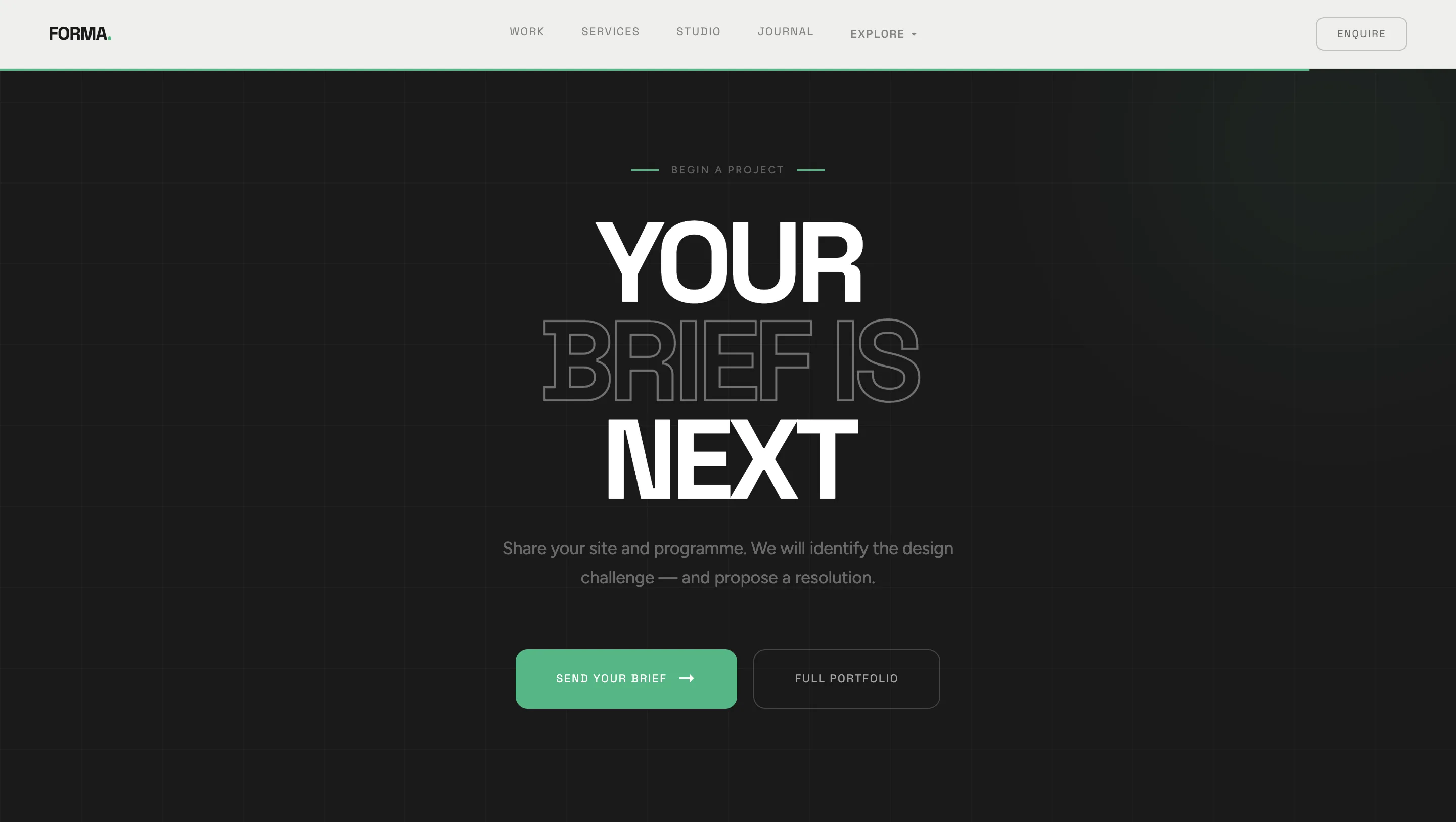
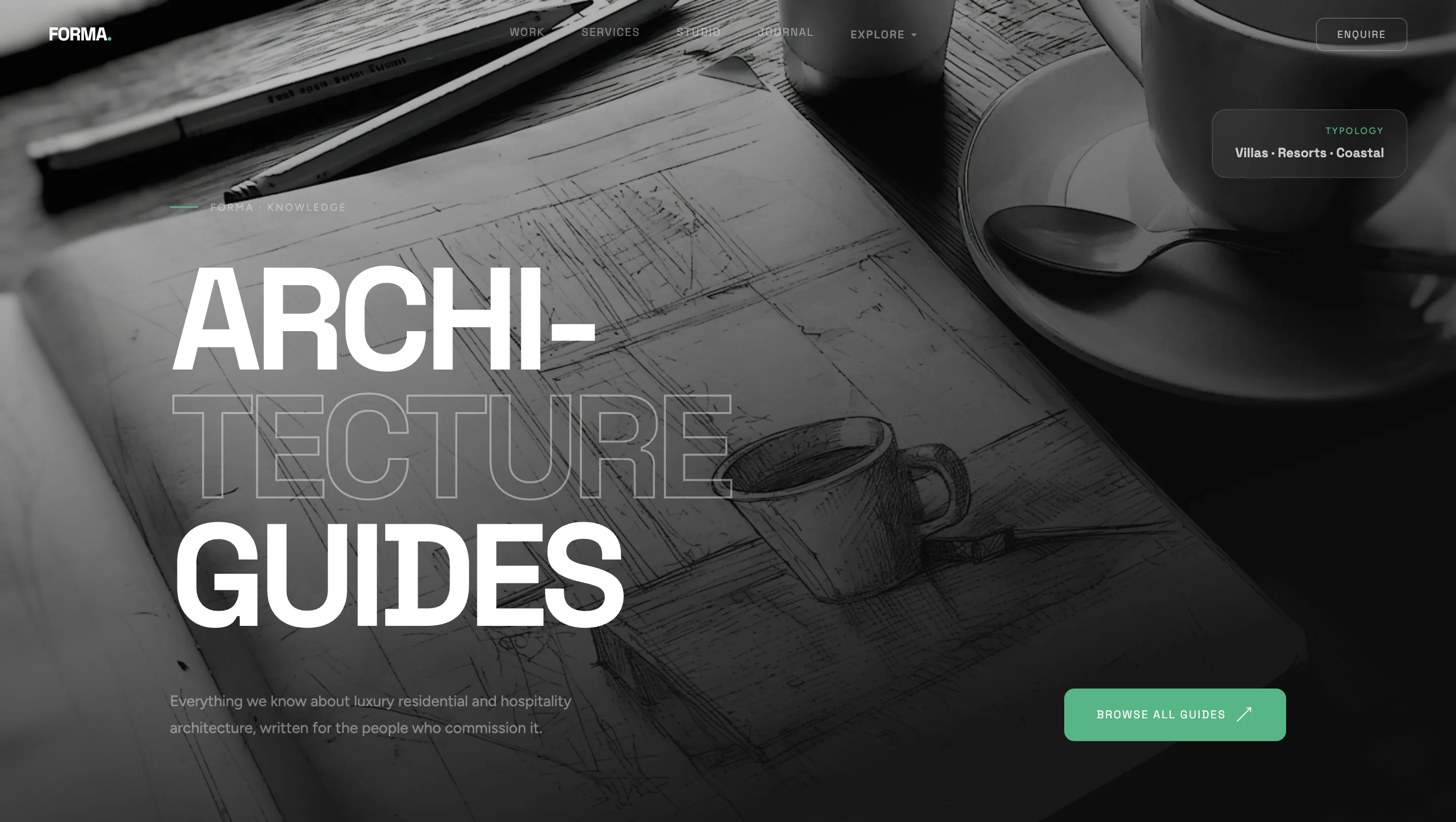
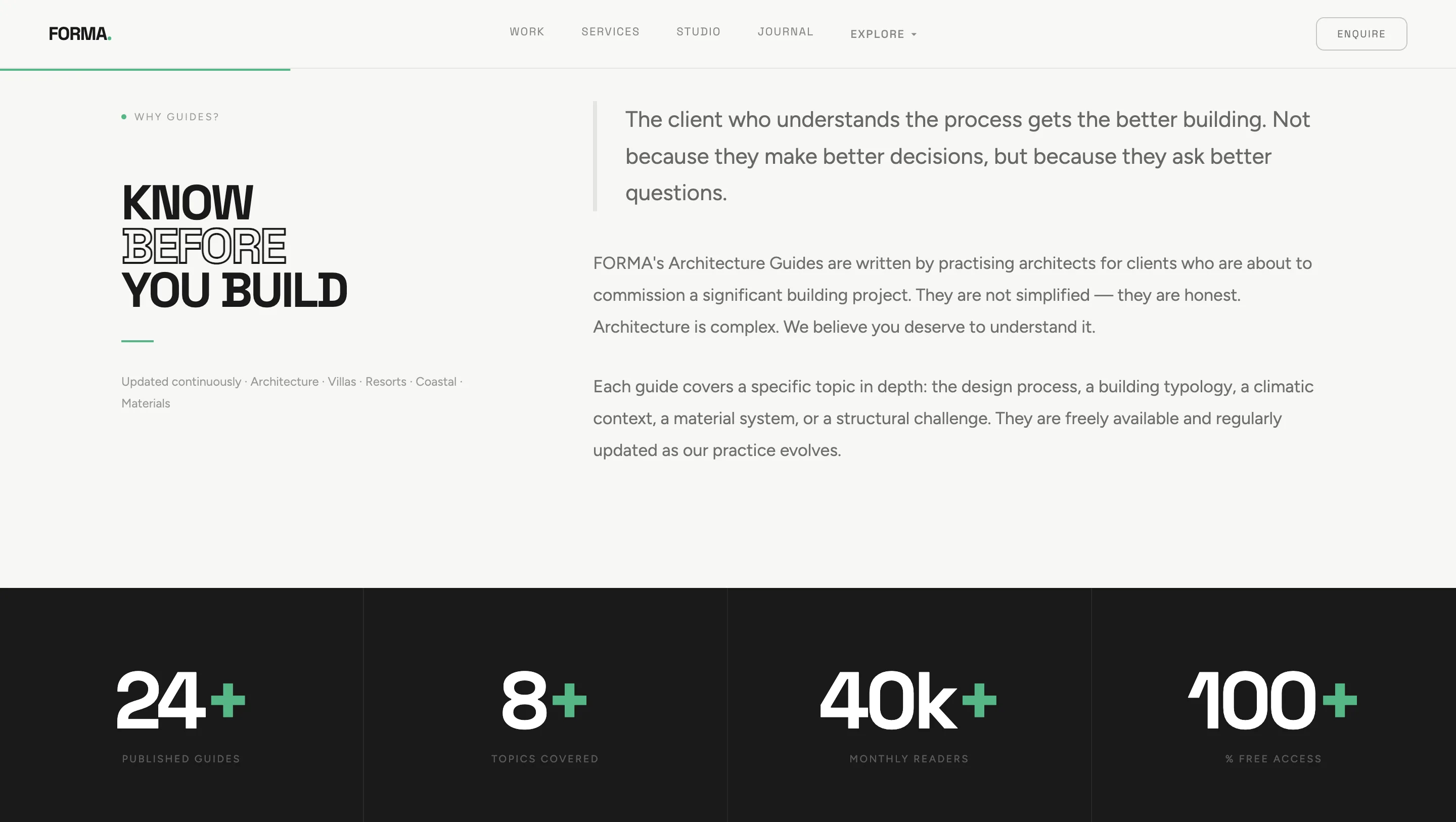
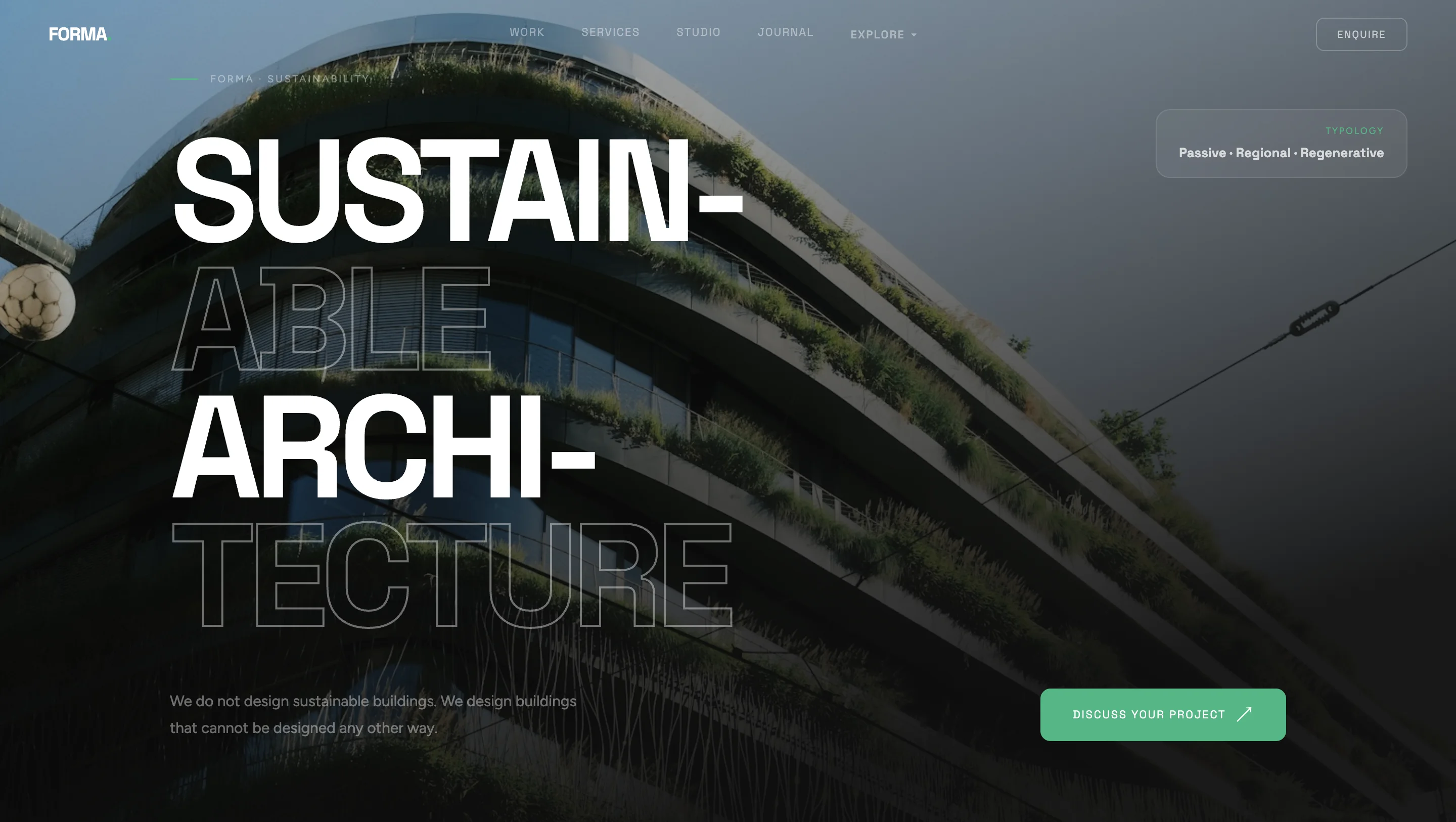
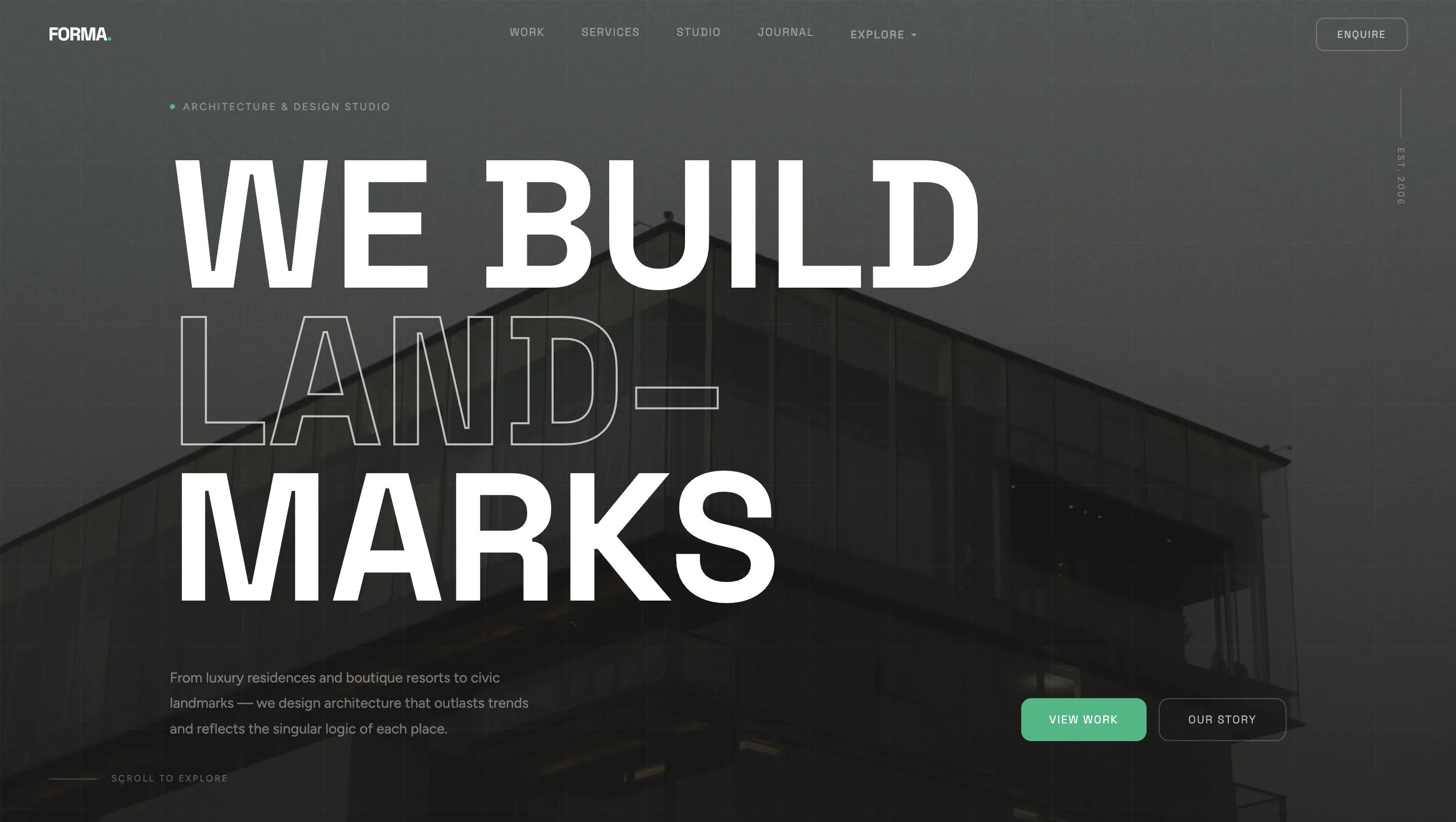
The visual direction explores a dark editorial language as a design hypothesis.
- Large editorial typography
- Minimal grid layouts
- Dark hero sections with light reading surfaces
- Subtle motion and parallax
- Restrained accent color usage
Space Grotesk is used for headlines and Figtree for body text, with restrained green accents inside a mostly neutral palette. Type and color choices are part of the study and not a fixed brand system.
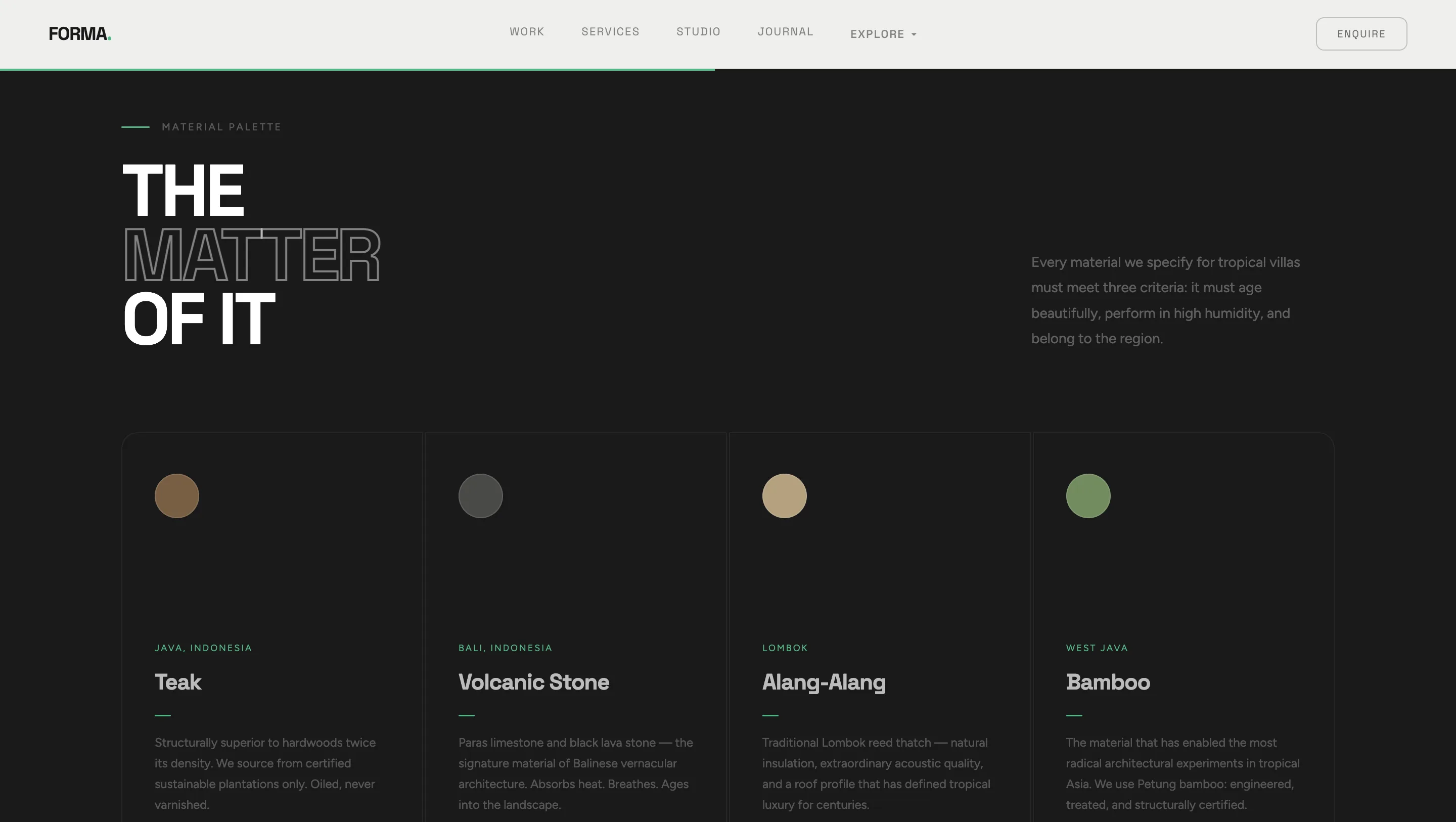
UX Decisions
Adaptive navigation
Navigation responds to dark hero backgrounds to preserve readability.
Editorial reading flow
Long-form content is structured to support reading depth and content orientation.
Portfolio exploration
Project browsing is sketched around region, typology and year-based discovery.
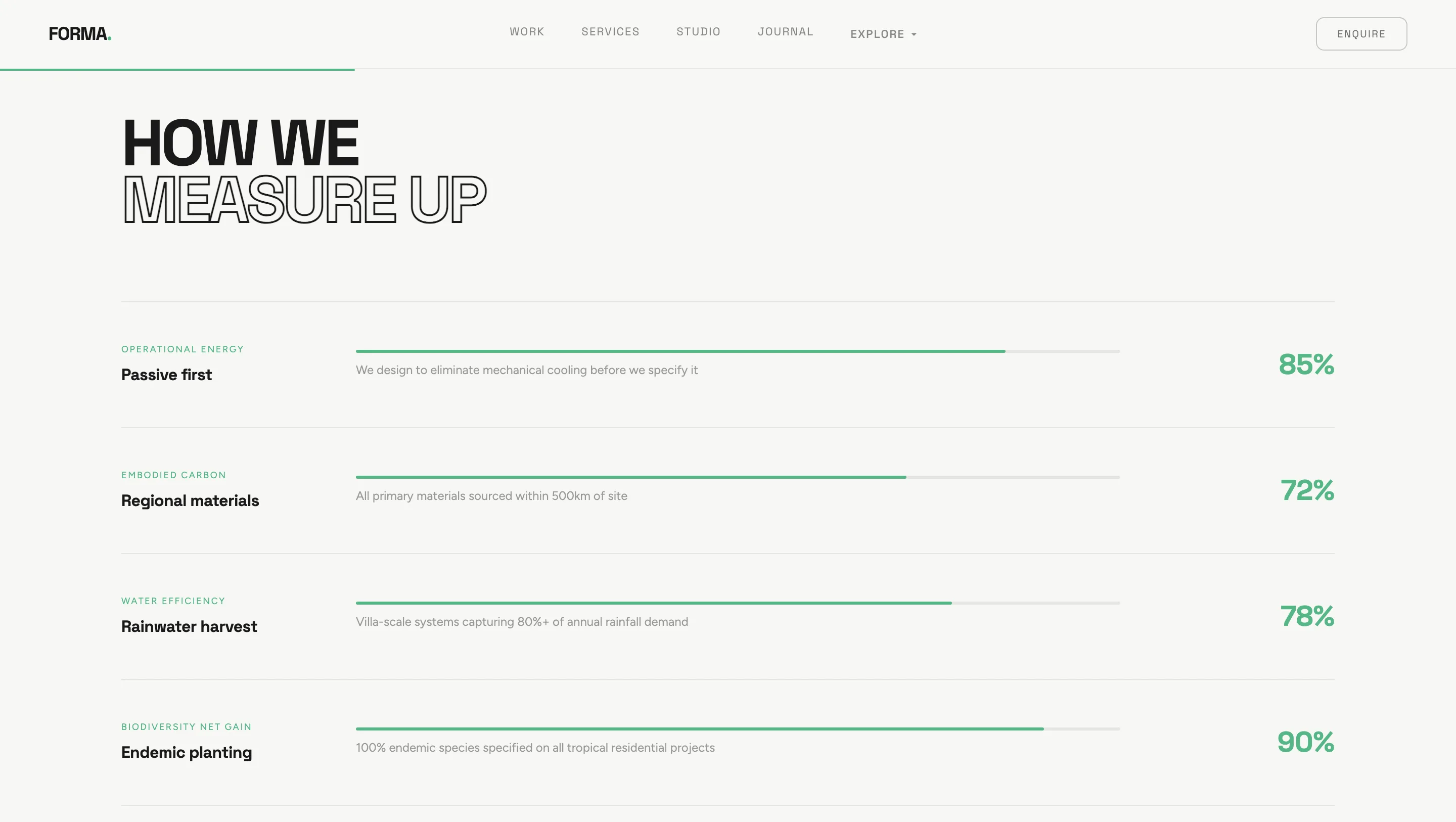
Study Outcomes
As a reference build, the study produces an internal structural artefact rather than measured client results.
- A hypothetical portfolio of ~127 projects organised into a navigable structure
- Around 20 reference routes across portfolio, expertise and editorial publishing
- A sketched editorial-publishing infrastructure for essays, guides and insights
- A positioning framework usable across Europe, the Middle East and Asia
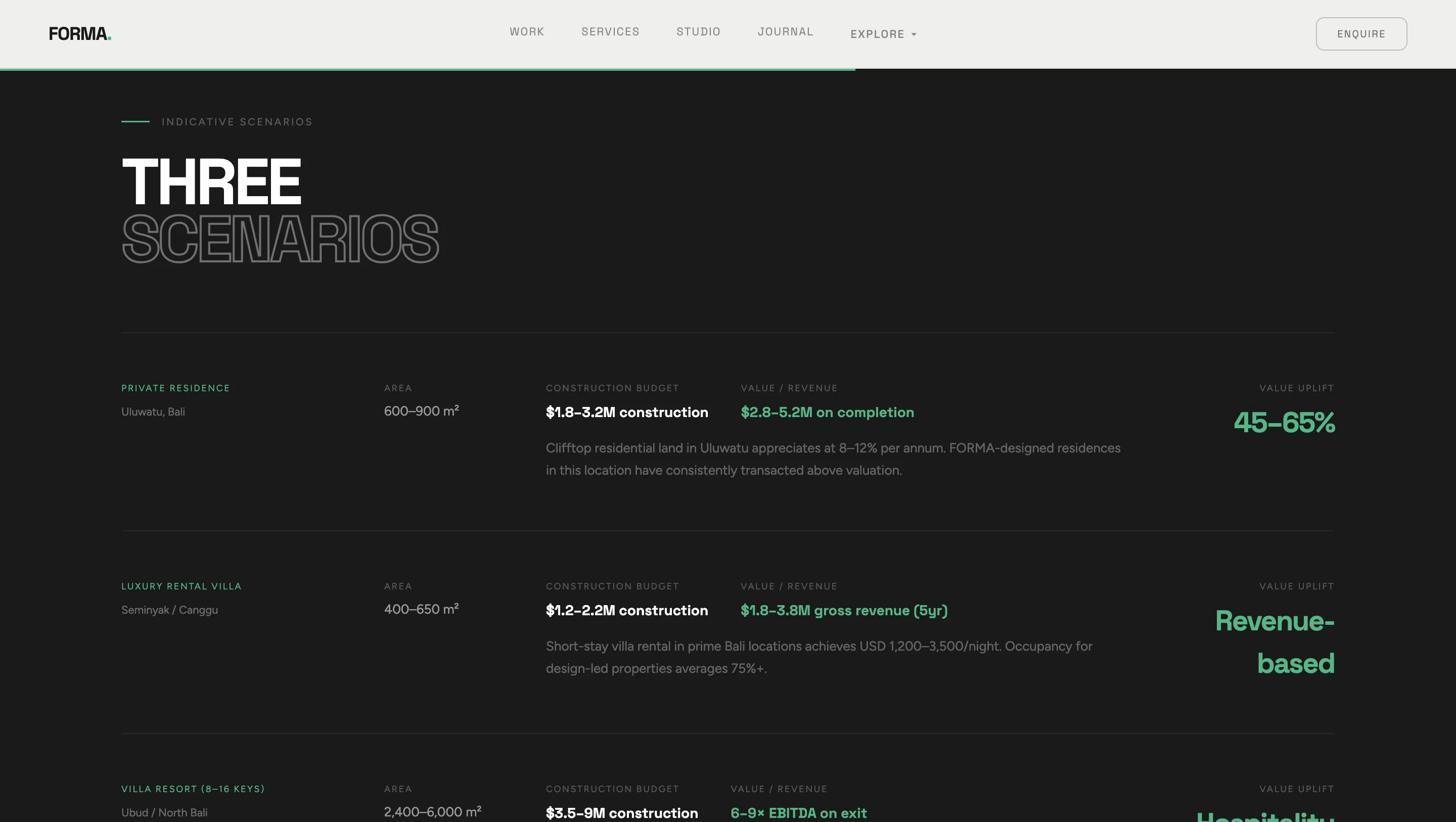
Prototype stack used to assemble this study
- Next.js
- TypeScript
- Component-based UI architecture
- Centralized design tokens system
- SEO-optimized routing
- Performance-optimized media delivery
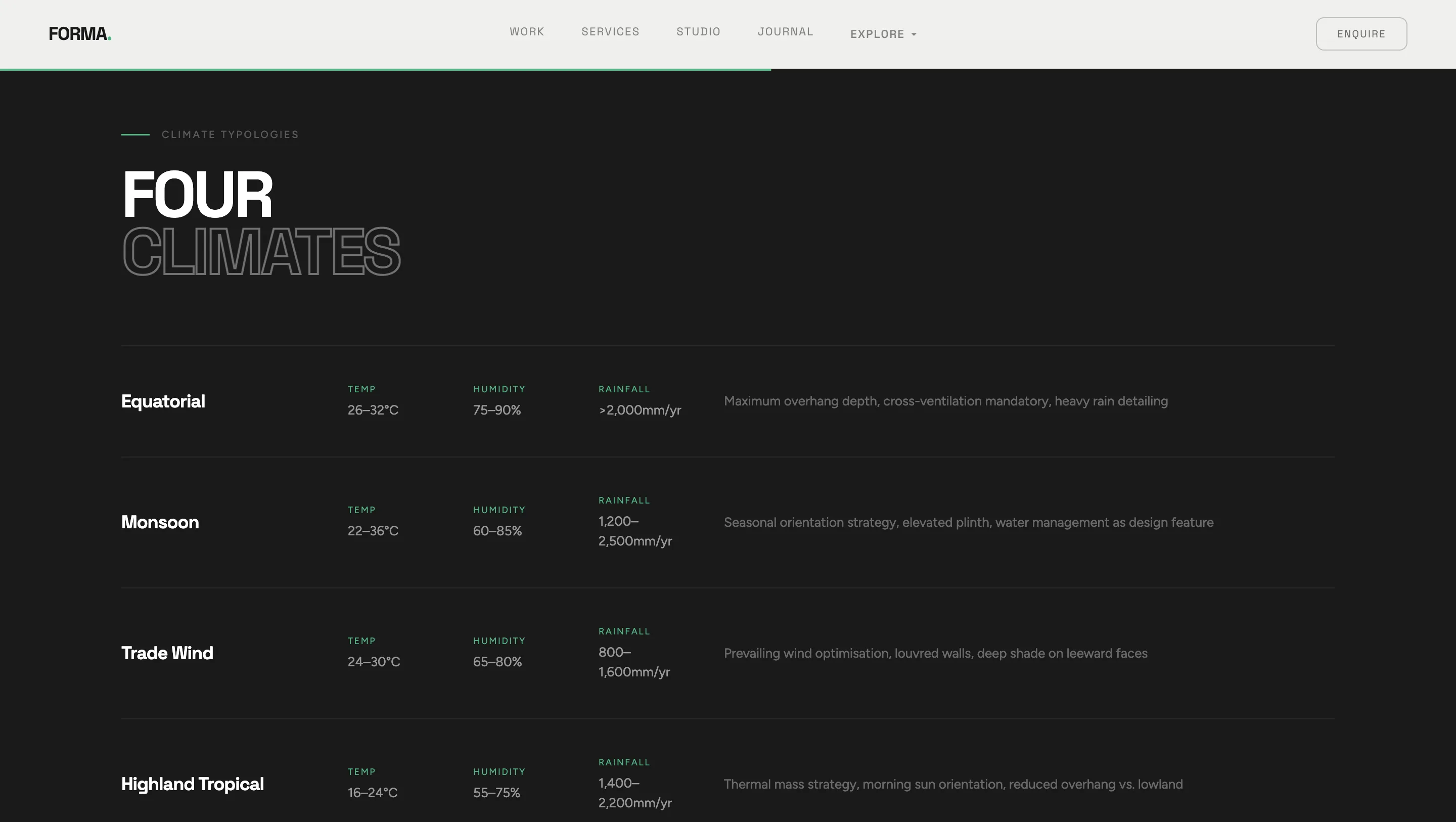
Why This Matters
Architecture studios working in premium and hospitality contexts often need digital platforms that combine portfolio depth, editorial substance and search visibility. This reference build is a structural study of how such a platform could be assembled — not a record of a delivered client engagement.
- Potential international client acquisition framing
- Editorial positioning in hospitality and villa architecture
- Long-term organic-discovery hypotheses
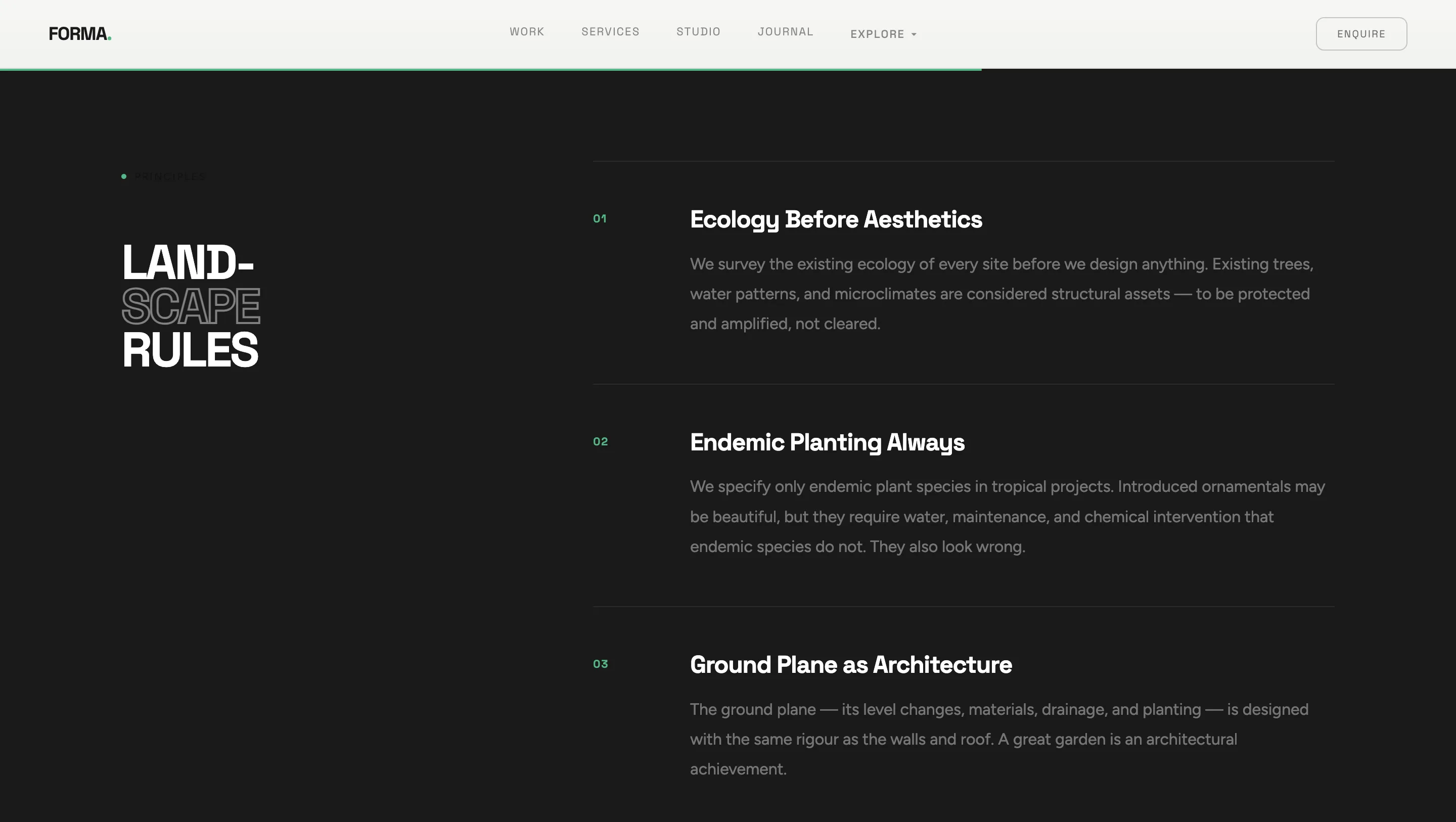
Interested in a similar reference build?
Potential integration points the concept is designed around — editorial publishing, structured portfolios, SEO-led content systems — can be discussed for real engagements with architecture studios, hospitality brands and premium property operators. This page itself remains a speculative concept study.
Concept Visuals (illustrative)