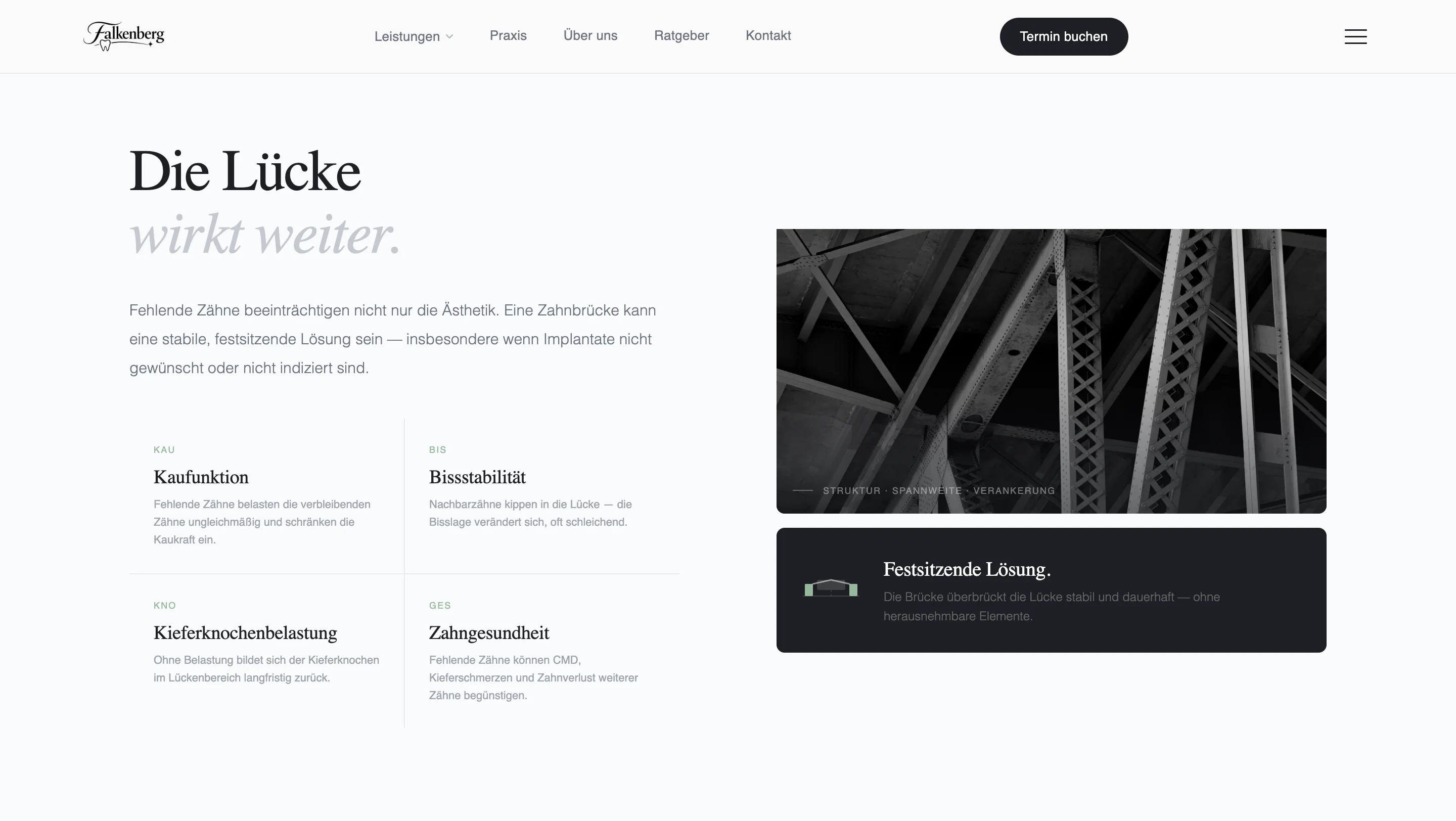
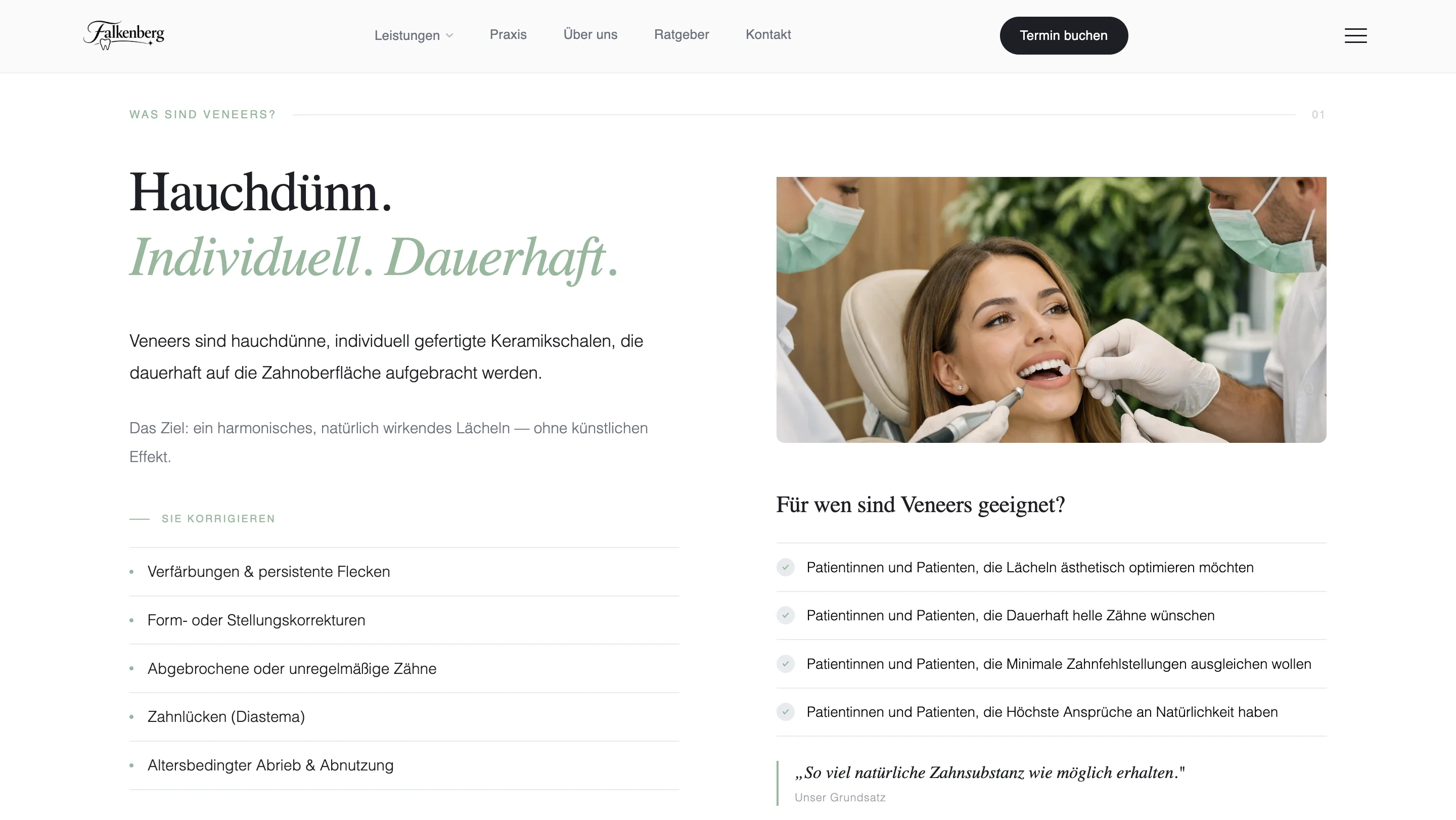
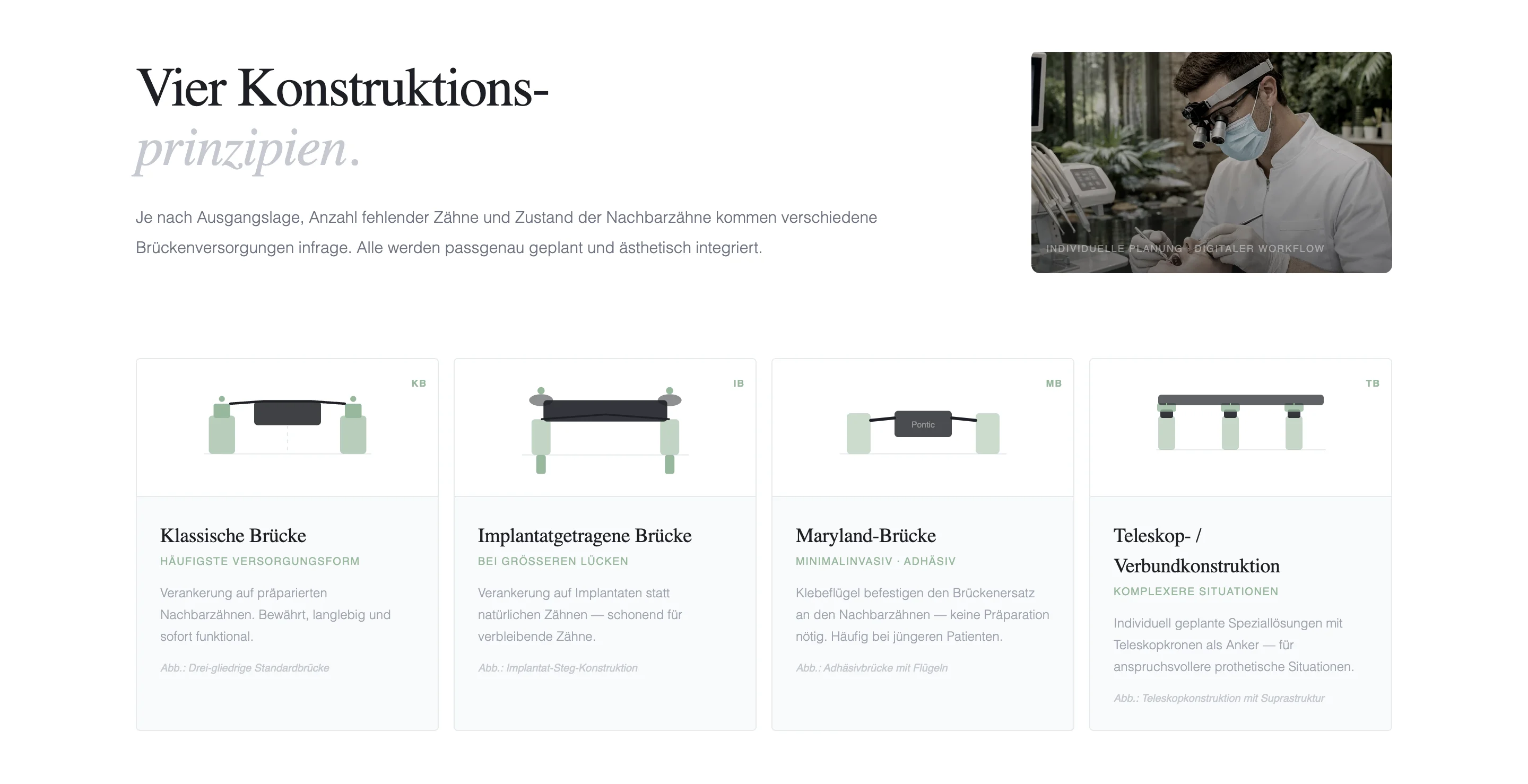
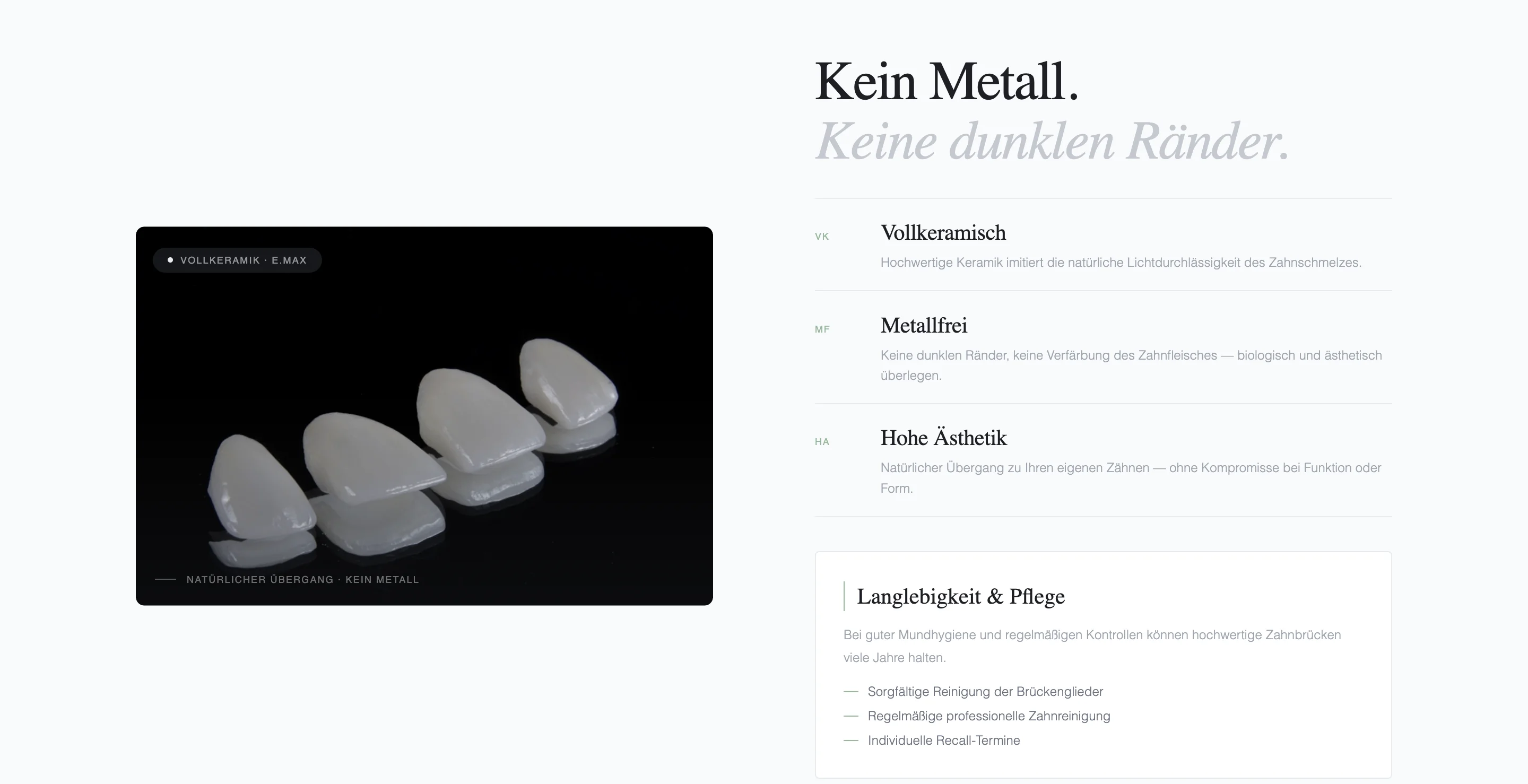
Context
Self-initiated H-Studio reference build (no client)
Status
Speculative concept study — not a delivered project
Scope
Illustrative platform pattern + treatment-information architecture
Dental-Clinic Platform Reference Build
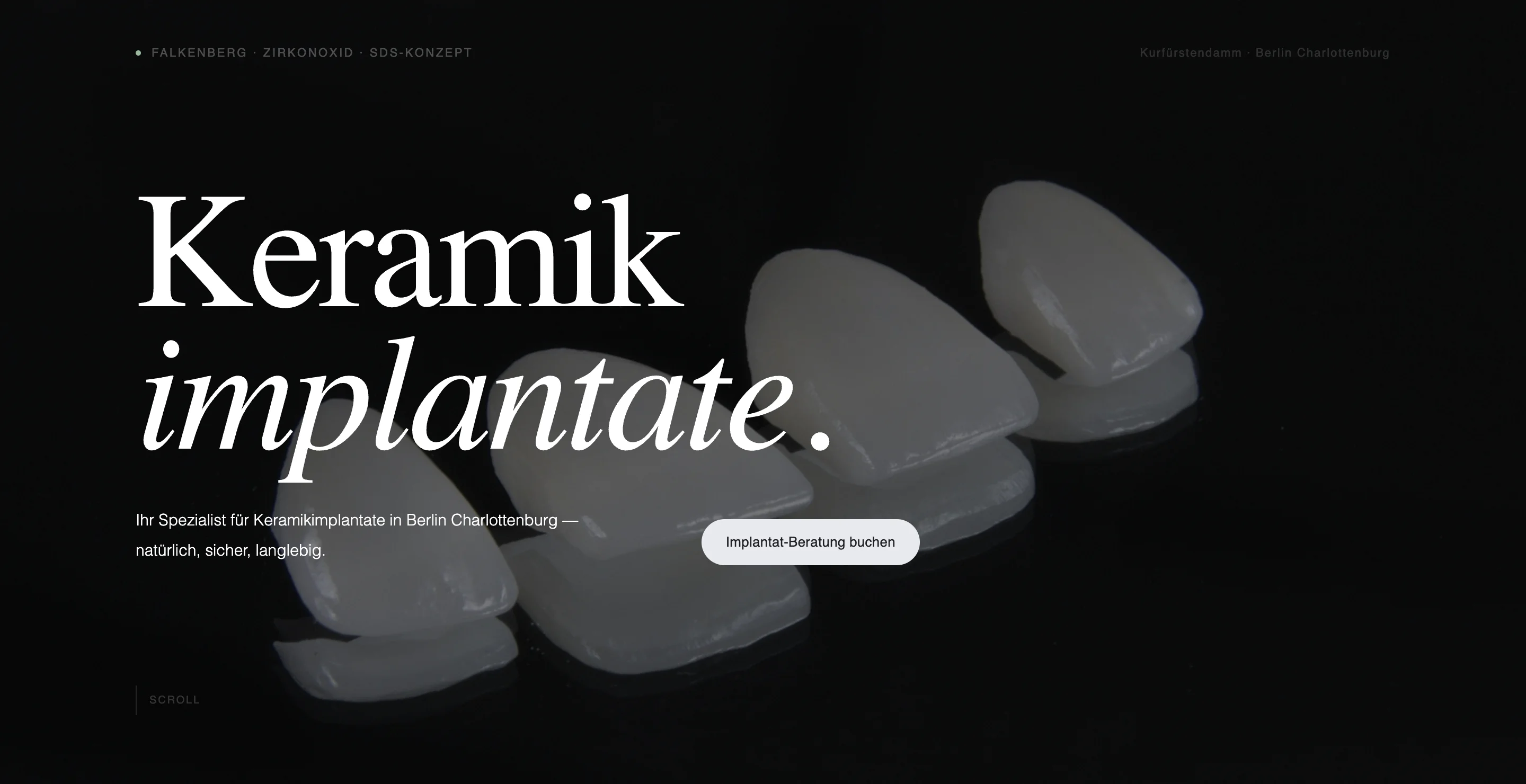
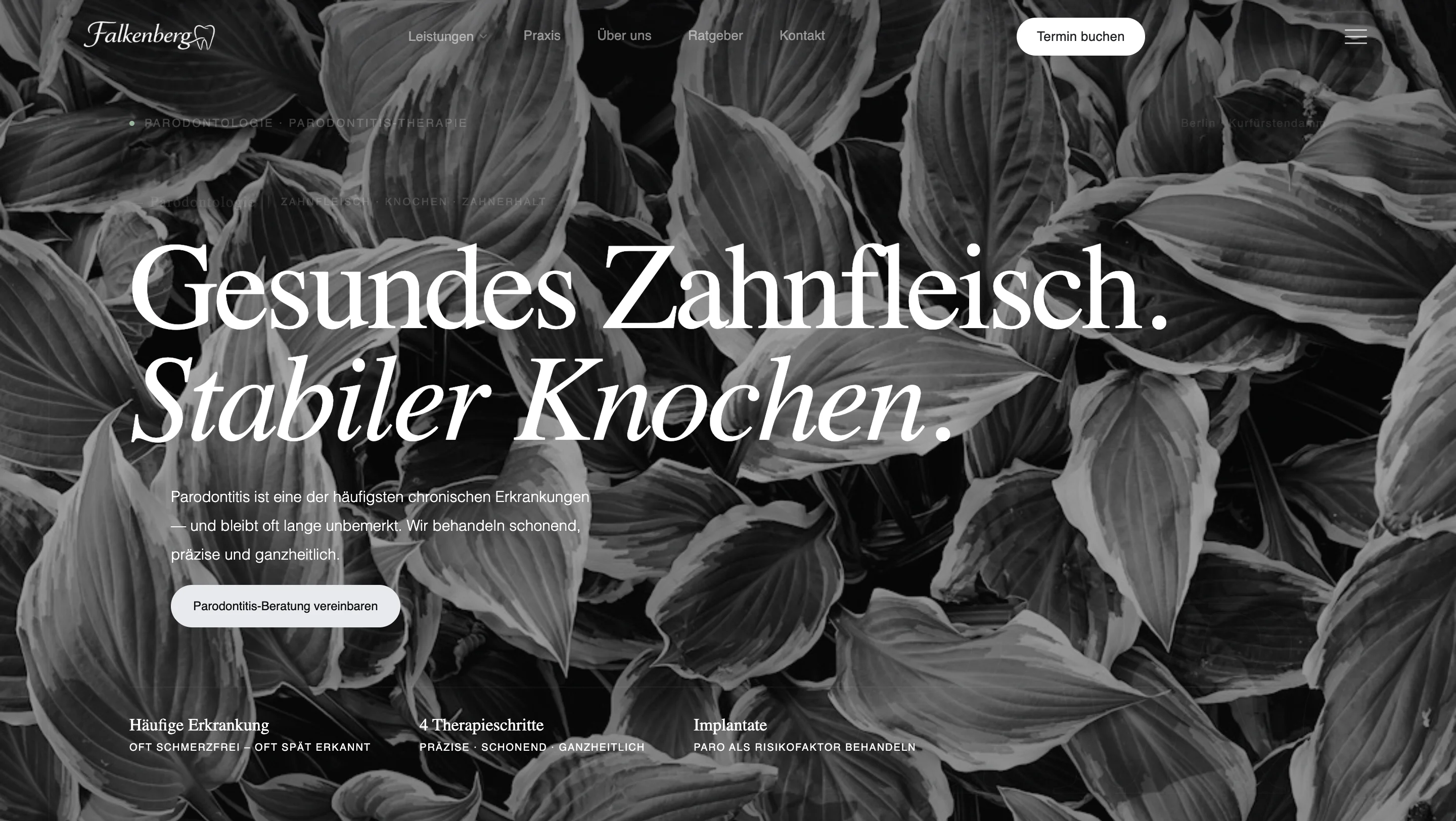
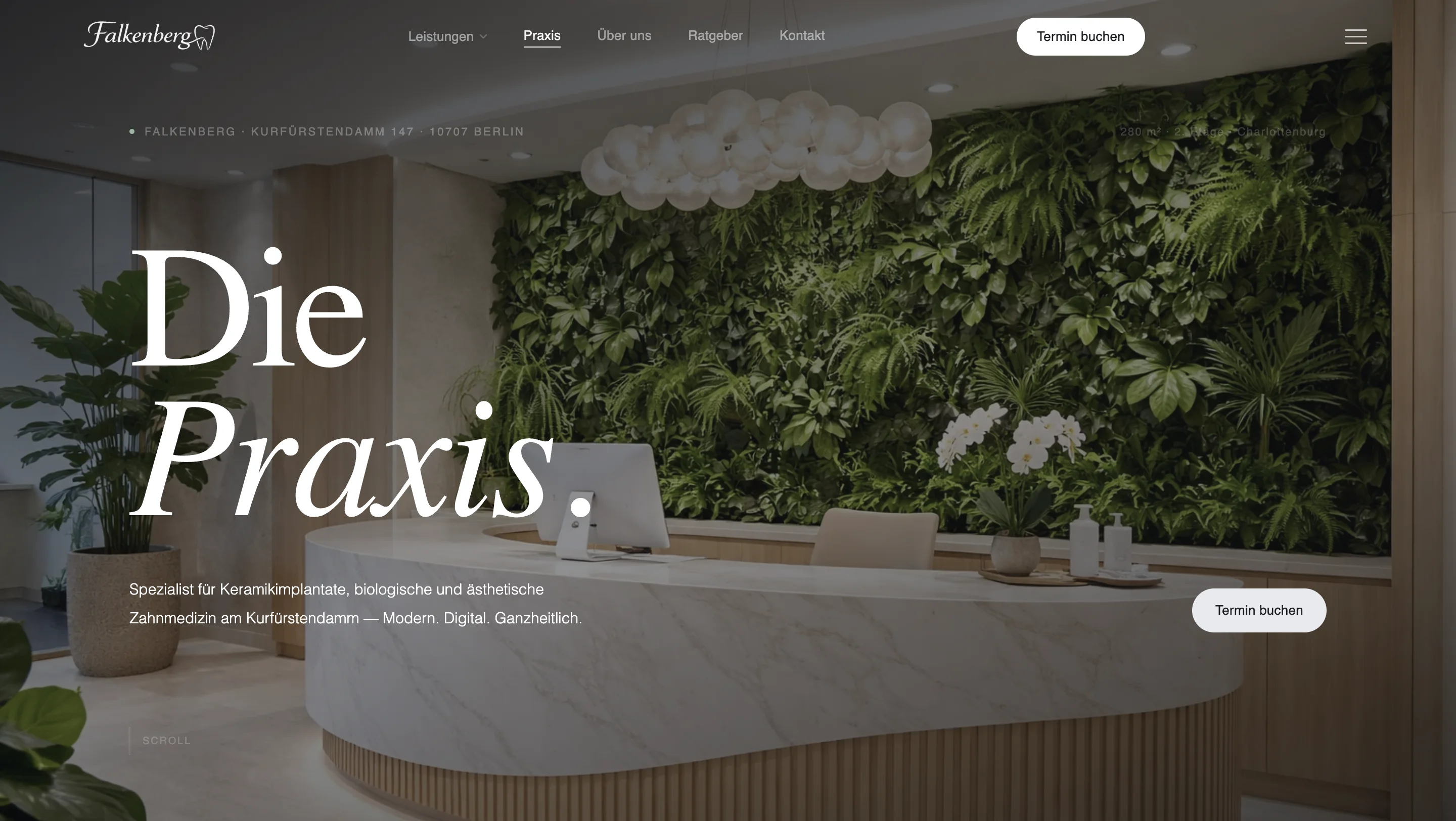
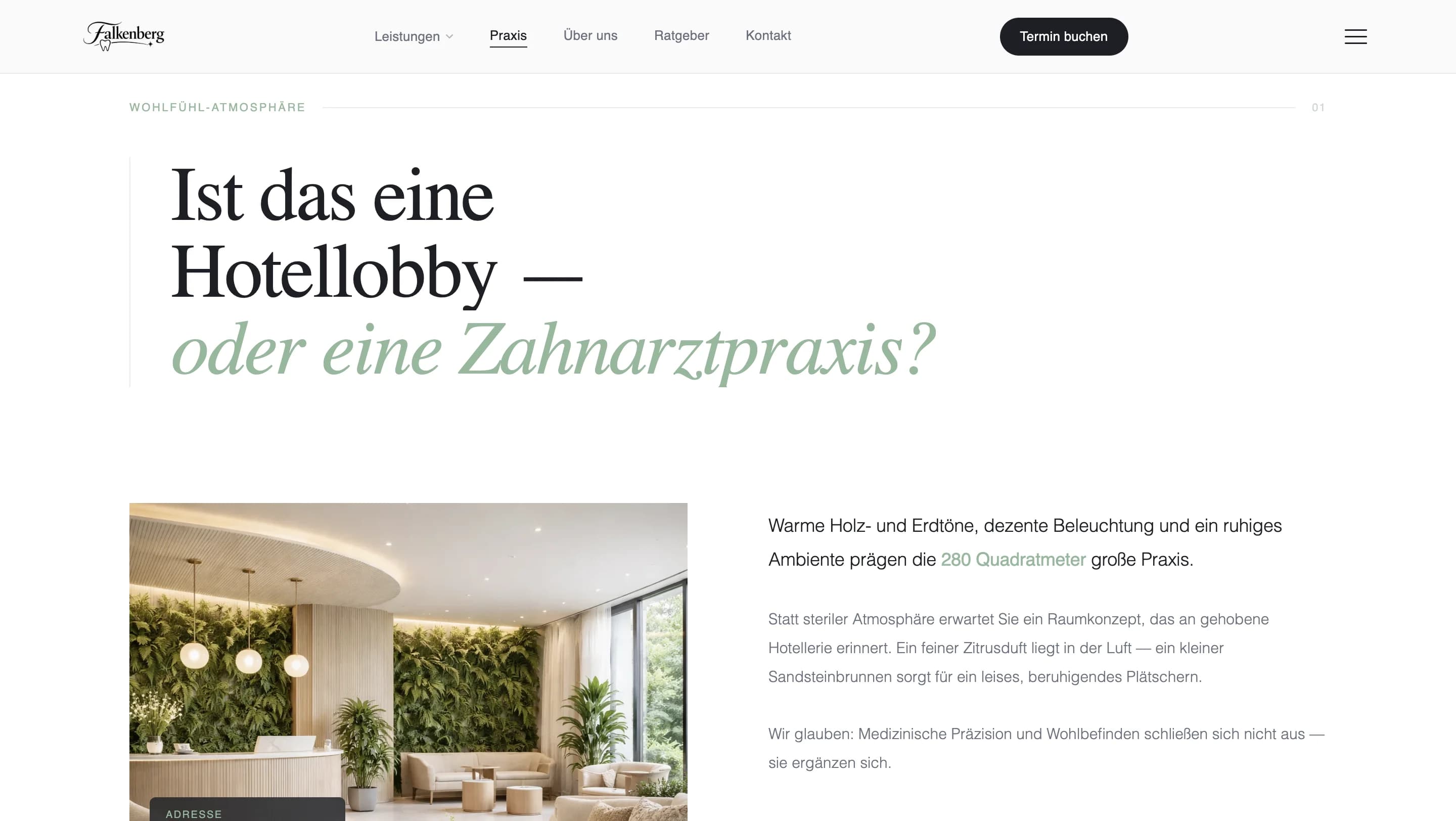
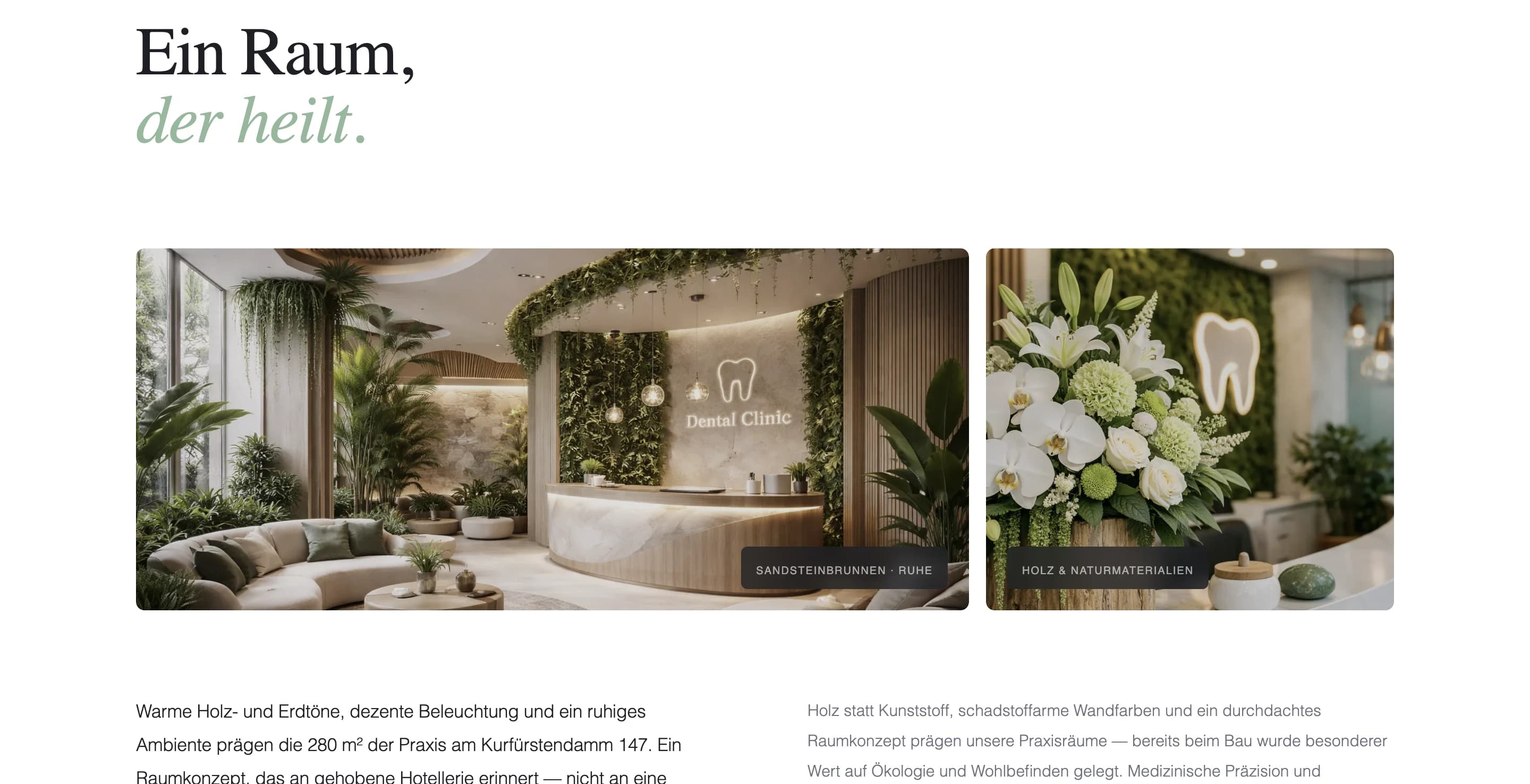
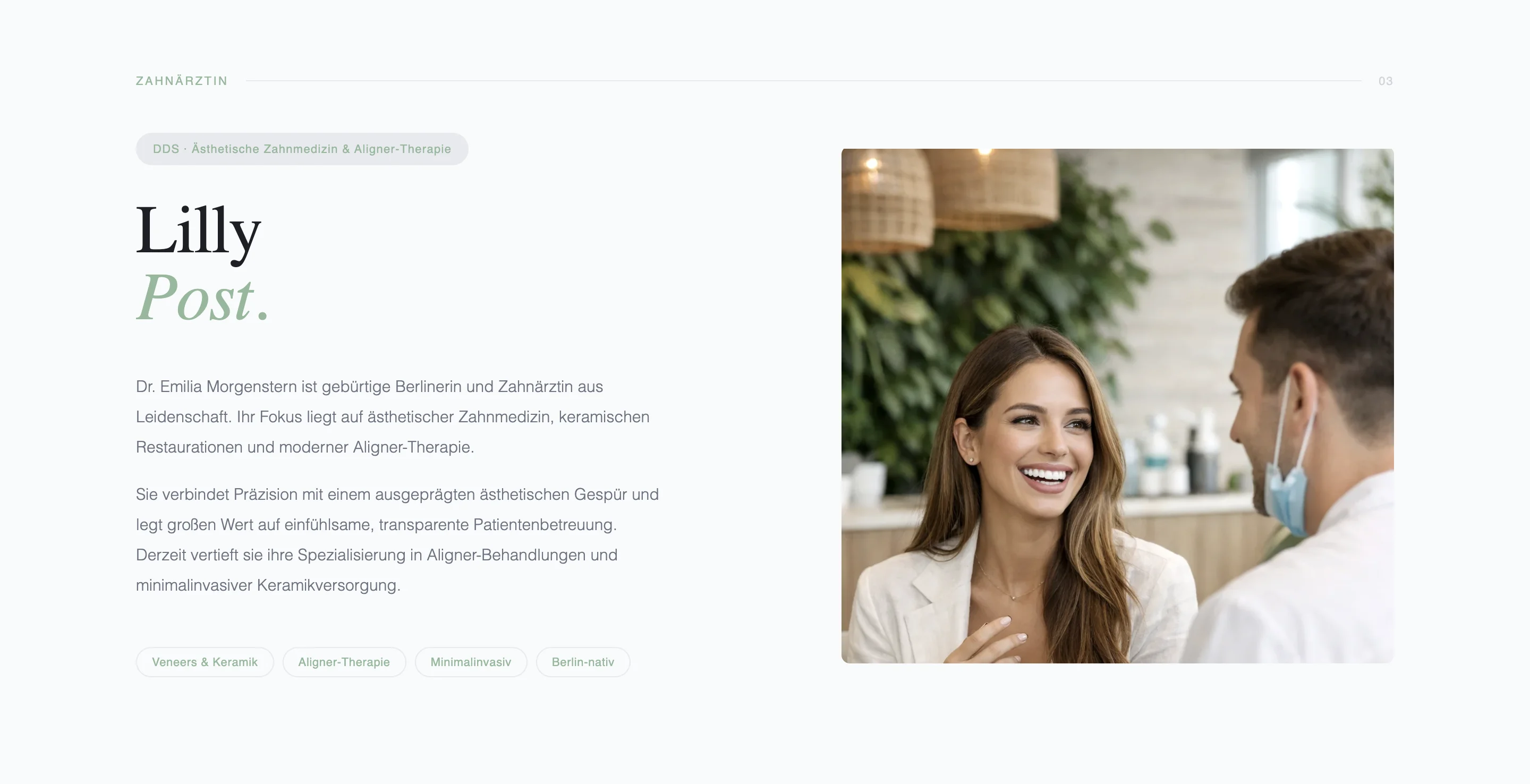
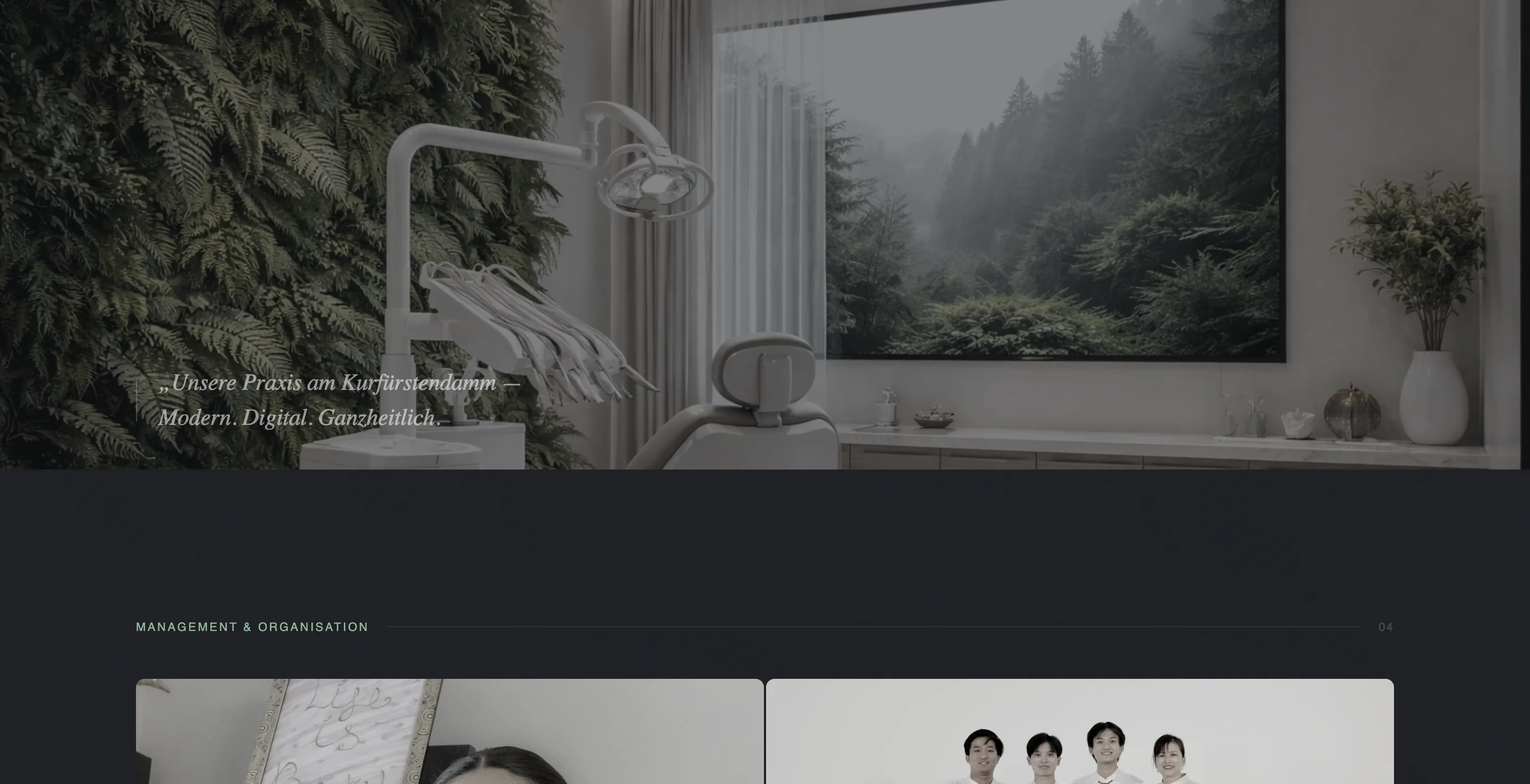
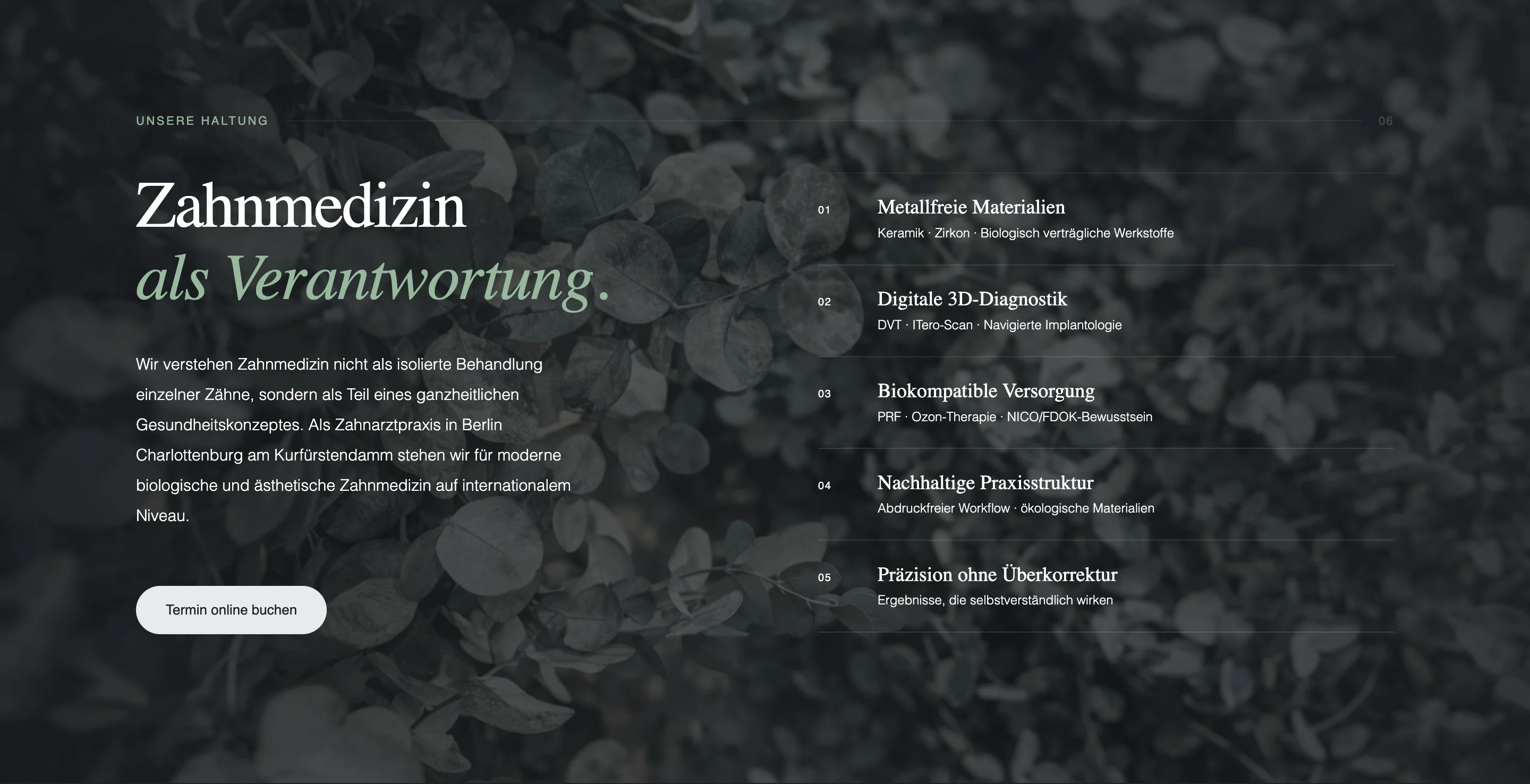
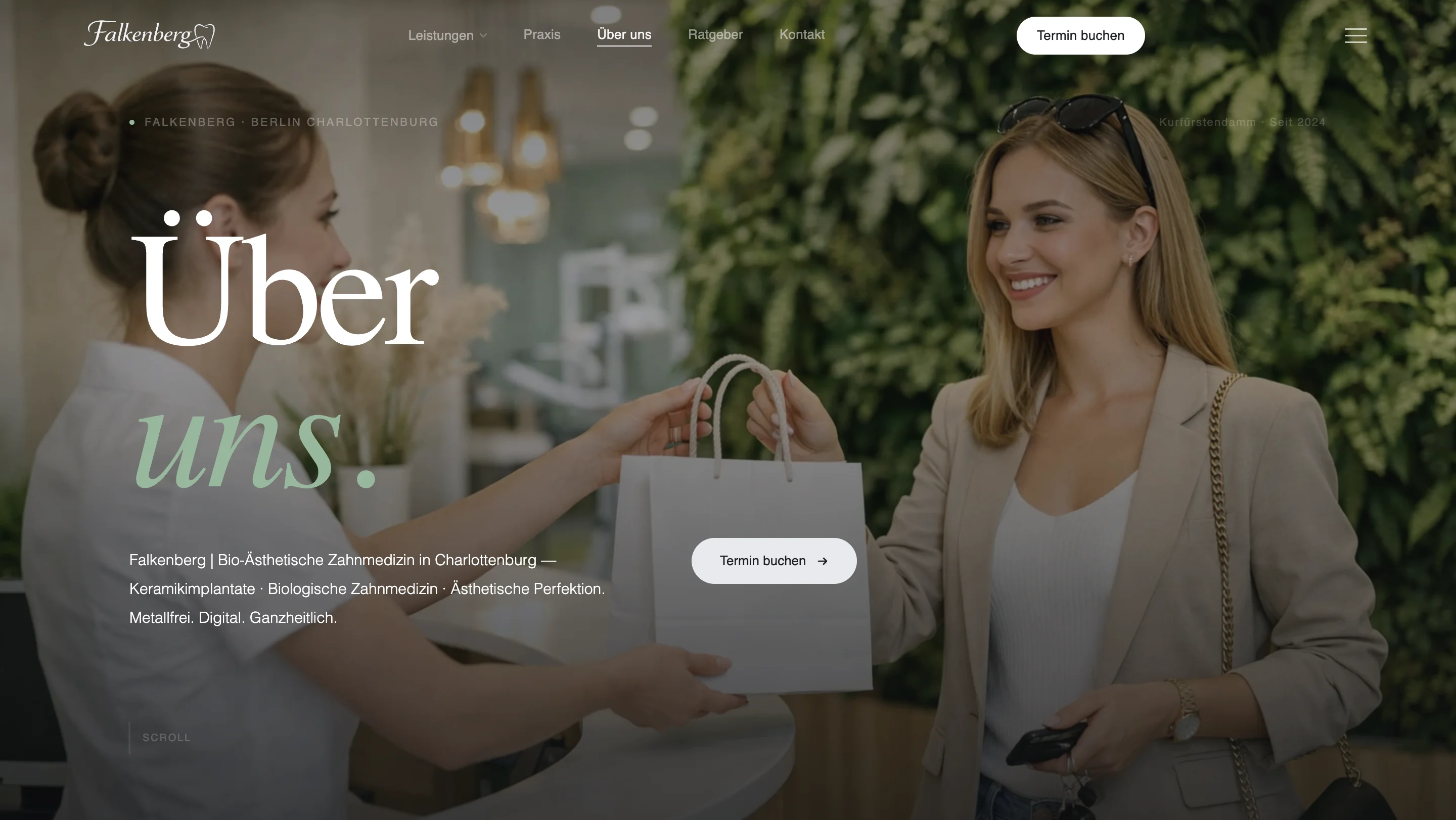
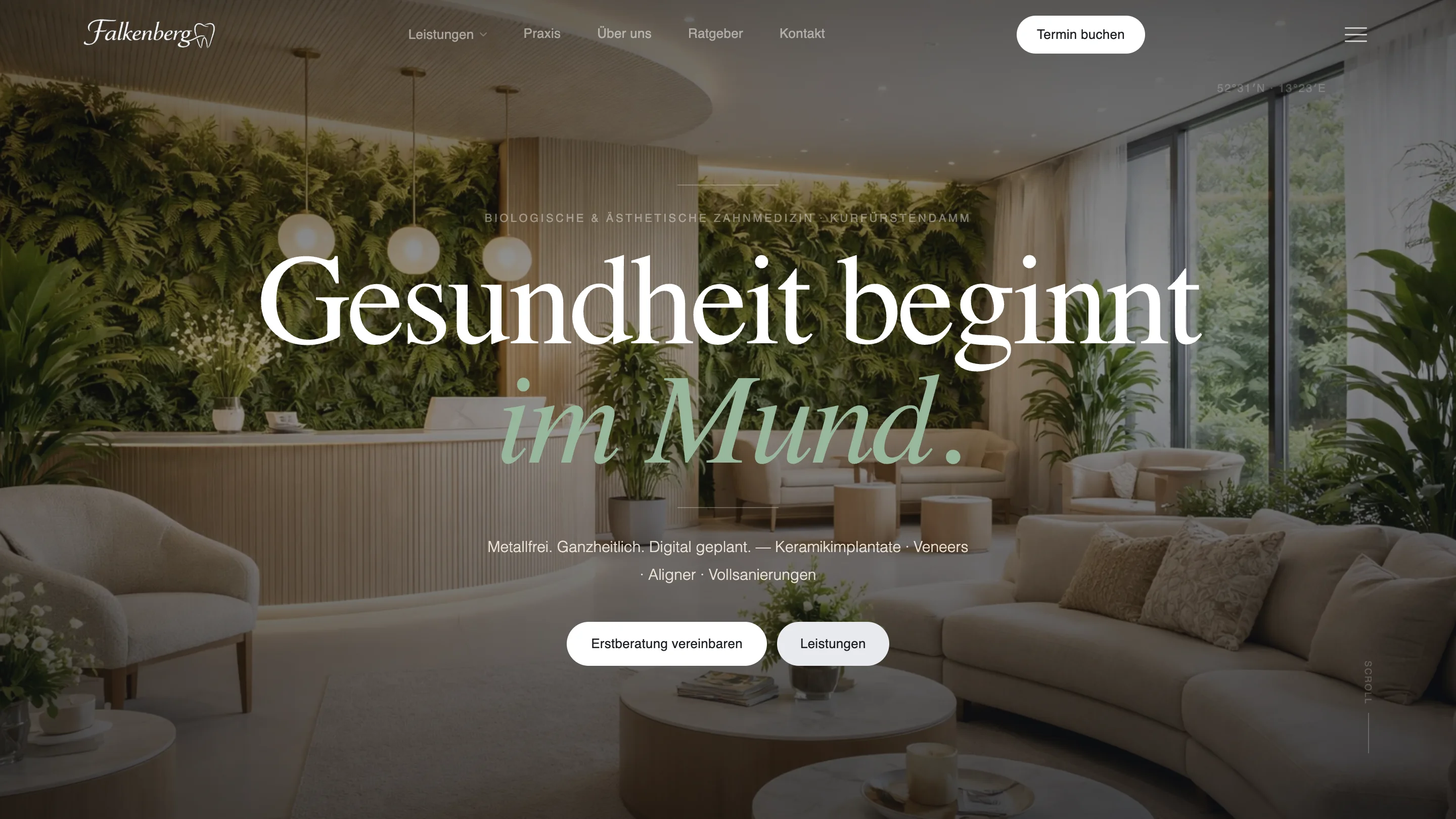
This is a self-initiated H-Studio reference build — a speculative concept study for a dental-clinic platform, not a delivered client engagement and not associated with any specific clinic. Brand, treatments, photography and visuals are illustrative only and make no clinical claims.
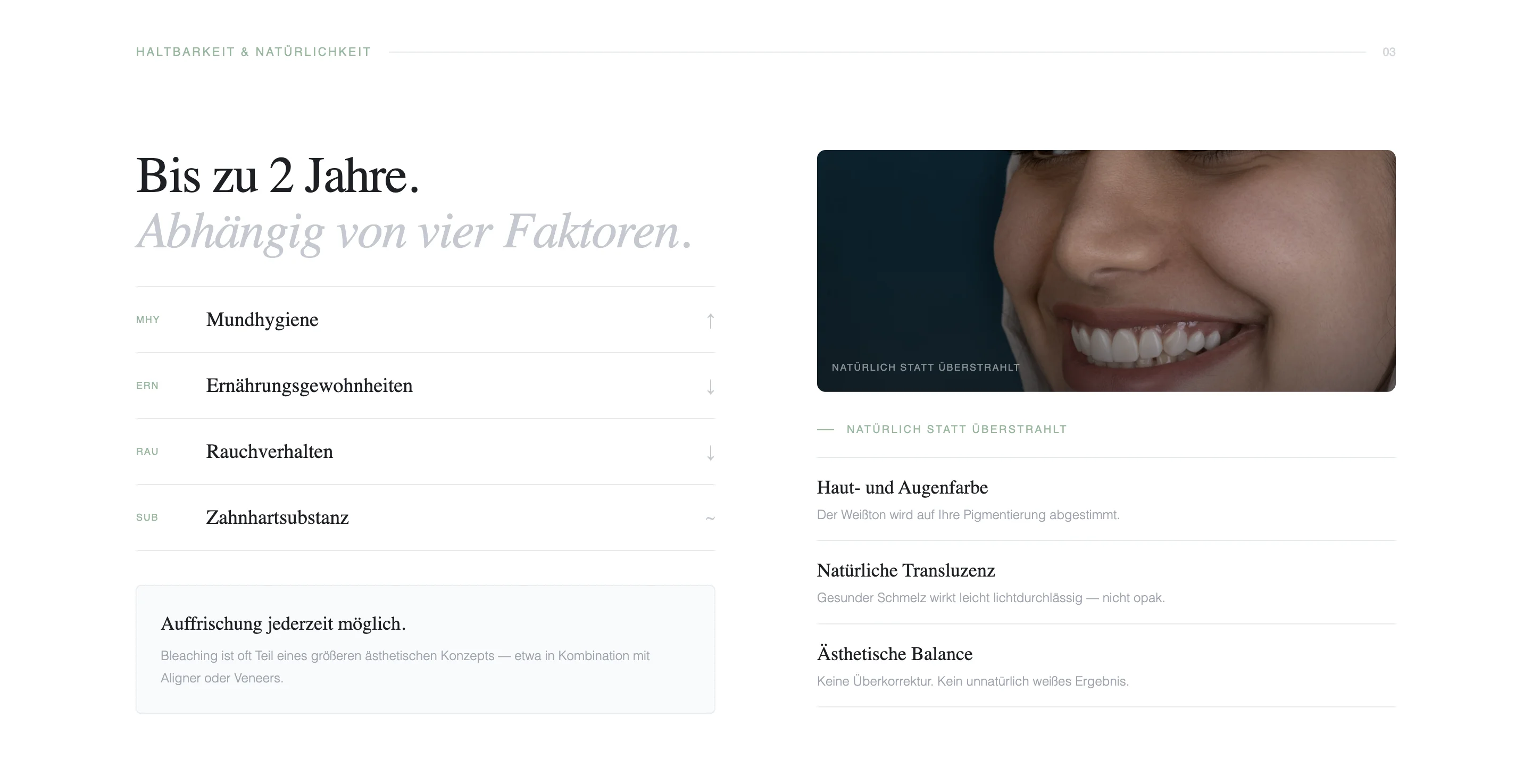
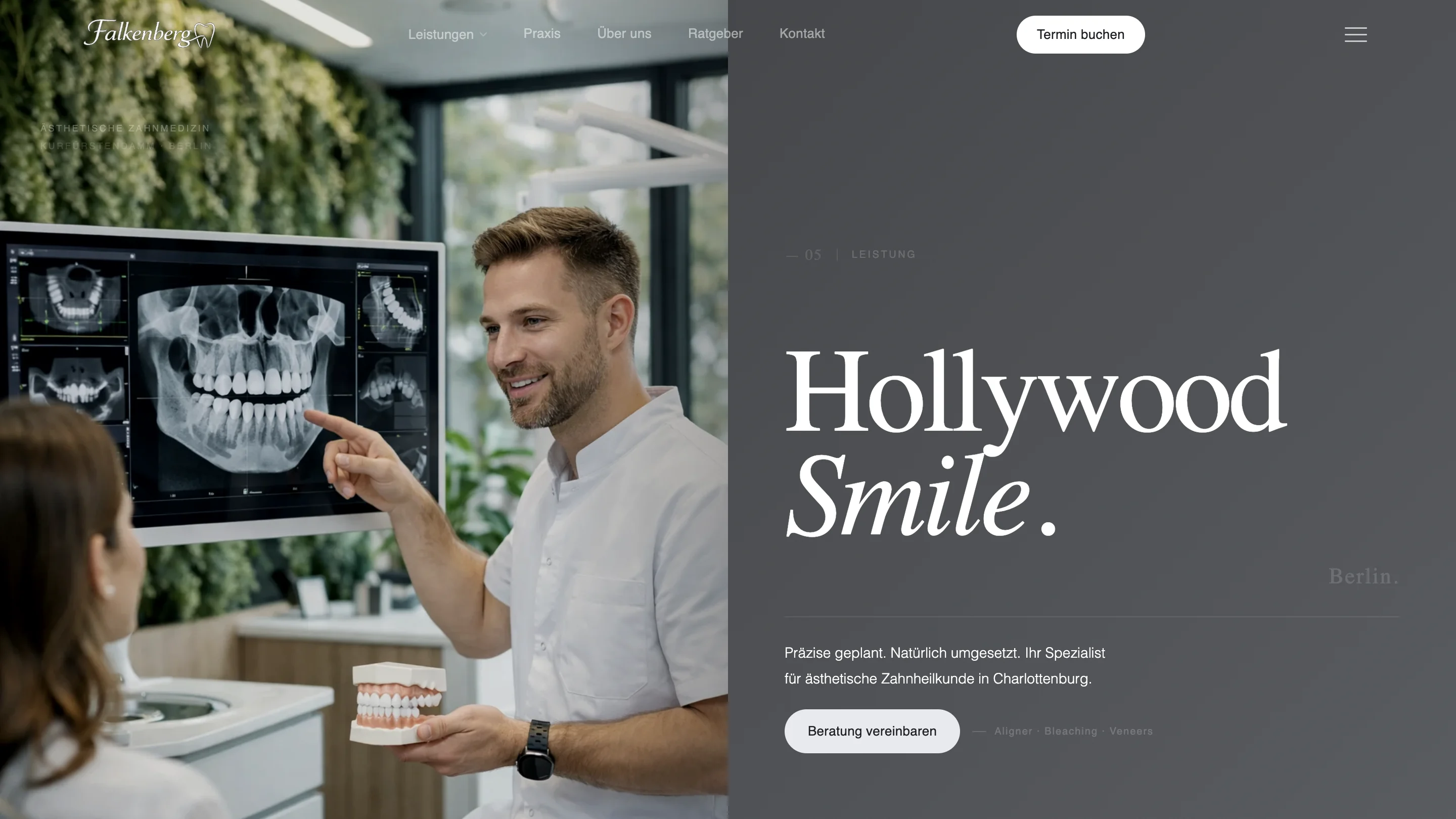
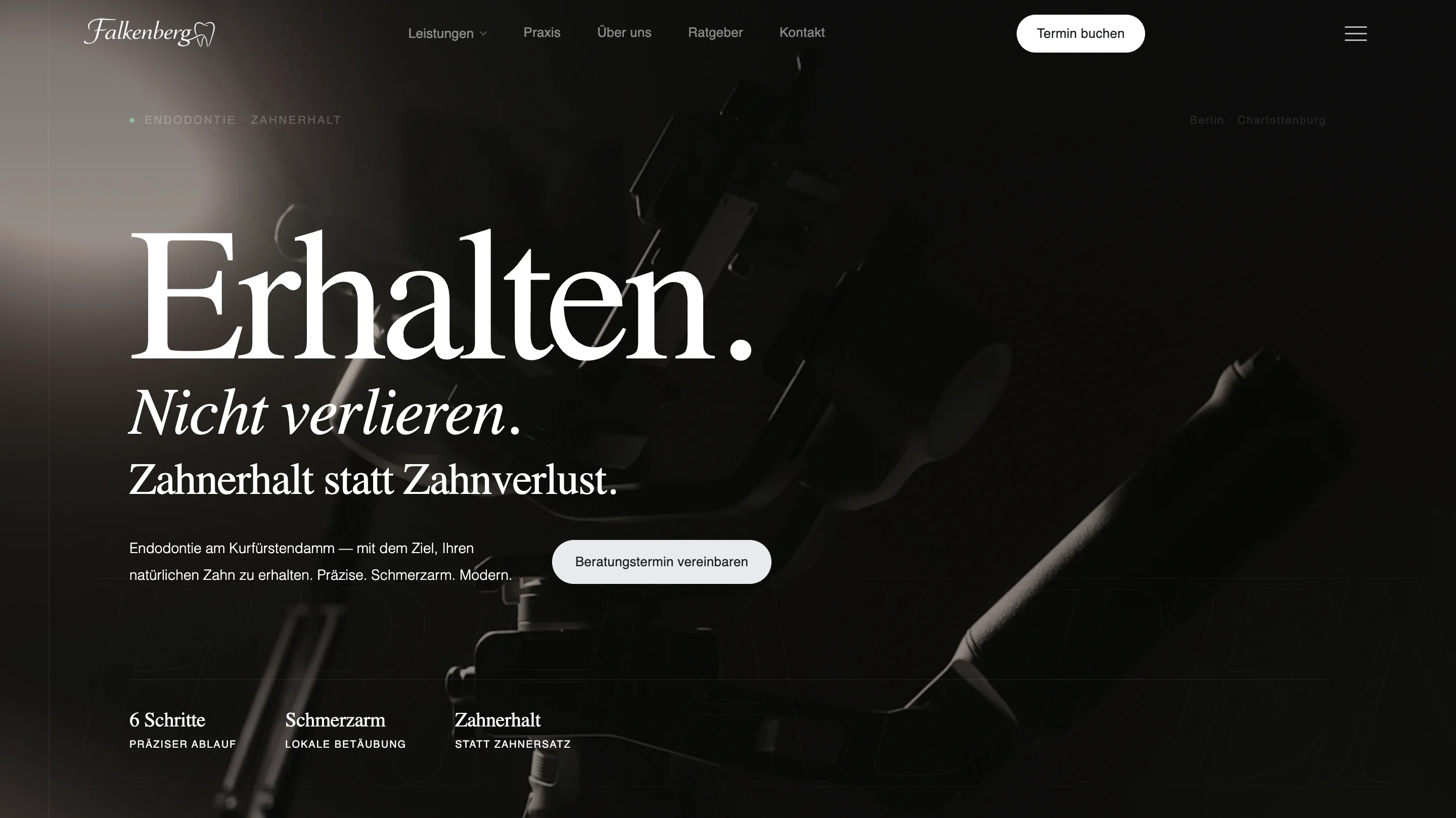
The study explores how a possible clinic-side platform pattern could be structured around clear information architecture rather than promotional messaging, in an illustrative way.
It imagines a possible clinic context where complex treatment topics could be organised through a calm, readable content hierarchy. No specific clinic, patient outcome, or treatment efficacy is described, claimed or implied.
Instead of focusing on promotional language, the reference build is structured around clarity of content patterns, illustrative trust-building layout direction, and a scalable content architecture.
Framing Questions
The study explores how a clinic-side platform pattern could approach a few recurring information-design questions, illustratively.
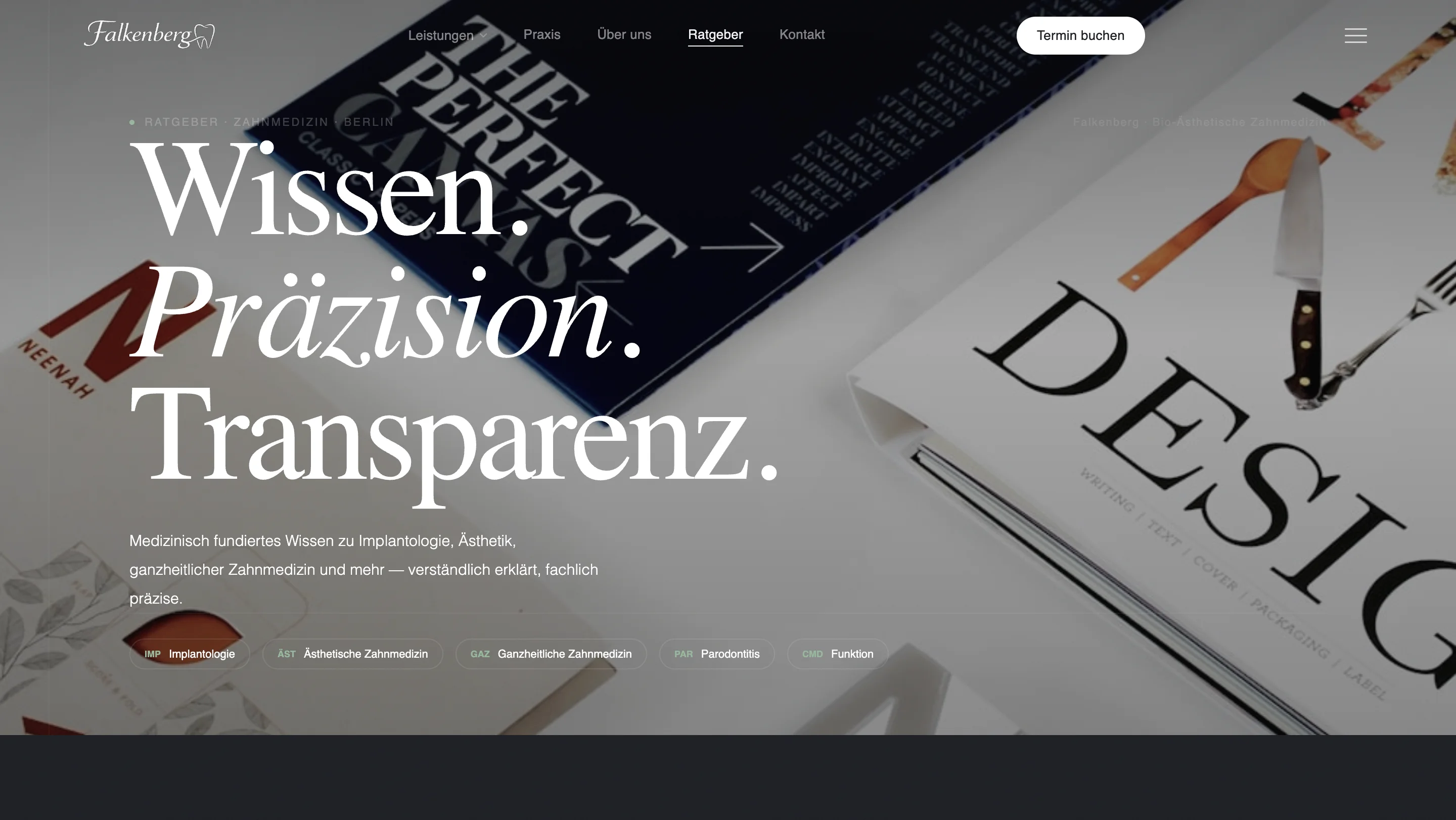
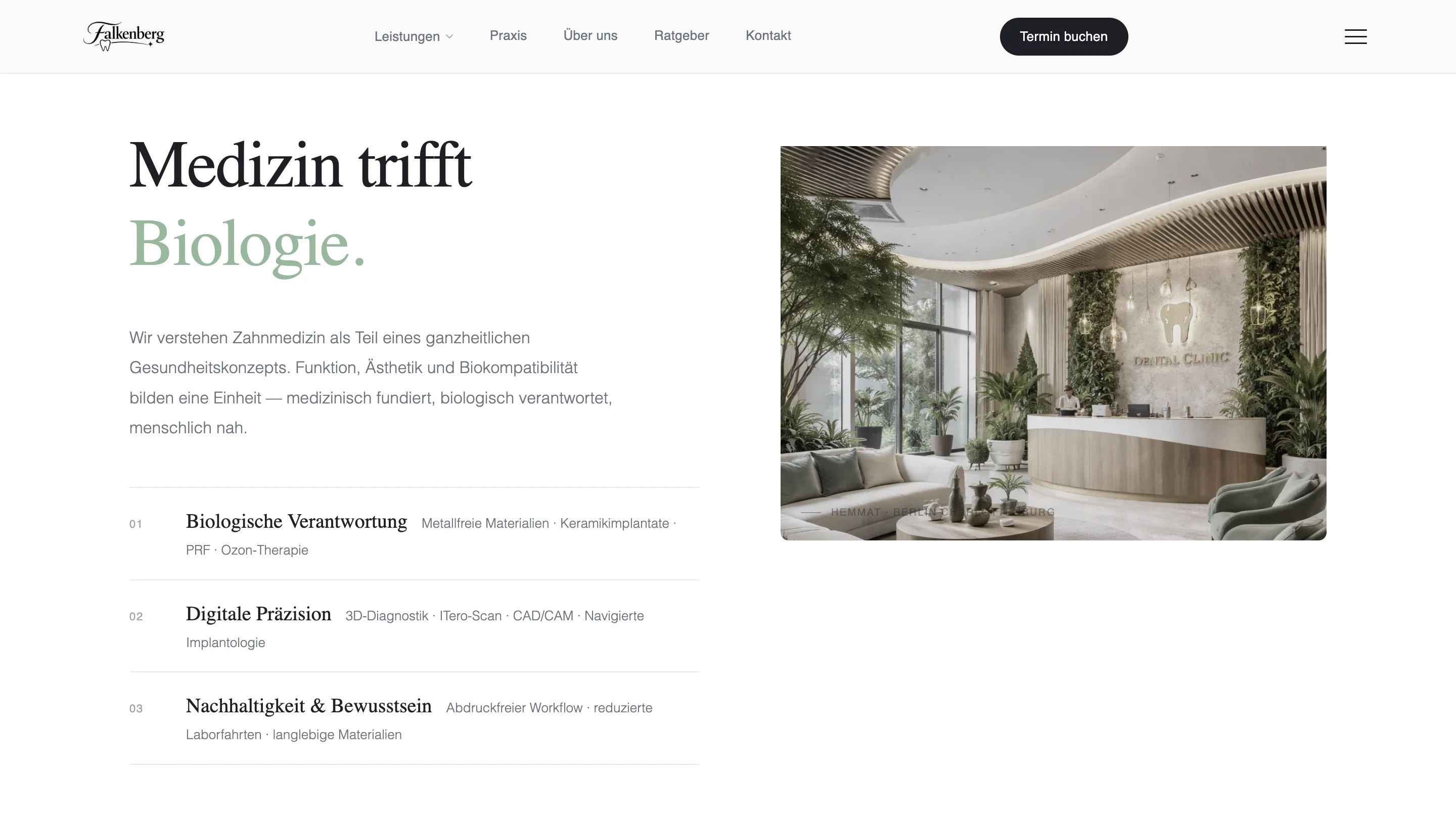
Illustrative treatment-information architecture
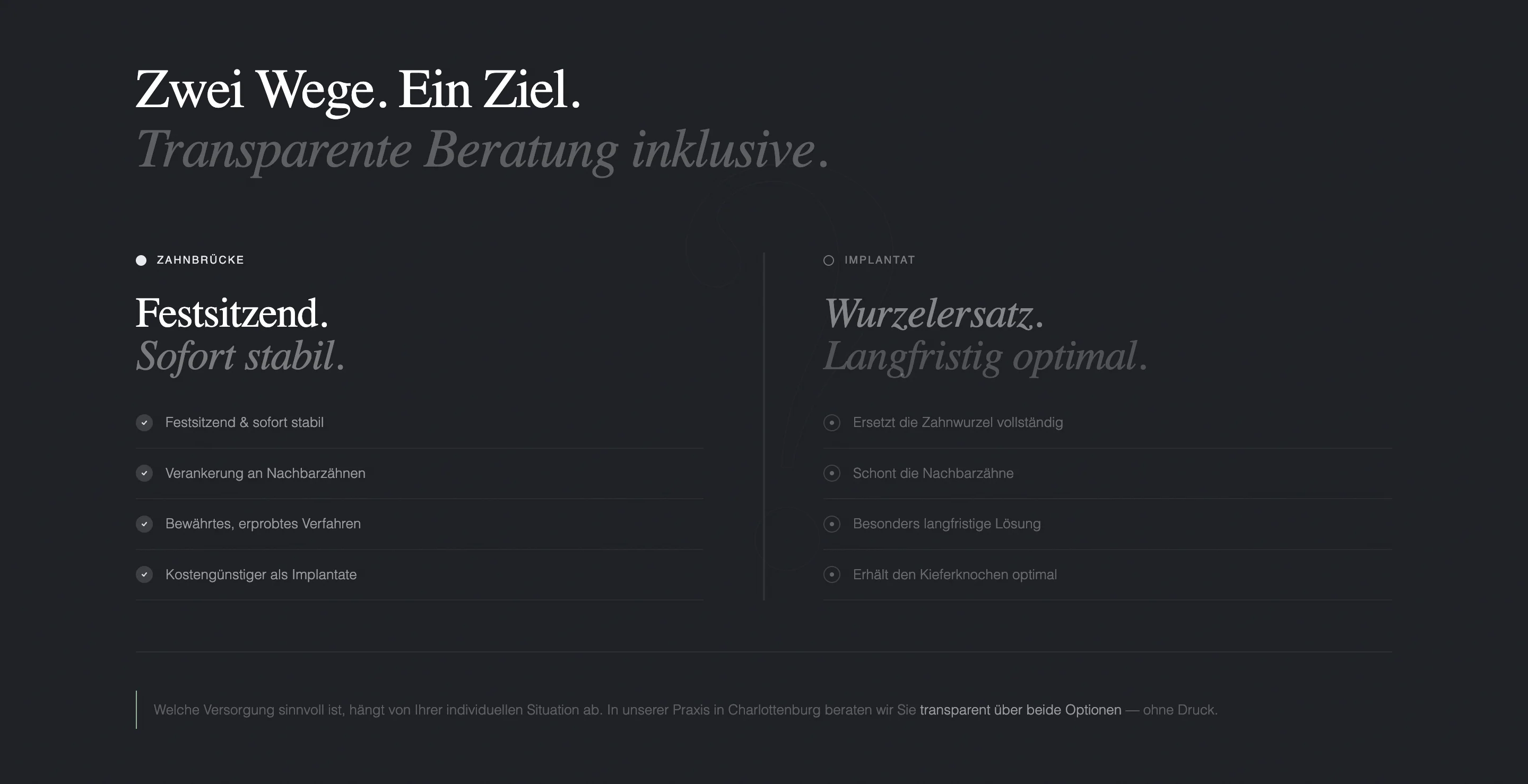
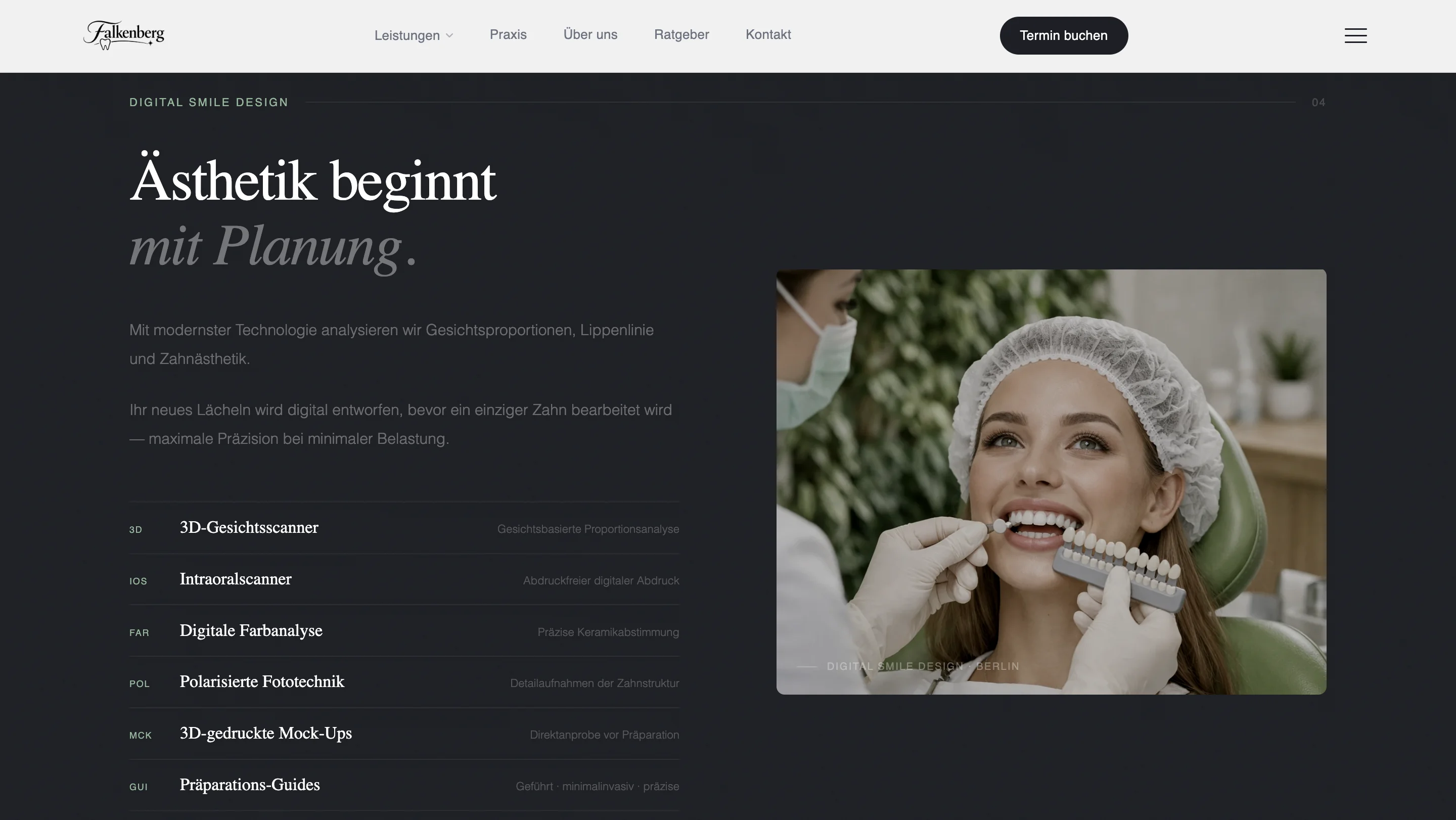
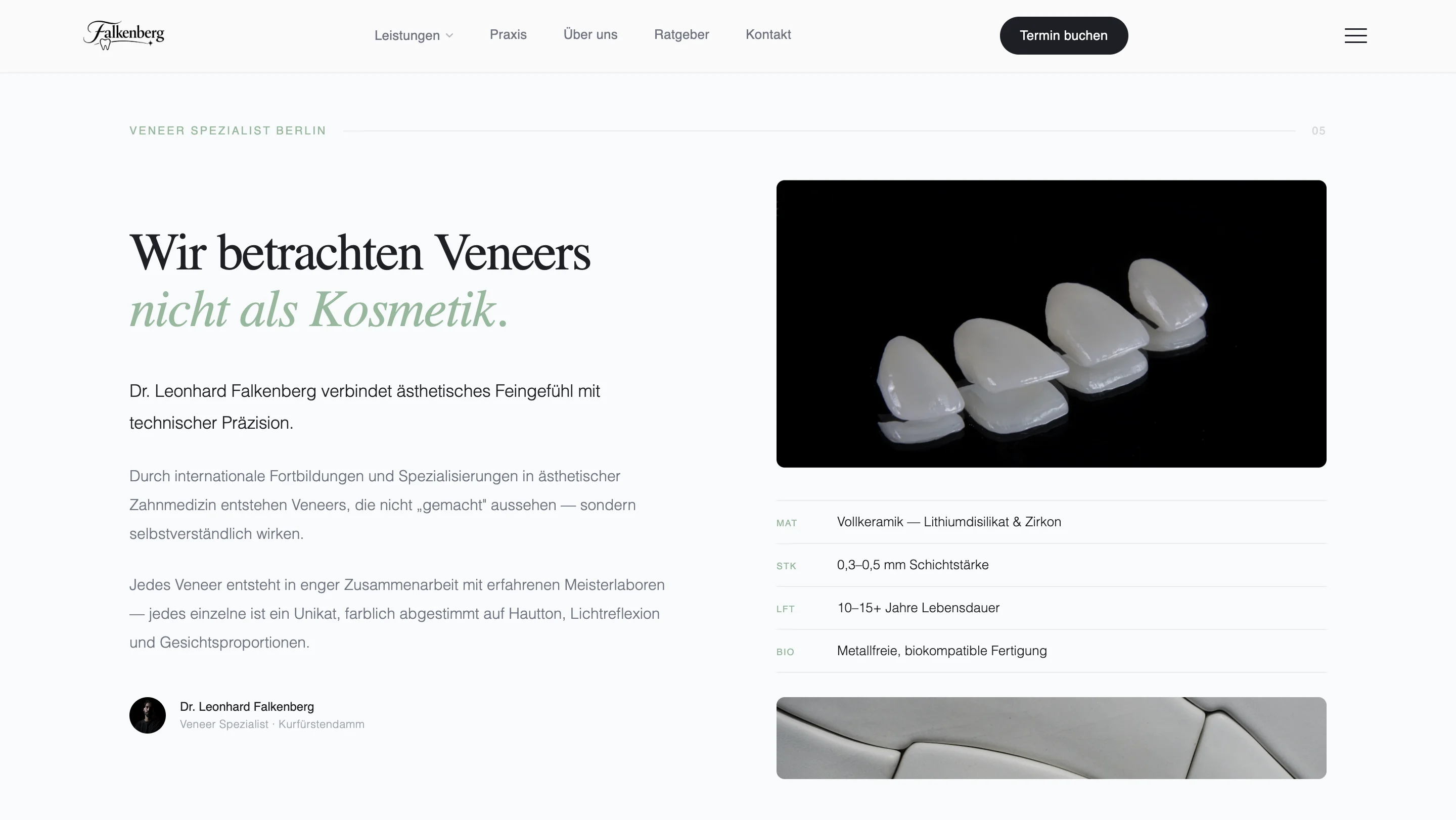
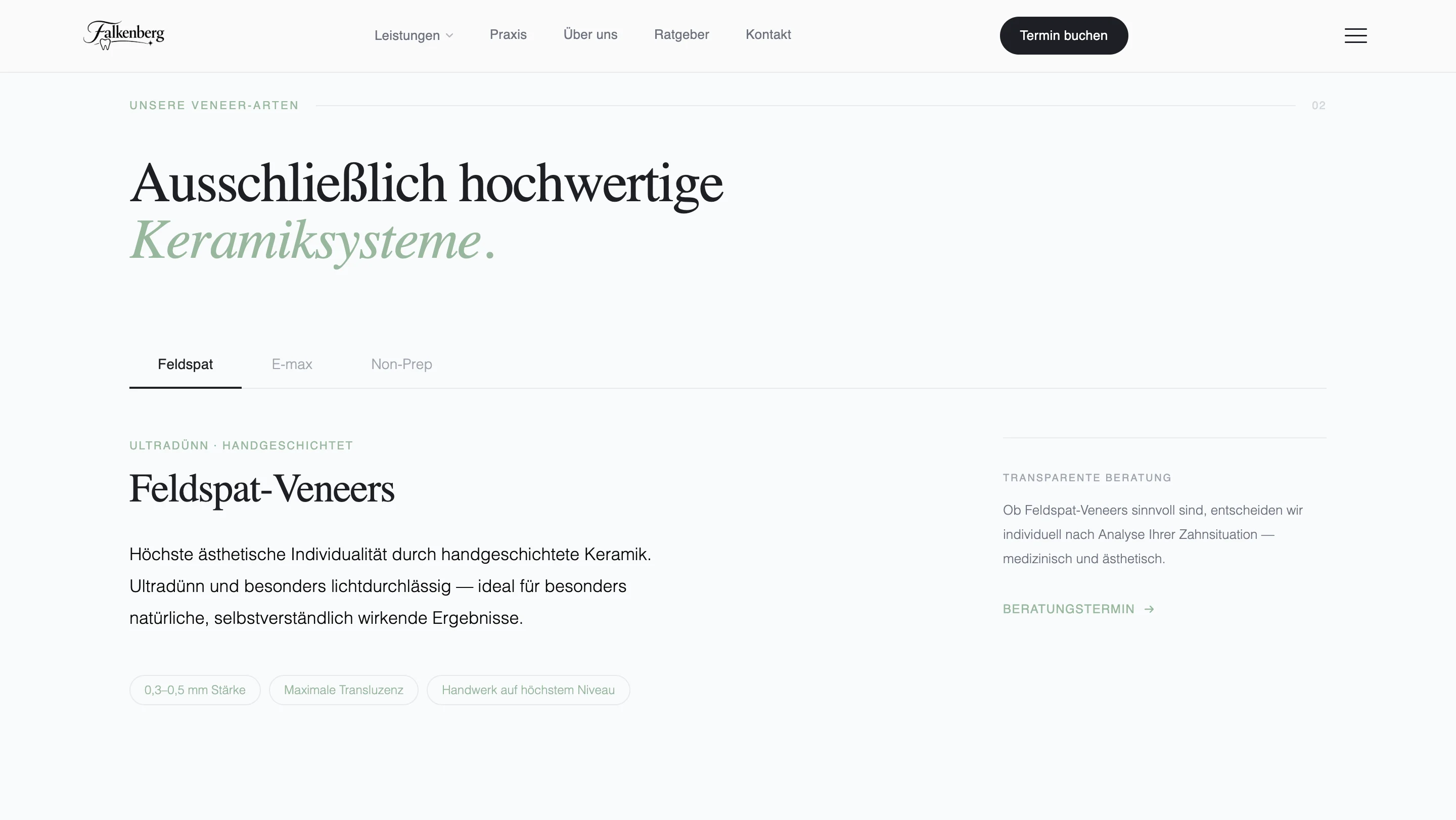
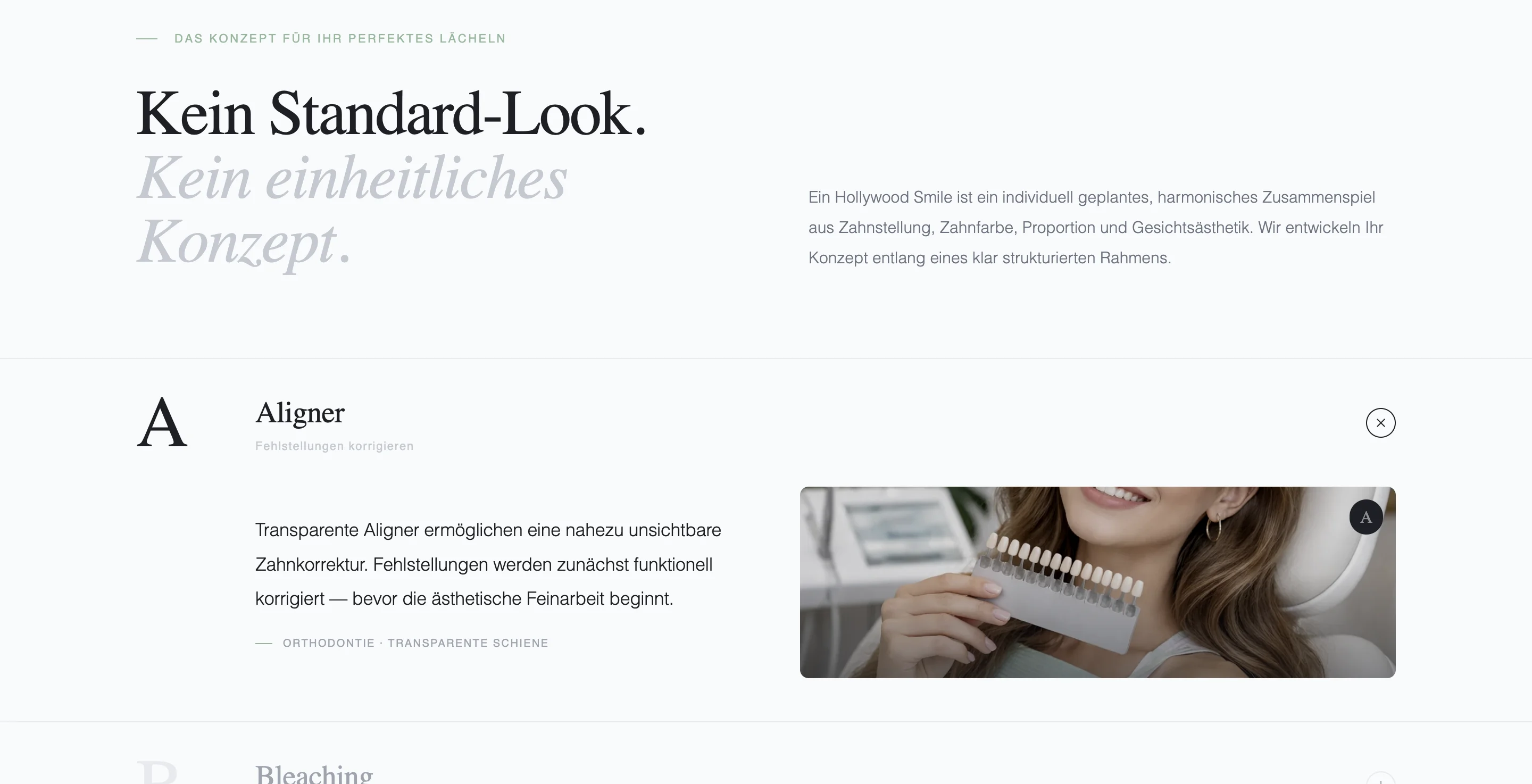
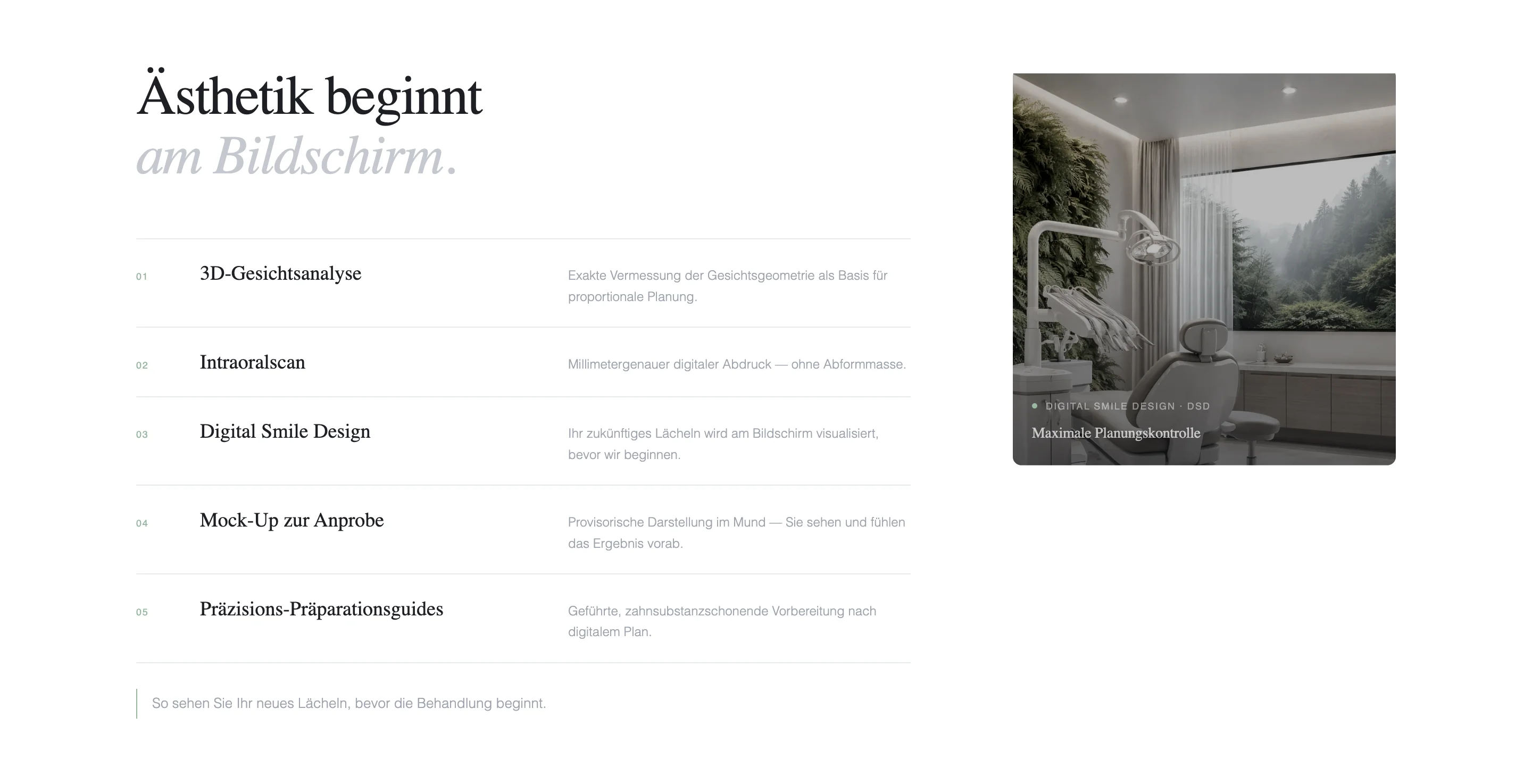
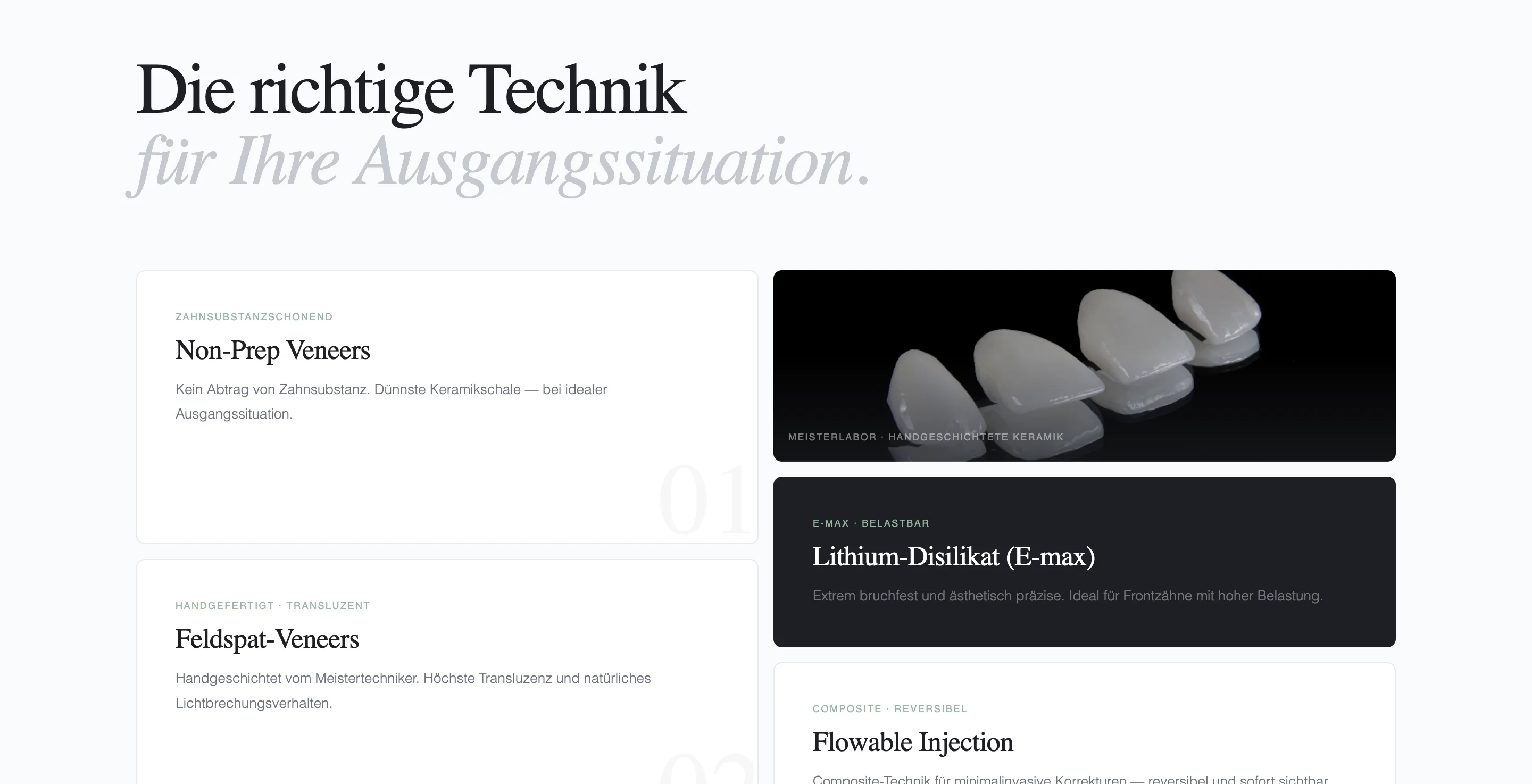
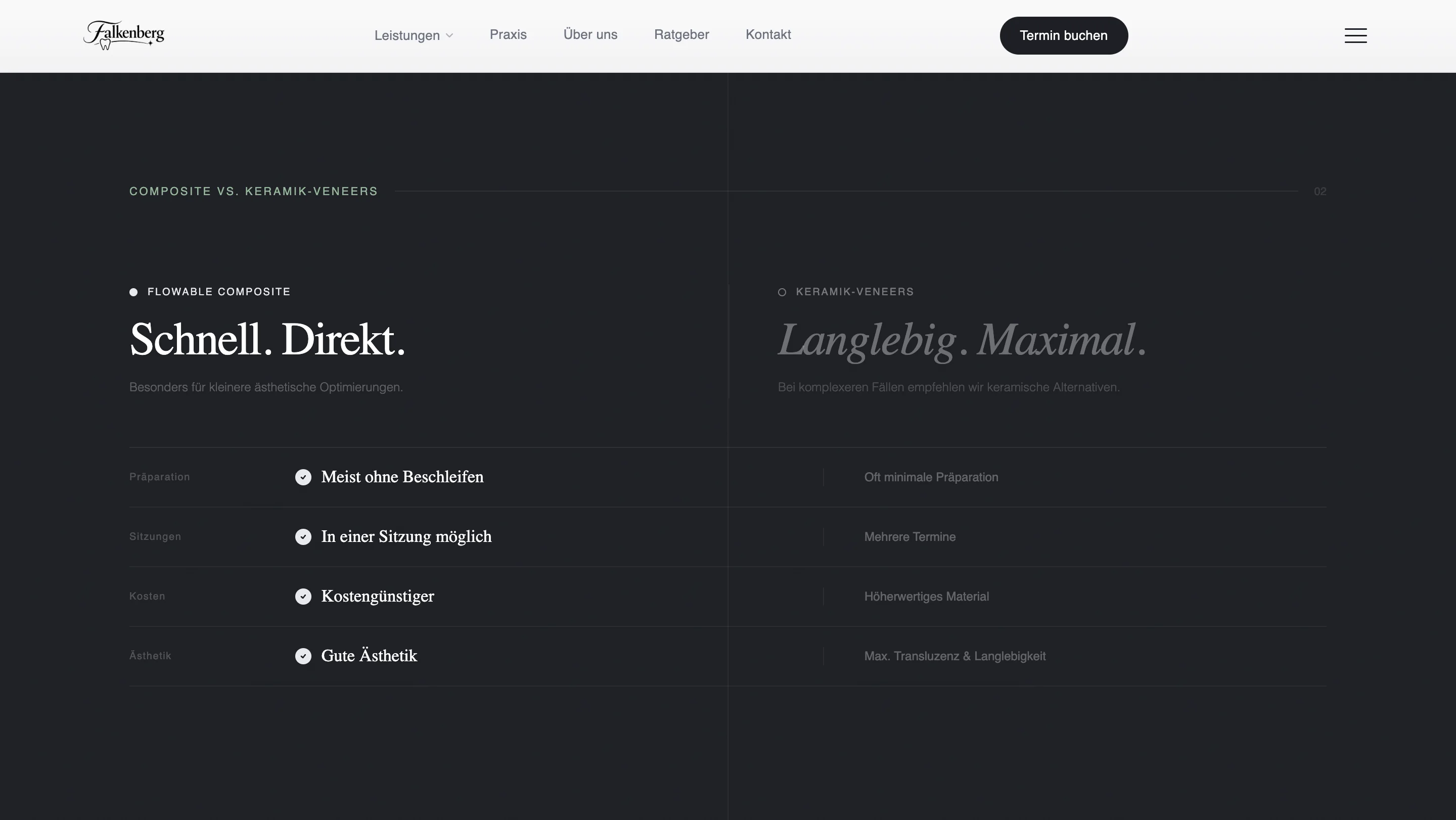
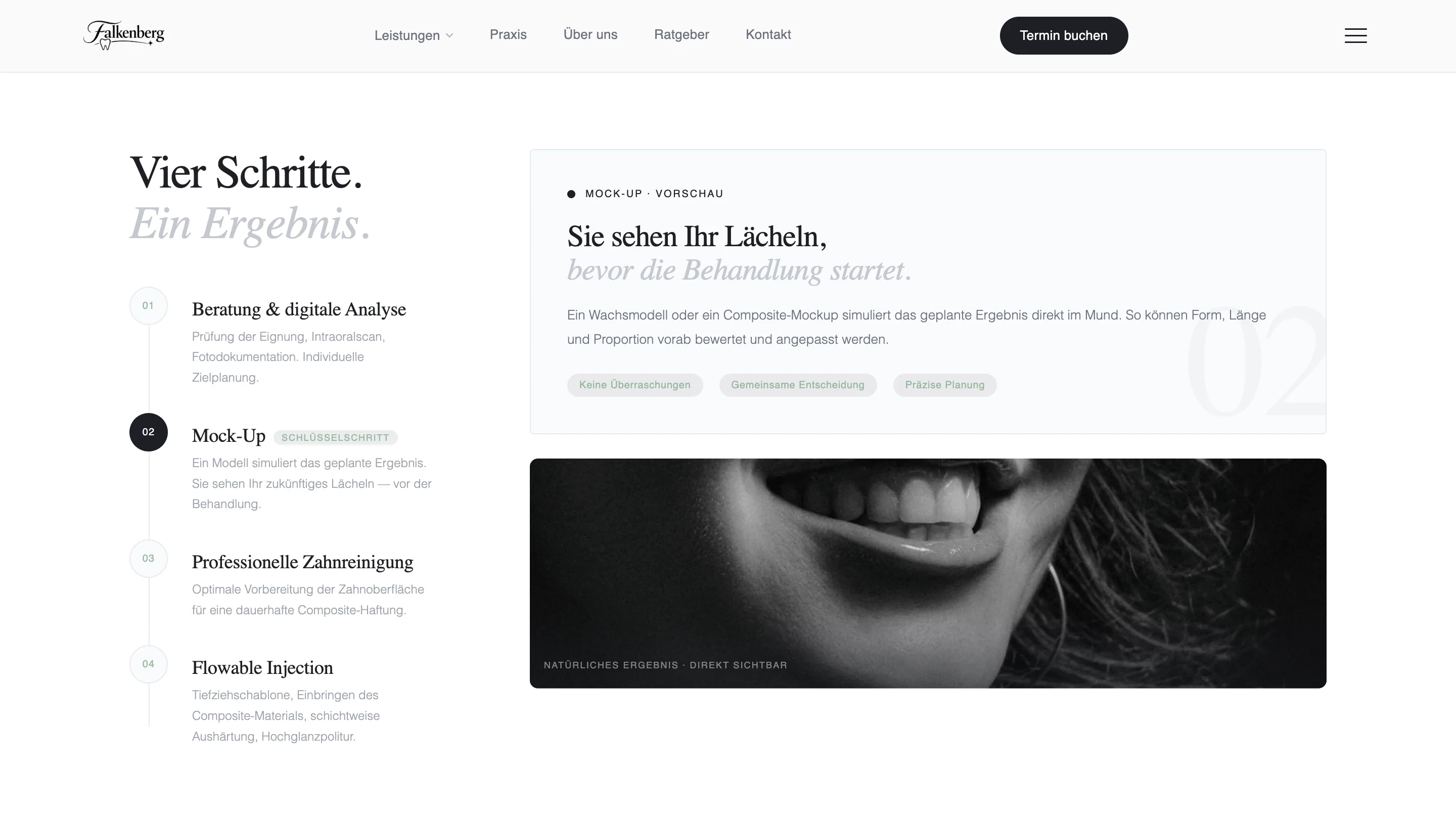
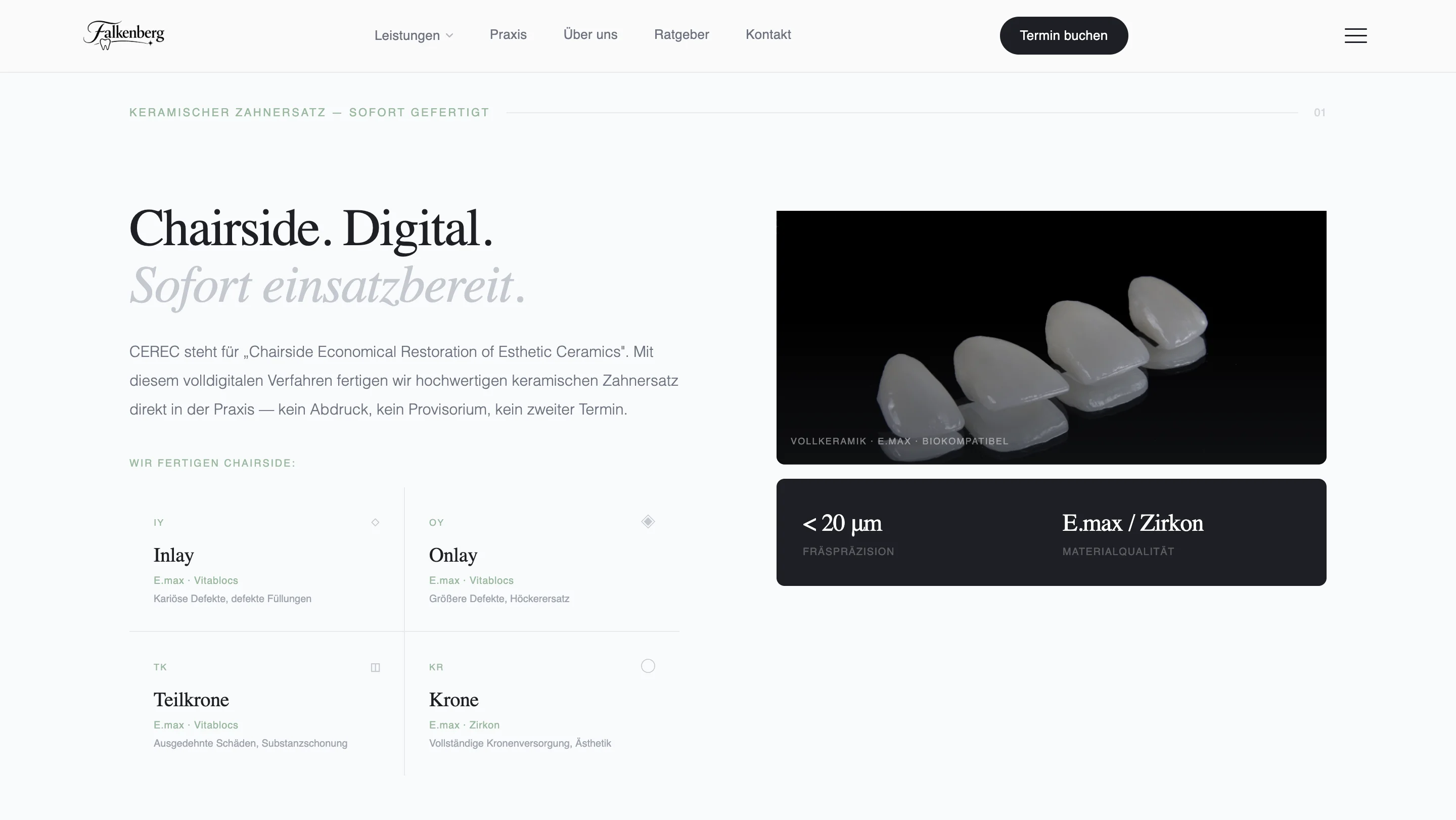
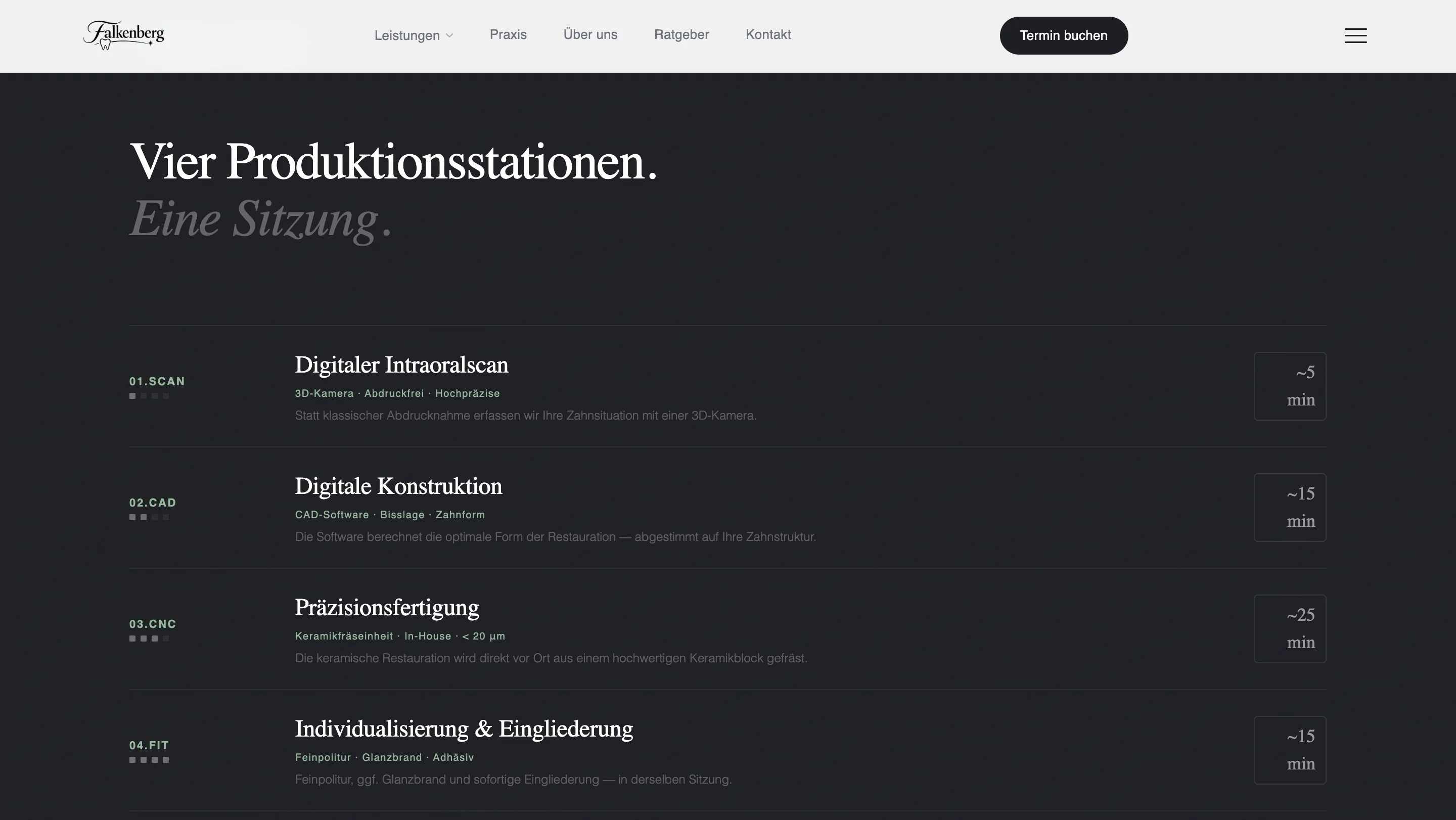
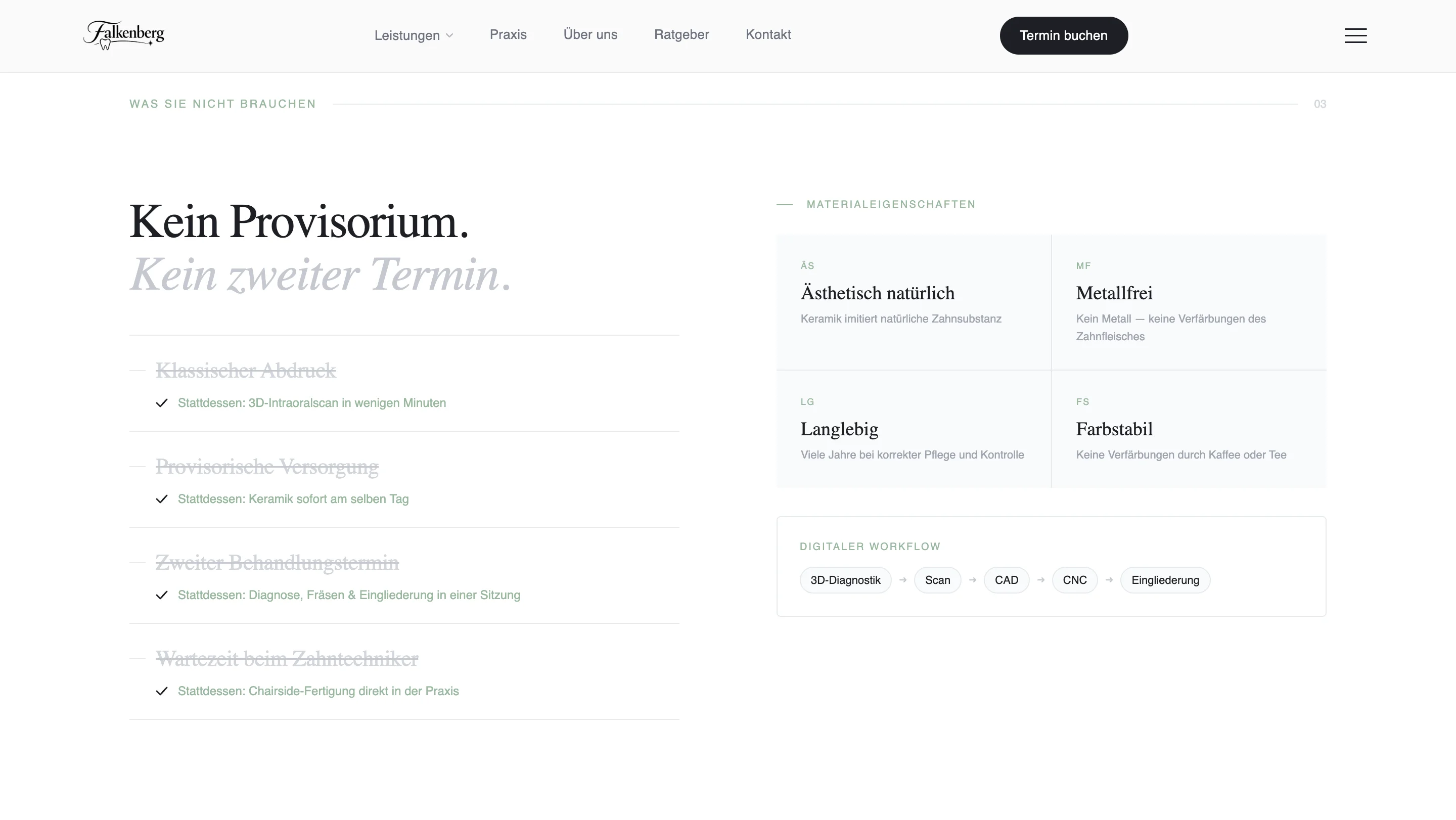
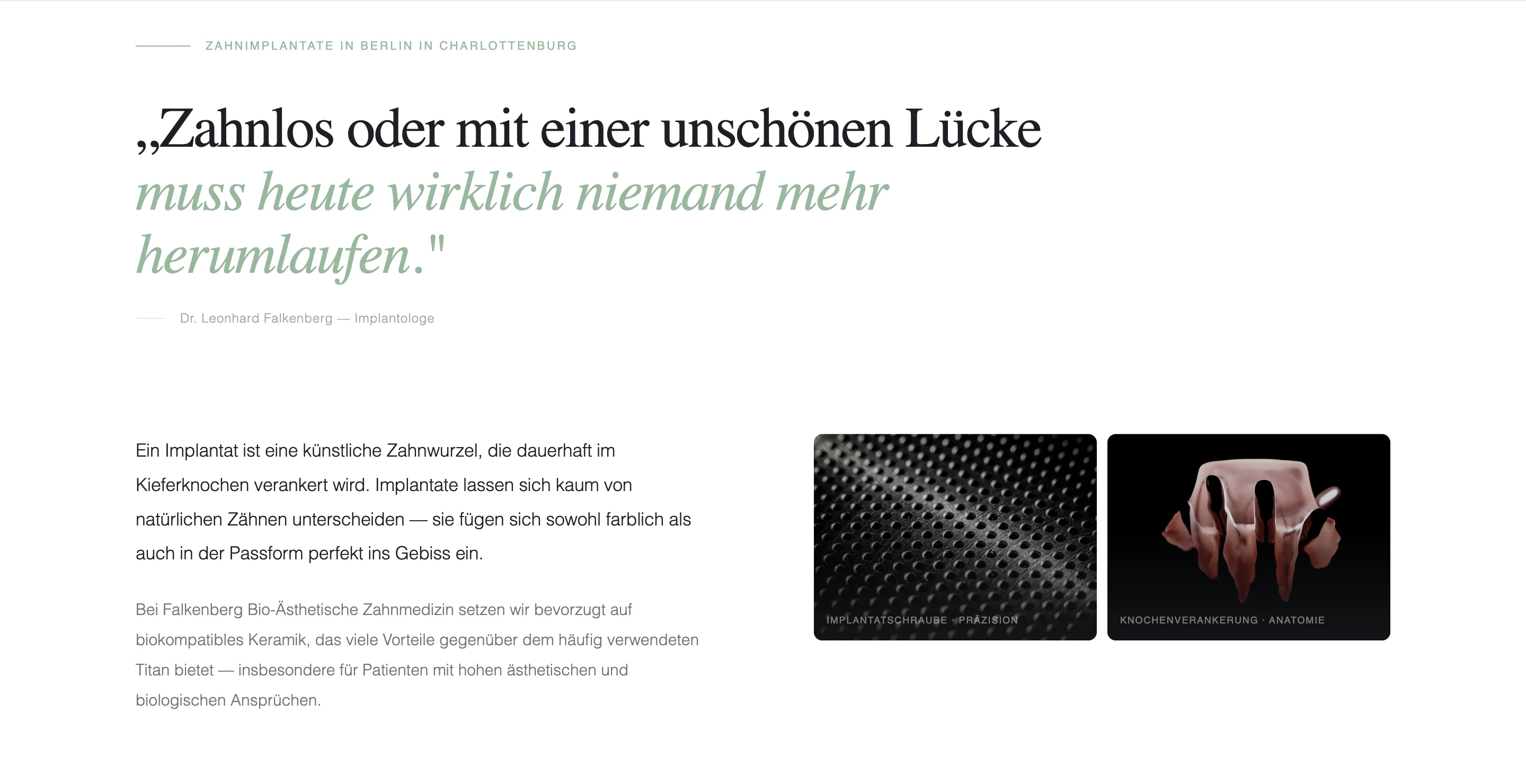
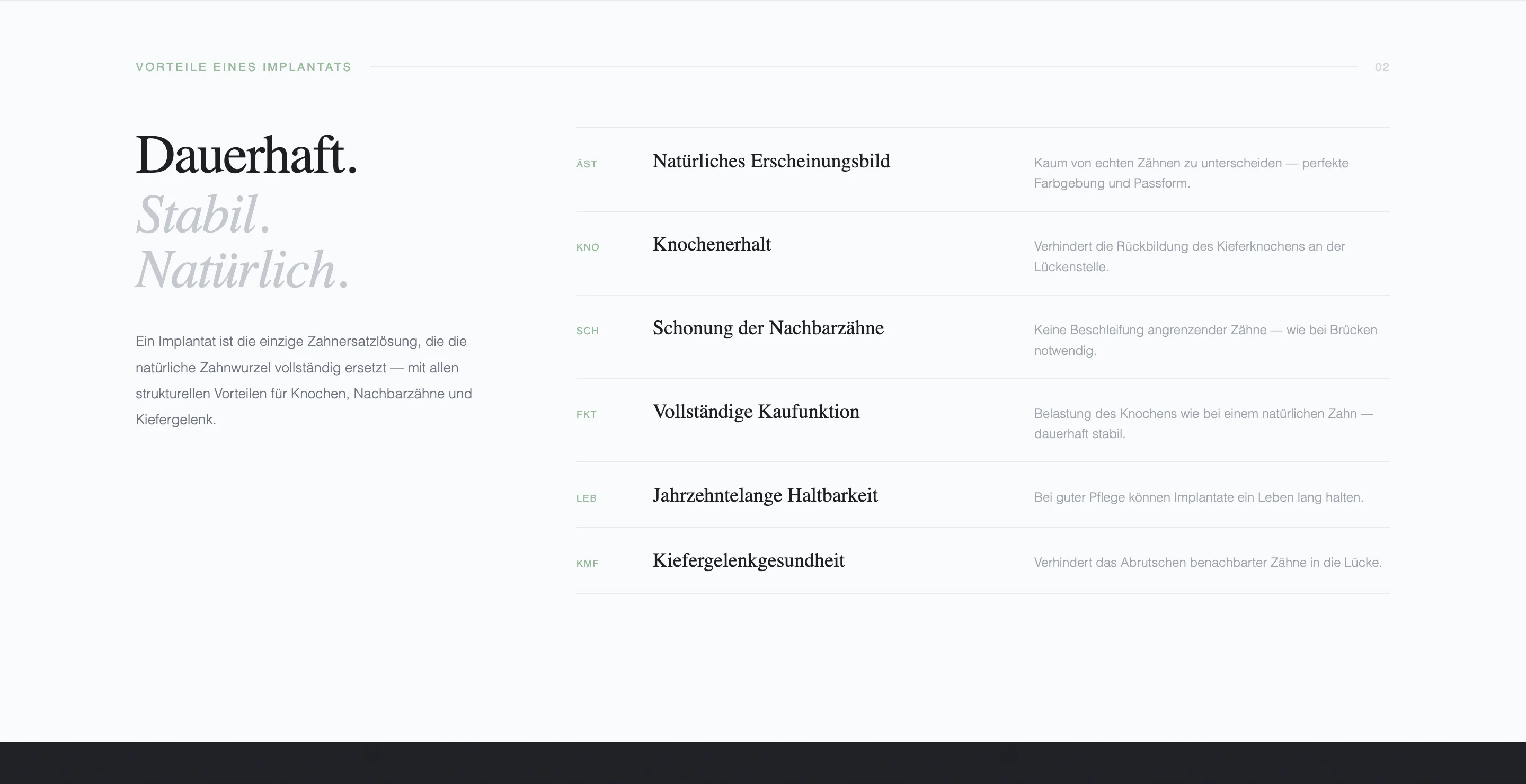
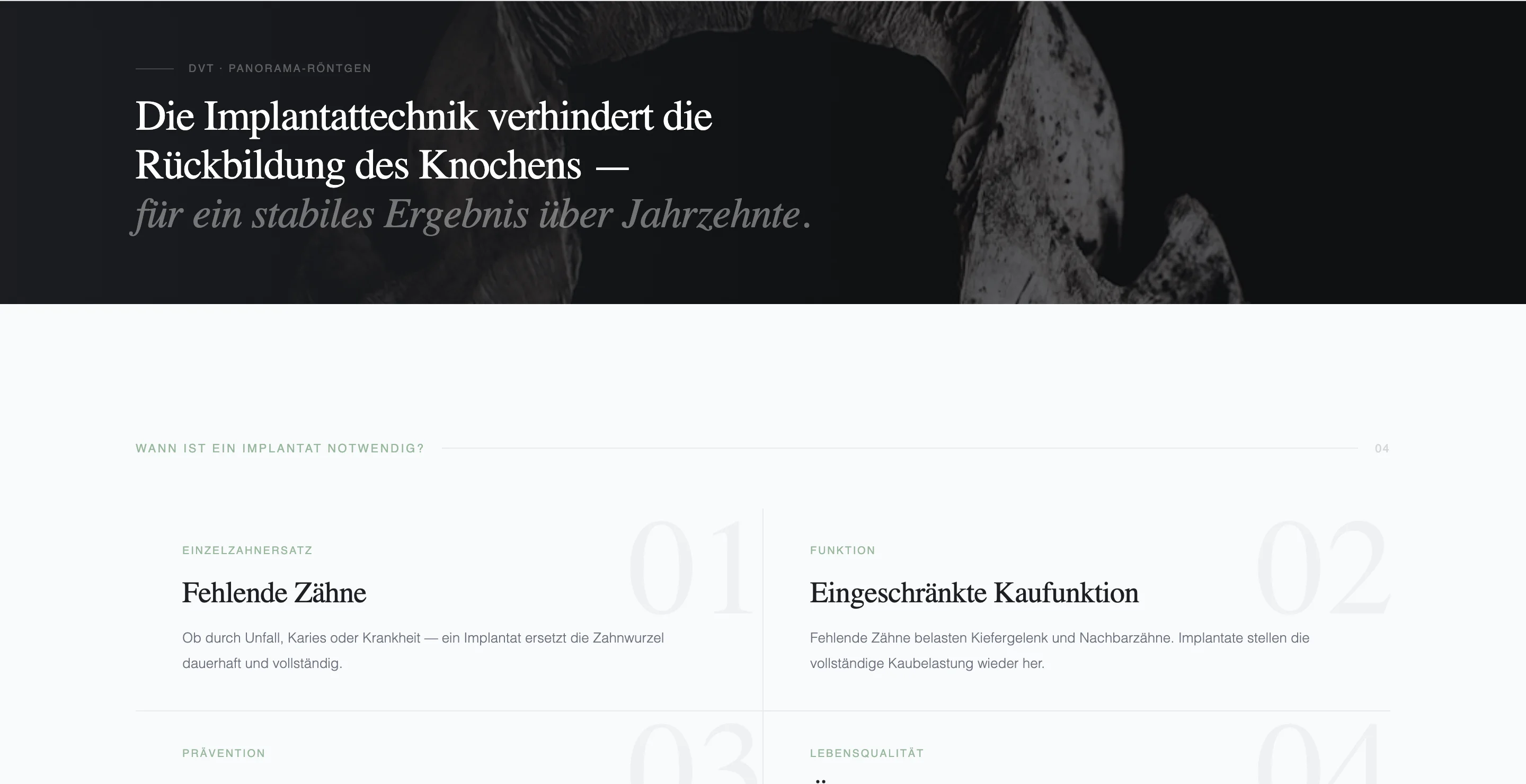
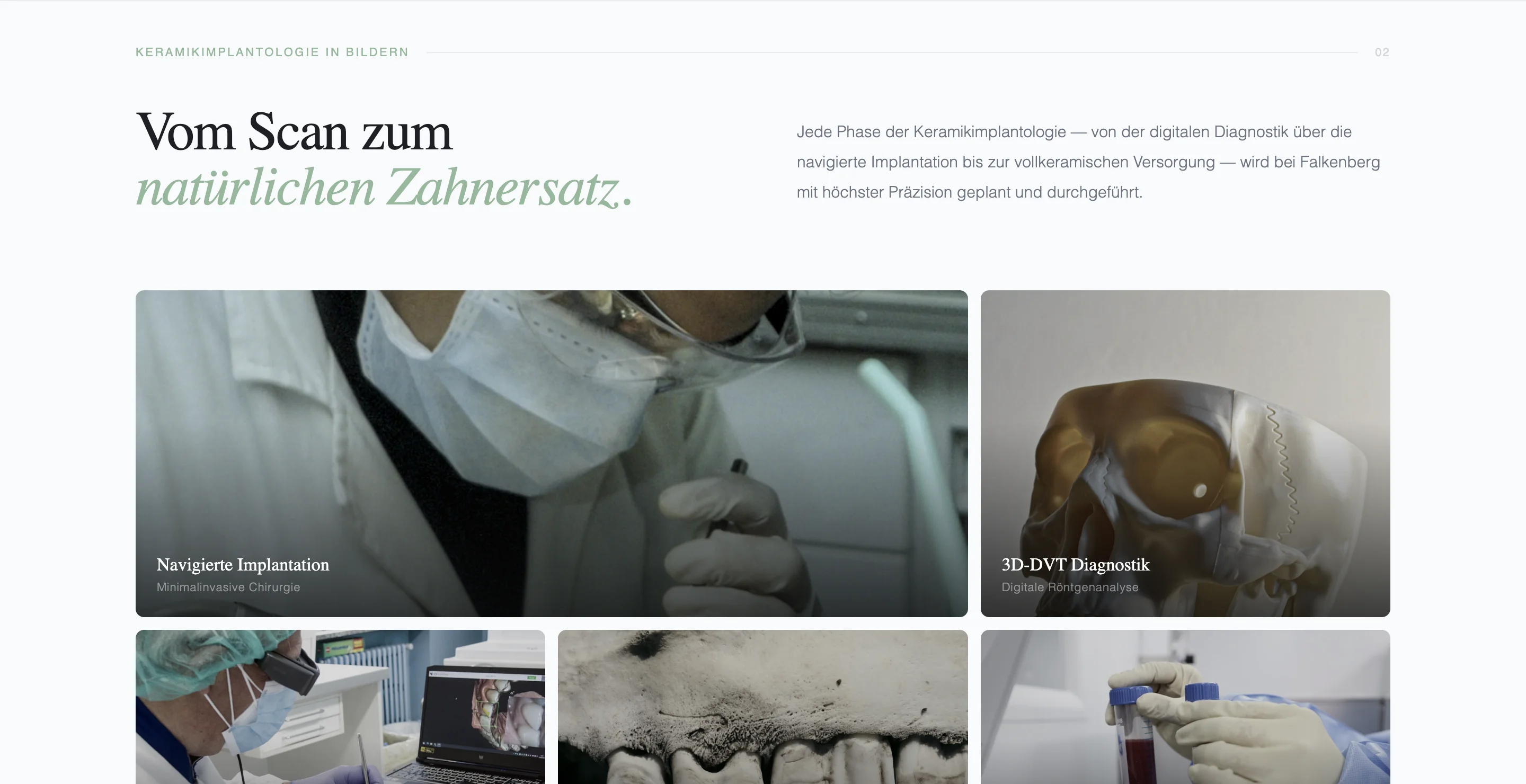
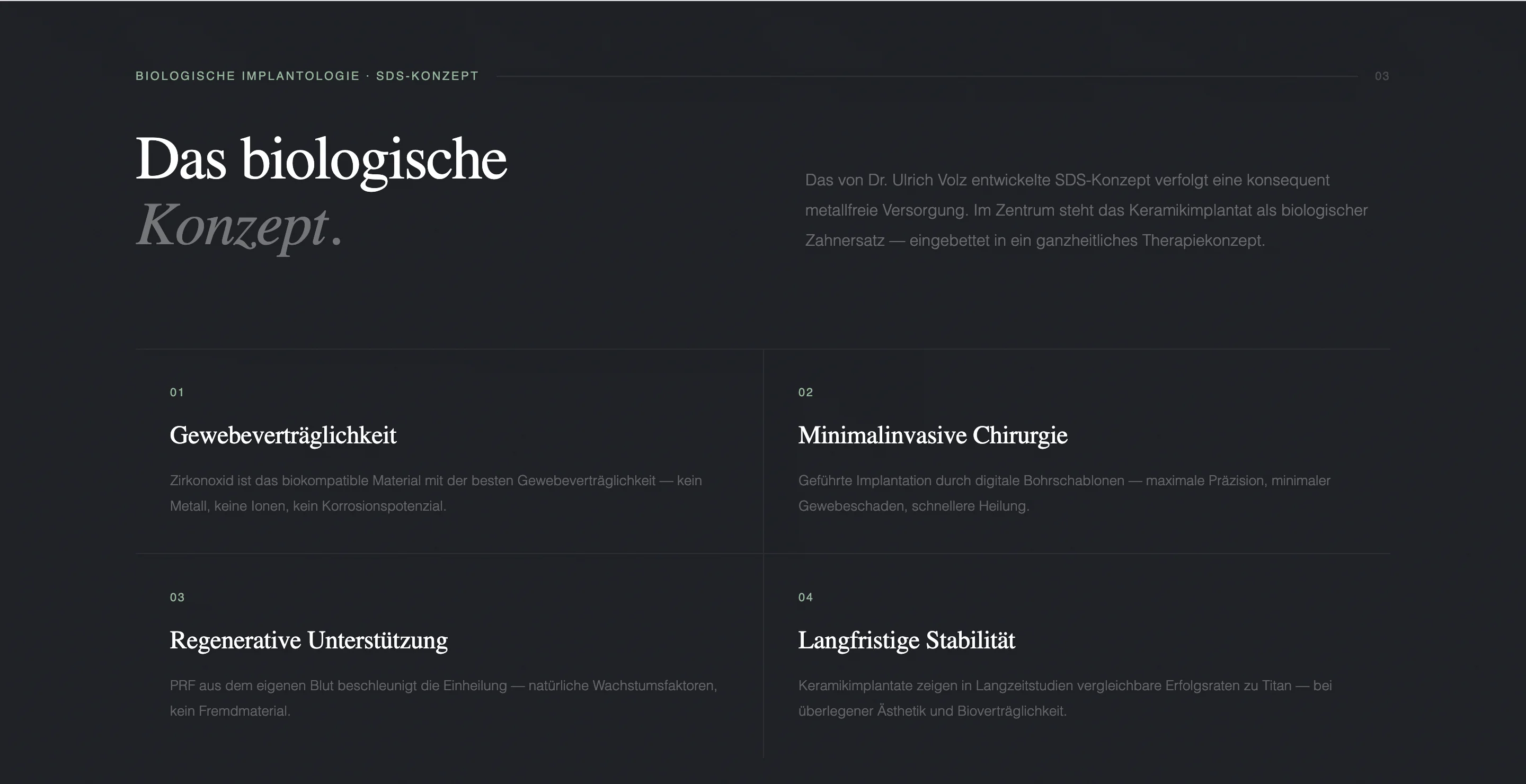
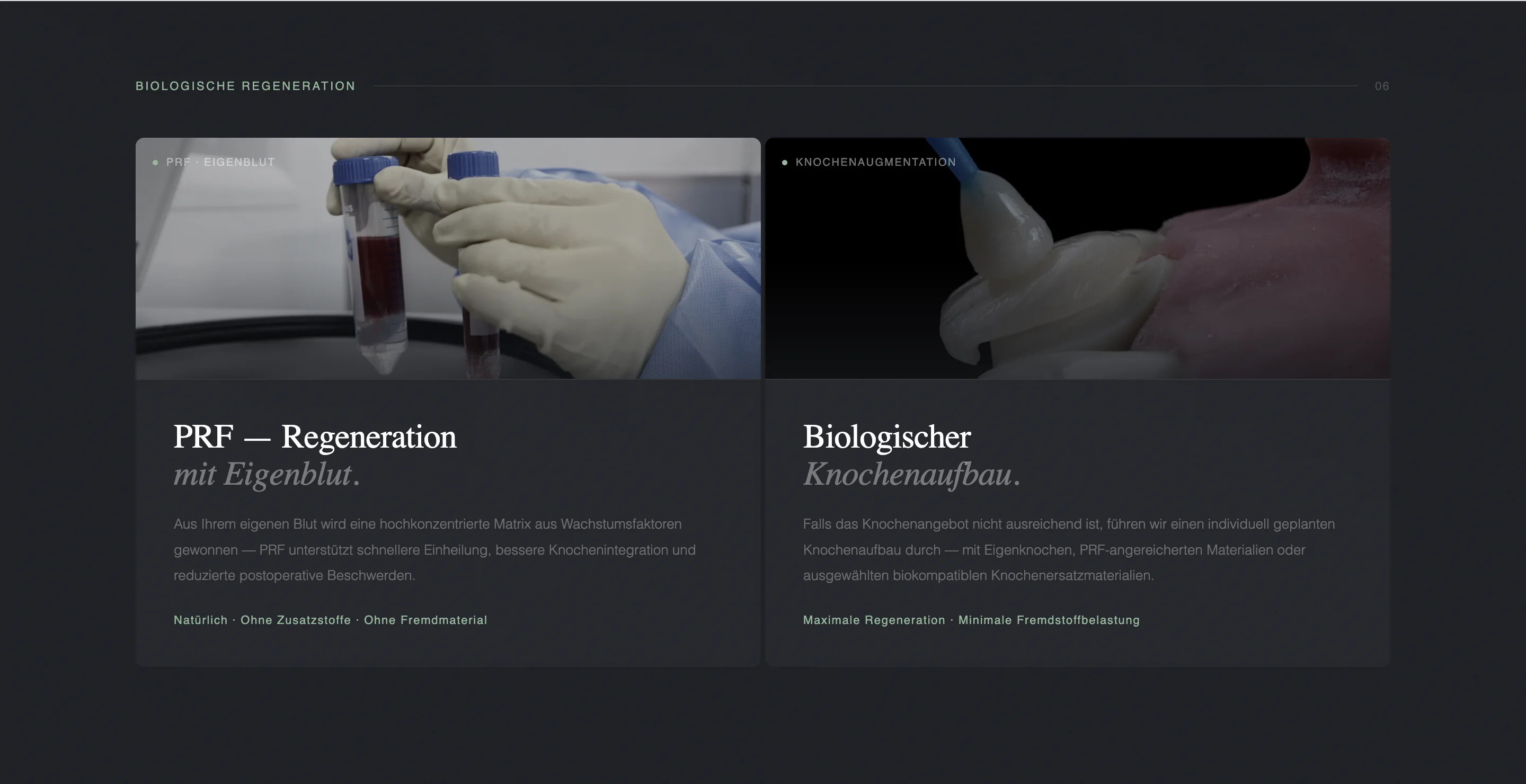
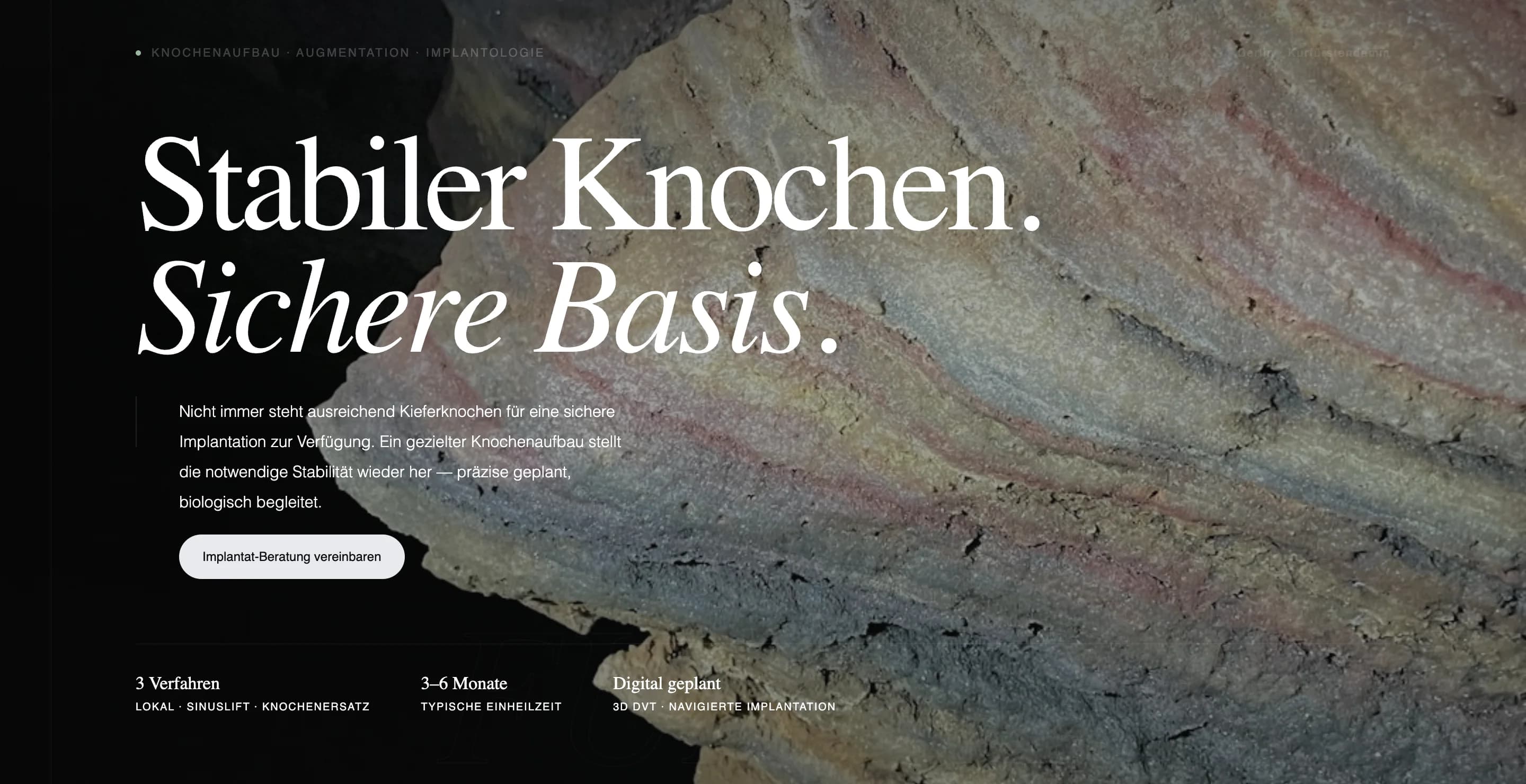
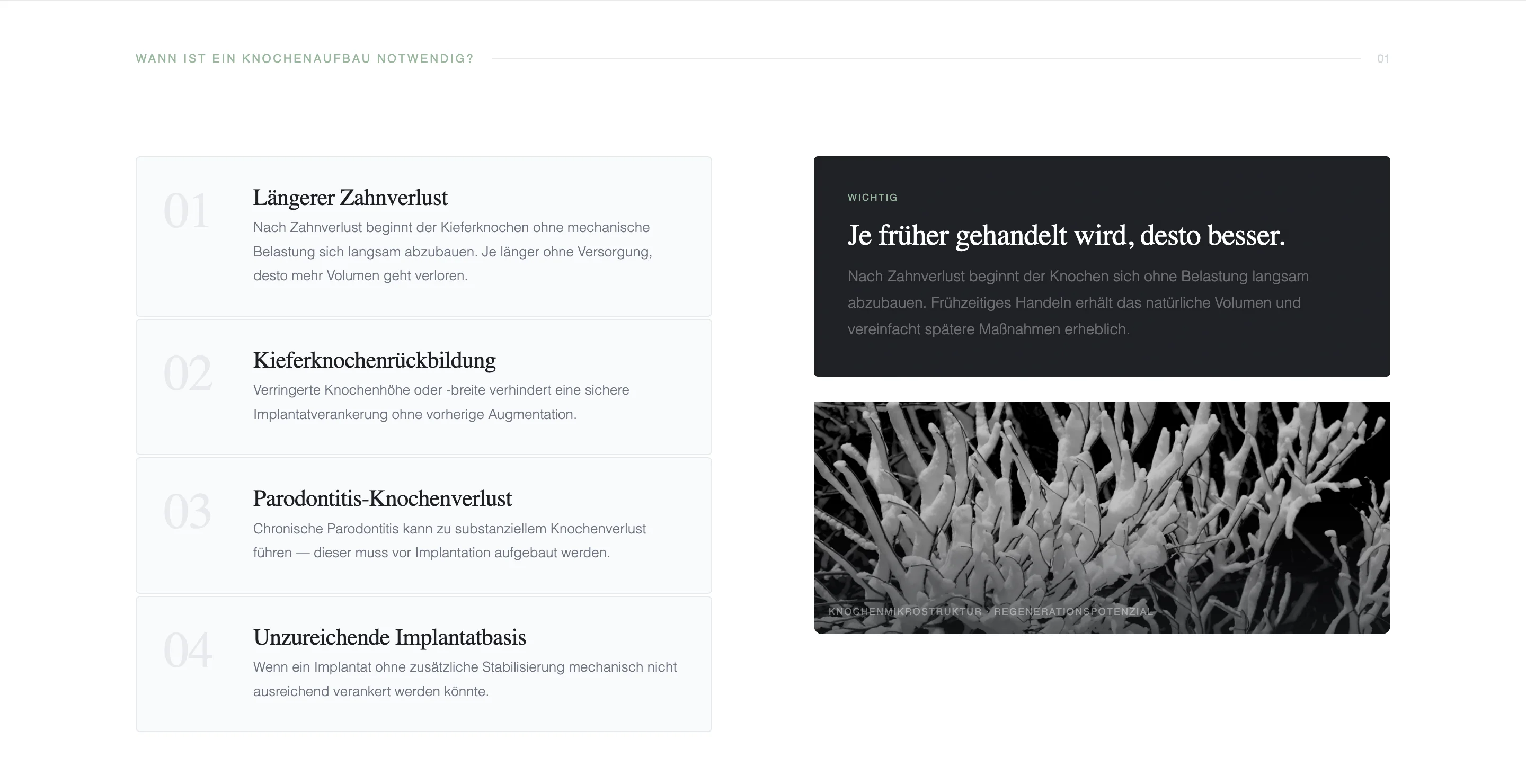
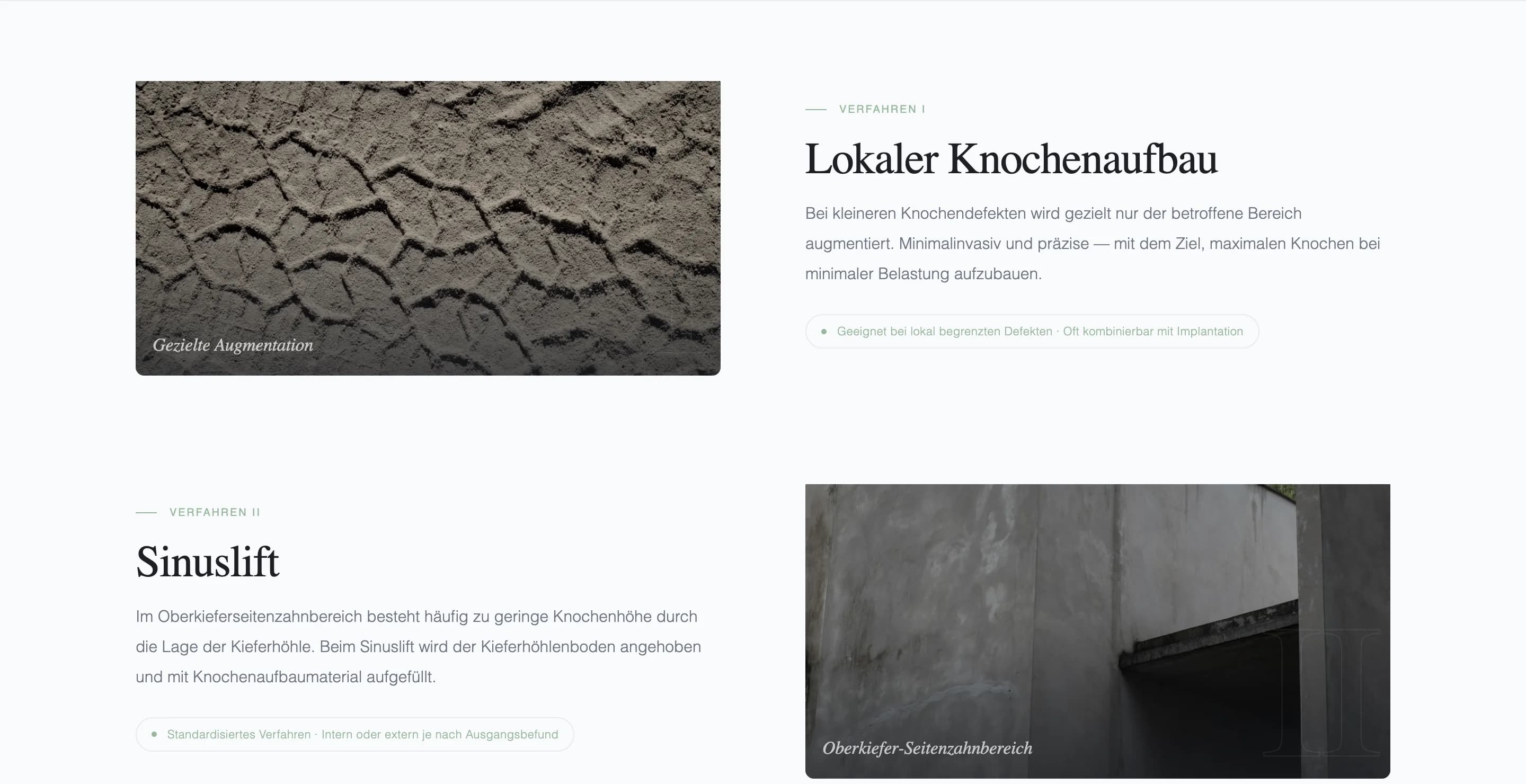
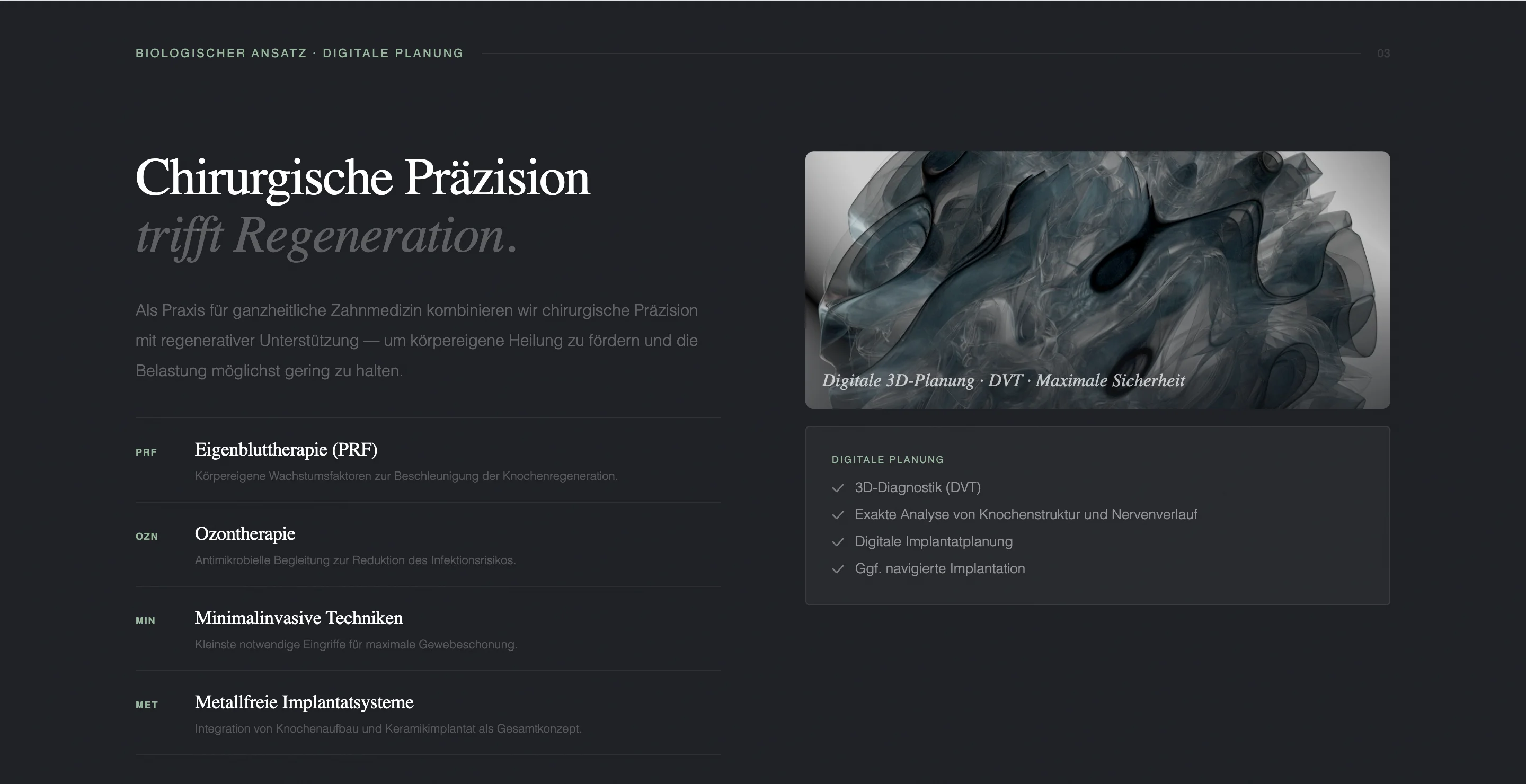
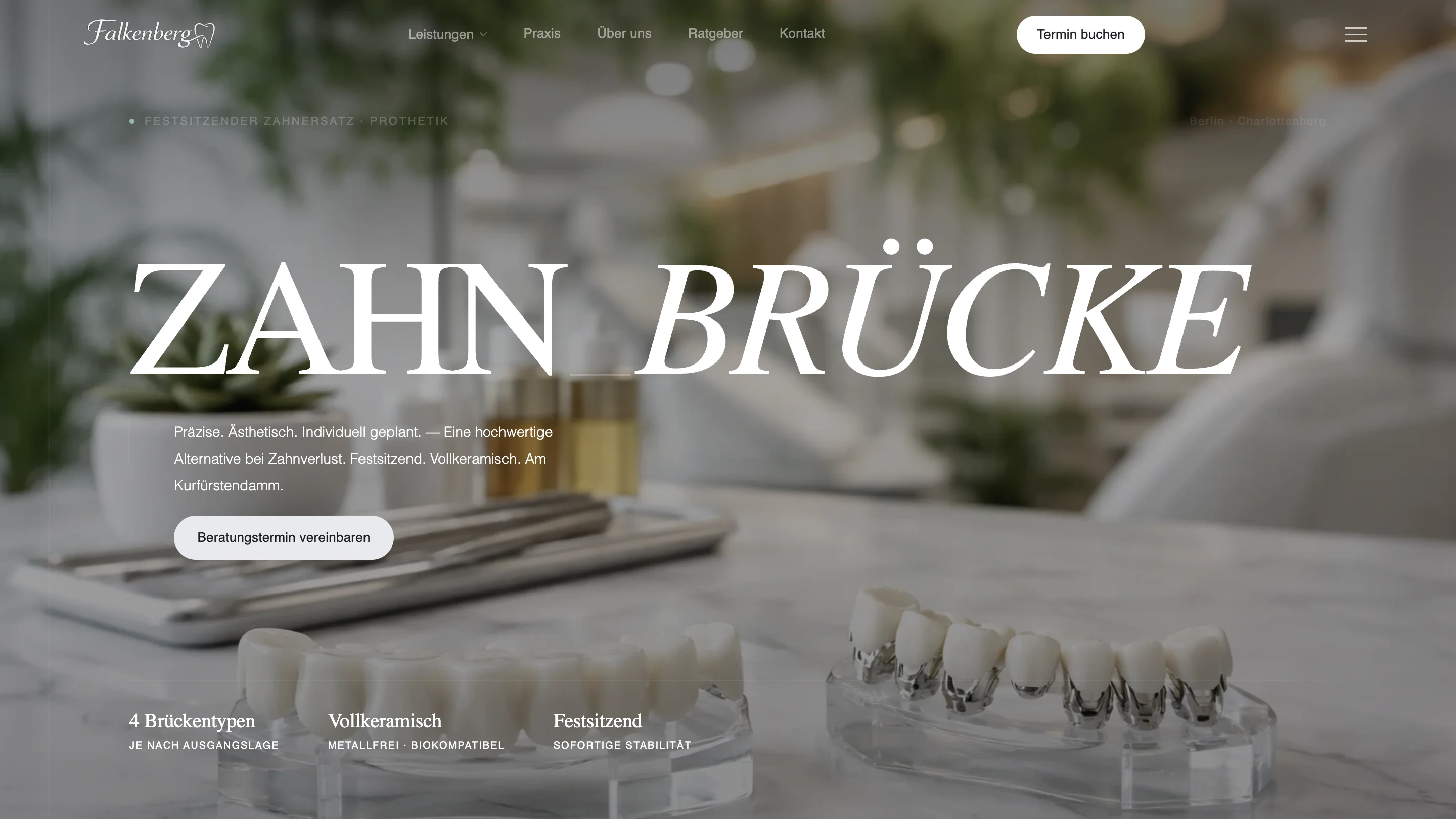
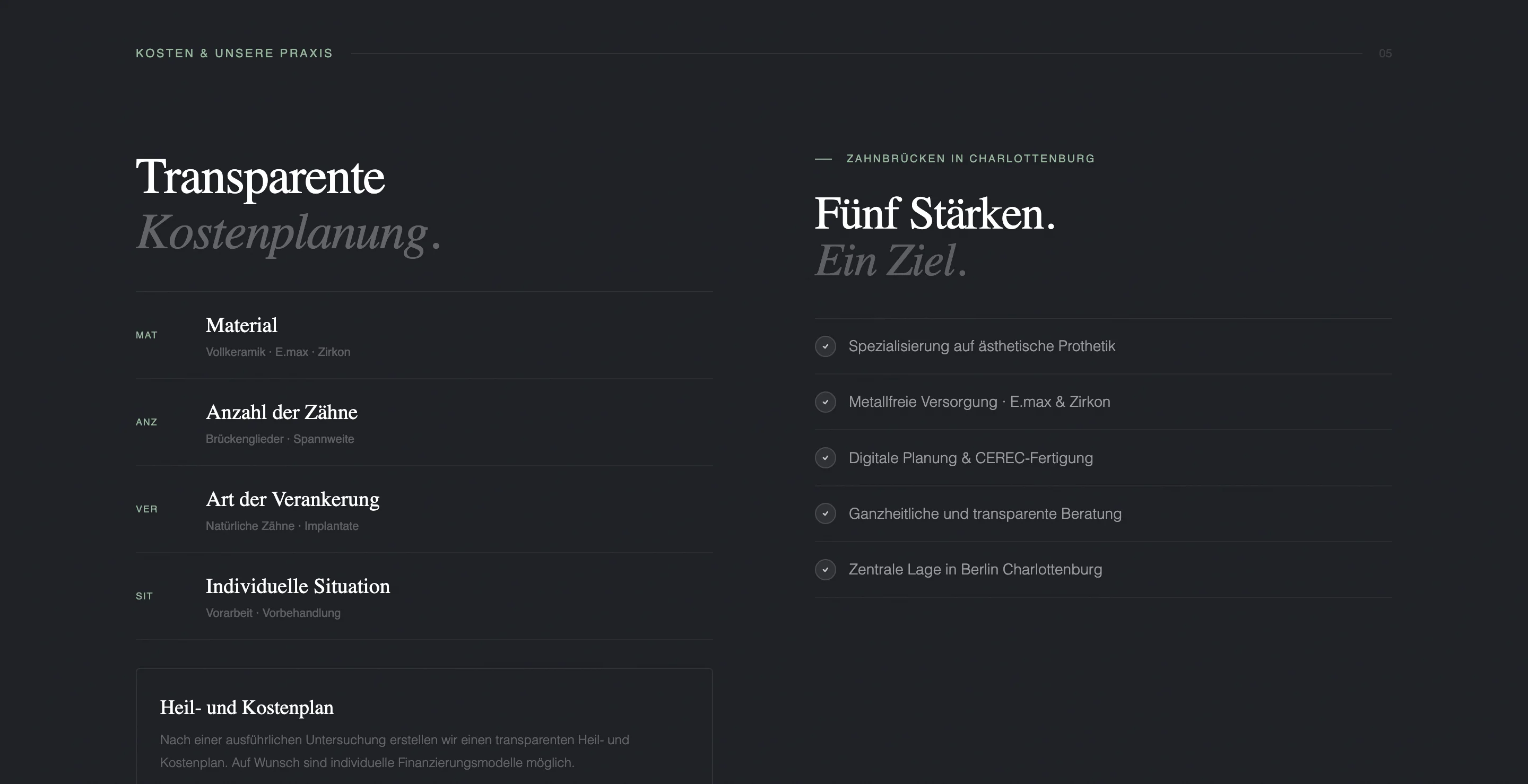
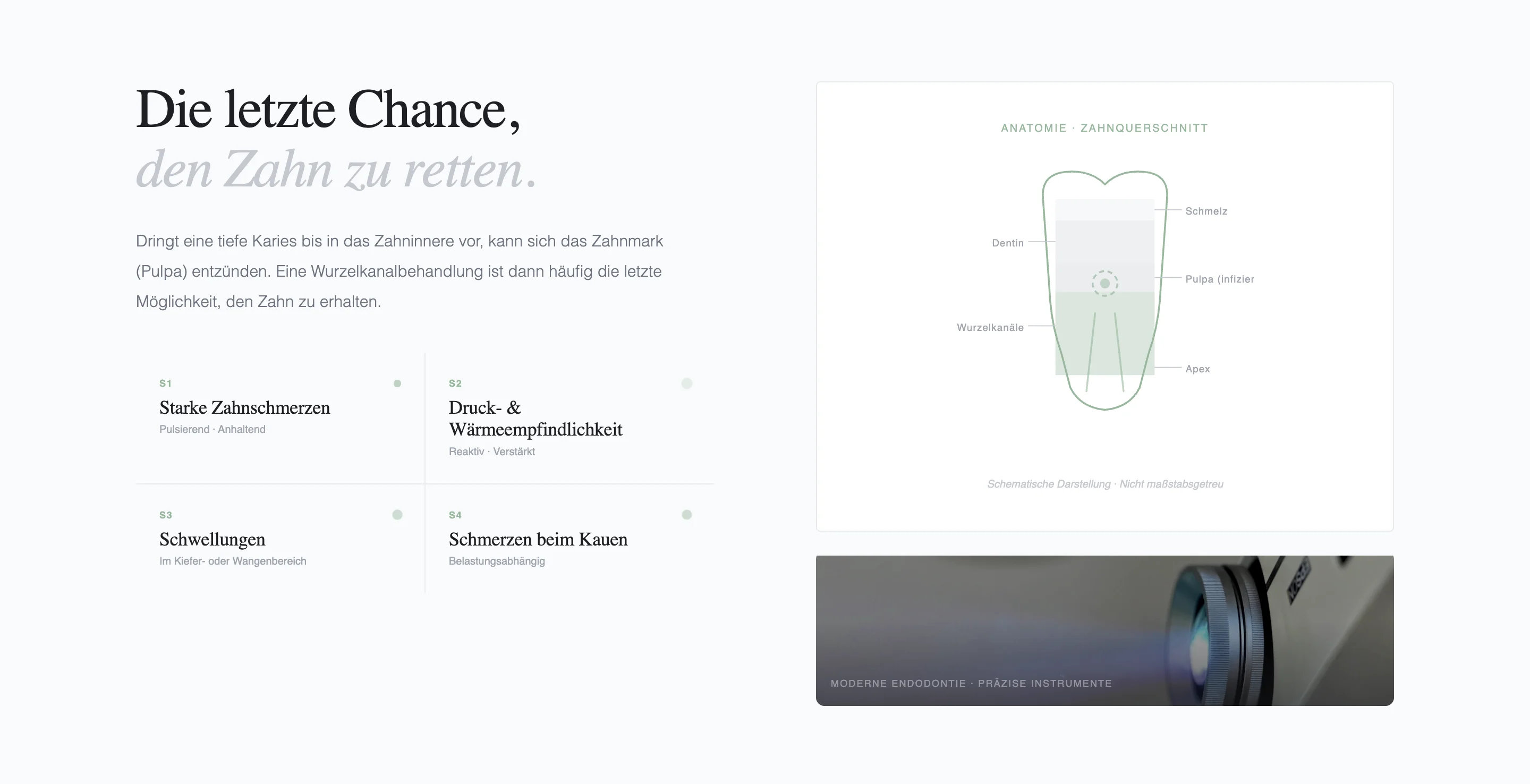
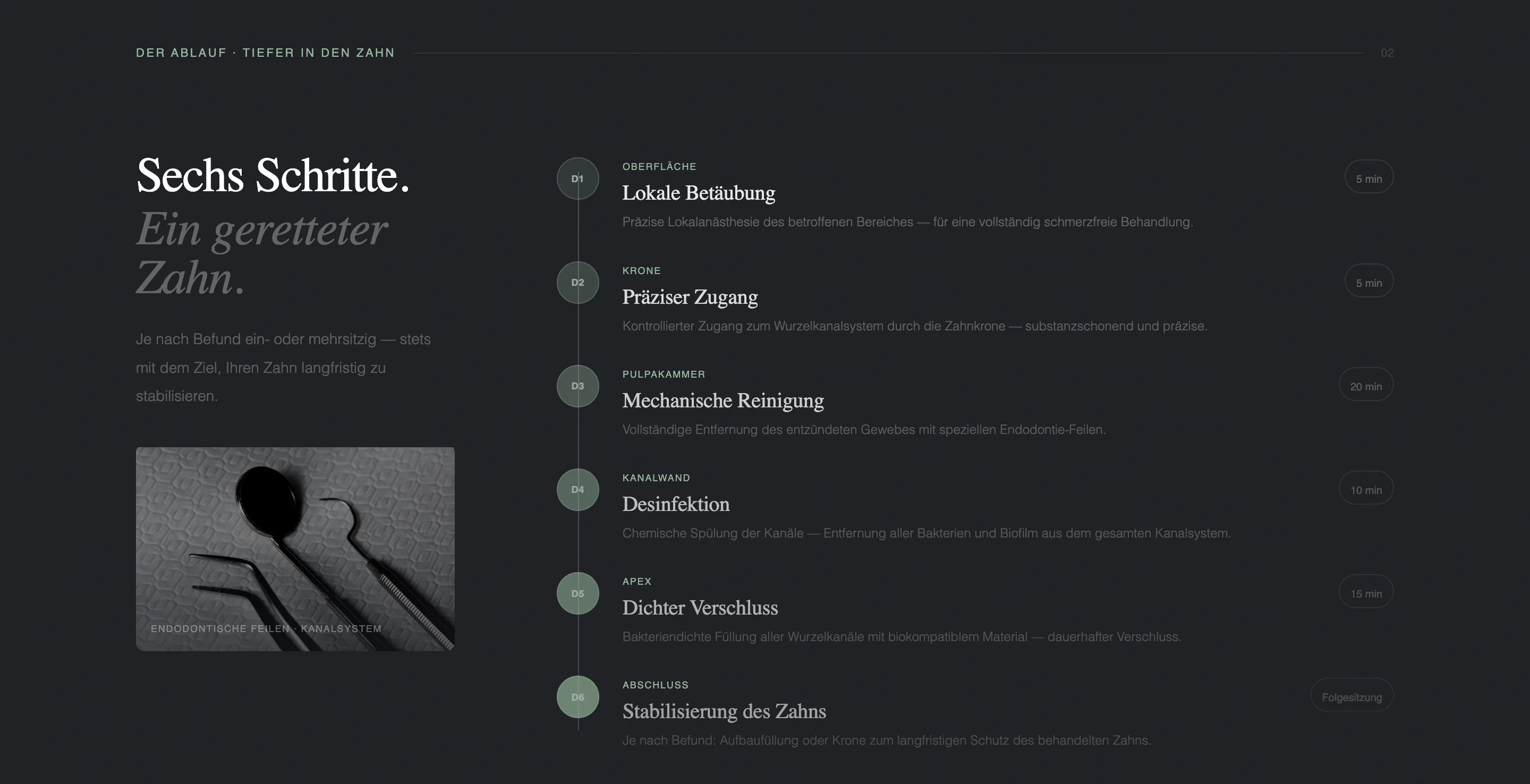
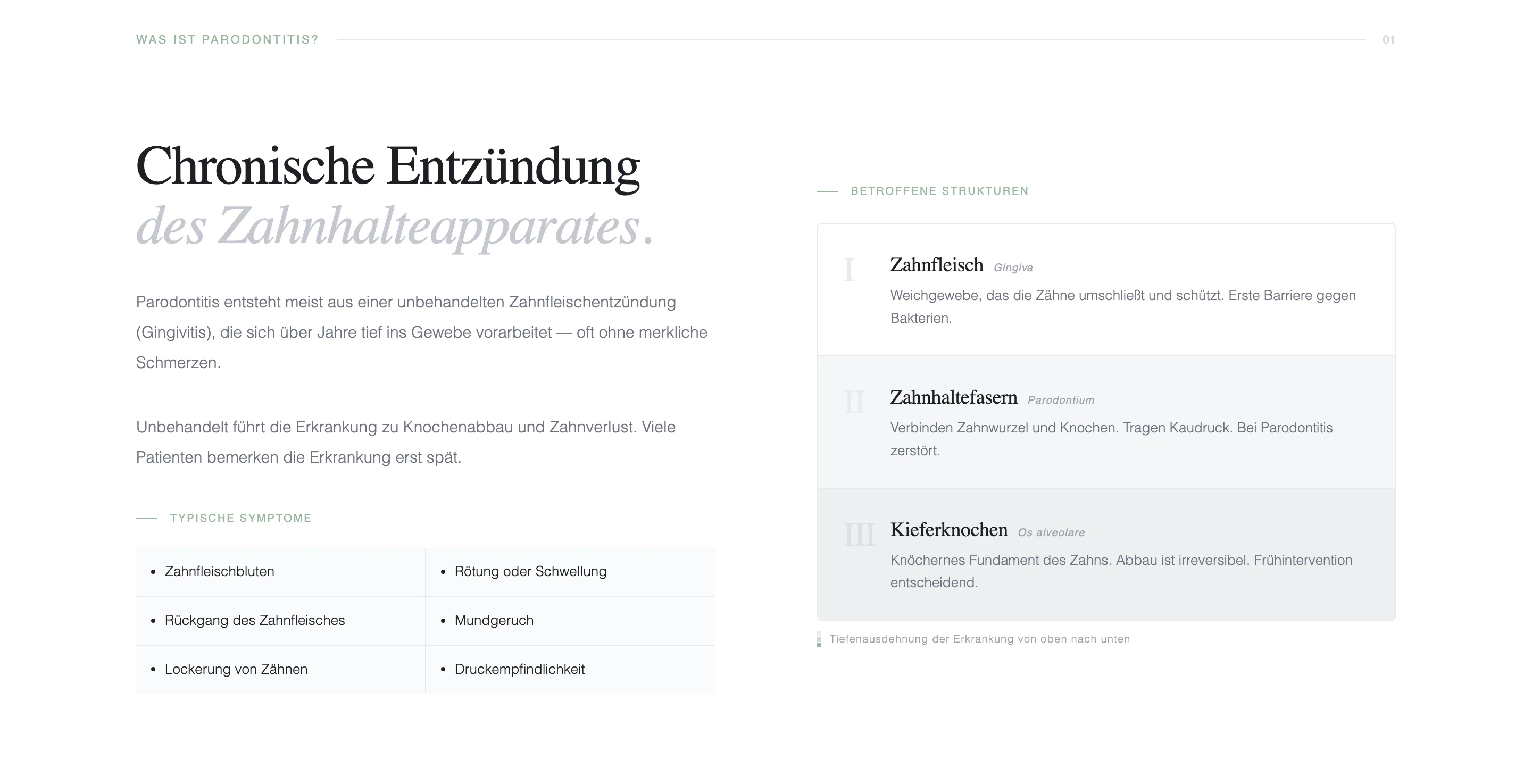
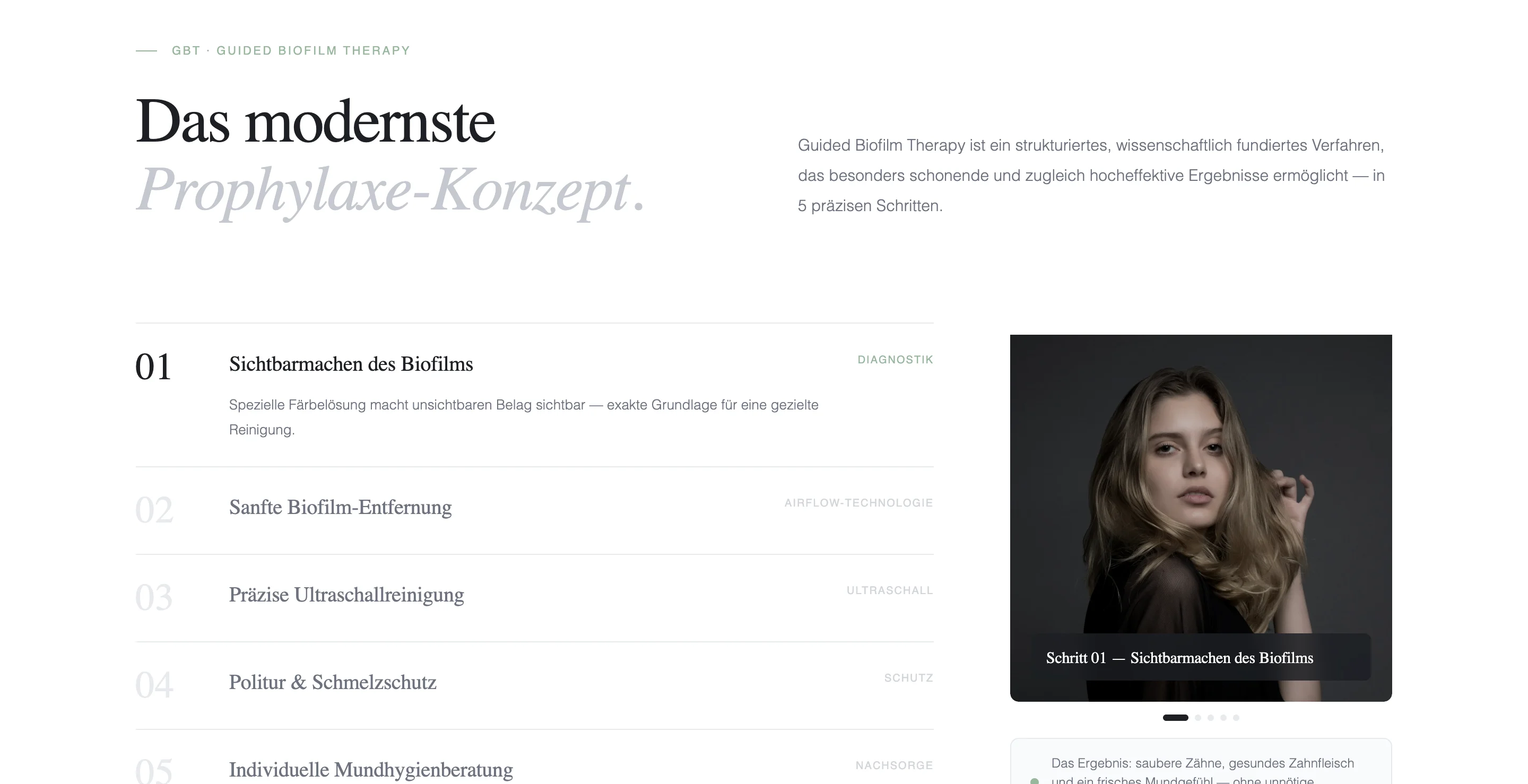
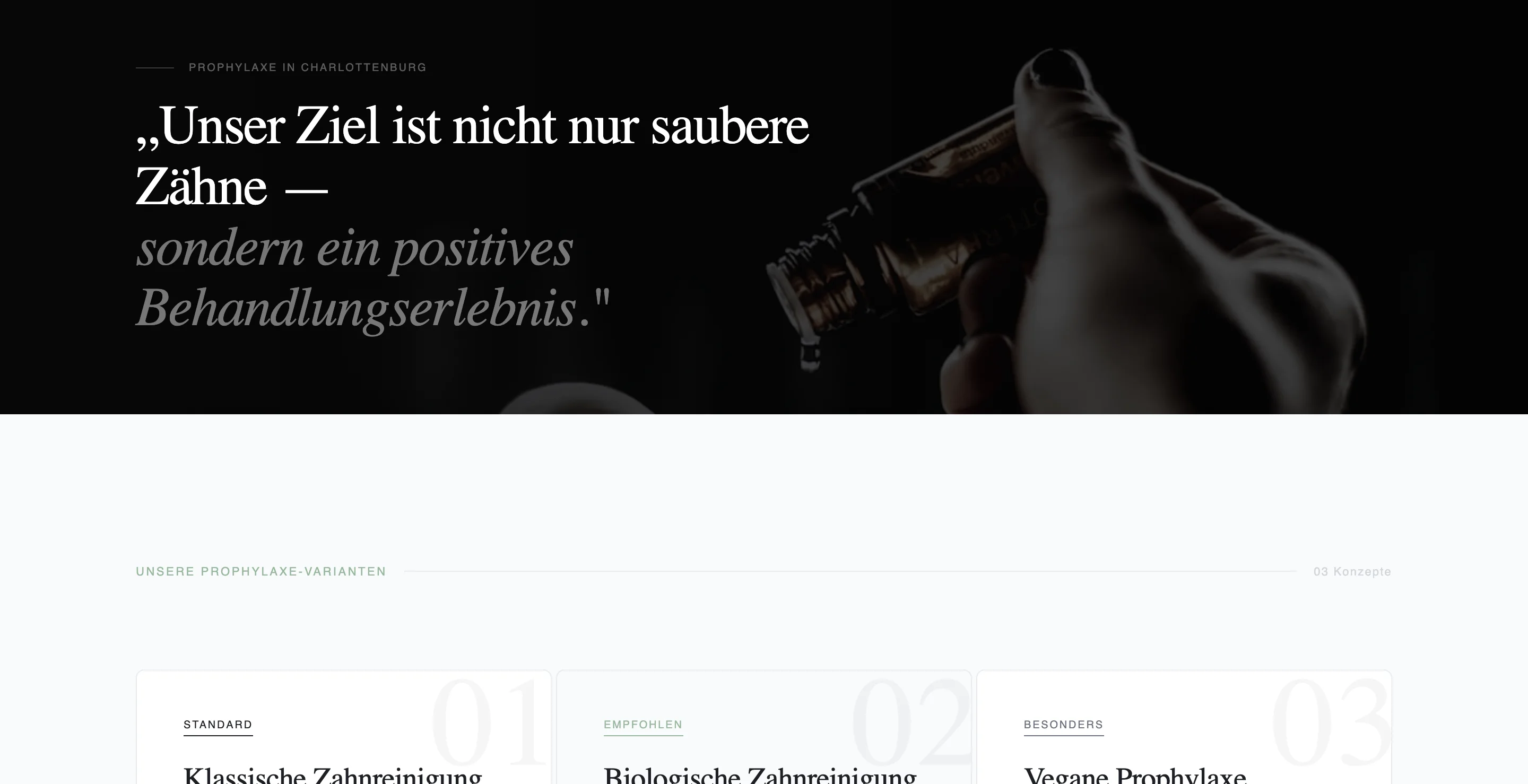
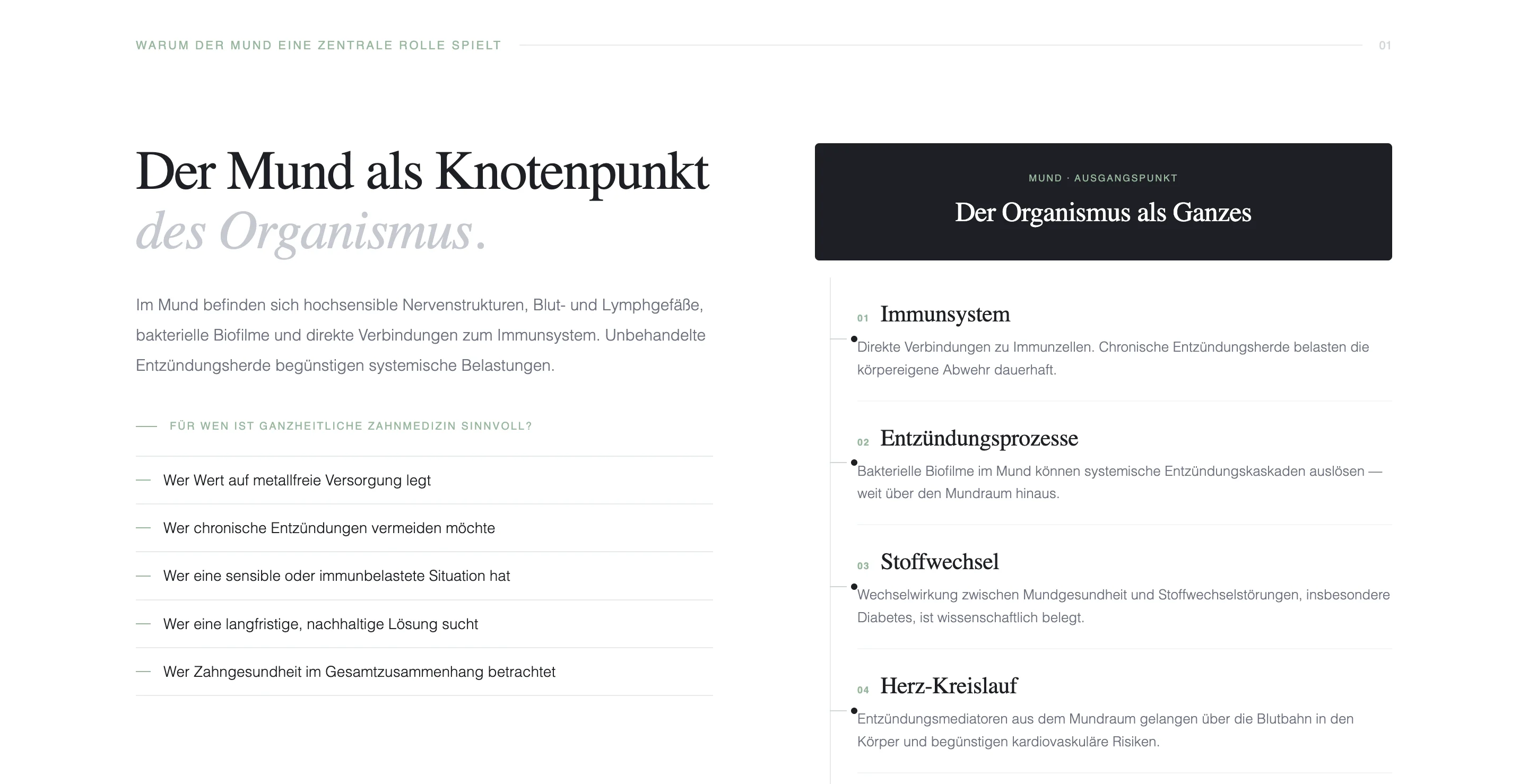
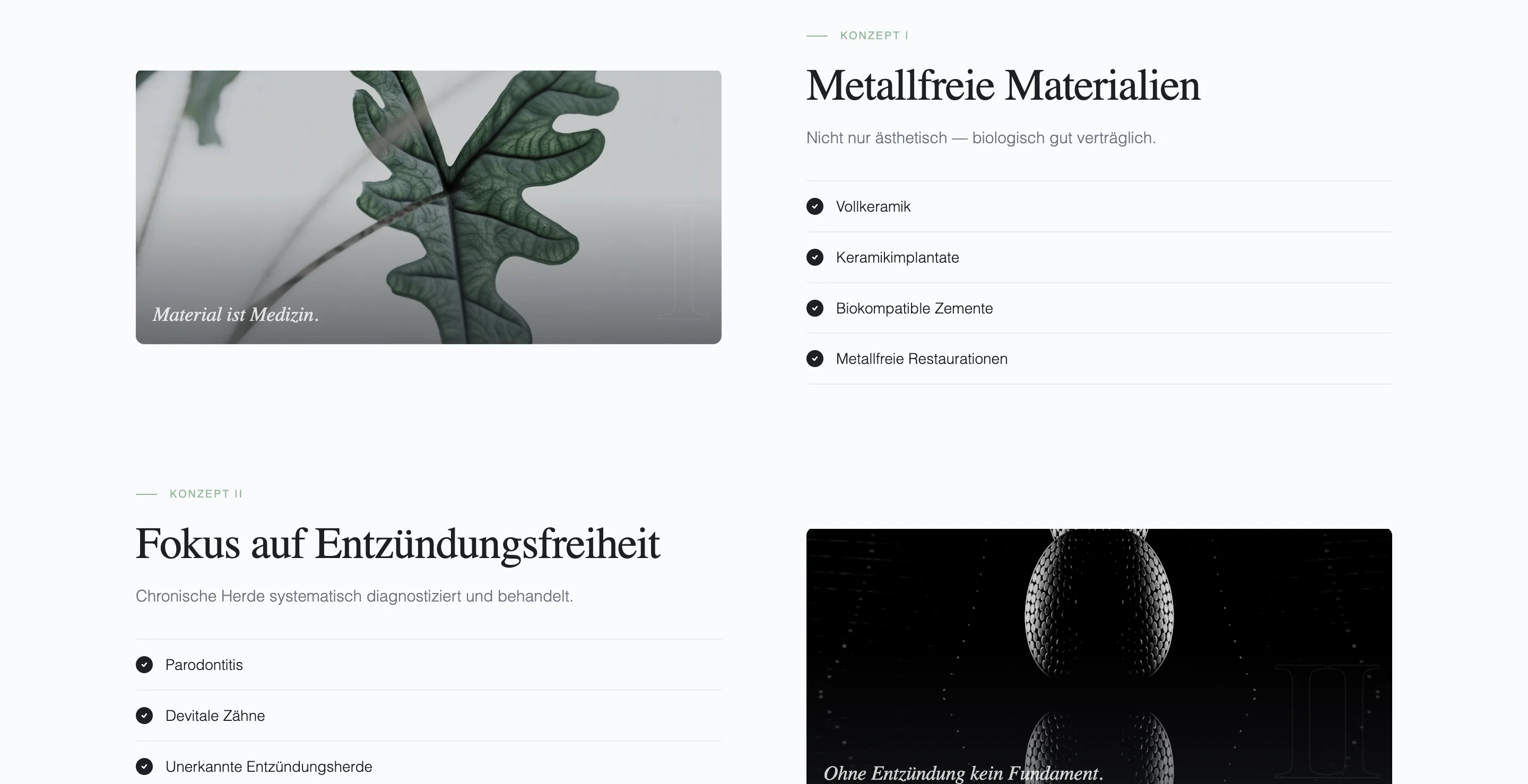
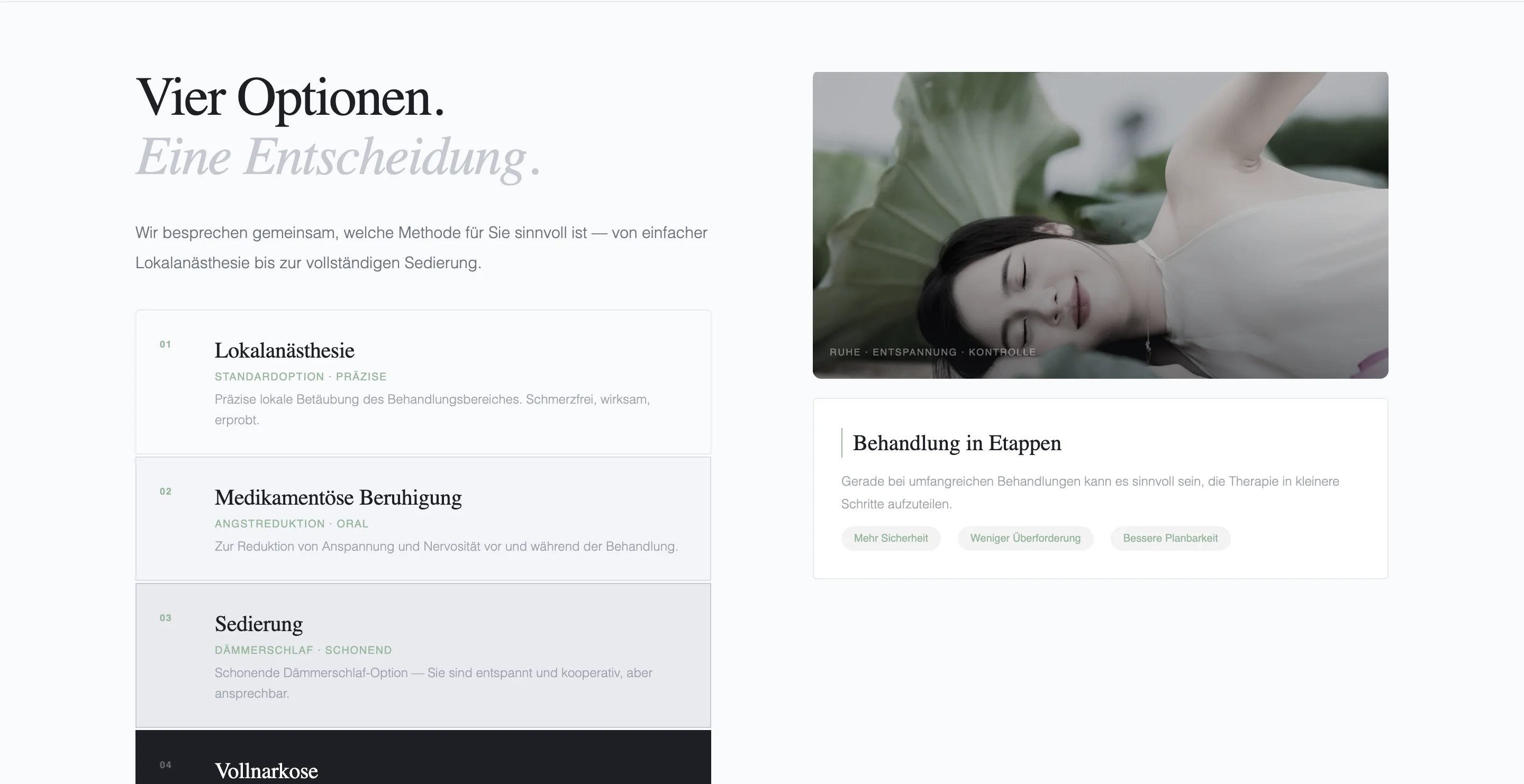
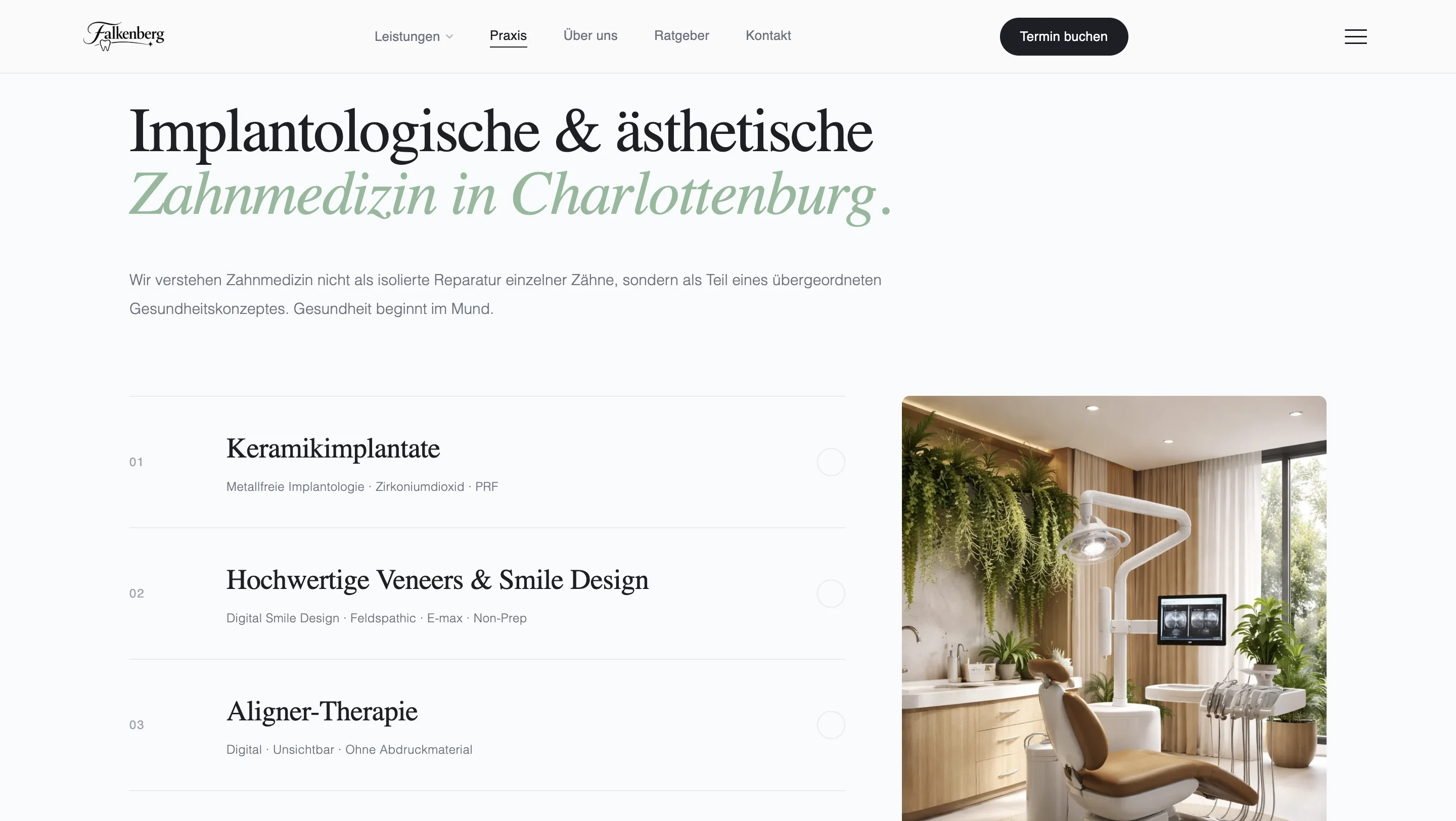
How structured explanations could be organised for treatment categories such as implants, veneers, aligners or rehabilitative care — used here only as illustrative content categories, with no efficacy claims.
Calm visual language direction
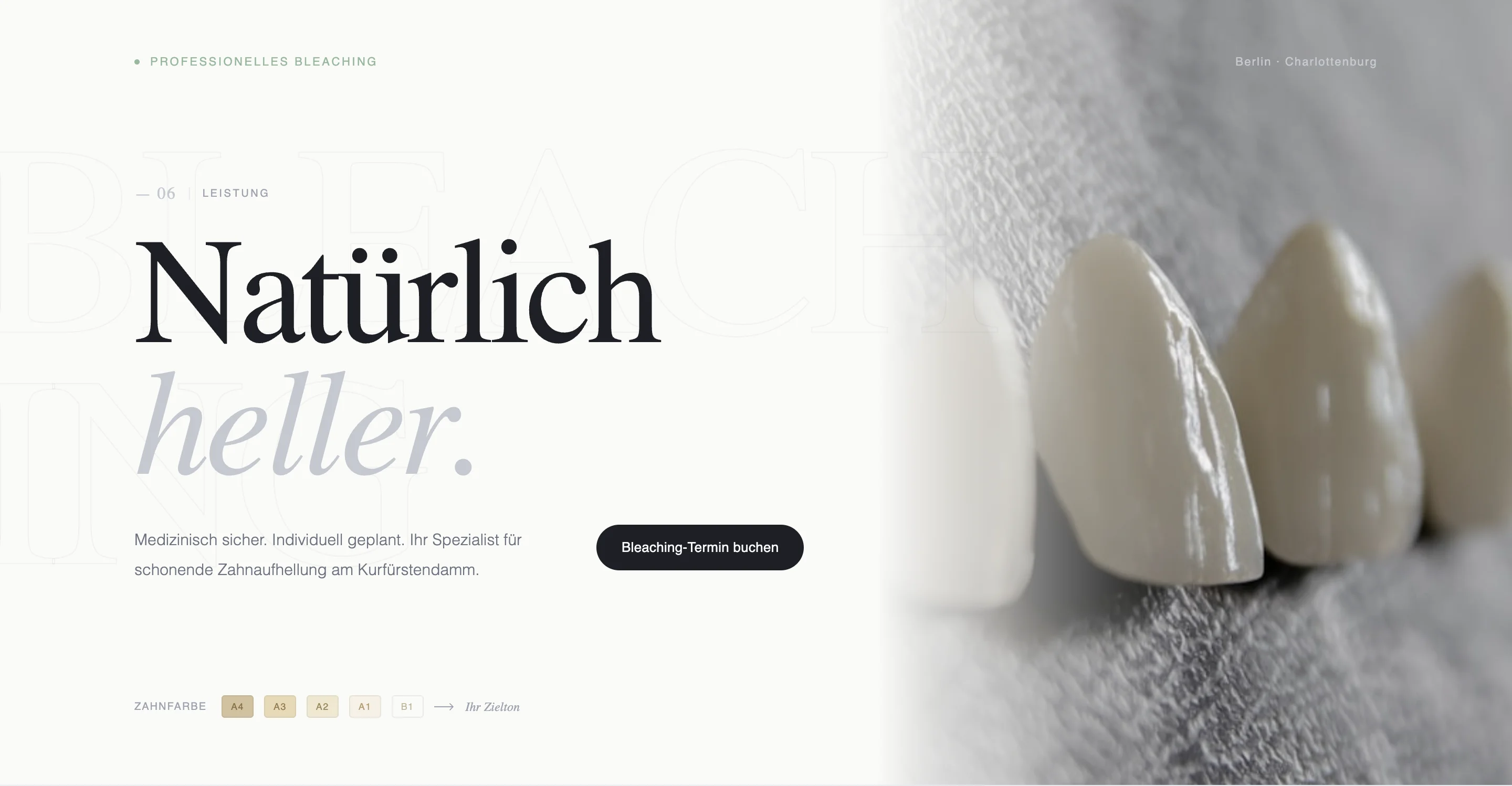
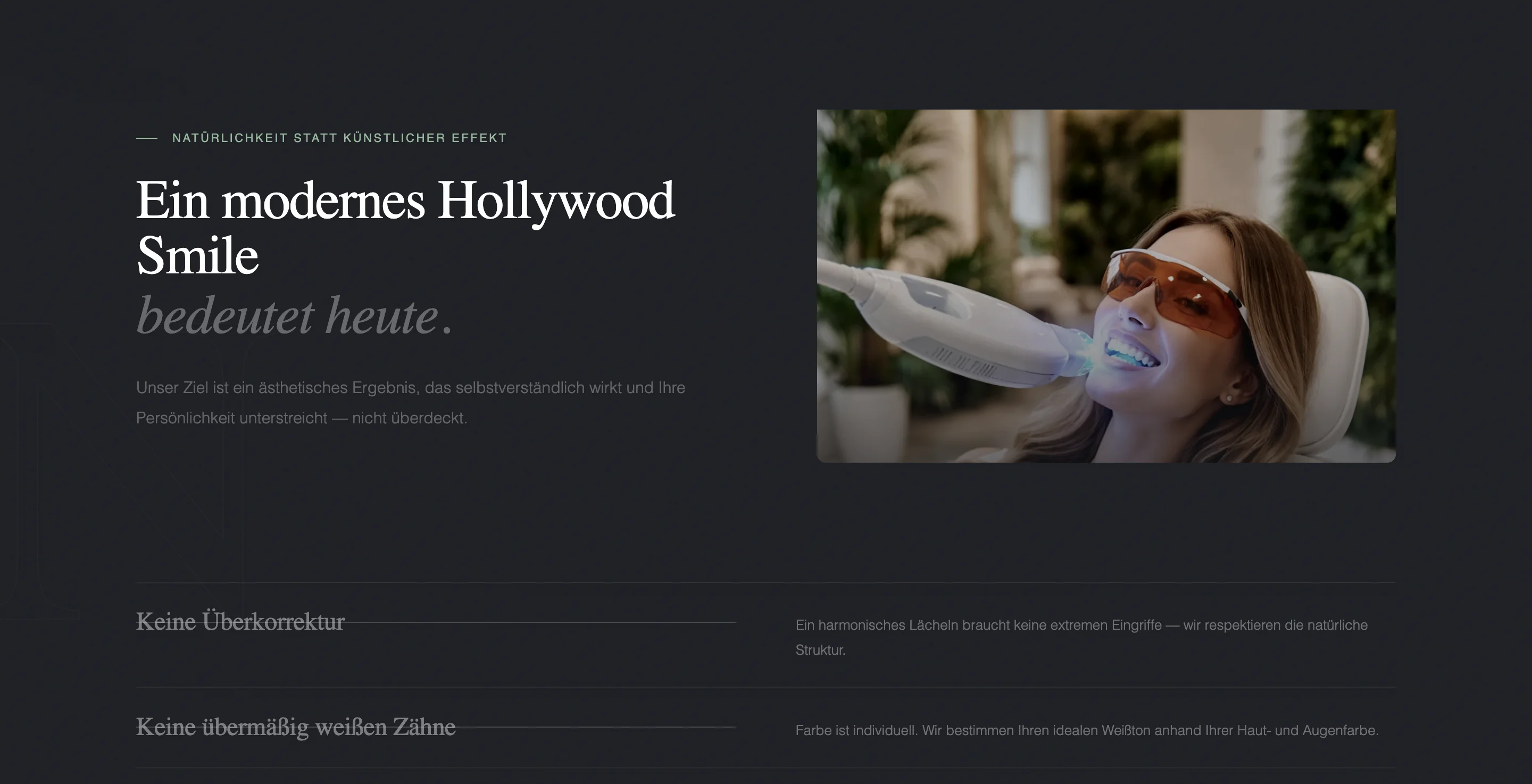
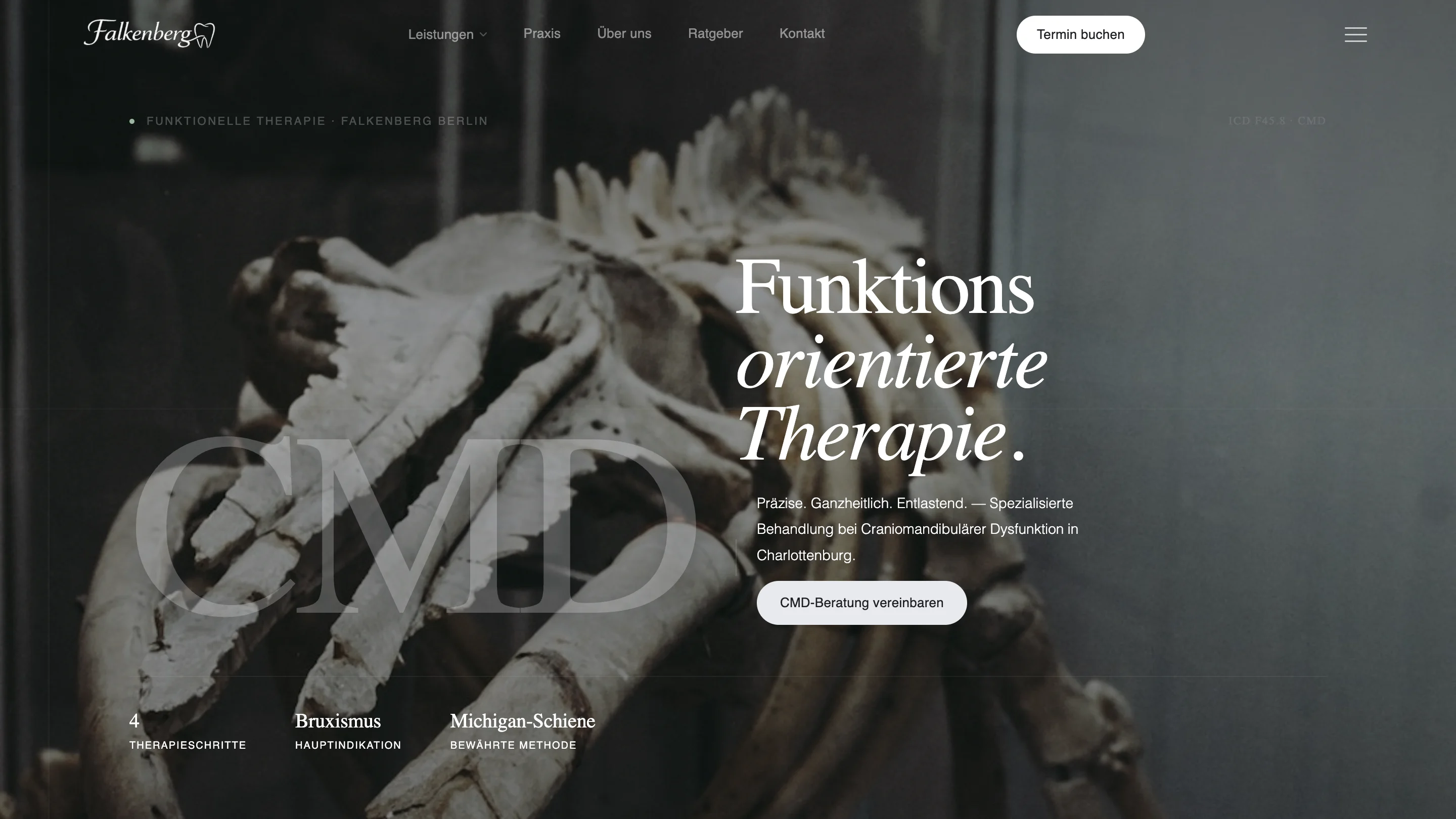
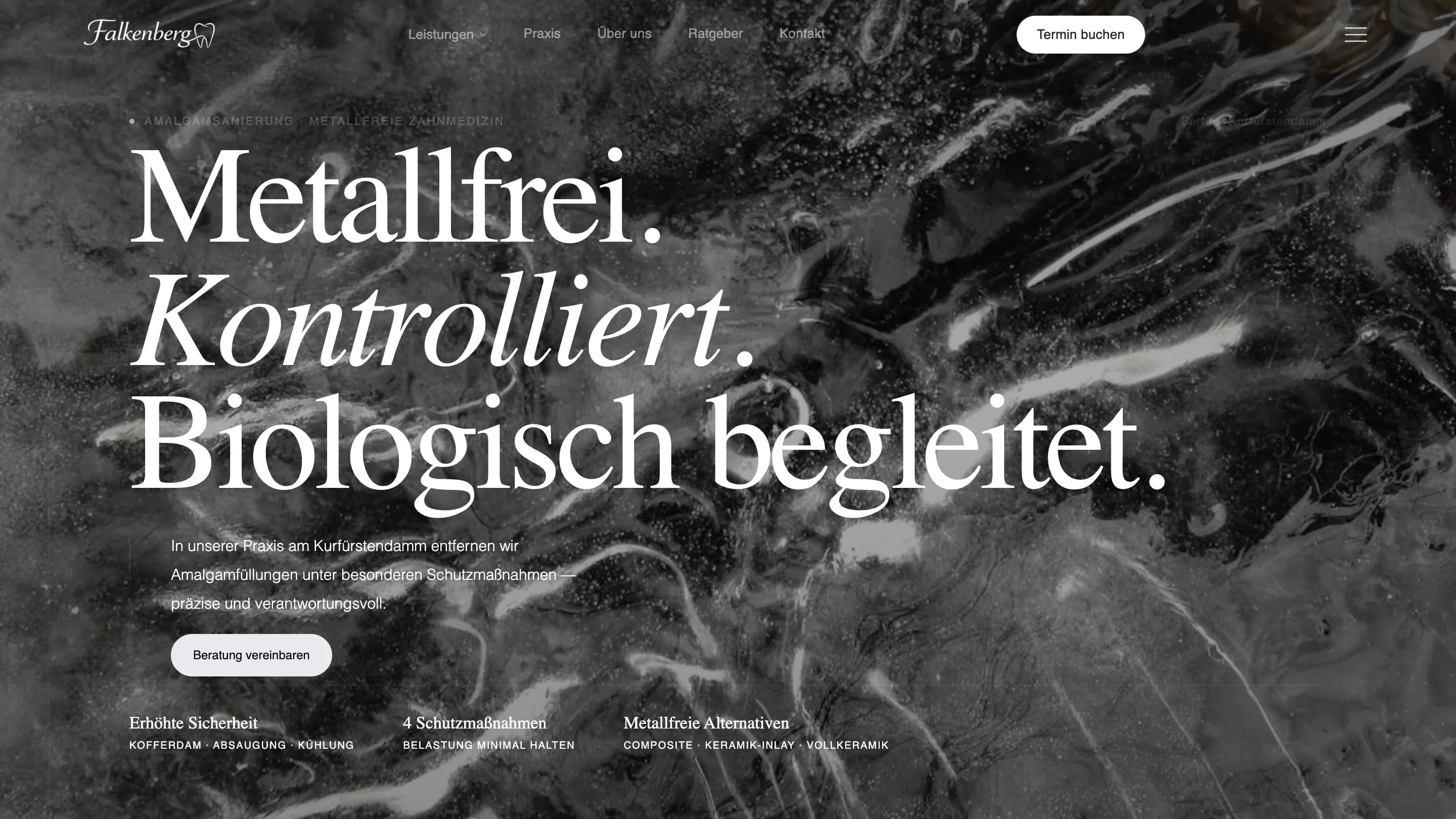
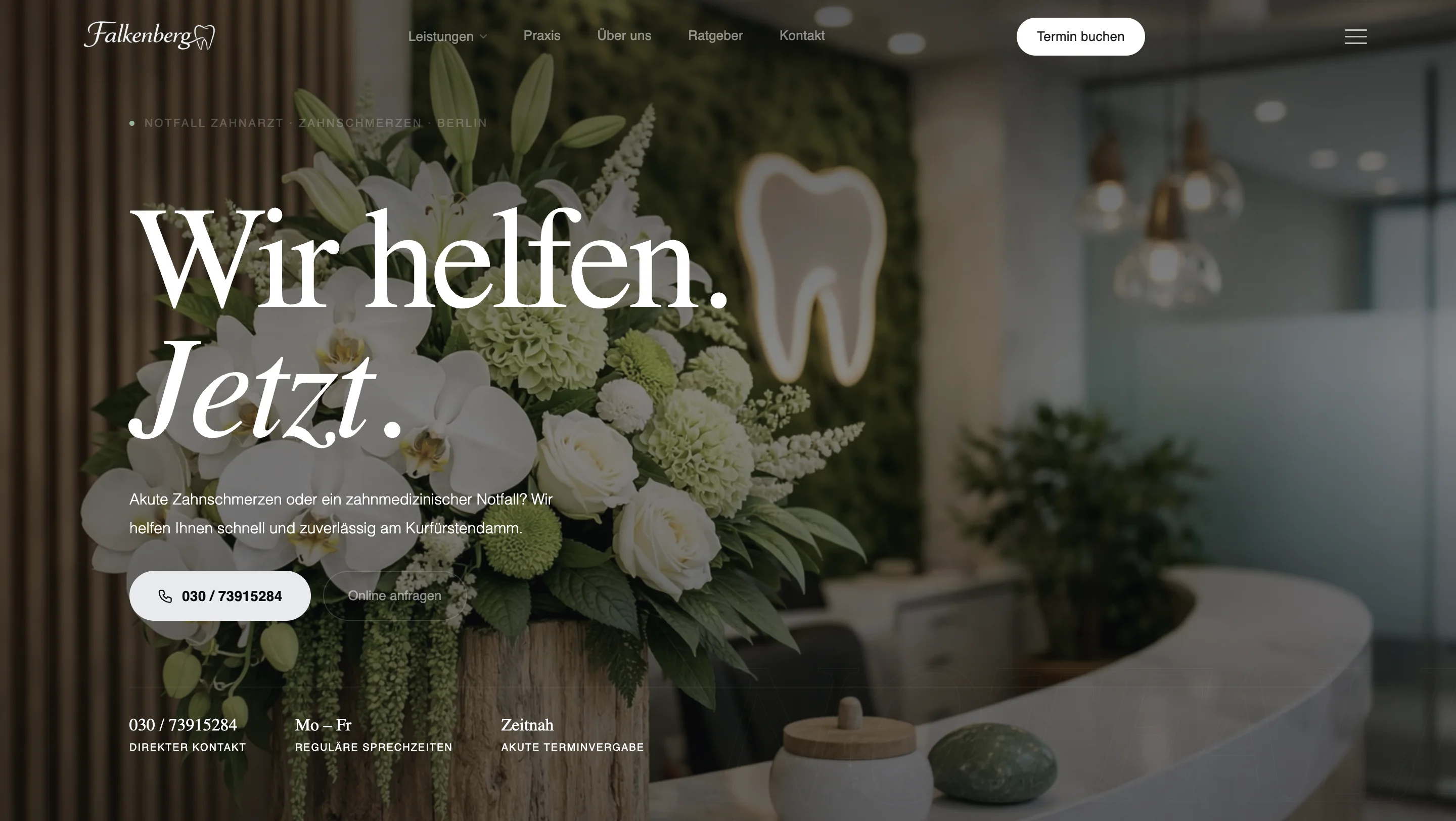
How a medical-adjacent visual system could read as readable and considered, without aggressive marketing patterns. Designed to support clinic-side trust-building patterns rather than make claims.
Content-structure visibility direction
How semantic structure and metadata could be organised so future content could be discoverable. No traffic, ranking or acquisition outcomes are promised.
Content scalability
How a content system could be designed so that future categories and topics could be added without rebuilding the underlying structure.
Concept Direction
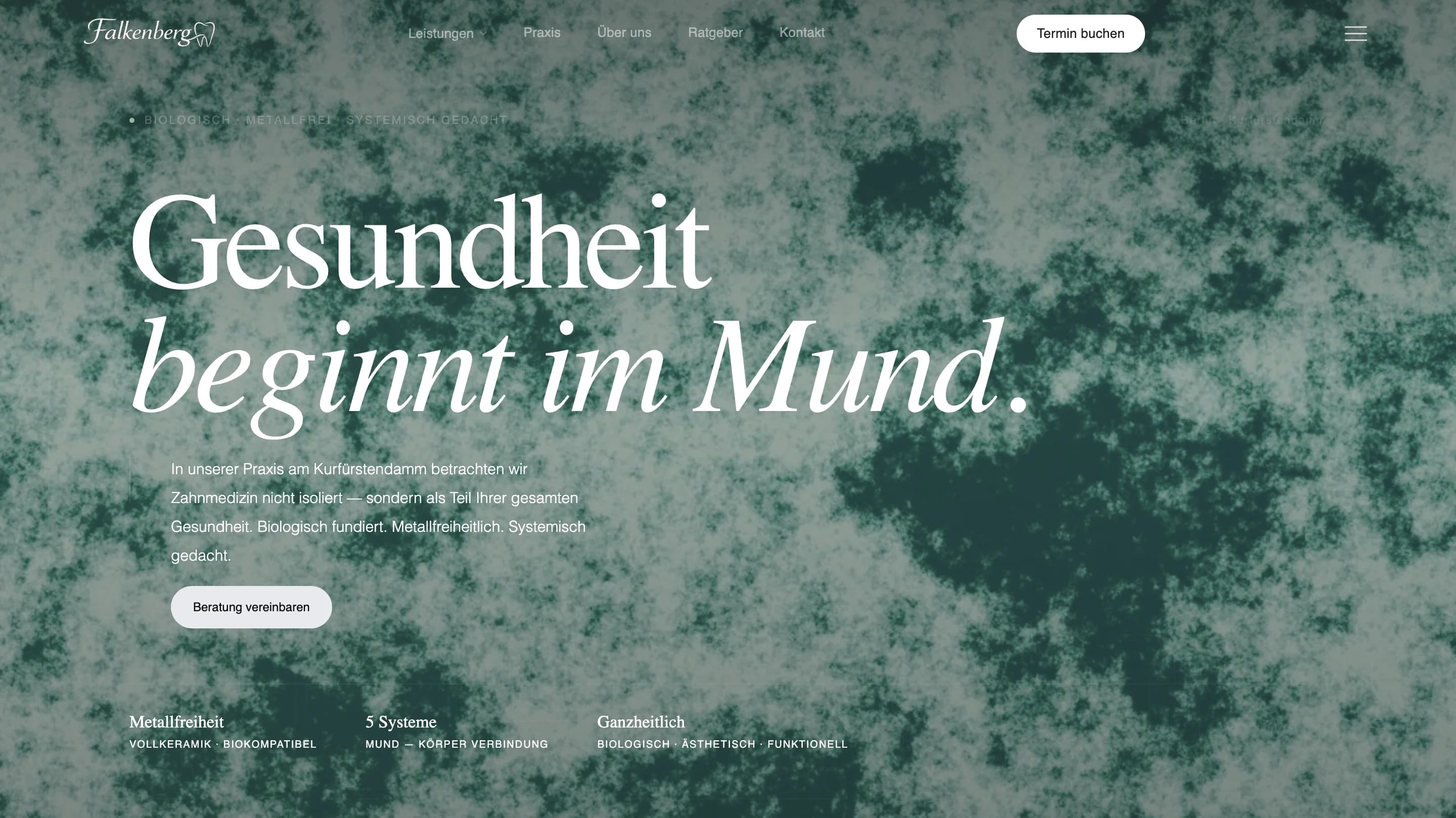
The reference build treats the platform pattern as an illustrative information system rather than a promotional landing page.
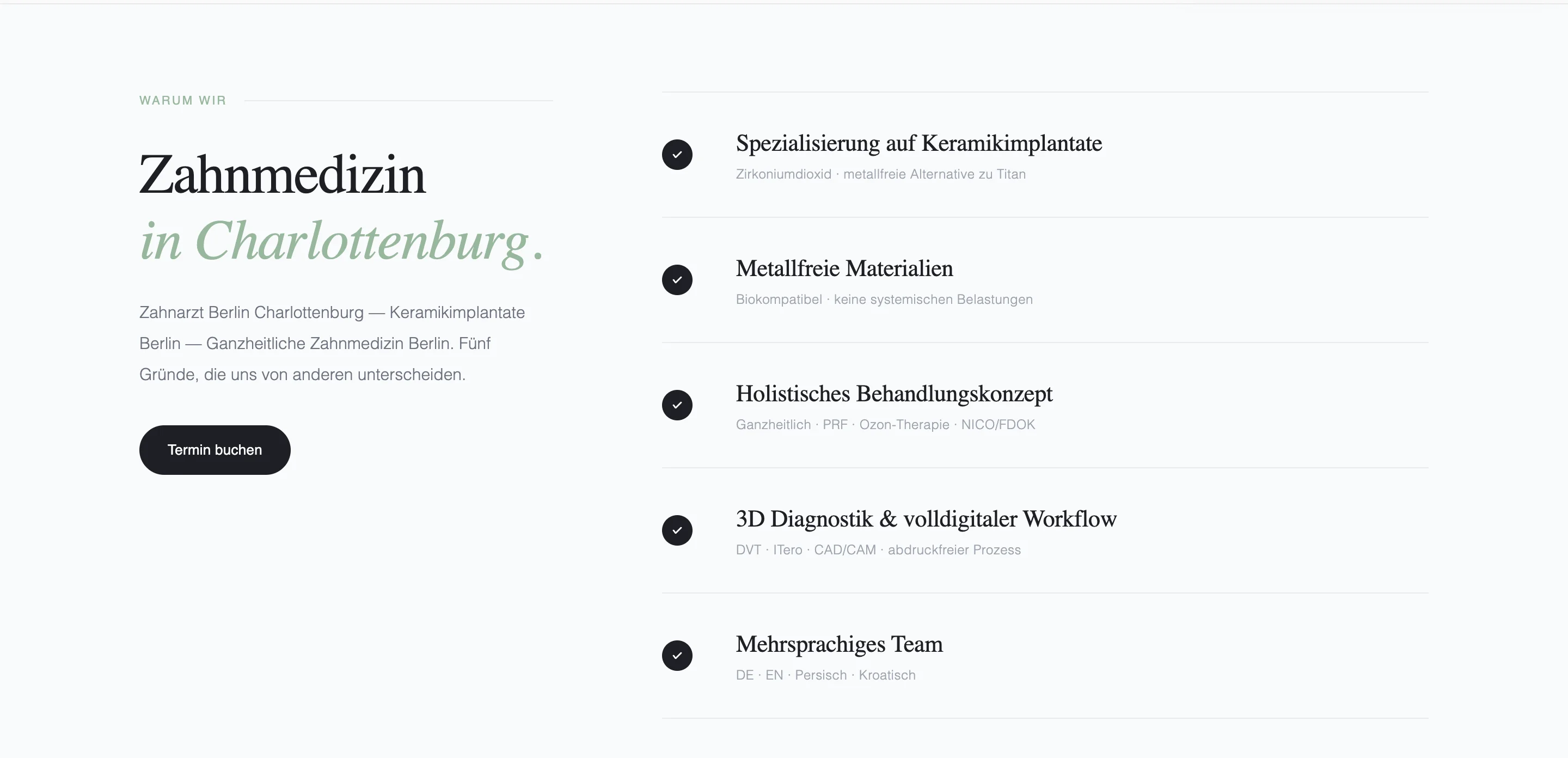
Information architecture
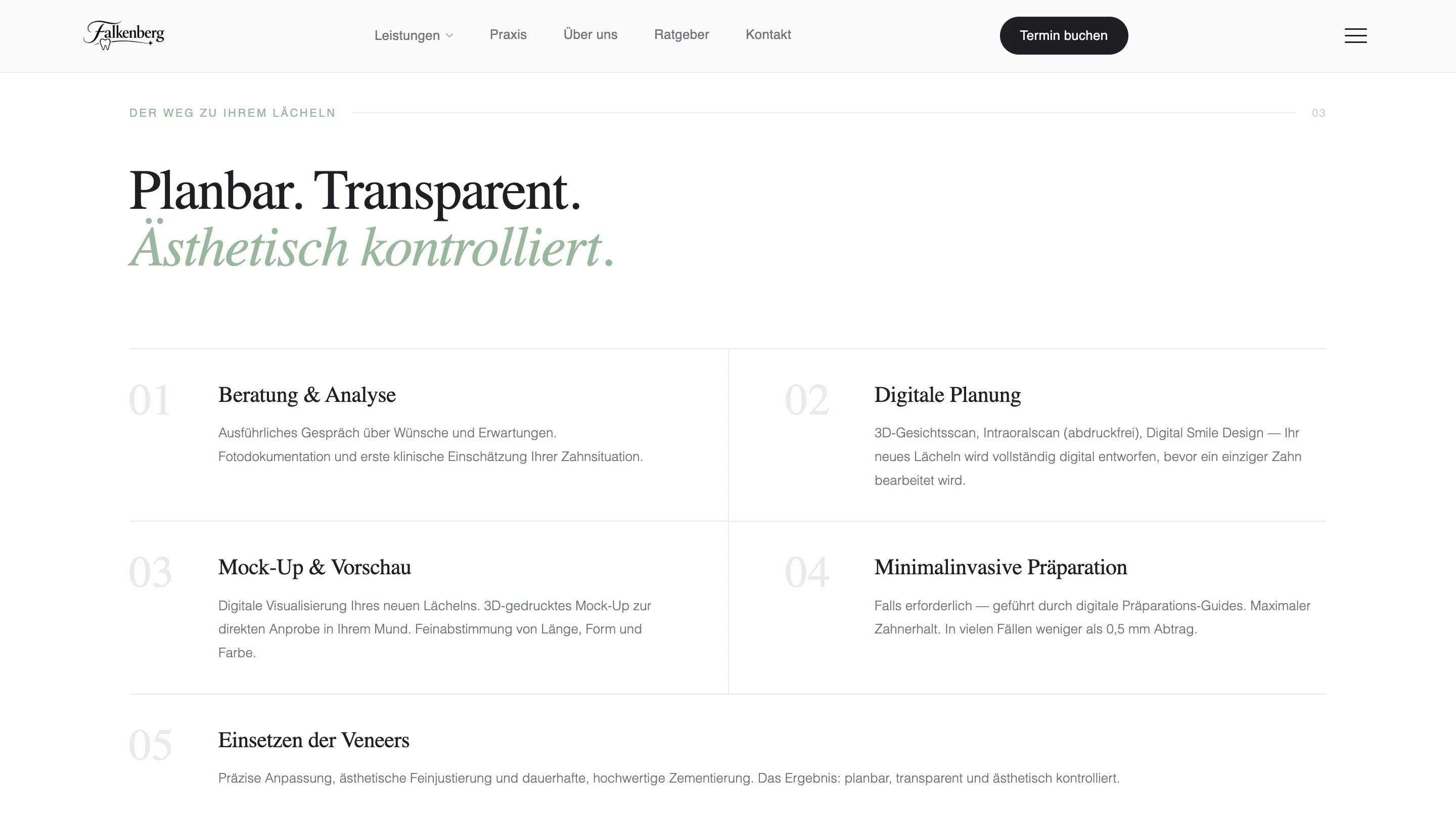
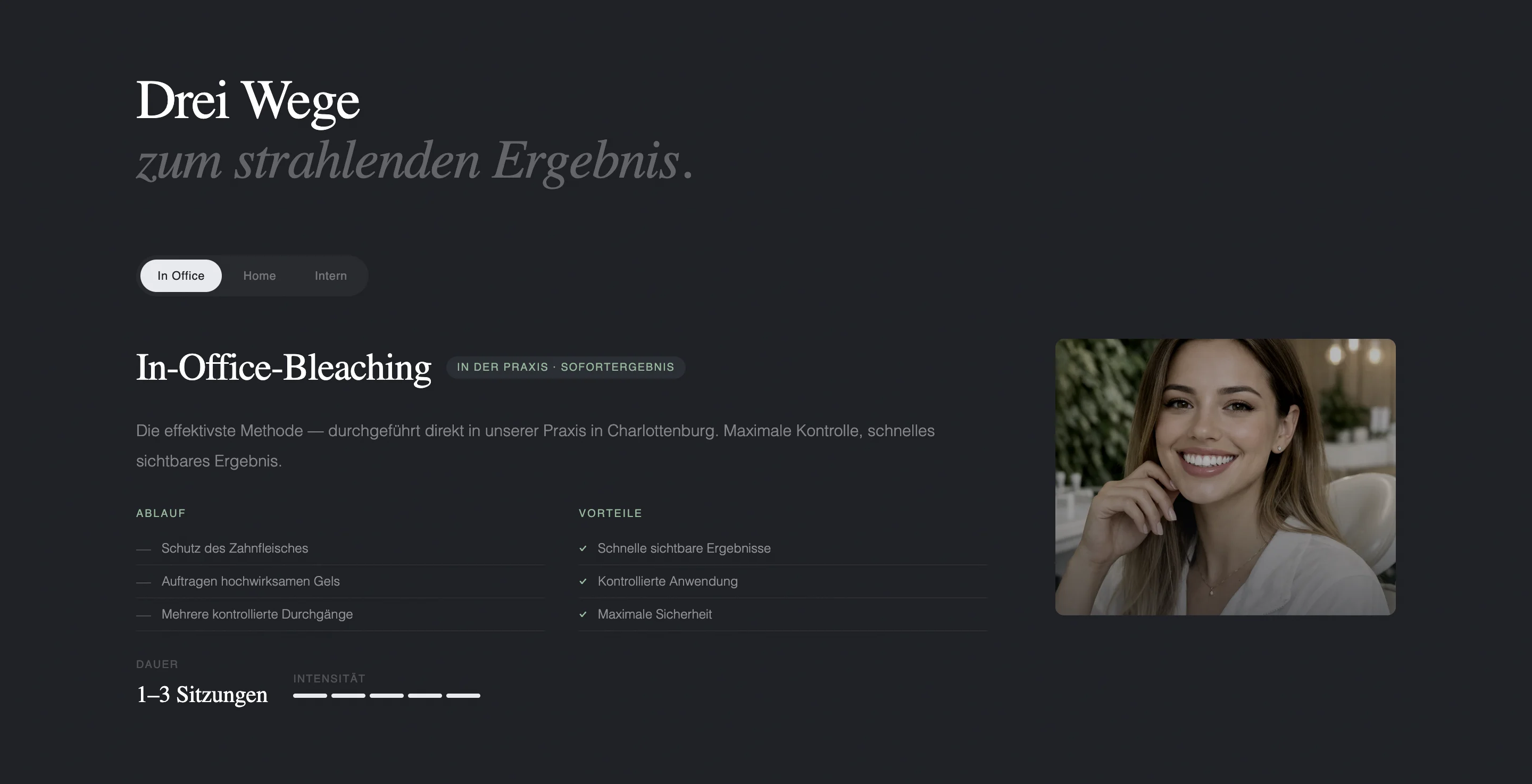
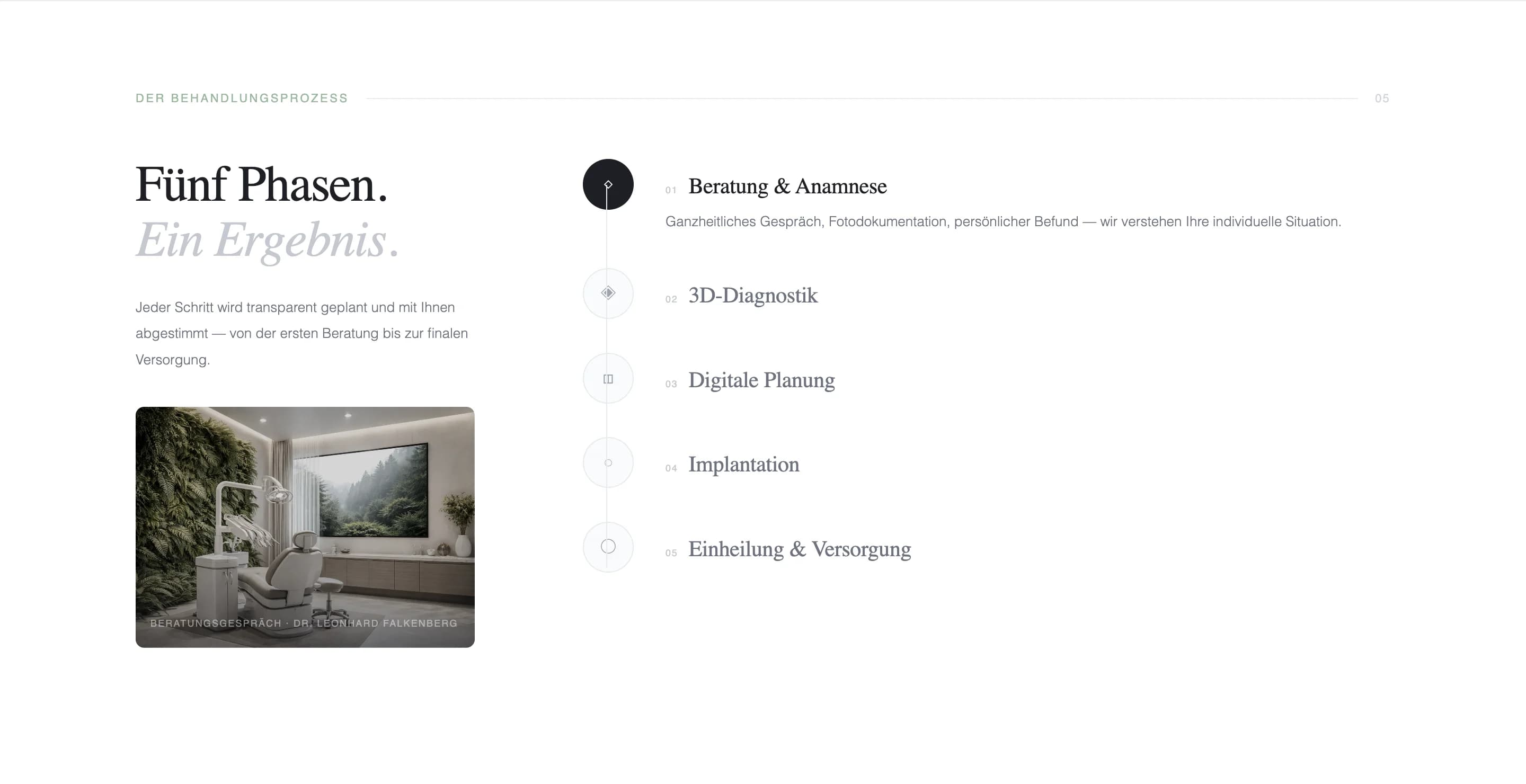
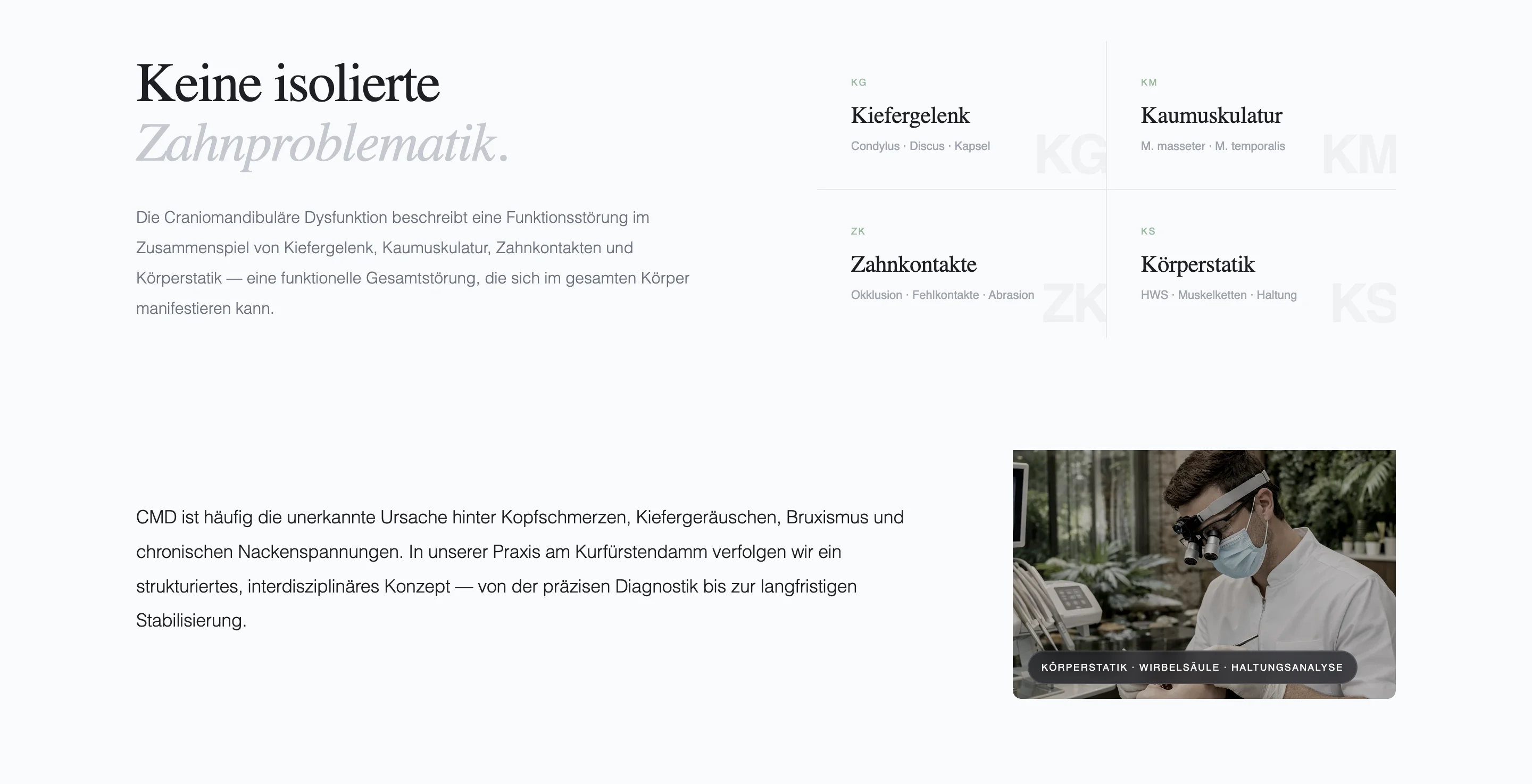
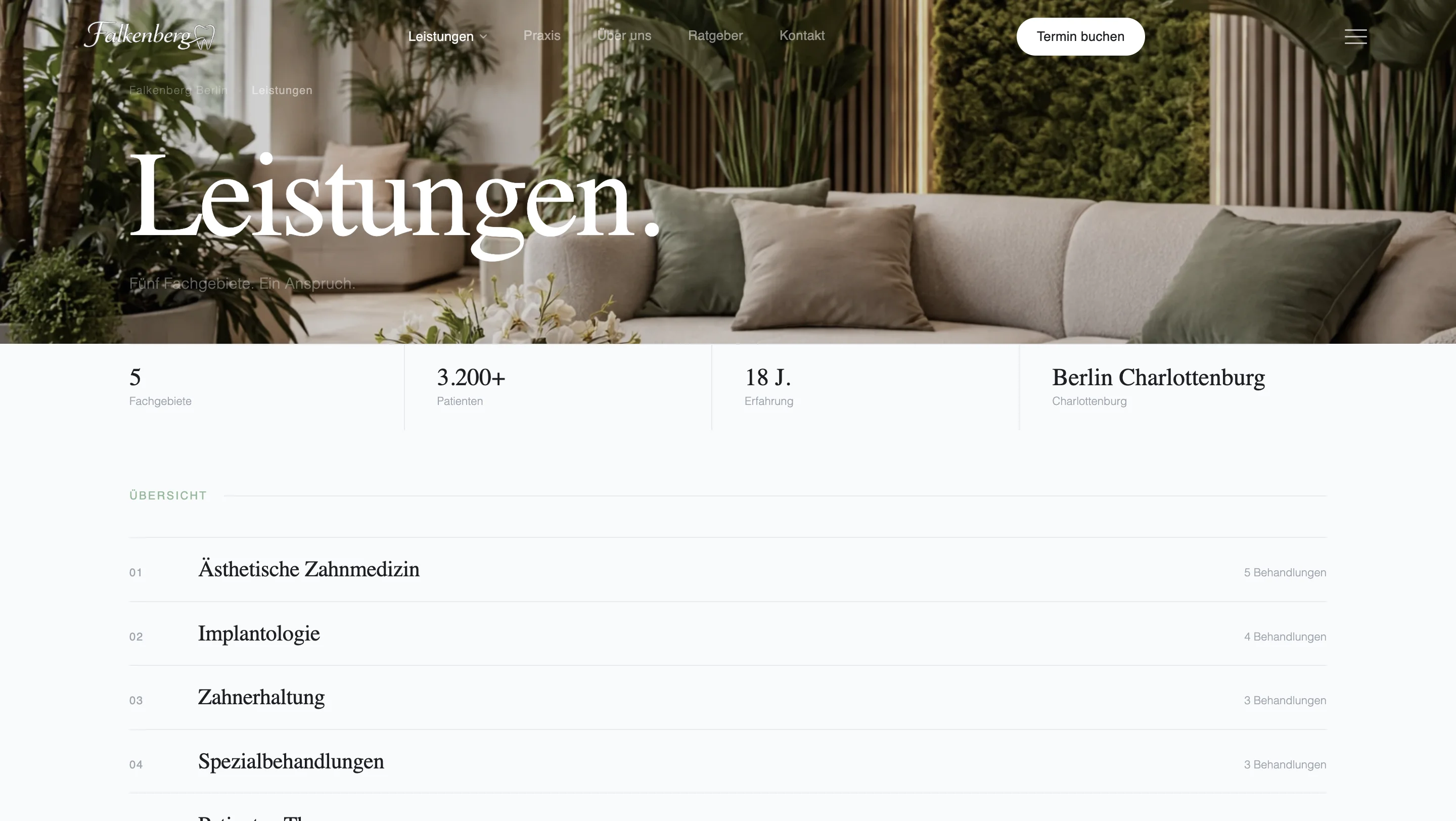
An illustrative content hierarchy separates topic areas, supporting information, and contact flows — purely as a structural pattern, not a live offering.
Readability and tone direction
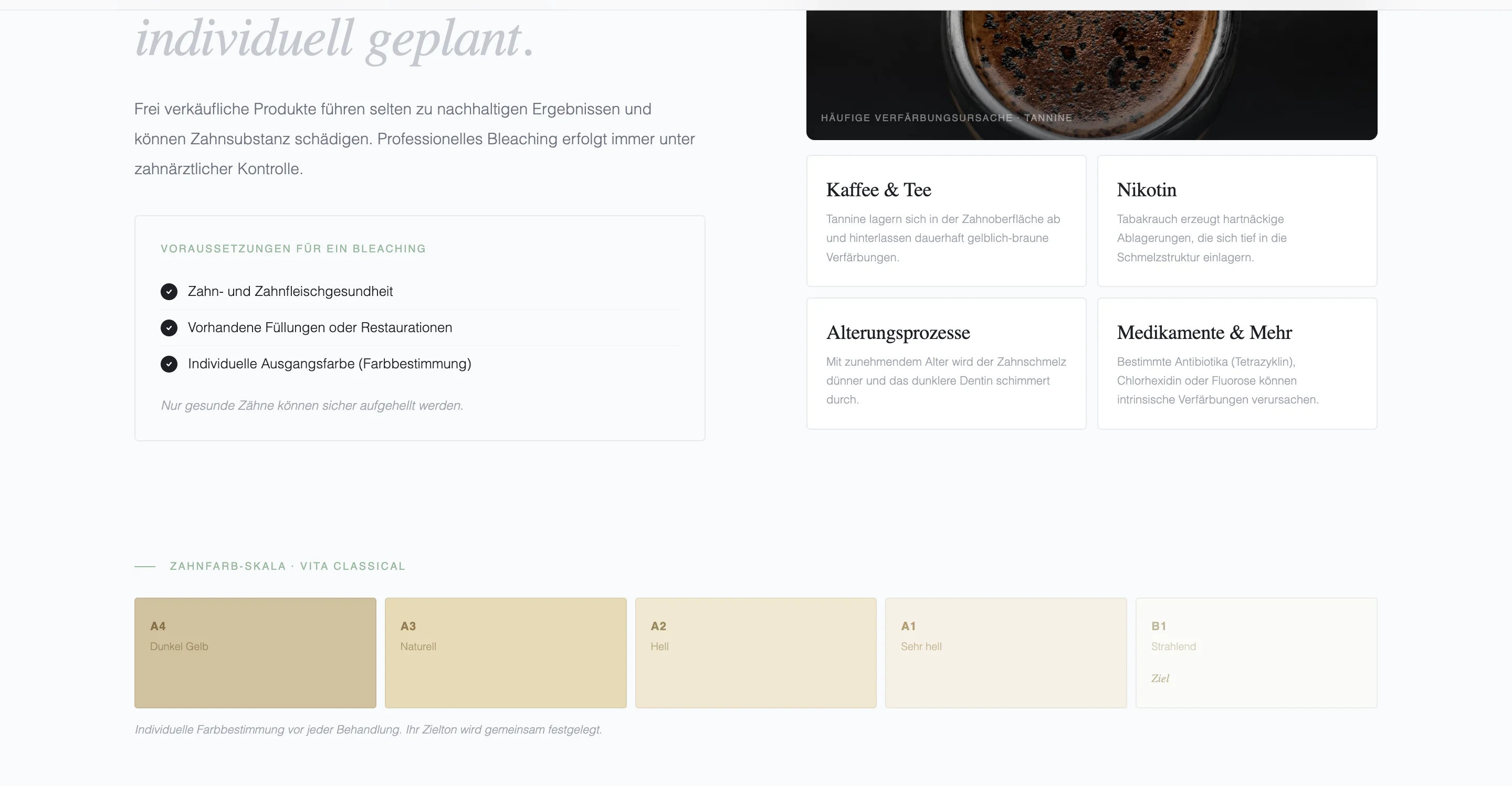
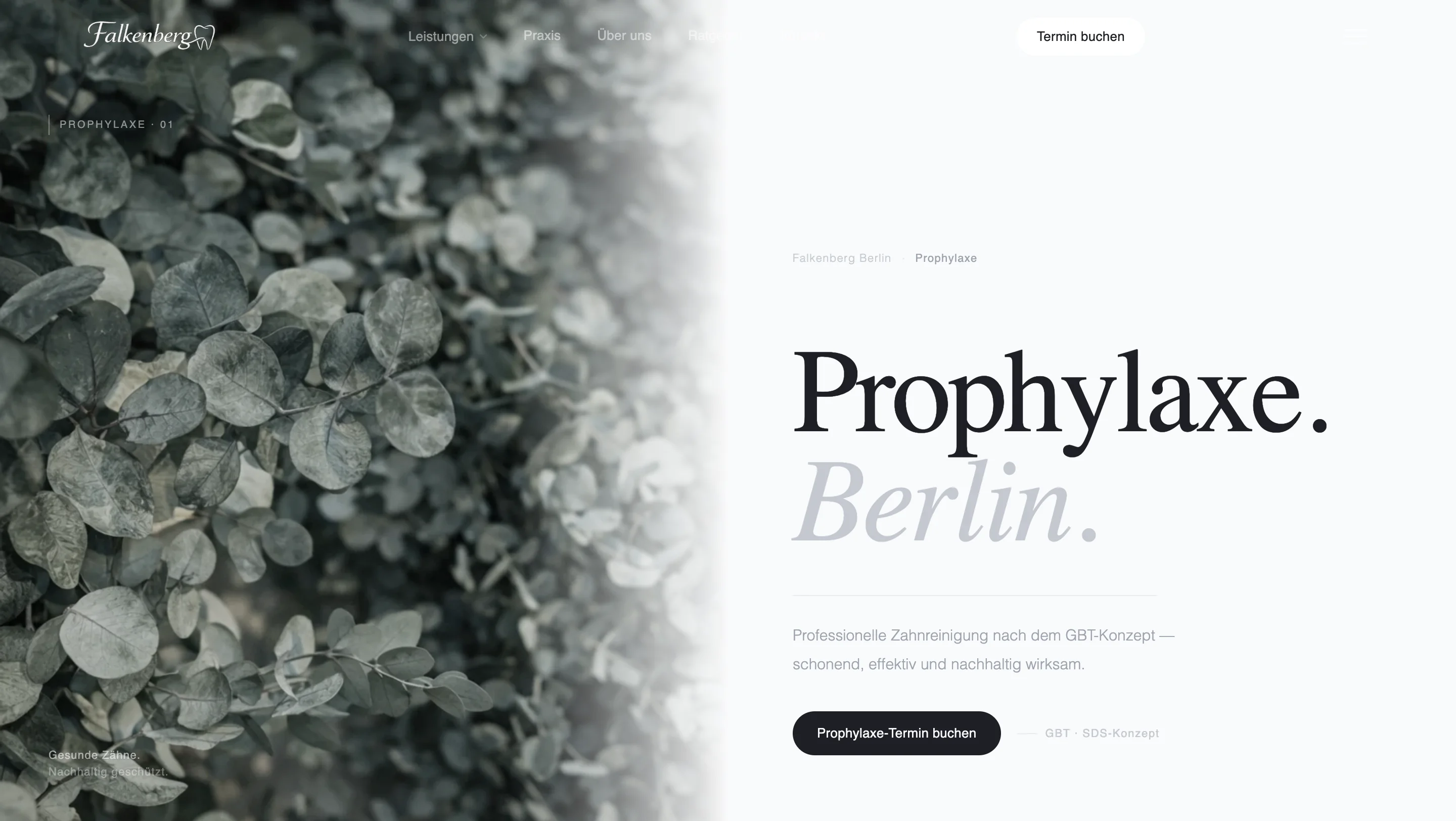
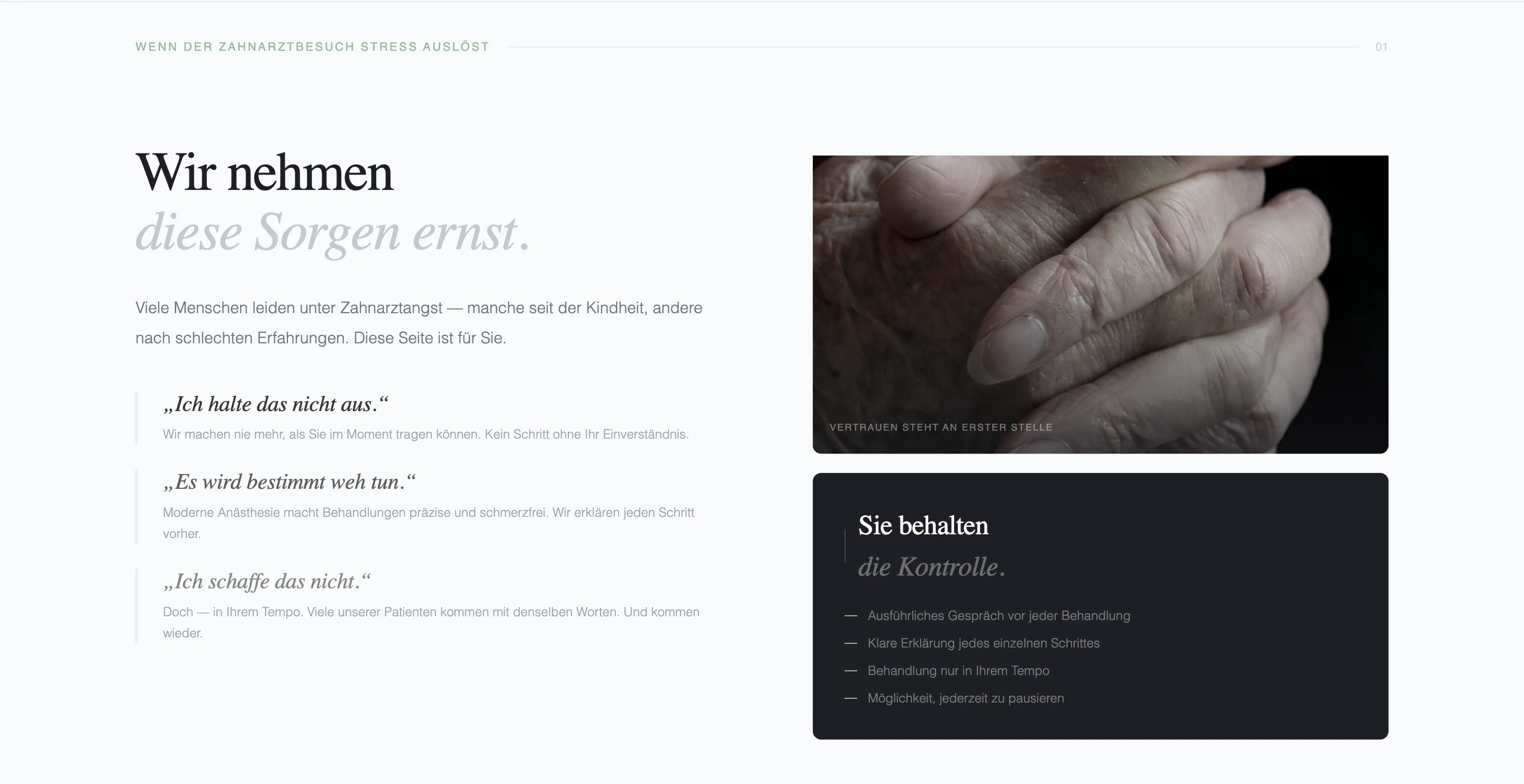
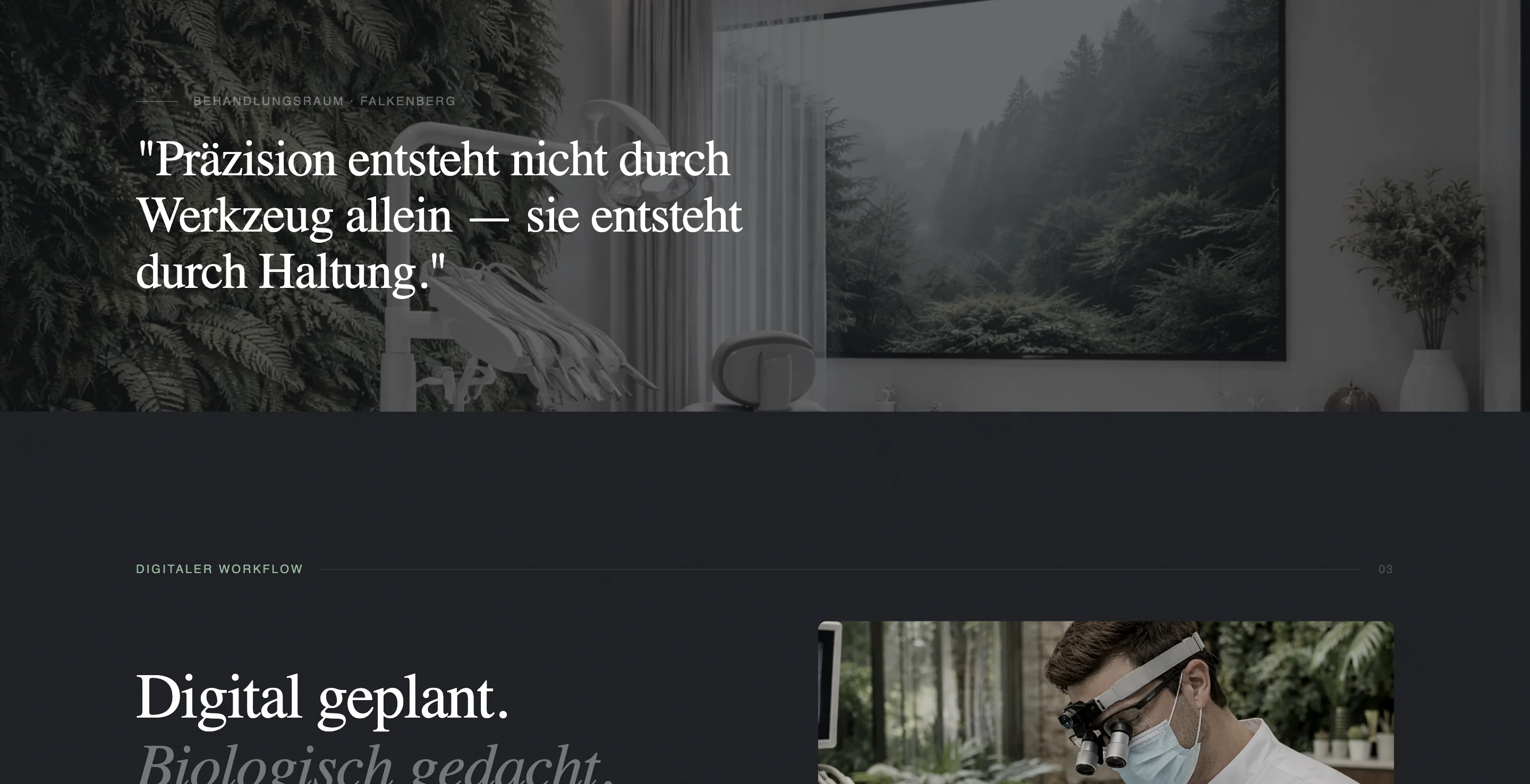
Layouts and typography are tuned for calm, readable, content-led communication. No diagnostic, therapeutic or clinical claims are made or implied.
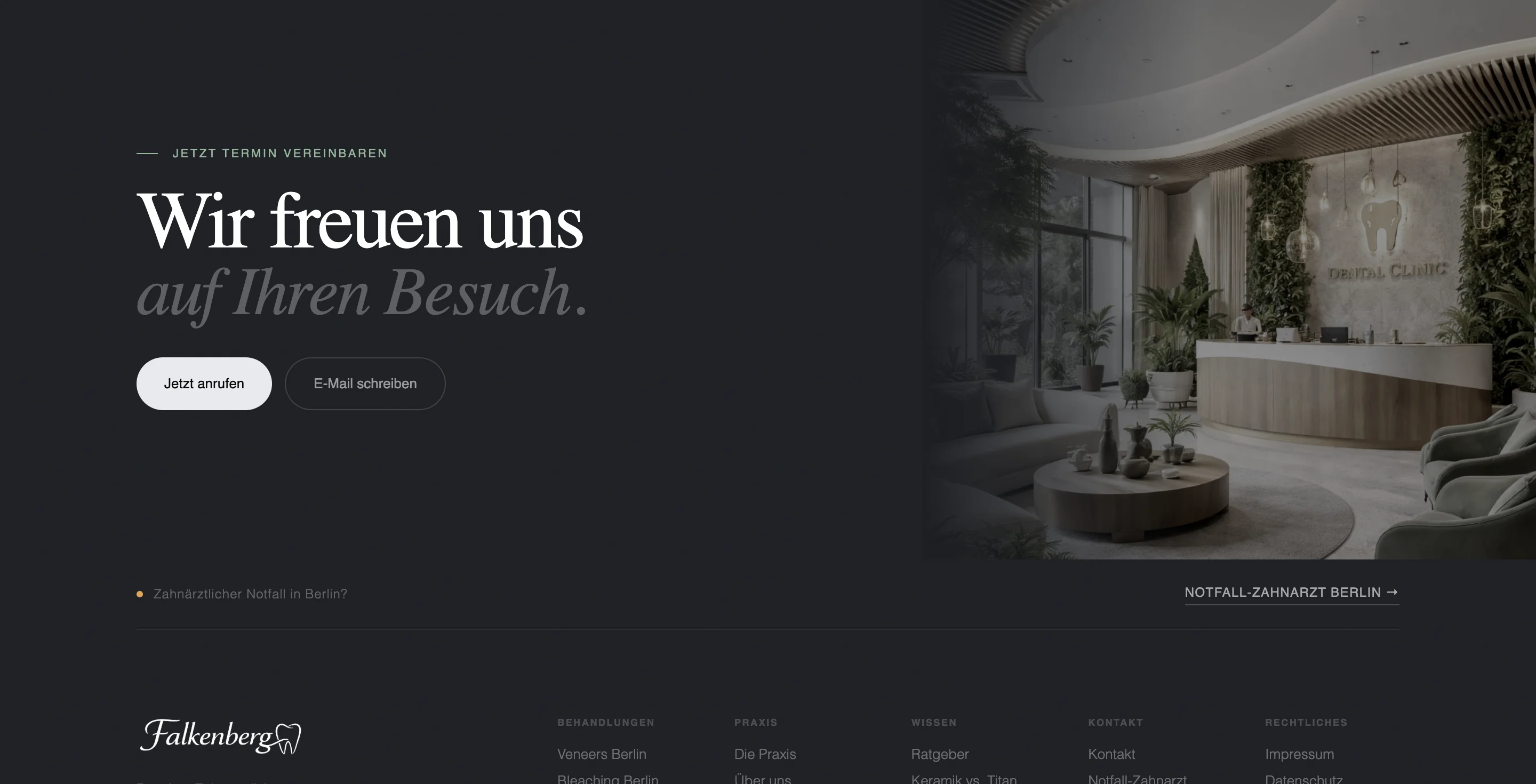
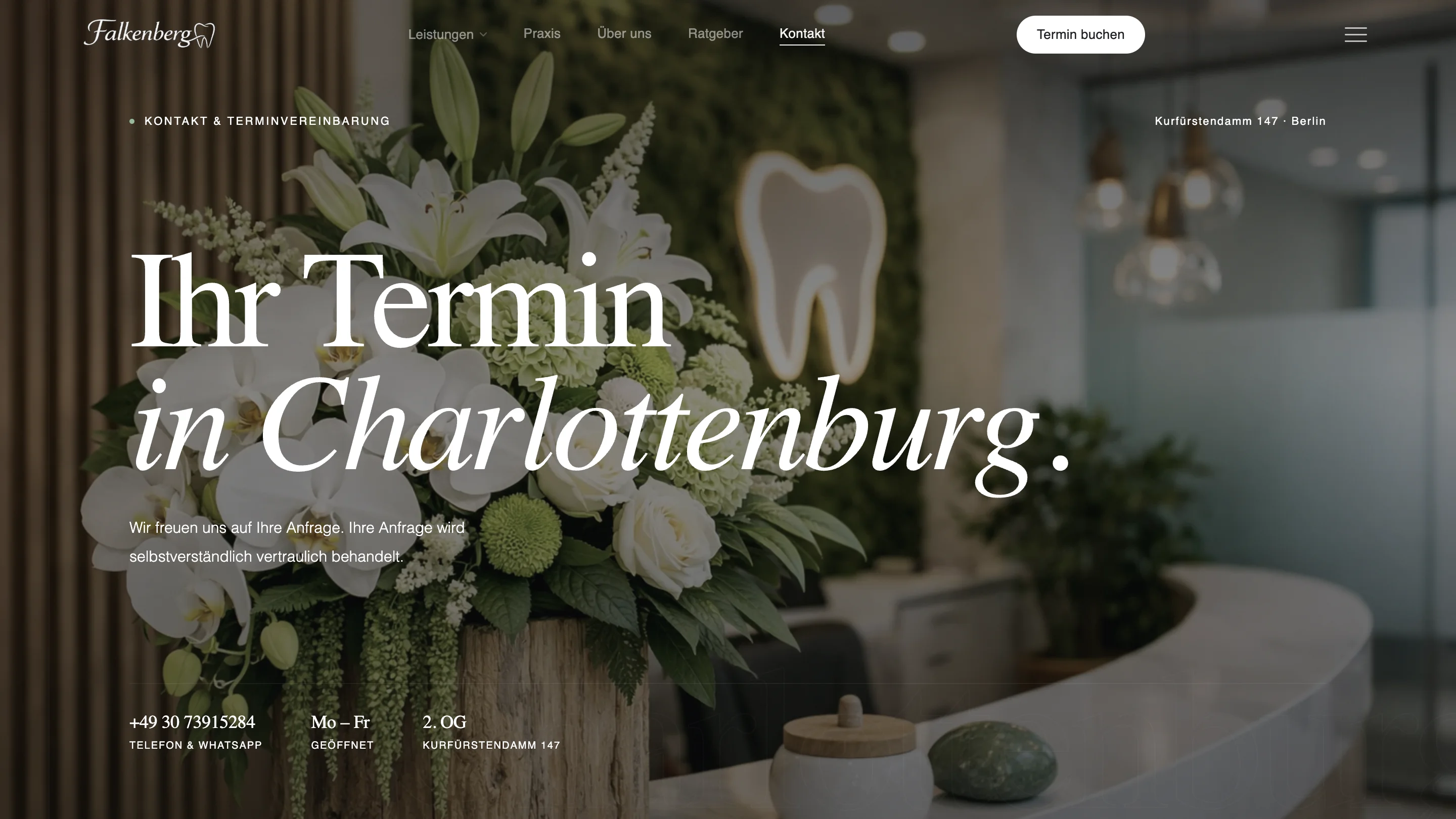
Illustrative booking-flow direction
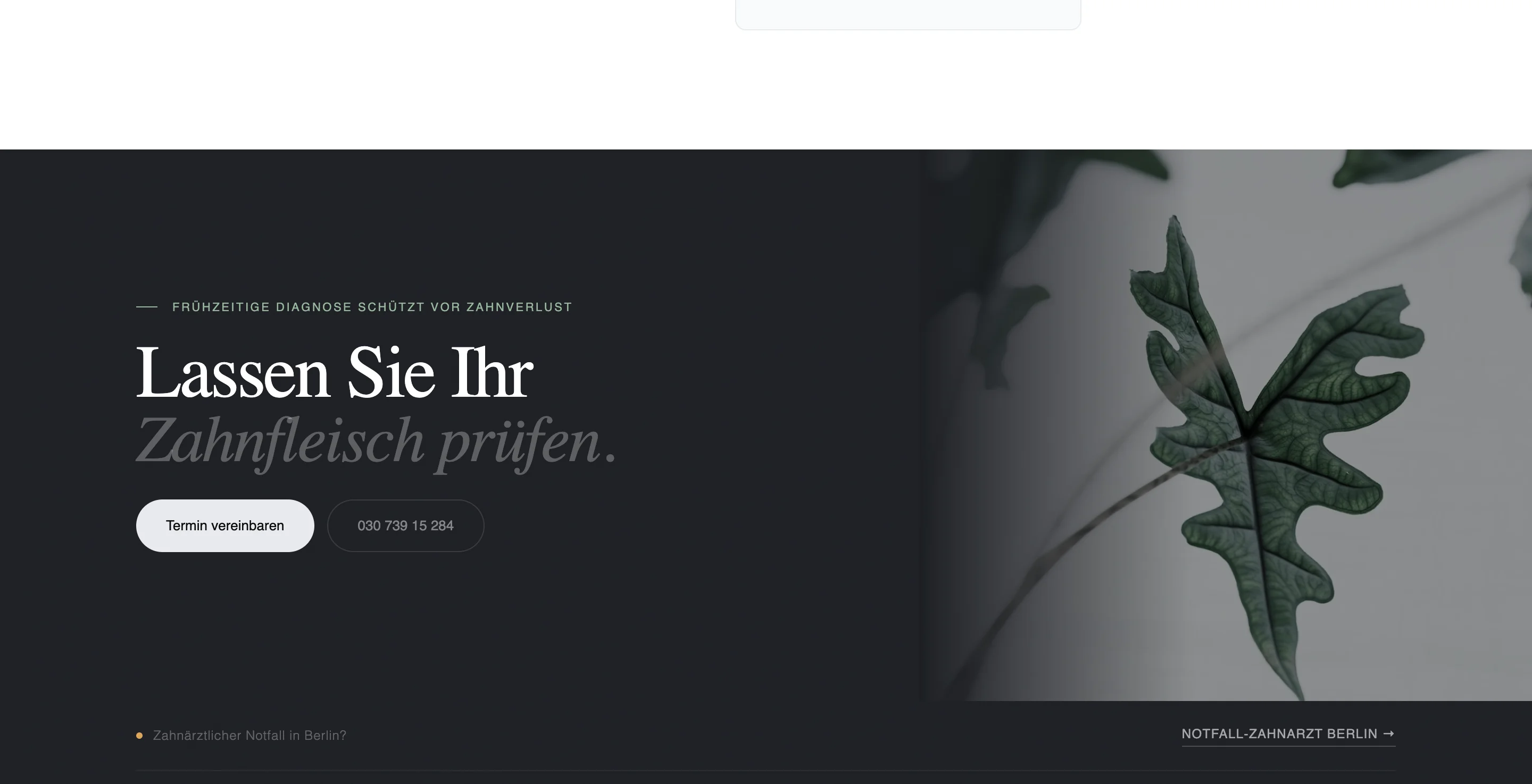
Contact and enquiry patterns are sketched in as illustrative layout direction. Nothing is implemented as a live booking system in production.
The reference build behaves more like an information-design study than a marketing site, with each layer supporting clarity and structural usability of the pattern itself.
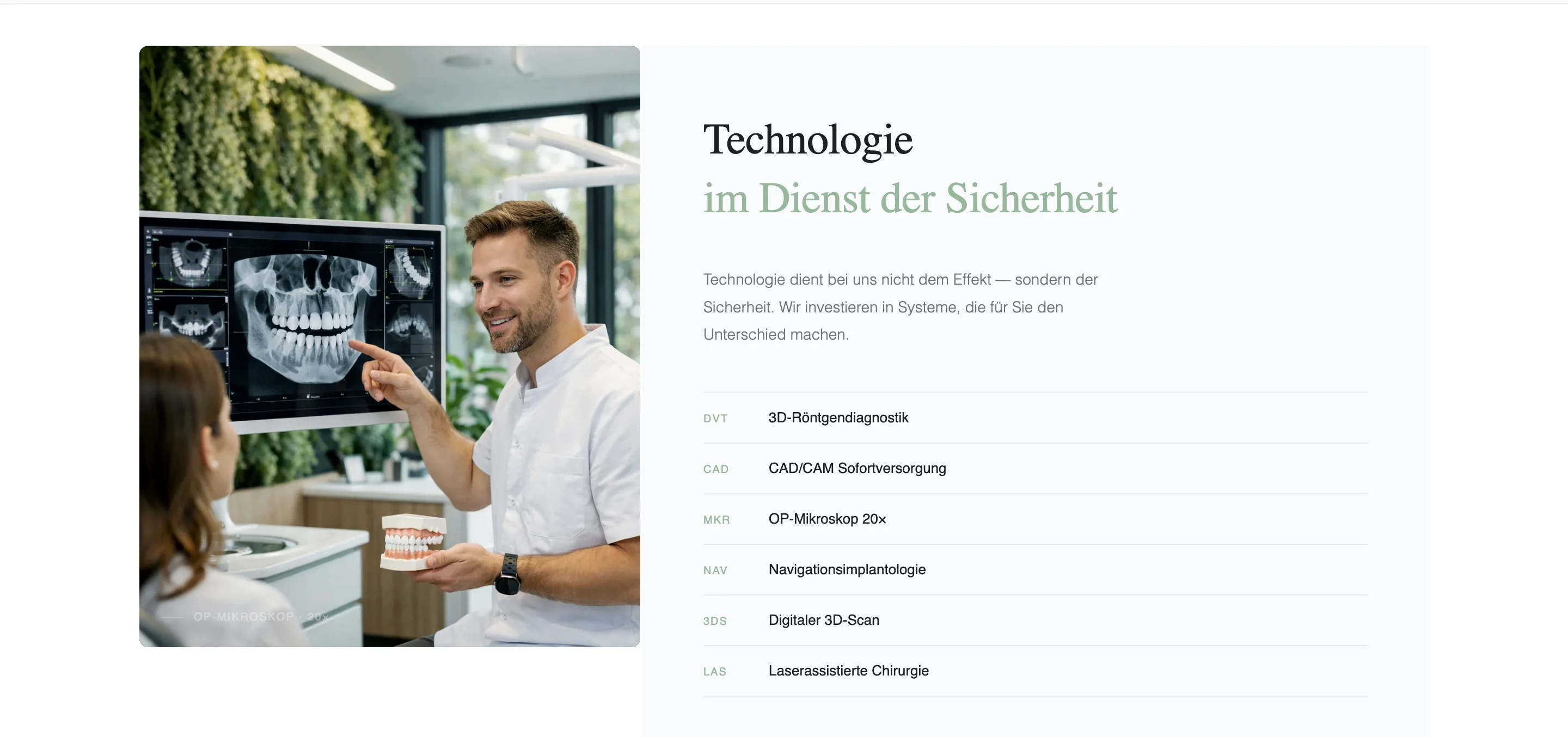
Prototype Stack (Used to Assemble This Study)
Frontend prototype stack
- Next.js, React, and TypeScript — prototype stack used to assemble this study
- Server-rendered architecture explored as a structural direction, not a guarantee of any outcome
- Component-based pattern so illustrative content modules can be extended without rebuilding the structure
Headless content layer
- Sanity CMS — prototype content layer used in the study
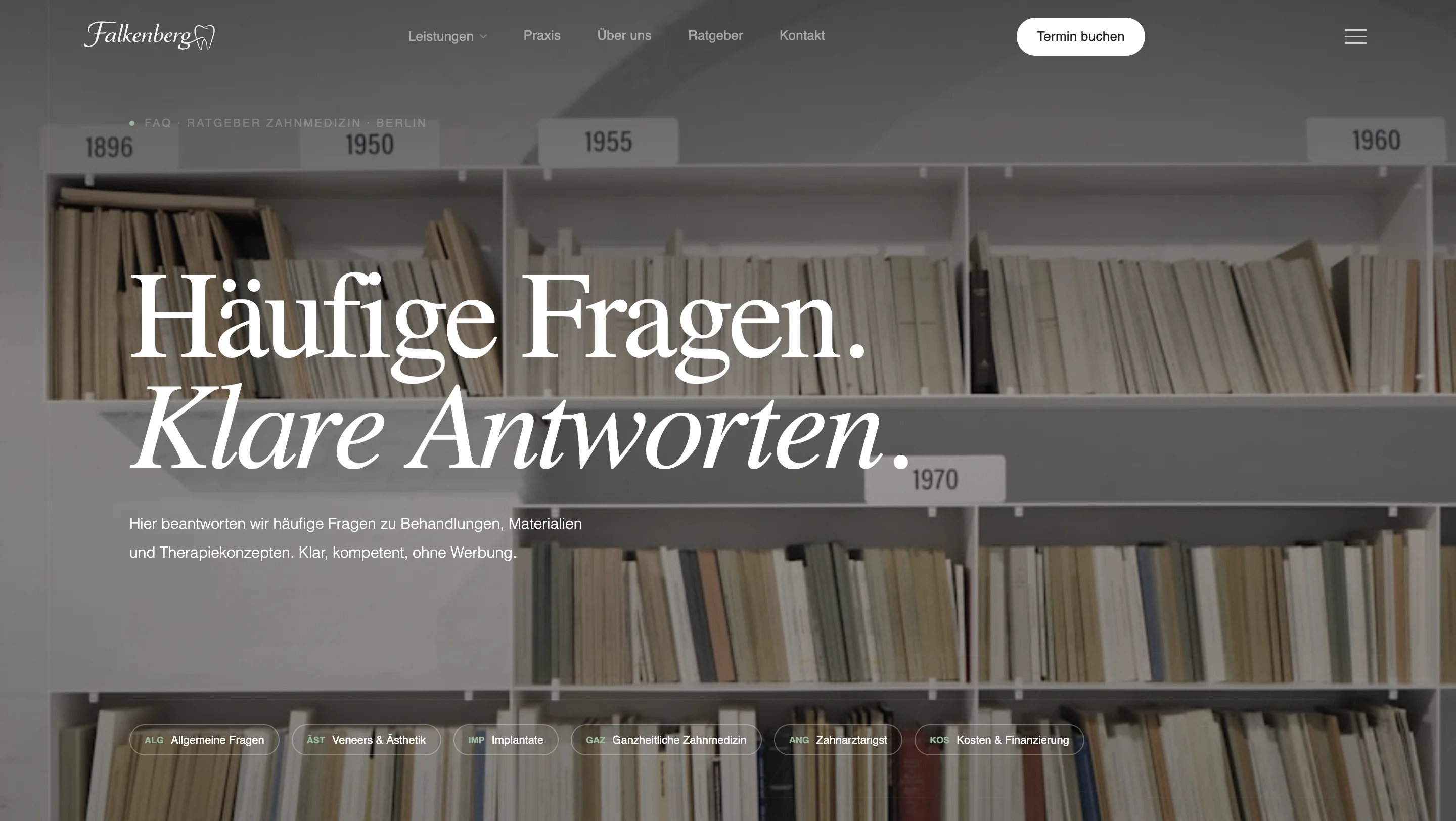
- Illustrative schemas for treatment categories, FAQs and informational pages
- Content management pattern with consistent layout direction
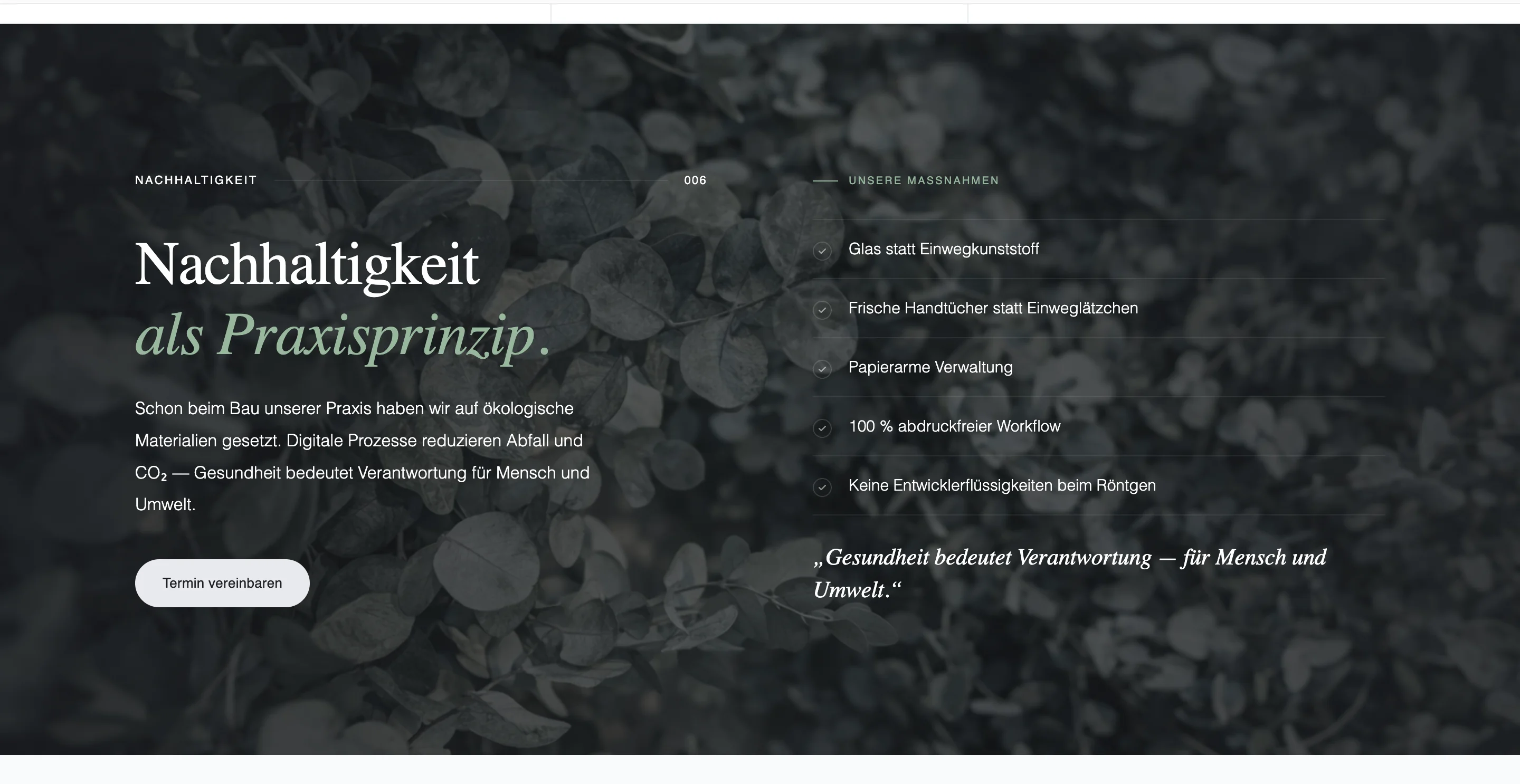
Content-structure direction
- Semantic URL pattern for categories and topics
- Structured metadata and schema markup direction for informational content
- Programmatic internal linking pattern between related topics
Performance and deployment direction
- Edge-oriented deployment direction explored in the prototype
- CDN-based asset delivery pattern
- Performance-oriented rendering direction
Design System Direction
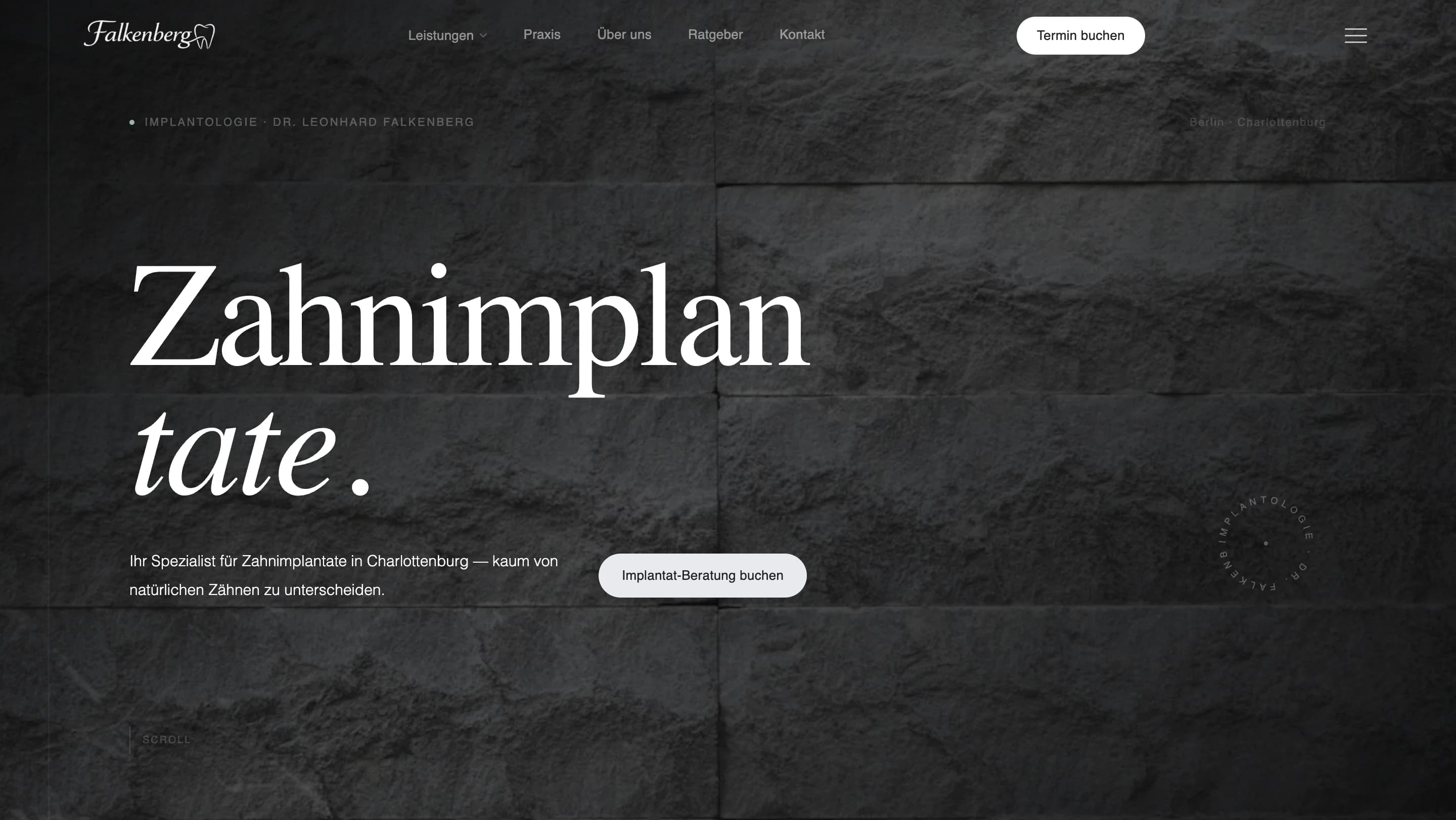
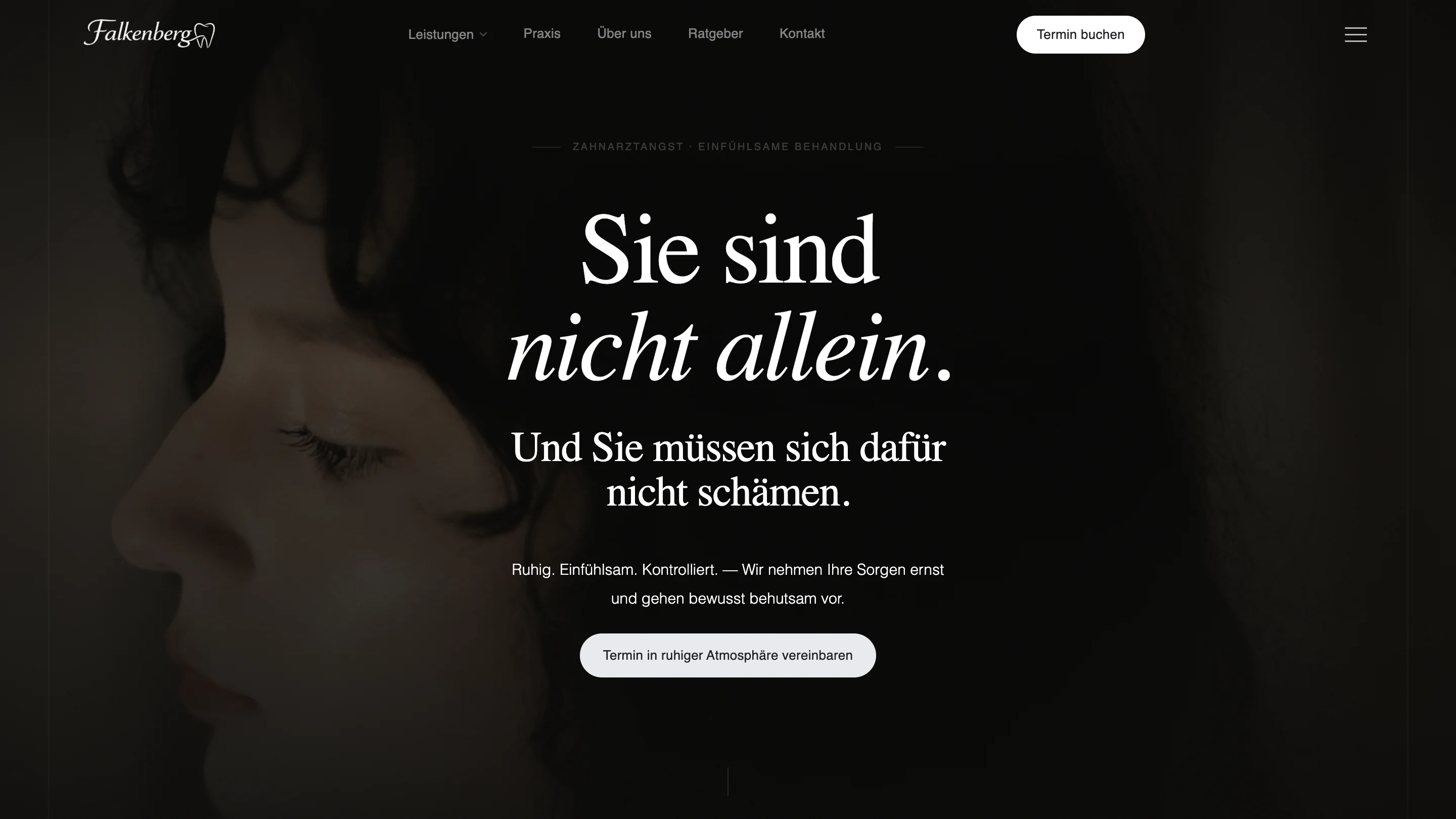
The visual system explores calm, considered interaction patterns suitable for content-led environments.
- Soft geometry and rounded interface elements
- Neutral, low-noise colour palette
- High-readability typography hierarchy
- Clear section rhythm for explanatory content
- Mobile-first interaction patterns
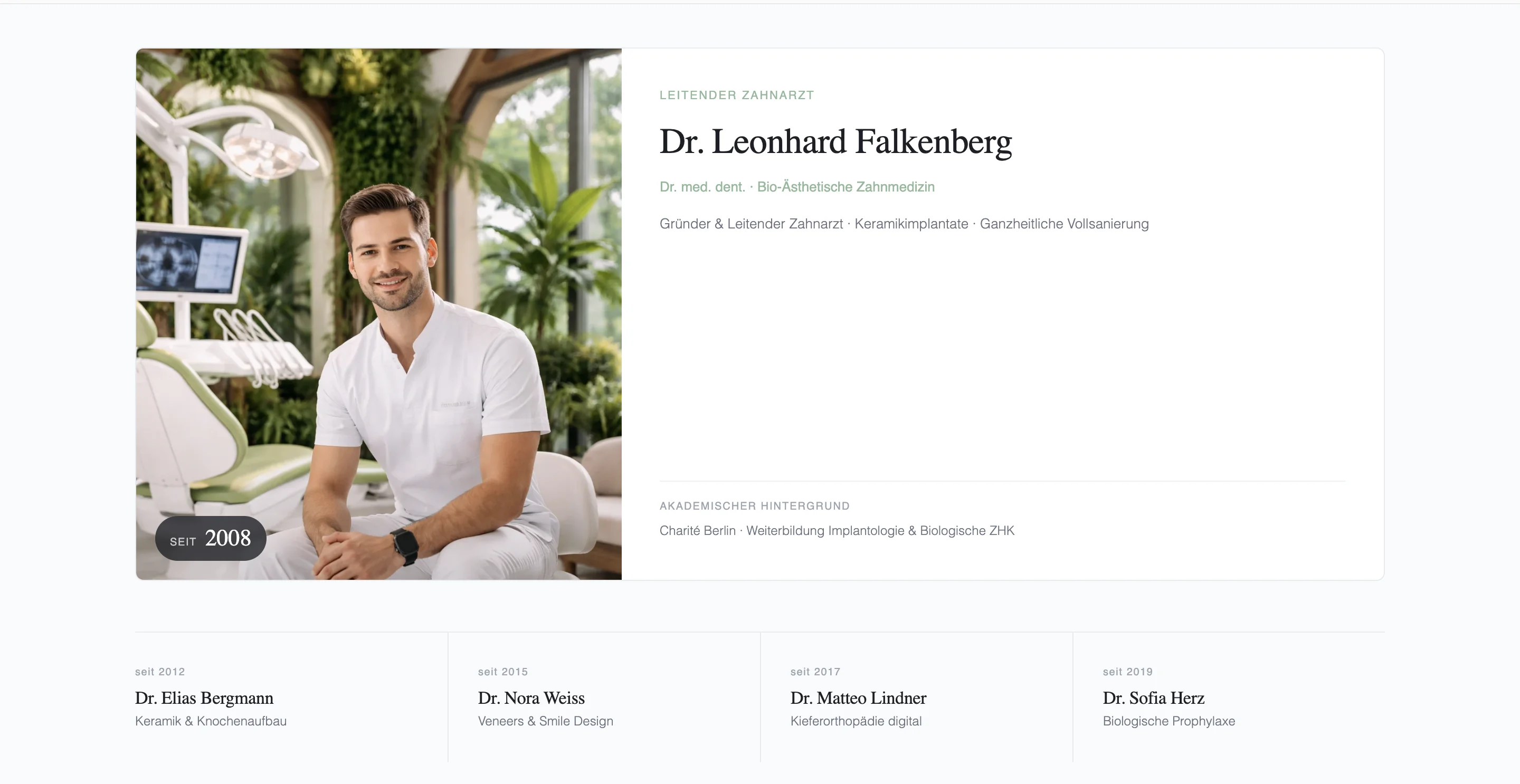
Content Structure Direction
The study includes a content-structure direction that could support discoverability over time. No ranking, traffic or commercial outcome is promised.
- Topic-focused landing-page direction
- Illustrative informational topic pages
- Internal linking pattern between topics and supporting questions
- Structured metadata and schema-markup direction for informational content
- Location-aware content-structure direction
Illustrative Platform Modules
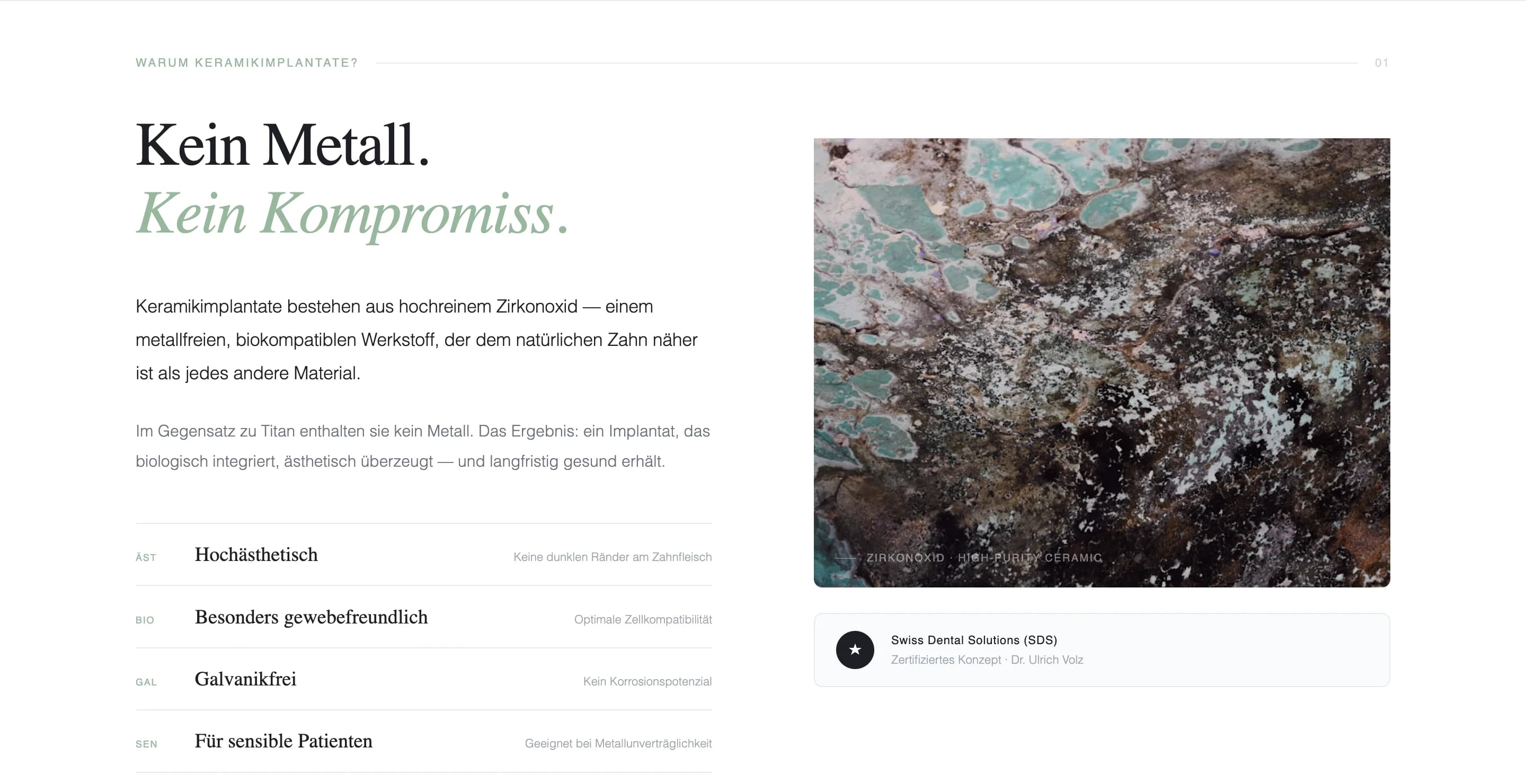
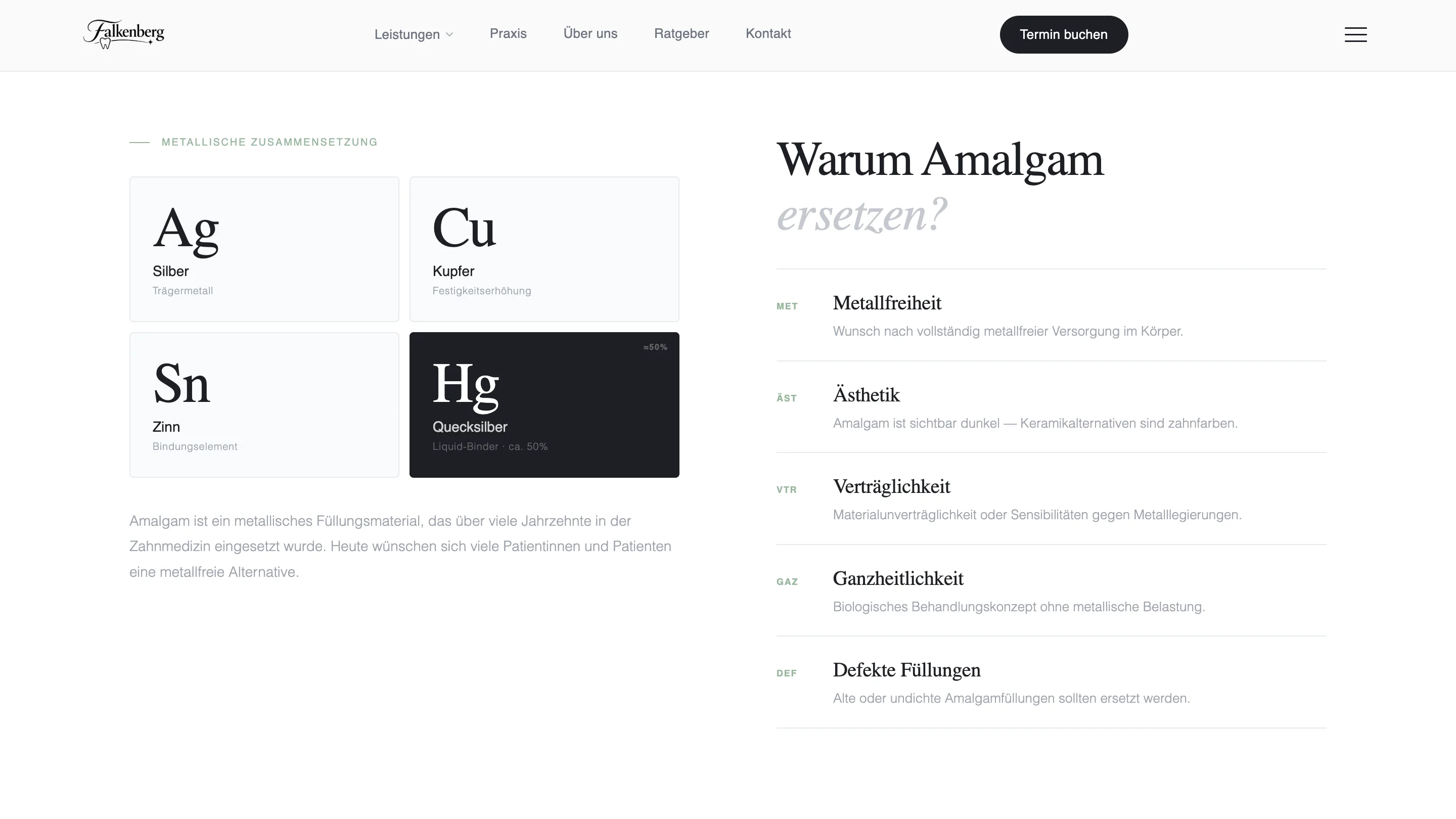
- Illustrative treatment-information architecture covering categories such as implants and veneers
- Informational content sections
- Layout blocks designed to support clinic-side trust-building patterns
- Illustrative enquiry-interface direction
- Illustrative booking-flow direction
- Scalable content-system pattern for future extension
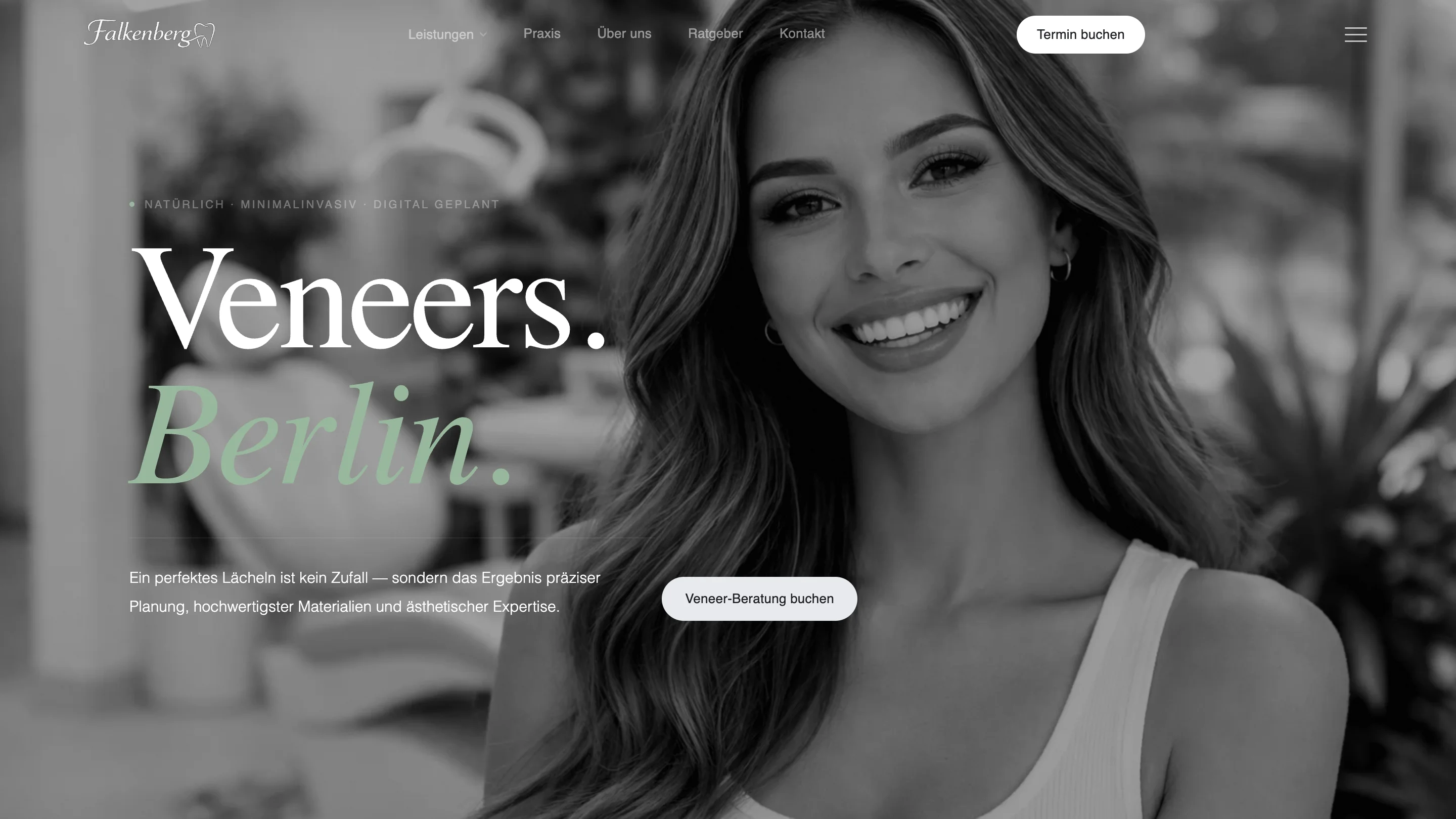
Integrations
Potential integration points the concept is designed around. None is implemented in production. Any future implementation could be adapted to applicable health-data and privacy requirements such as GDPR/DSGVO — this is a design direction, not a compliance claim.
Reference-Build Notes
Rather than presenting a live clinic website, the reference build illustrates a possible platform pattern as a studio study.
- Illustrates how topic content could be organised through a clear hierarchy
- Explores a calm, considered visual direction
- Sketches a content-structure direction that could support future discoverability
- Shows a content pattern that could be extended without structural redesign
Reference build note: this is a speculative studio study for a dental-clinic platform pattern, not a delivered project, and not associated with any specific dental practice. No medical, clinical or treatment-outcome claims are made or implied.
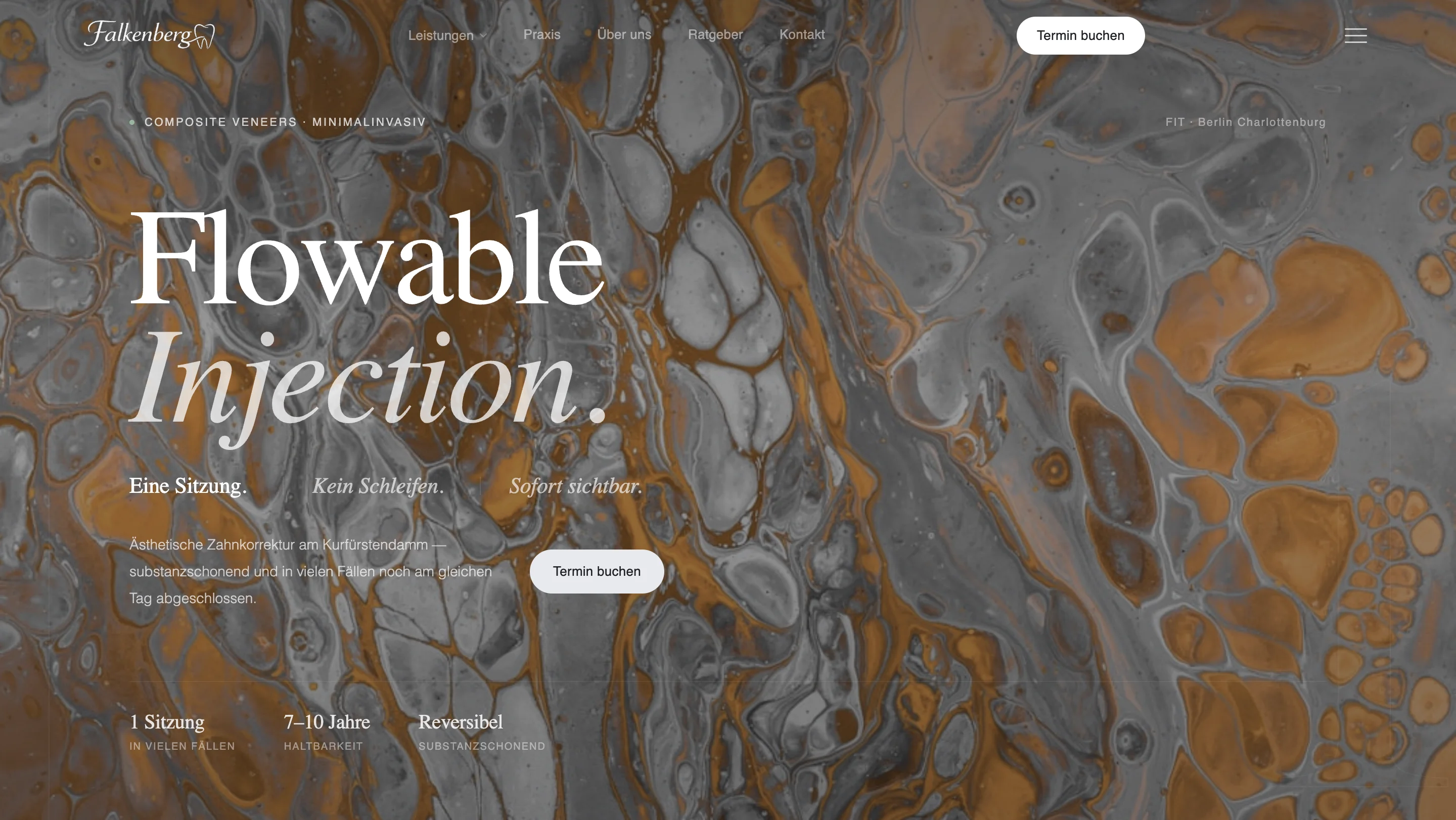
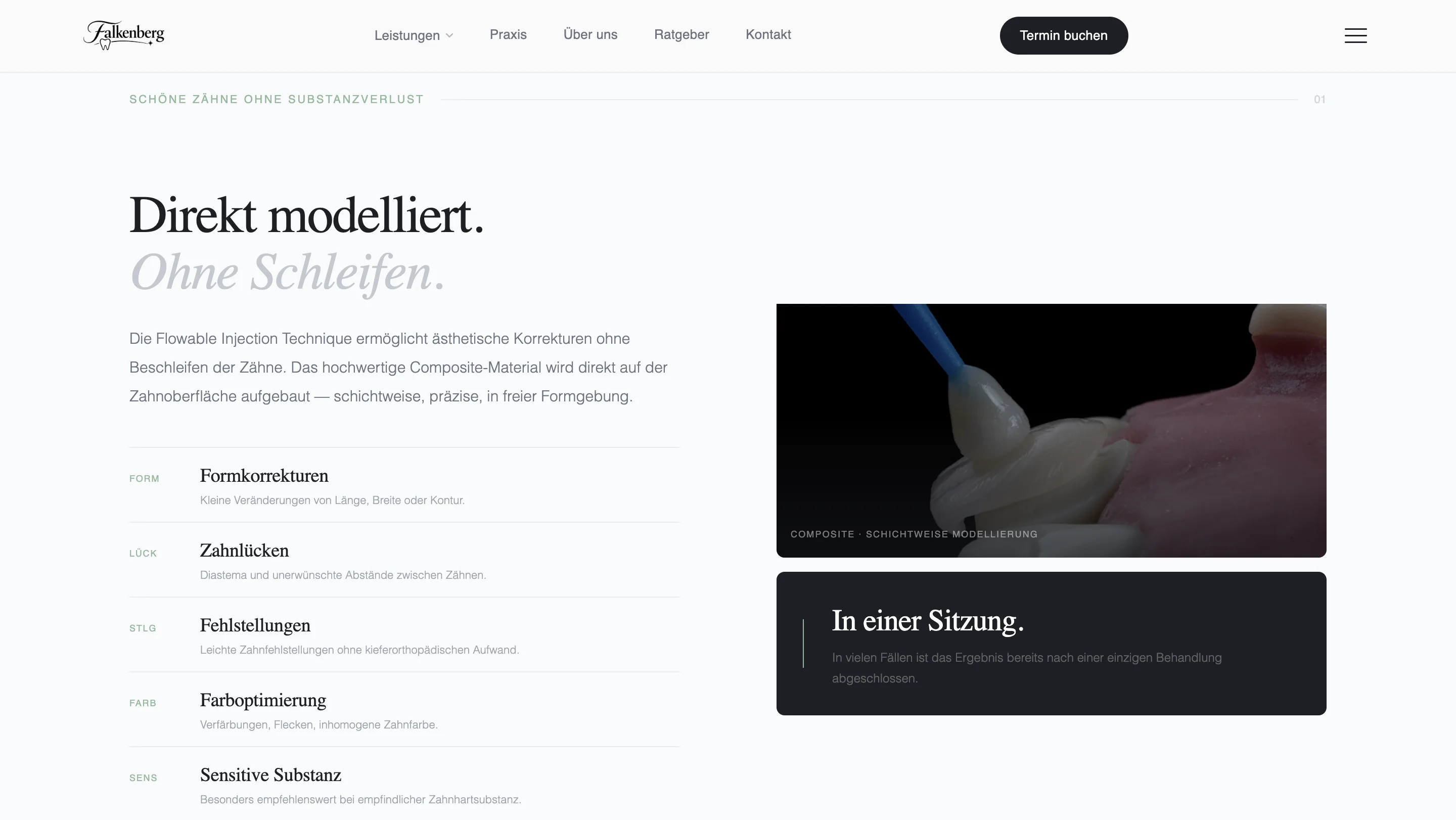
Illustrative Interface Studies