Matahari Hills
Investor-facing real-estate platform for a Bali development — combining positioning, premium UX, CRM, analytics, automation, and data-driven lead infrastructure.
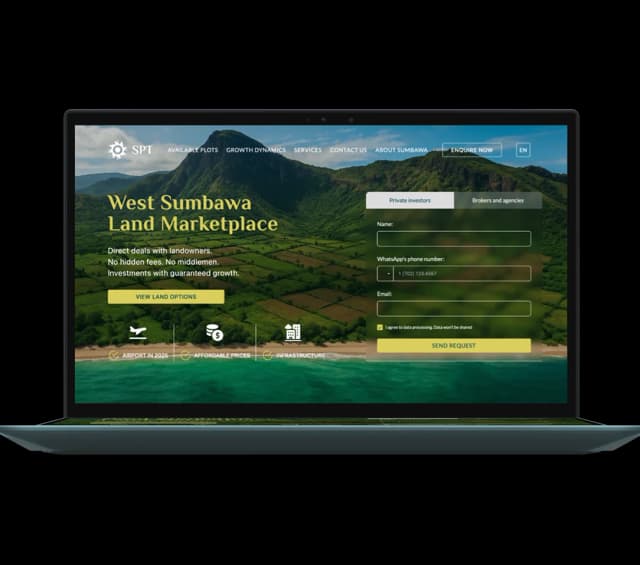
Instead of a traditional marketing campaign, we built a scalable digital infrastructure that combined analytics, automation, and investor-facing UX.
Decision Context
This project operated under several structural constraints typical for early-stage real estate ventures.
The objective was not to predict returns or guarantee outcomes, but to replace assumption-driven marketing with measurable signals and transparent data flows. Any solution had to remain adaptable to changing market conditions, budgets, and audience behavior.
Key considerations at the decision stage:
- Traditional real estate marketing offers limited visibility into audience quality and intent.
- Early validation was required before committing to large-scale campaigns or long-term assets.
- Manual lead handling increases the risk of delayed follow-ups and data loss.
- Insights needed to be comparable across campaigns without relying on subjective interpretation.
The system was therefore designed as a reusable digital infrastructure for testing positioning, messaging, and demand signals — not as a promise of performance, but as a foundation for informed decision-making.
Our Approach
01 — Strategic Positioning & Messaging
We started by defining the target audience and aligning the product story around investor intent. A clear USP, structured communication flow, and value-based messaging helped turn a real-estate listing into an investable digital product.
02 — MVP Landing & Identity System
We built a high-performance landing system that translated the project's value into clear conversion paths. Everything — from copywriting and design to analytics and CRM setup — was integrated into one MVP architecture ready to scale.
Digital Platform & Conversion Layer
The client needed significantly more than a presentation page. Required was a digital system that:
- conveys a premium brand experience
- supports informed investor decision-making through facts, transparency, and storytelling
- consistently provides bilingual content (English/Indonesian)
- bundles analytics, CRM and lead funnel in a unified platform
- designed for high speed and strong SEO performance with a mobile-first approach
In short: Brand Experience + Conversion Engine + scalable technical architecture.
1 — Architecture & Technology
We completely rebuilt the platform based on a modern, scalable stack:
- Next.js 14 + React for performance and SEO-optimized rendering
- Storyblok CMS for flexible content structures
- Static Site Generation for international loading speed
- lit-element components for reusable UI building blocks
- Swiper.js for immersive, visual storytelling sequences
- Deployment via Vercel, including HTTP/3, CDN caching, automatic deployments
The result: an extremely fast, stable foundation, designed to support scalability and future expansion.
2 — Integrated Analytics and CRM Flow
We developed a complete analytics ecosystem that measures all touchpoints:
- Google Tag Manager, GA4, Facebook Pixel, Yandex Metrica
- Event tracking for scroll depth, map interactions, CTA clicks
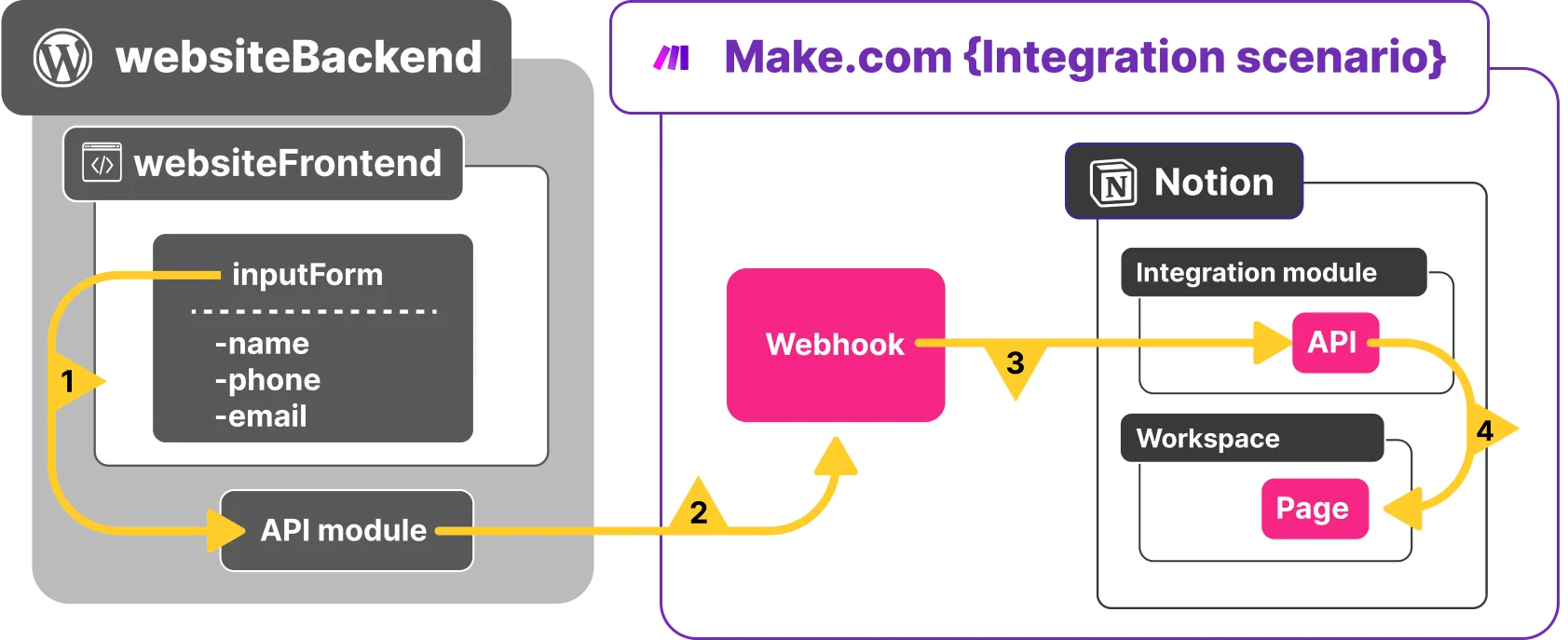
- CRM integration via Make webhooks
- Central lead processing in a Notion-based CRM
- Real-time notifications for the sales team
This creates a fully automated funnel designed to minimize manual handling and reduce the risk of data loss across the funnel – from first impression to qualified inquiry.
3 — UX & Visual Identity
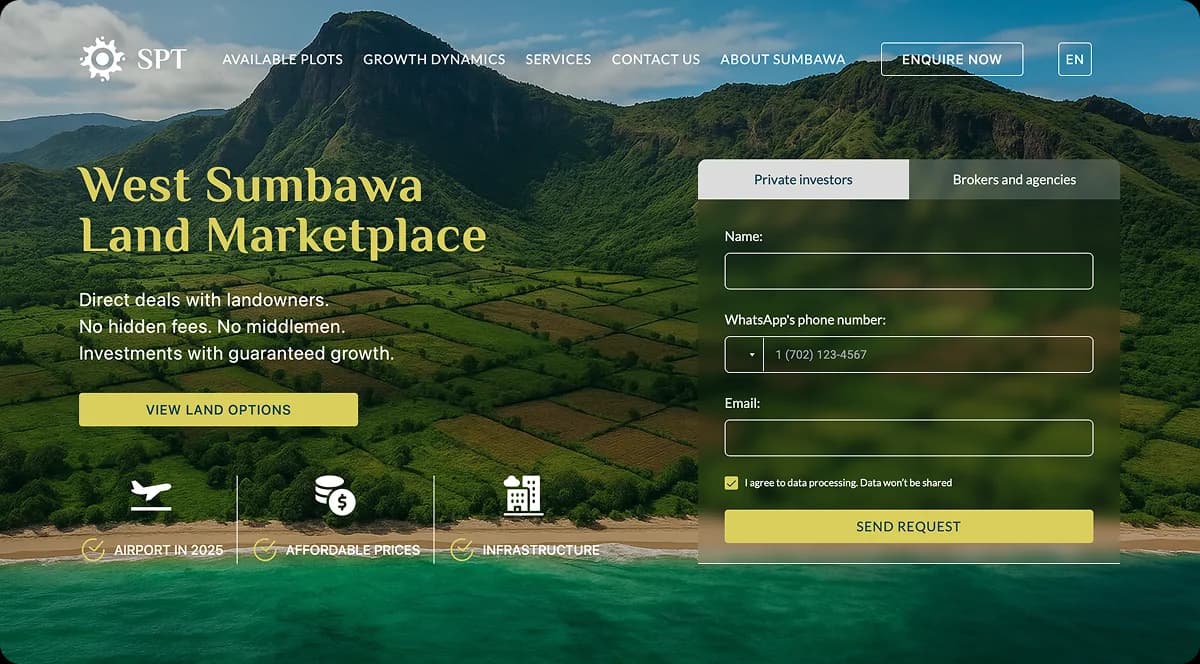
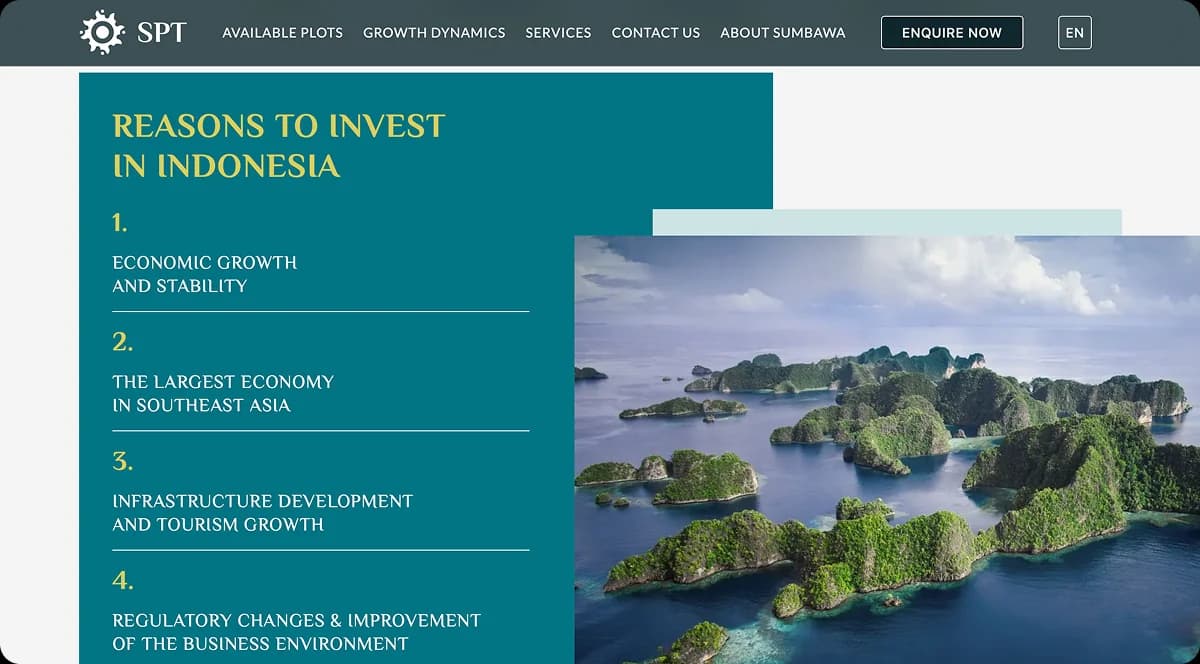
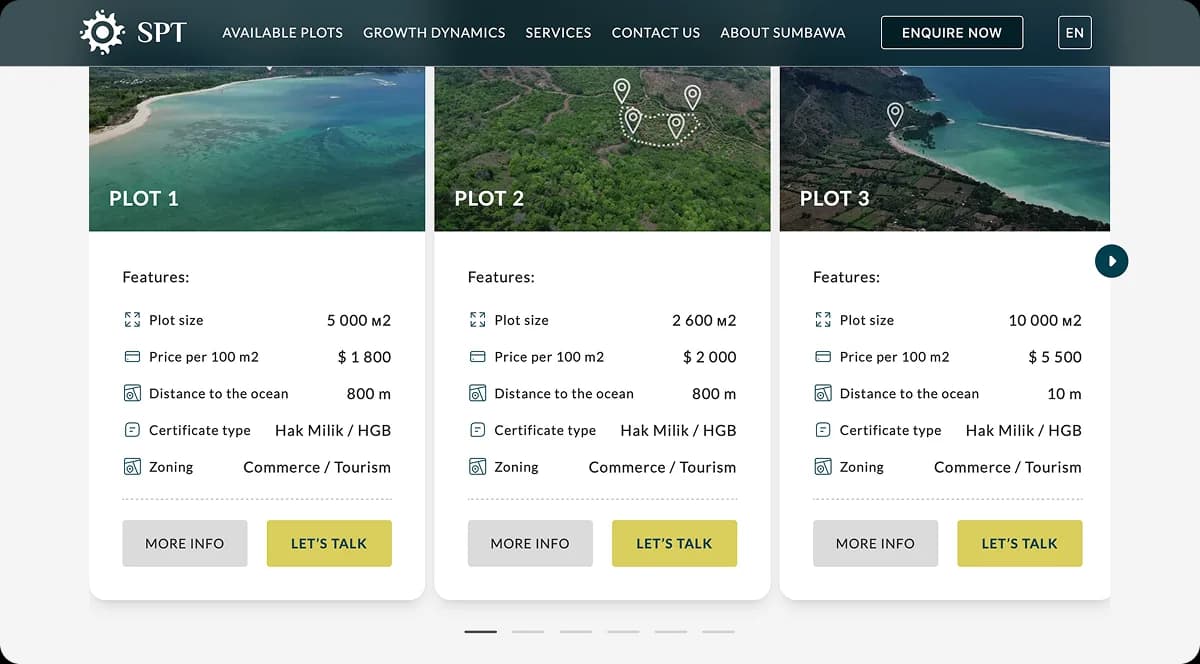
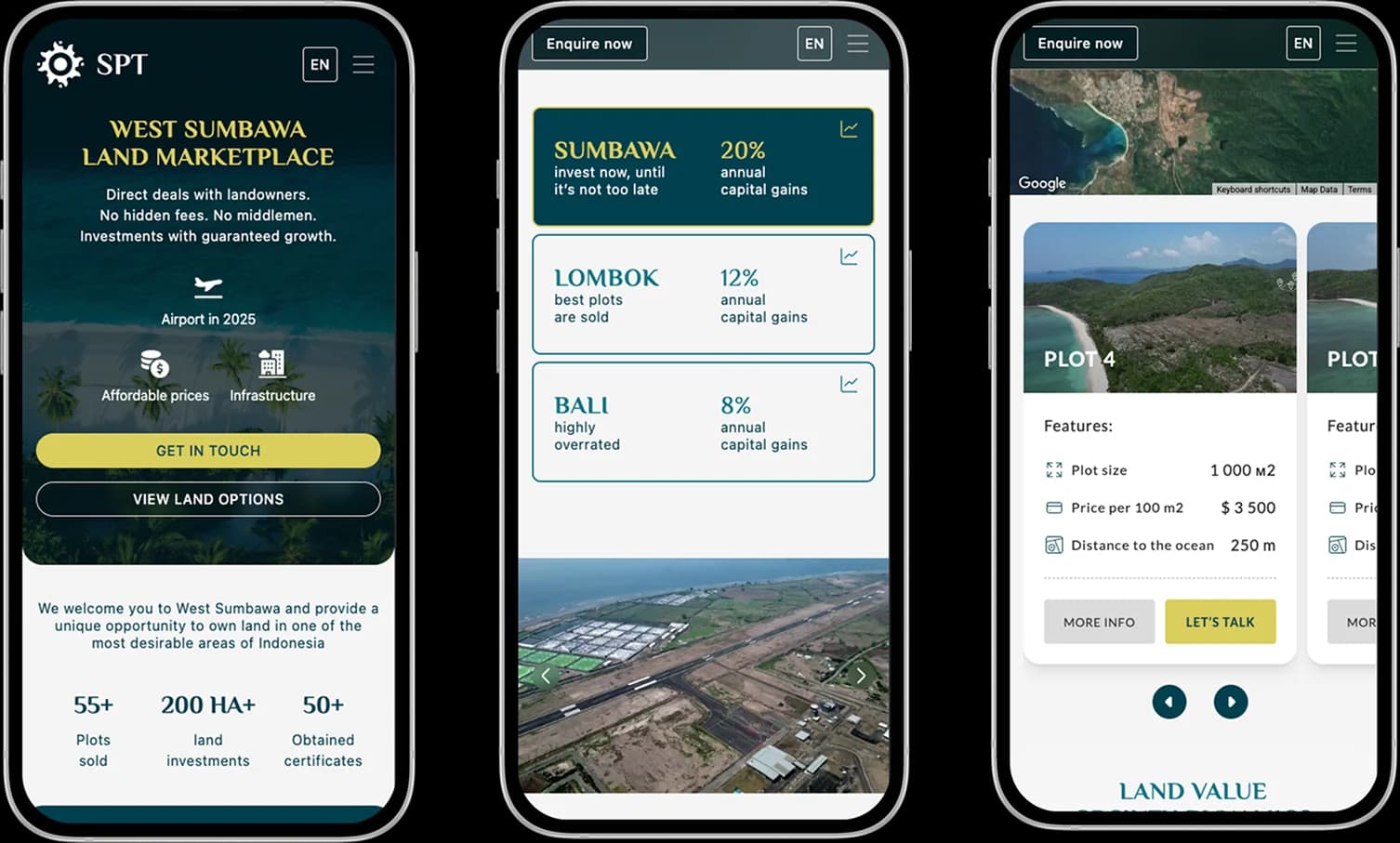
The website follows a clear, linear narrative structure: Hero → Vision → Location Map → Architecture → Investment Offer We developed:
- a consistent brandbook (typography, color palette, tone of voice)
- interactive modules like Google Maps, WhatsApp Chat, micro-animations
- a calm, trustworthy aesthetic that reflects premium real estate
- mobile-optimized page layouts for international audiences
The experience combines emotion (storytelling) with structure (investment arguments).
4 — Conversion System & Funnel
Every module became part of a data-driven sales funnel:
- Reverse Squeeze Page → Lead magnet / Downloads
- Application Form → Qualification and automatic data enrichment
- Thank-You Page → Onboarding & handover to CRM
- A/B tests for headlines, CTAs and visuals
- Rule-based lead qualification using predefined behavioral signals
This created a measurable, optimizable funnel for performance marketing.
03 — Automated Funnel & Lead Infrastructure
To validate traction early, we connected a Notion-based CRM through a webhook system (Make API). Every submission captured user data, UTM parameters, and contact details — stored automatically for analysis and follow-up. The system was designed to minimize manual work and reduce the risk of missed leads.
04 — Analytics & Experimentation
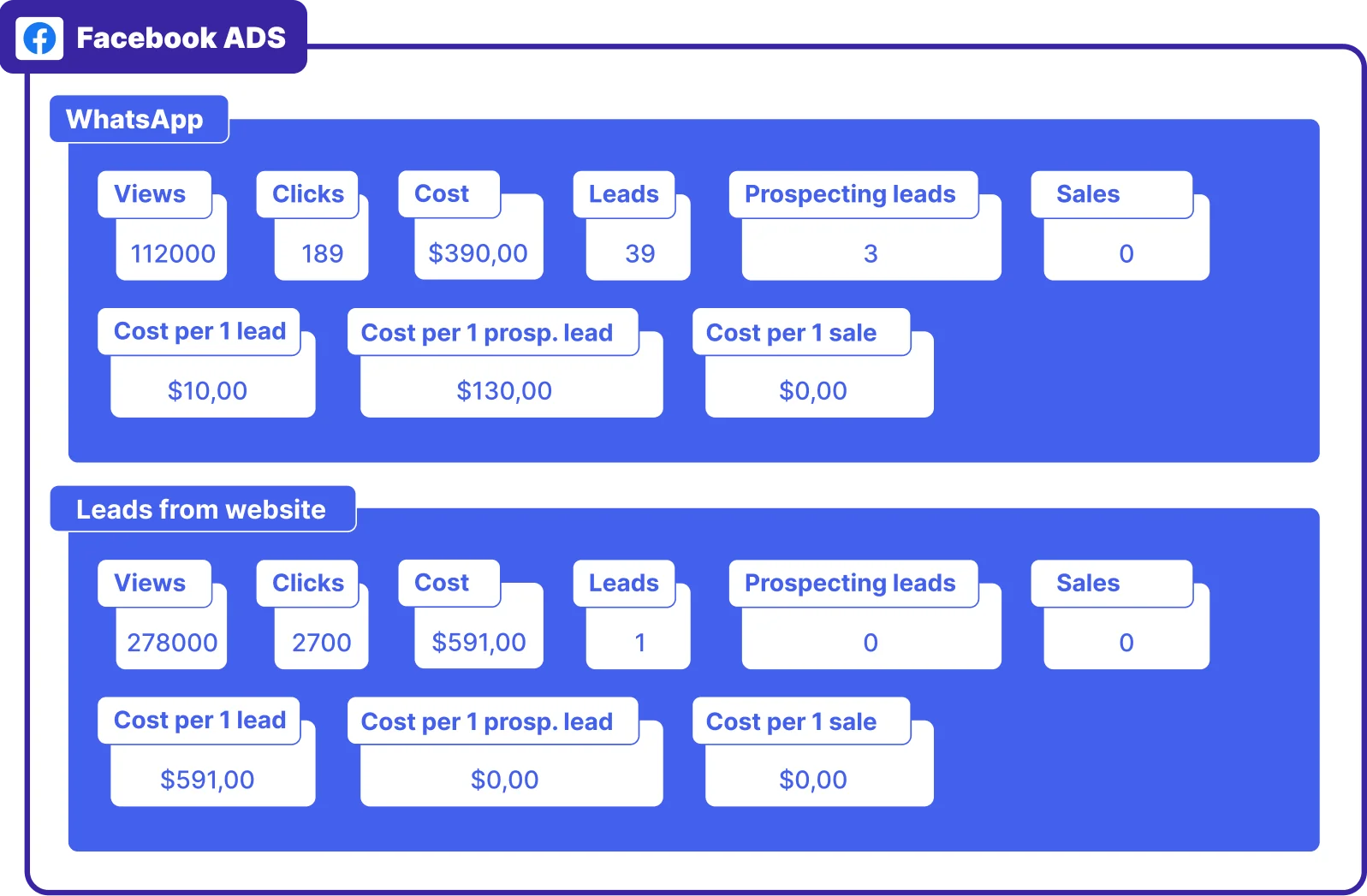
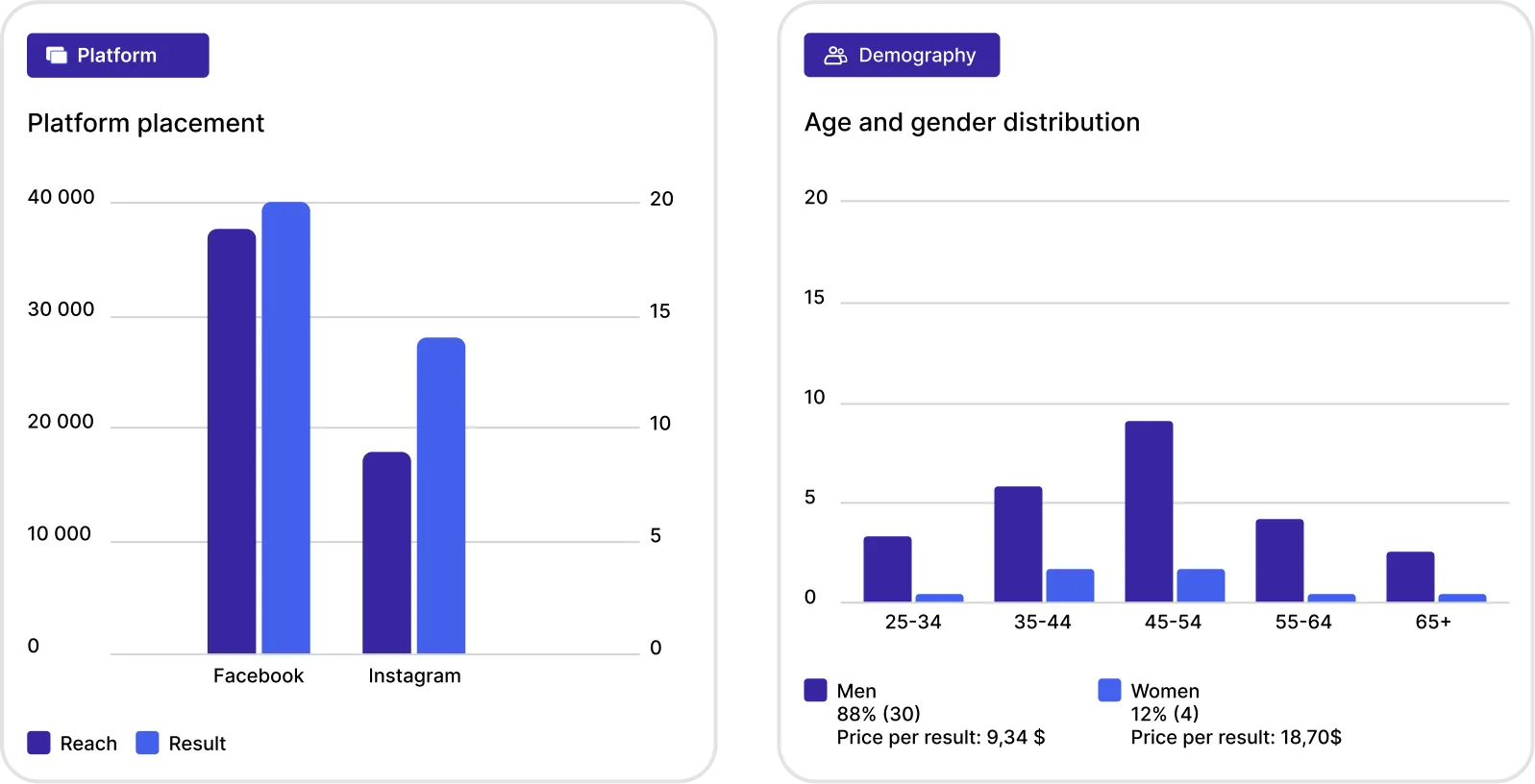
We implemented multi-channel A/B testing (Google Ads + Meta Ads) and tracked user flow via Google Tag Manager. Each variant produced measurable insights on audience quality, cost per lead, and conversion drivers.
05 — Investor Materials & Data Visualization
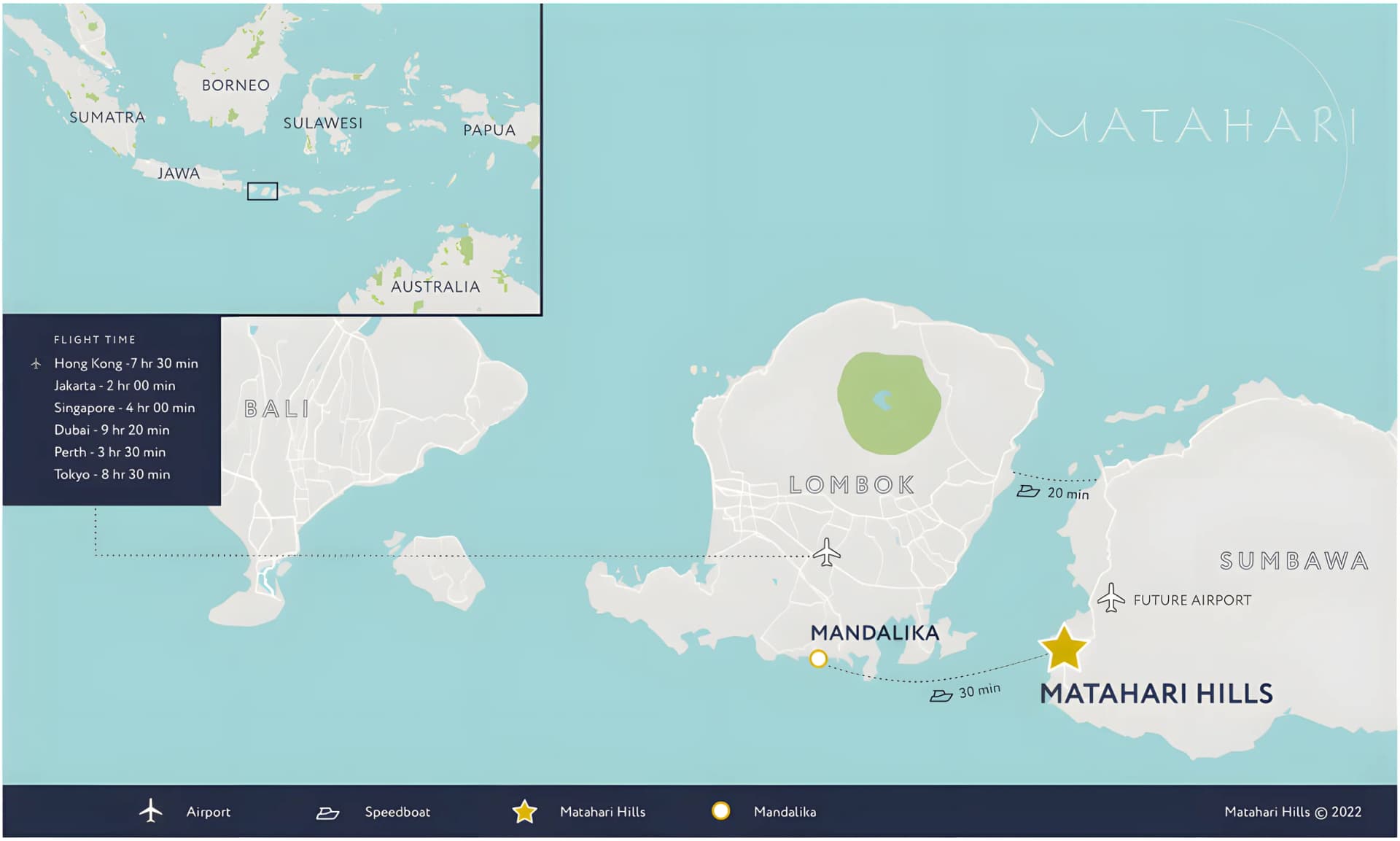
We designed digital and printed pitch decks highlighting market potential, ROI scenarios based on available data, and geographic analytics — helping the team secure investor interest with clarity and credibility.
The Result
Within the first campaign cycle, the system generated qualified leads with an average CPA of around $64 during the initial campaign phase, with real-time reporting and audience segmentation by region and intent. More importantly, the infrastructure remained reusable — the same system could be scaled for new properties or other verticals without major re-architecture.
Results
- Lighthouse score of up to 97/100 under standardized mobile test conditions
- Significantly reduced page load times compared to the previous platform version
- Generated qualified leads through paid acquisition campaigns, with average CPL values around $64 during the initial test campaigns
- Enabled real-time reporting and CRM sync through Make automations
- Created a consistent brand identity for web, social media and investor materials
Performance metrics, lead costs and conversion results depend on market conditions, advertising strategy, target audience and external platforms. Past campaign results do not constitute a guarantee of future outcomes or investment performance.
What We Delivered
- Full MVP system — from website to automated CRM
- Brand & communication framework for investor market
- Integrated analytics and reporting setup
- Multi-channel ad testing and lead qualification logic
- Investor-ready presentations and assets
Insights
- Premium UX and performance directly impact trust in high-value B2C products.
- Integrating CRM and analytics from day one saves dozens of hours of manual work each month.
- Building with Next.js and Storyblok provides startup-grade flexibility even for traditional industries like real estate.
Tech Stack
Frontend: Next.js 14 · React · Tailwind CSS
CMS: Storyblok CMS
Components: lit-element · Swiper
Integrations: Google Maps API · WhatsApp Chat
Analytics: GTM · GA4 · FB Pixel
Deployment: Vercel
Automation: Make CRM Webhook
Key Insight
Even in traditional industries, startup thinking wins: Build once, validate early, and scale with data — not assumptions.
Matahari Hills became a proof of concept for how our startup engineering approach can transform any complex idea into a measurable, scalable digital product.
Results depend on market conditions, budget, audience, and campaign setup.
Related Services
Explore our services that helped deliver this project.
Case Studies
Digital Experience & Brand Systems
Next.jsNeon PostgresClient Dashboard+1
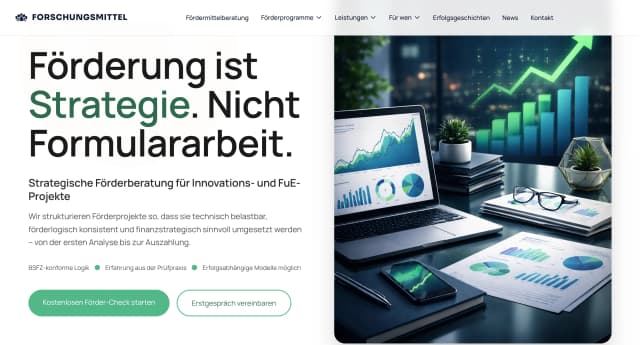
Forschungsmittel.com
B2B funding website and connected product platform with client dashboard, team workspace, document workflow, and operational command center.
Enterprise-Grade Foundations
React NativeReactNode.js+1
Vulken FM
Enterprise PlatformEngineering Team
Inspection & Asset Management Platform - Internal survey and compliance system for facilities management with mobile inspection app and web-based admin platform.
Startup Engineering

JavaSpring BootPostgreSQL+1
PlayDeck - Powering Telegram's Gaming Ecosystem
How we built the backend architecture for Telegram's fastest-growing gaming platform.
Digital Experience & Brand Systems
Next.jsNeon PostgresPrisma+1
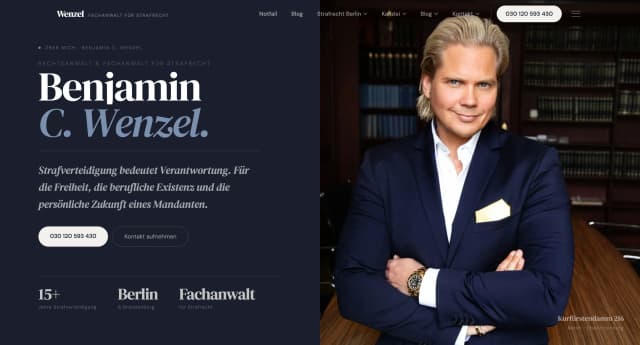
Benjamin C. Wenzel - Legal-Tech Criminal Defense Platform
Custom-built criminal defense platform with public authority site, digital intake, secure client portal, internal case operations, billing, and audit-ready workflow logic.
Enterprise-Grade Foundations
JavaSpring BootApache Kafka+1
VTB Bank
9 months5 engineers
Real-Time Data Streaming Platform - High-performance data-streaming platform capable of processing millions of financial messages per second.
Digital Experience & Brand Systems
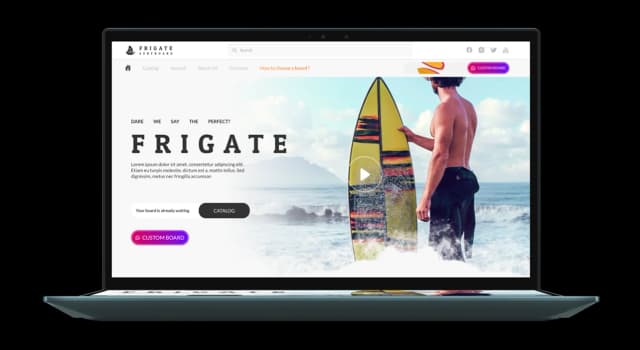
Next.jsReactTypeScript+1
Frigate Surfboards
E-Commerce Platform for a Premium Surf Brand - Bringing craftsmanship and storytelling online.
Enterprise-Grade Foundations

JavaSpring BootApache Kafka+1
Societe Generale
12 months5 engineers
Personalized Advertising & Credit Service Platform - Advanced financial services with real-time personalization.
Digital Experience & Brand Systems
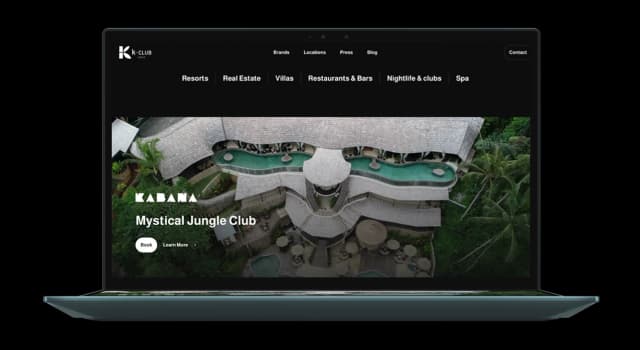
Next.jsReactTypeScript+1
K Club Group
Digital Platform for Barefoot Luxury Experiences - From place to platform.
Enterprise-Grade Foundations

JavaSpring BootApache Kafka+1
Sber
18 months5 engineers
Enterprise Data Analytics Platform - Comprehensive data processing and analytics solution for Russia's largest bank.
Digital Experience & Brand Systems
Next.js 14.2.5ReactWebpack
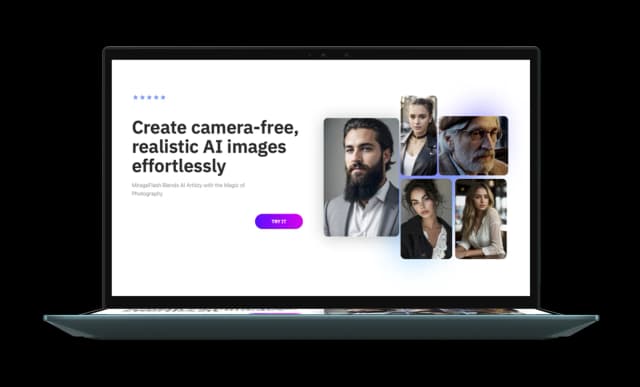
MirageFlash
AI-Powered Visual Platform for Creative Expression - Fusing cutting-edge AI with intuitive design to revolutionize image creation for social media creators.
Enterprise-Grade Foundations

Node.jsReactPostgreSQL+1
EventStripe
12 months3 engineers
Event Management & Payment Processing Platform - Scalable event ticketing and payment processing system.
Startup Engineering
PythonFastAPITensorFlow+1
Modelplace.ai - AI-Powered Marketplace
Building an intelligent platform that connects AI models with real-world applications.
Digital Experience & Brand Systems
Next.js 14ReactStoryblok CMS
Matahari Hills
Digital Experience for Earth-Conscious Development - Transforming a premium property concept into a conversion-driven digital platform.
Startup Engineering

IoTPythonReact+1
Interweave® - Smart Textile Innovation
Revolutionizing textile industry with IoT sensors and data analytics.