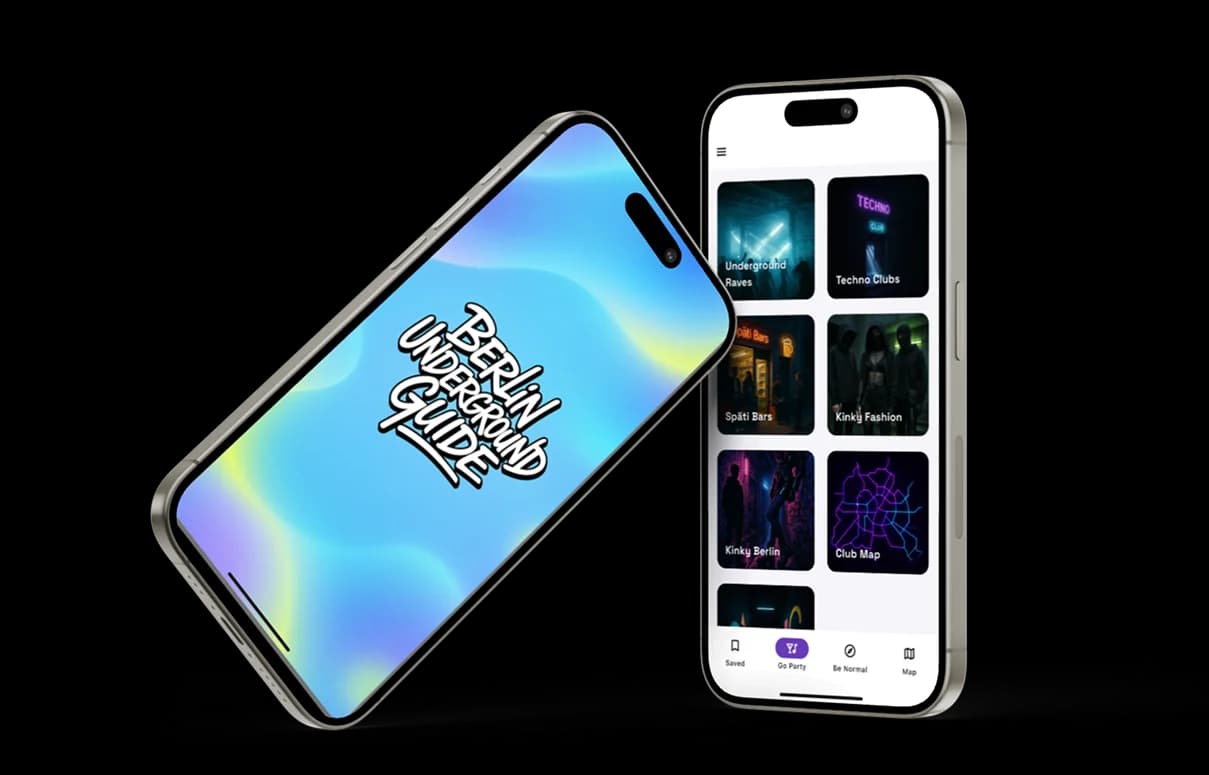
A small Berlin city guide we built for ourselves — and for friends, contractors and new hires landing here. We publish it as a values case: it shows how we treat taste, locality and quiet usefulness as part of engineering. Not a TripAdvisor competitor; a slim, hand-curated companion to a city we live in and care about.
Why we built it
This is a self-initiated, self-funded project — built in studio hours, not under a brief.
Berlin is our home city, and every few months someone we like moves here: a friend, a contractor, a new colleague. Sending them a list of Notes app screenshots felt wrong. So we built a small guide that holds the places we'd actually recommend — quiet hours, late libraries, swim spots, slow food, off-tourist districts — and gave it a calm interface that doesn't shout.
What we wanted it to be:
- Hand-curated by the team, not generated or scraped — the places we'd send a friend to.
- Honest about scale — narrow on purpose, not trying to cover everything.
- Privacy-respecting by default, because that's how we'd want to use it ourselves.
- Offline-friendly and edge-cached, so it works on the U-Bahn and at the lake.
- Designed with typography and quiet rhythm, not infinite-scroll spam.
We publish it as a values case — to show how we think about taste, locality, and quiet usefulness — not as a commercial reference.
What we wanted to avoid
Most city guides try to be everything to everyone. We wanted the opposite: A short, opinionated guide that feels like a friend's annotated map, not a directory. No paid listings, no ad slots, no affiliate links, no algorithmic ranking — just places the team actually likes. So we set ourselves a few rules. The guide should:
- stay small and hand-curated — quality over coverage
- feel like a Berlin object, with typography and palette to match
- respect privacy by default — no invasive tracking
- work offline and load fast on a phone in a U-Bahn tunnel
How we built it
1 — Stack & craft
A light technical setup that suits a small, slow-changing guide. Built on Next.js with edge caching, and a small Supabase backend handling:
- Optional sign-in for saving places (Apple / Google)
- A small Postgres for the curated place list
- Row Level Security so saved lists stay private
- File storage for hand-picked imagery
A few quiet integrations: • Map tiles for navigation and walking directions • Anonymous, privacy-friendly analytics — no personal identifiers • Local offline cache — the guide keeps working without signal, which matters in this city
2 — The places
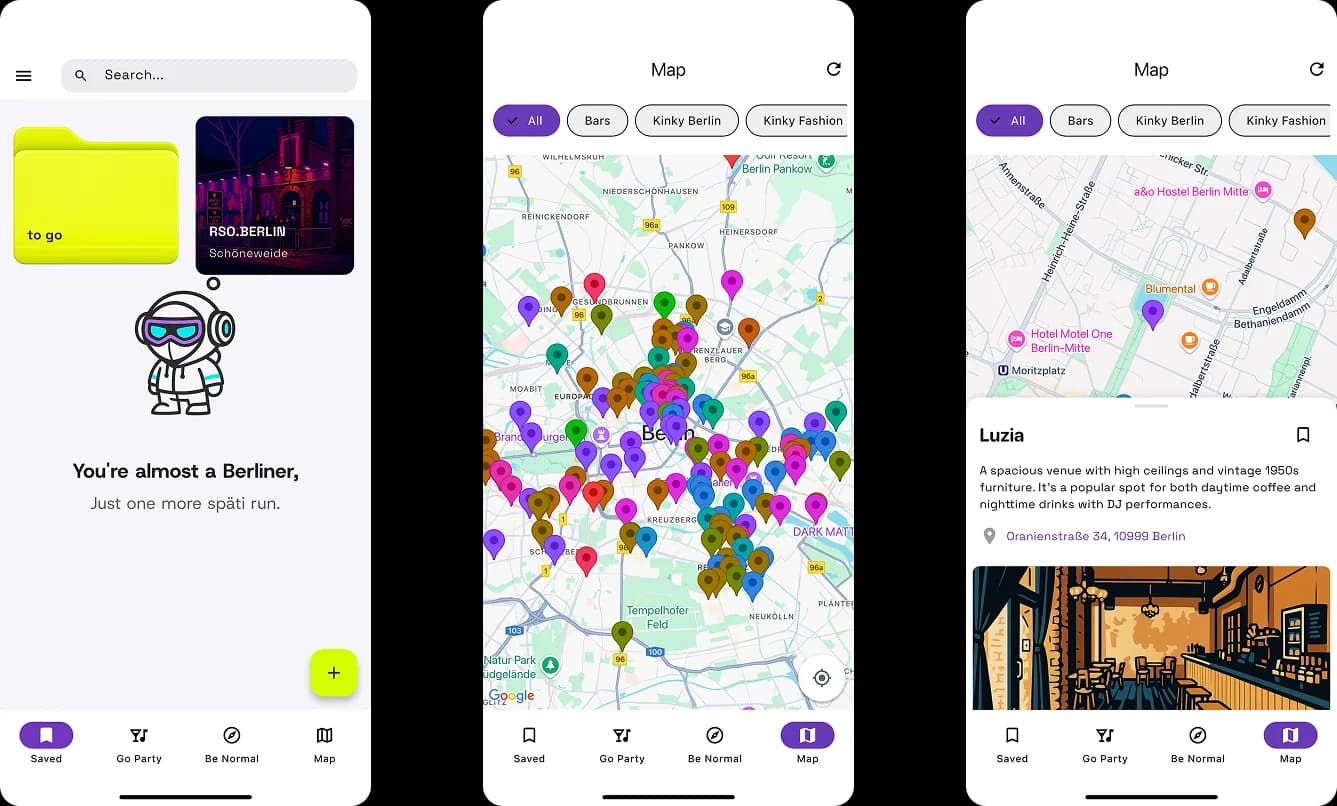
Every entry is added by the team. No bots, no scrapers, no mass import. Each place has:
- A district and a category (food, swim, library, walk, drink, quiet)
- A short note in plain language — why we like it, when to go
- A visual cue tied to the kind of place, not a brand
- A map pin and walking-time hint
- A reviewed-on date — we revisit the list once a year
Around 80 hand-picked places across 6 districts, reviewed annually by the team.
3 — Design taste
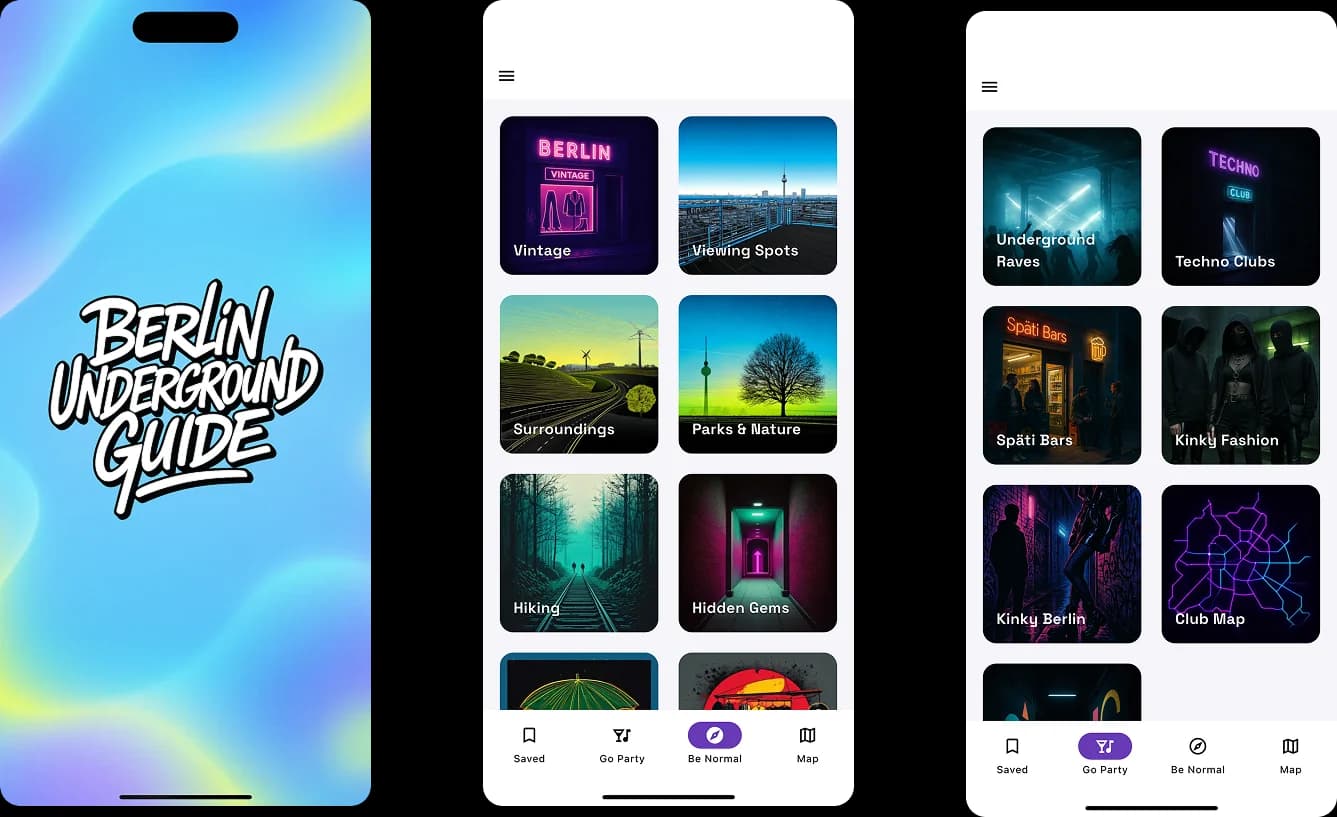
The interface is meant to feel like a small printed object — calm, typographic, easy to put down:
- A quiet palette, easy on tired eyes after a long day
- Generous whitespace, no infinite-scroll spam, no dark patterns
- Typography tuned for reading short notes, not skimming a feed
- Tiny, soft transitions — the guide should never demand attention
It reads more like a zine than a city app — slow, considered, Berlin-affectionate.
What's actually in it
- Quiet hours and off-tourist corners of districts we know well
- Late libraries and reading rooms we actually use
- Swim spots — lakes, pools, and the river when it behaves
- Slow food, neighbourhood bakeries, and unhurried cafés
- Independent bookshops, small galleries, and quiet cinemas
- Transit hacks and walking routes that beat the obvious ones
- A small list of after-dark places we'd send a trusted friend to
The guide stays small on purpose. No ads, no affiliate links, no paid listings. We use it ourselves when friends, contractors or new hires land in the city — and we're happy if anyone else finds it useful.
How it's used
- A quiet shared link the team sends to friends and new colleagues moving to Berlin
- Around 80 hand-picked places across 6 districts, reviewed annually
- Used internally during onboarding for new hires landing in the city
- Offline-friendly — works on the U-Bahn, at the lake, on weak café Wi-Fi
- A craft testbed for typography, edge caching, and calm interface ideas
Tech notes
Mobile: Next.js · React
Backend: Supabase (small, mostly read)
Analytics: Anonymous, privacy-friendly
Maps: Lightweight map tiles
Auth: Optional Apple / Google sign-in
Deployment: Edge-cached, offline-friendly