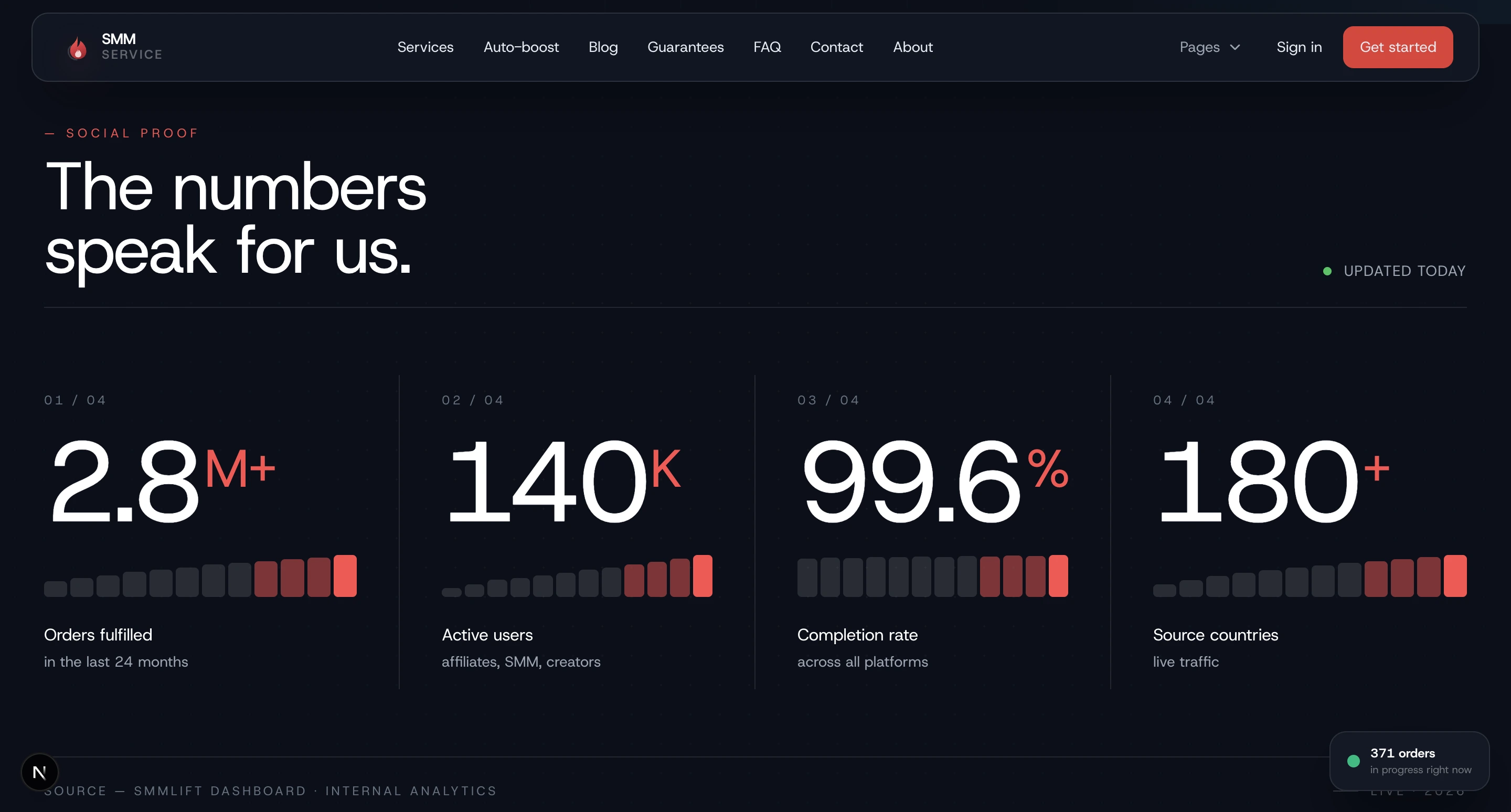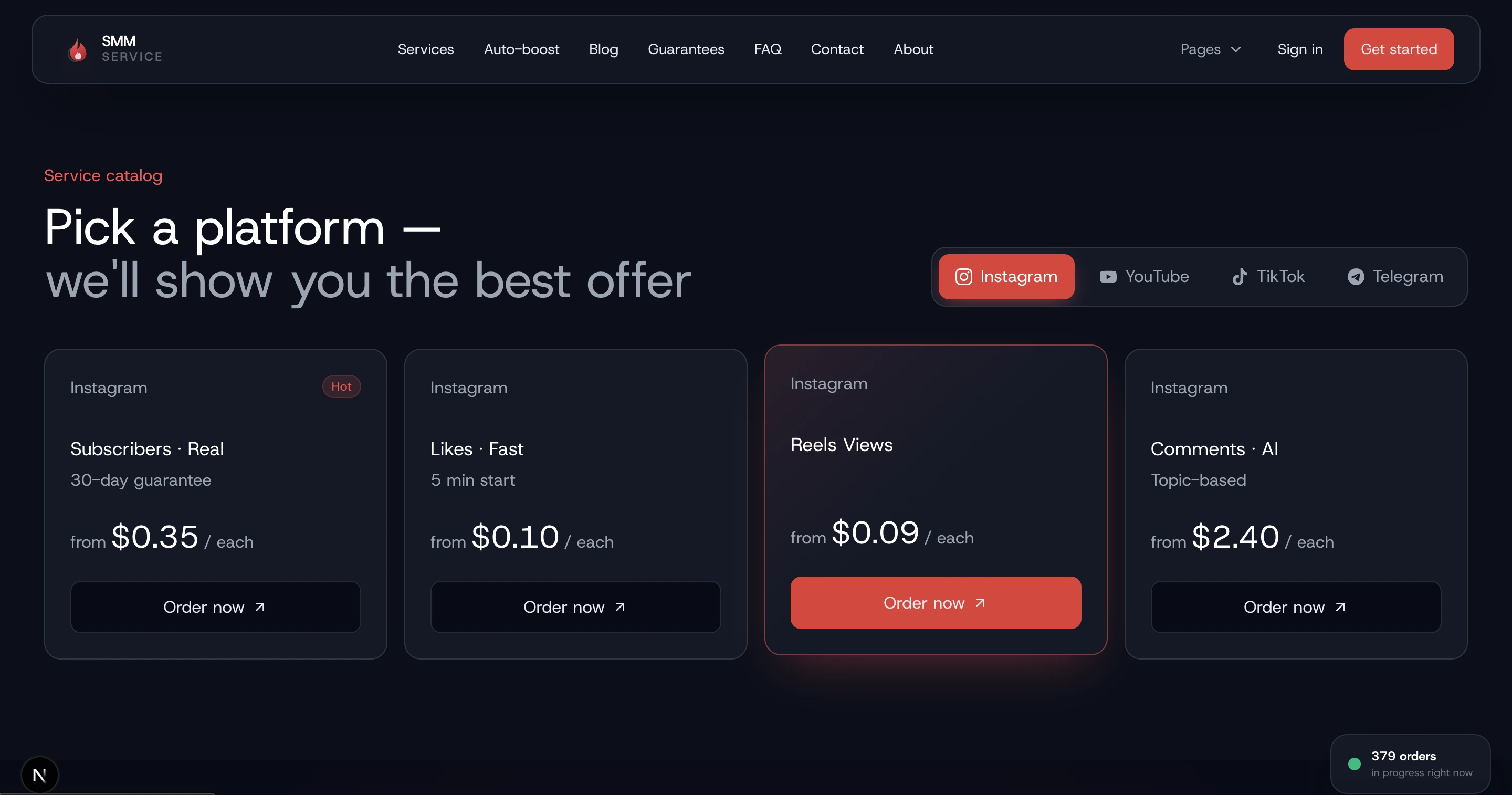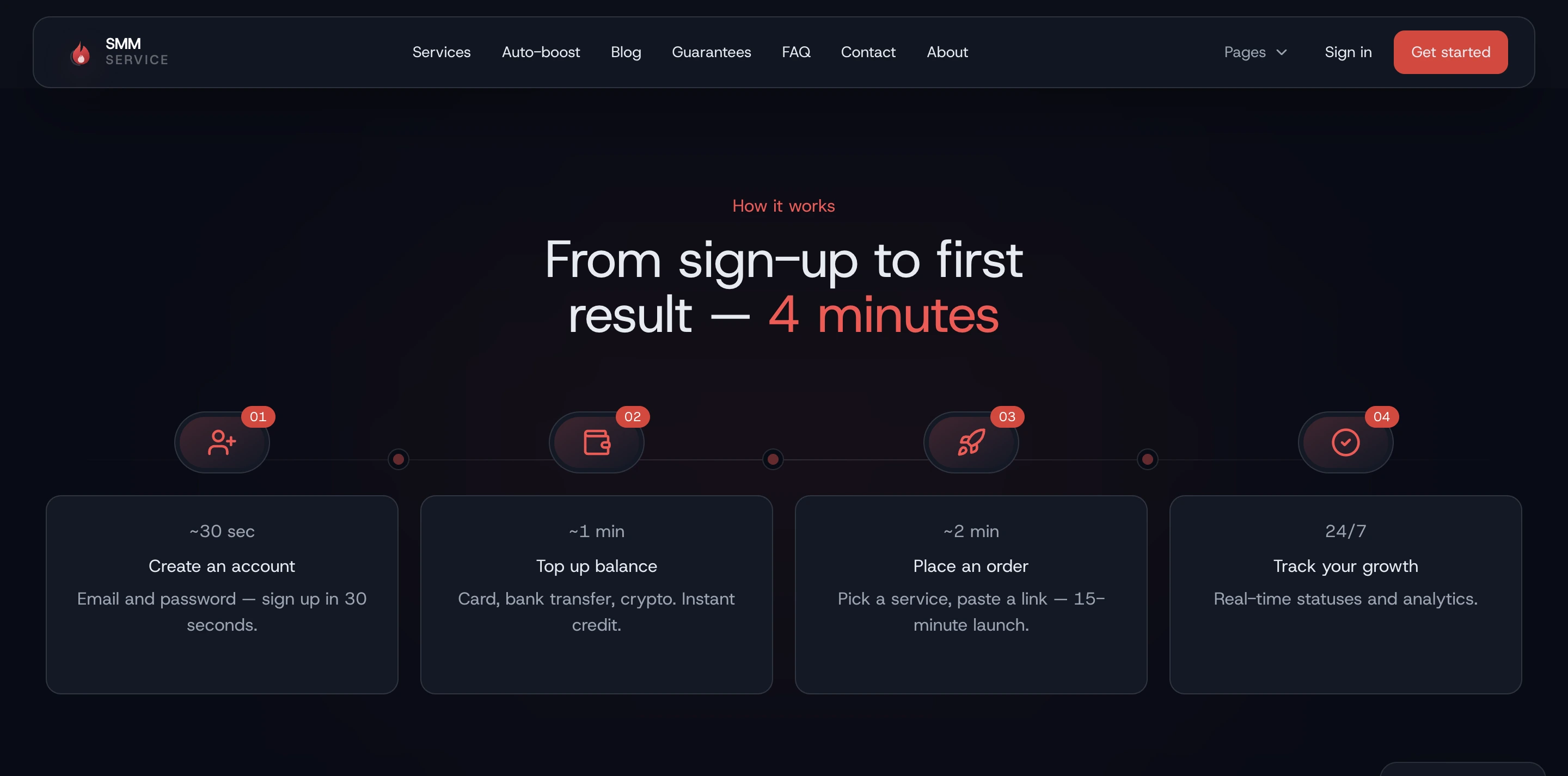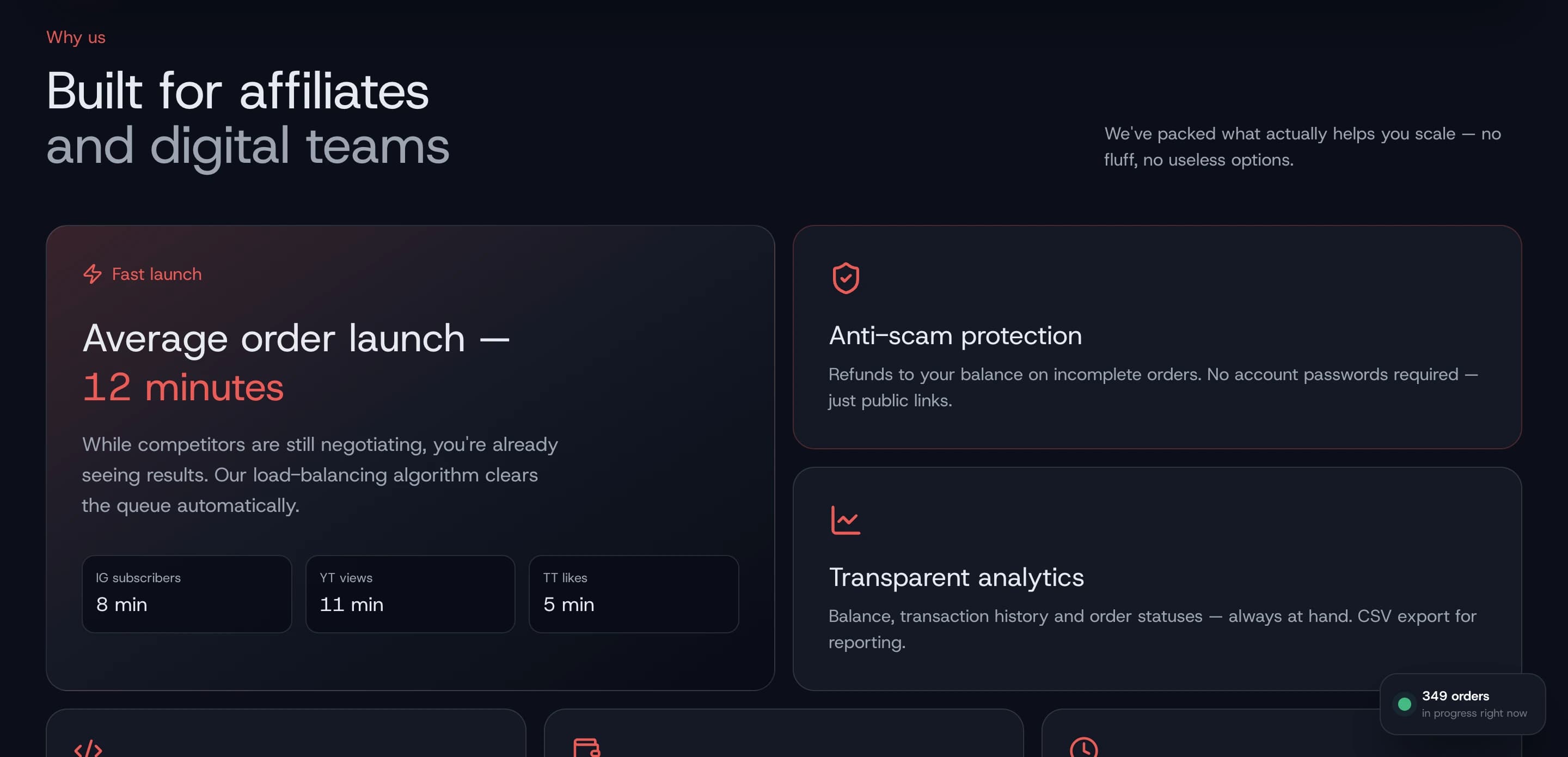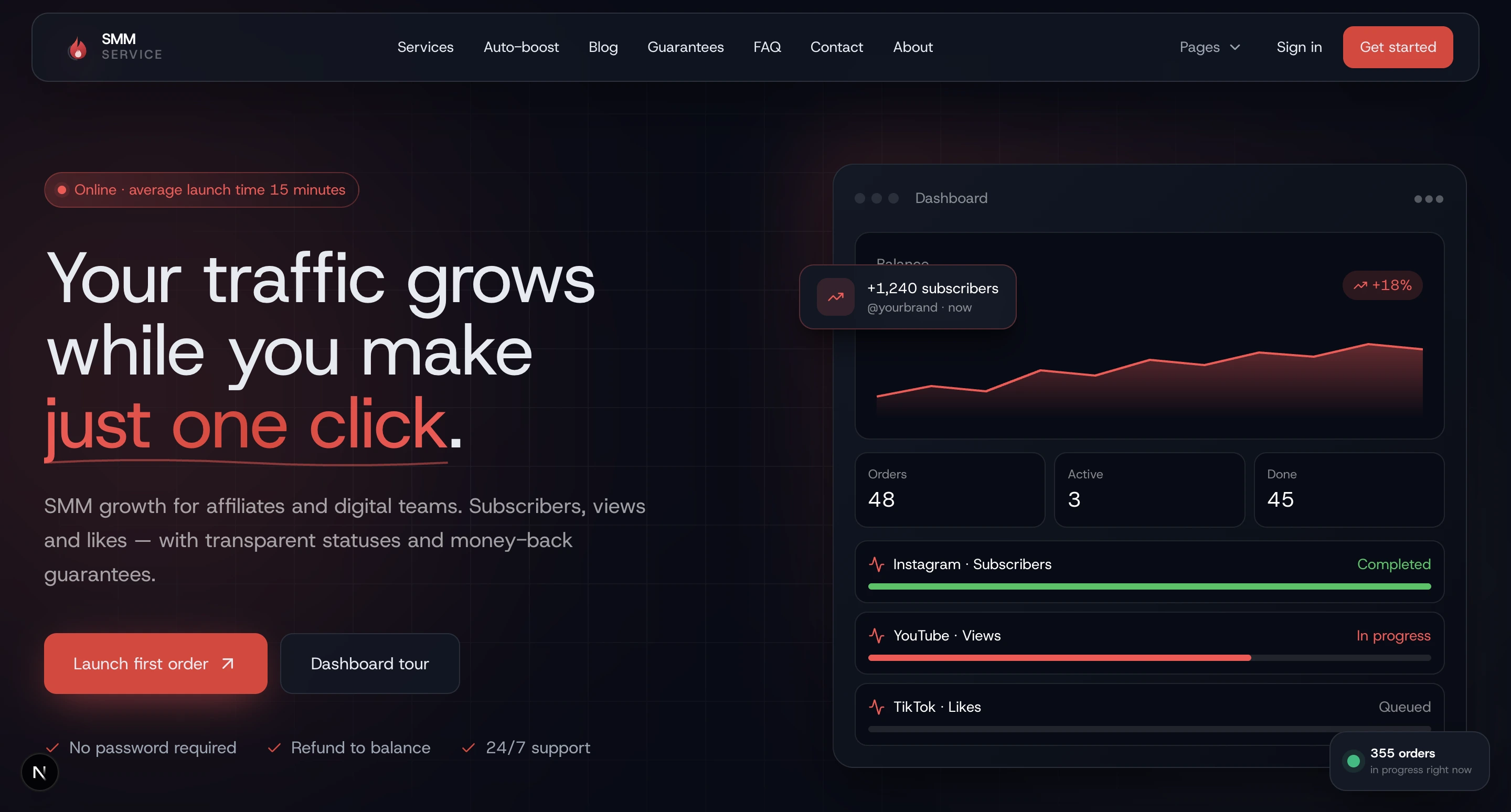
For comparable platform engagements, see our Backend development and Startup & MVP development services.
Decision Context
A marketplace is not only its storefront. The same system had to support public discovery, authenticated ordering, balance and payment flows, provider catalog updates, refunds and manual intervention by the operations team.
We therefore treated the public site, customer dashboard and admin console as separate product surfaces built on one backend. Provider data is normalised before it reaches the customer catalog, while prices and order state are calculated and changed on the server.
The main delivery risks were:
- Provider updates changing service names, prices, limits or availability
- Payment, balance and refund actions being processed more than once
- Different permissions across customer, support, admin and superadmin roles
- Manual operator actions changing money or order state without a trace
- Routine pricing and catalog updates depending on a developer
The resulting design keeps volatile provider data away from accepted customer transactions and gives the operator an auditable path for every material price, payment and status change.
Platform Scope & Capabilities
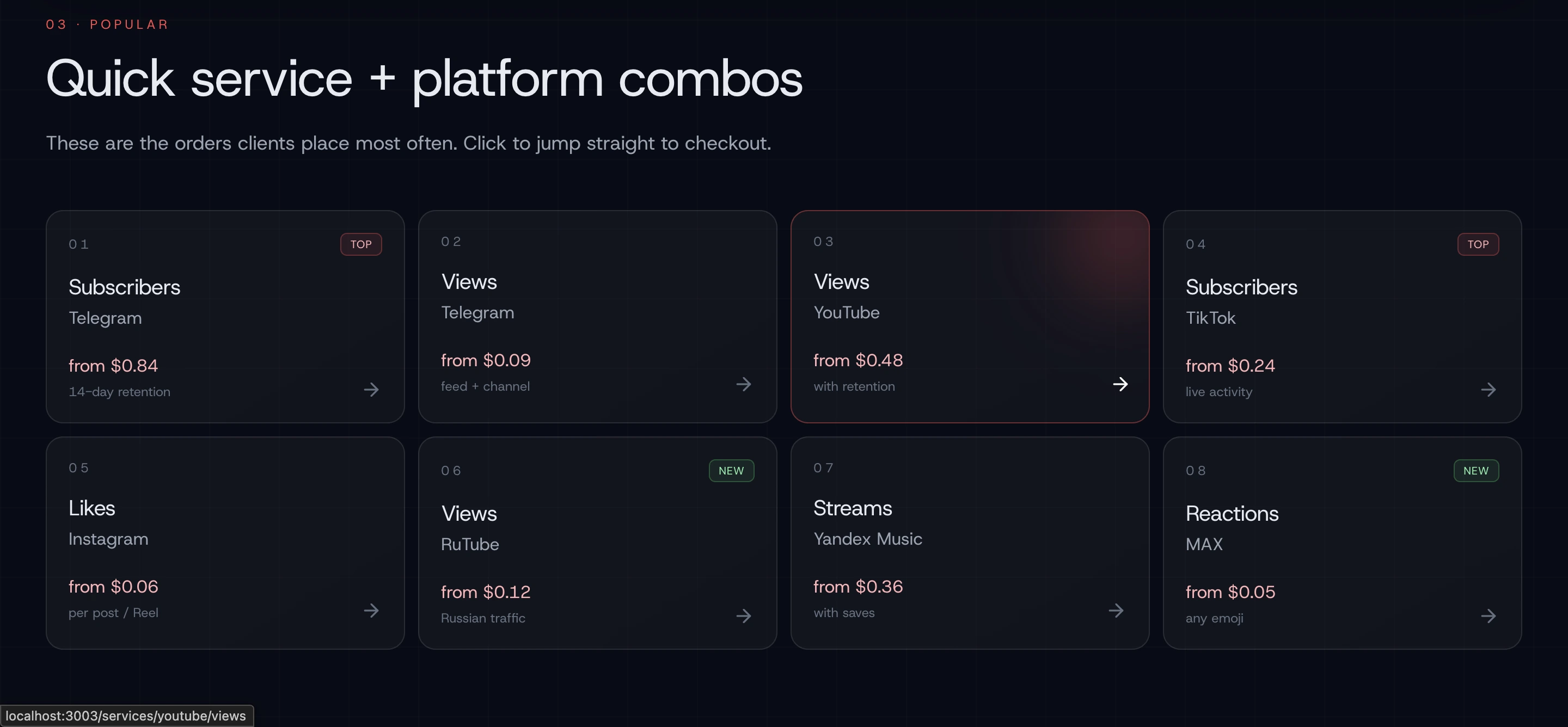
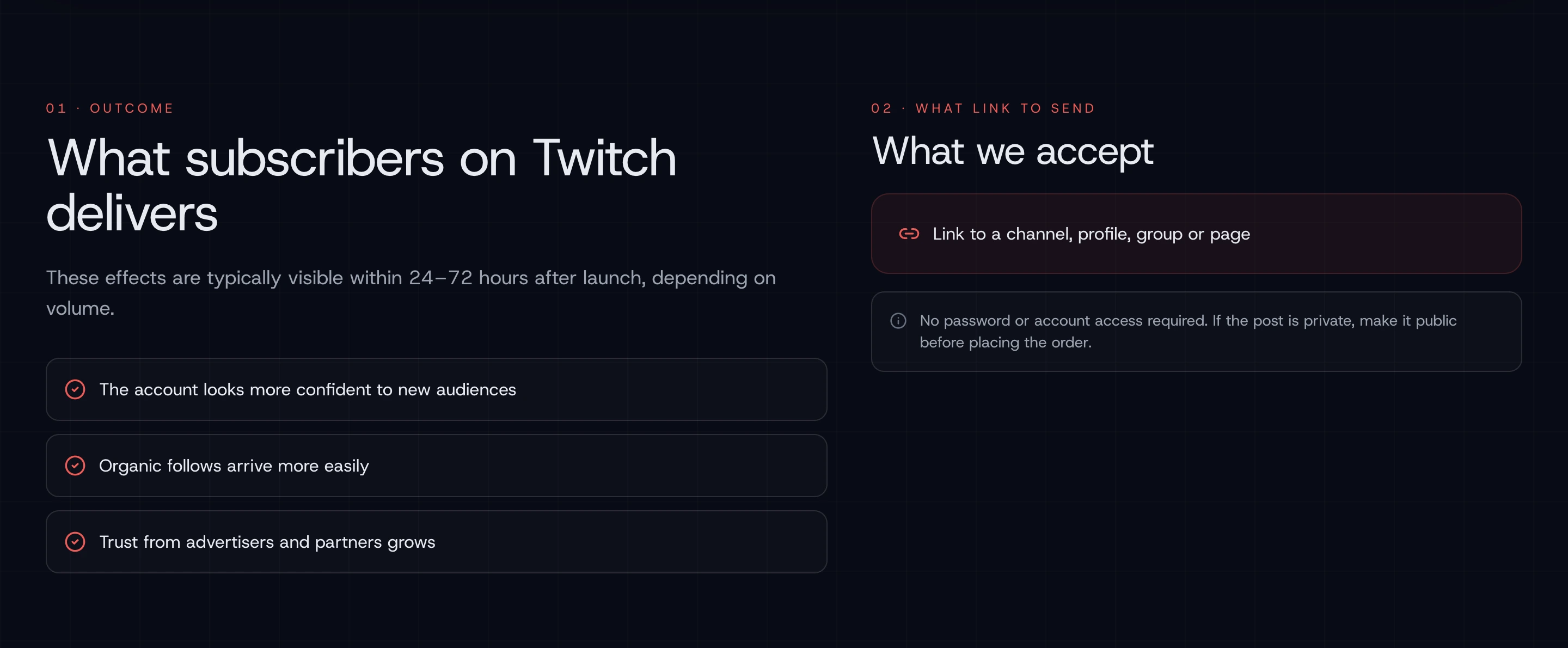
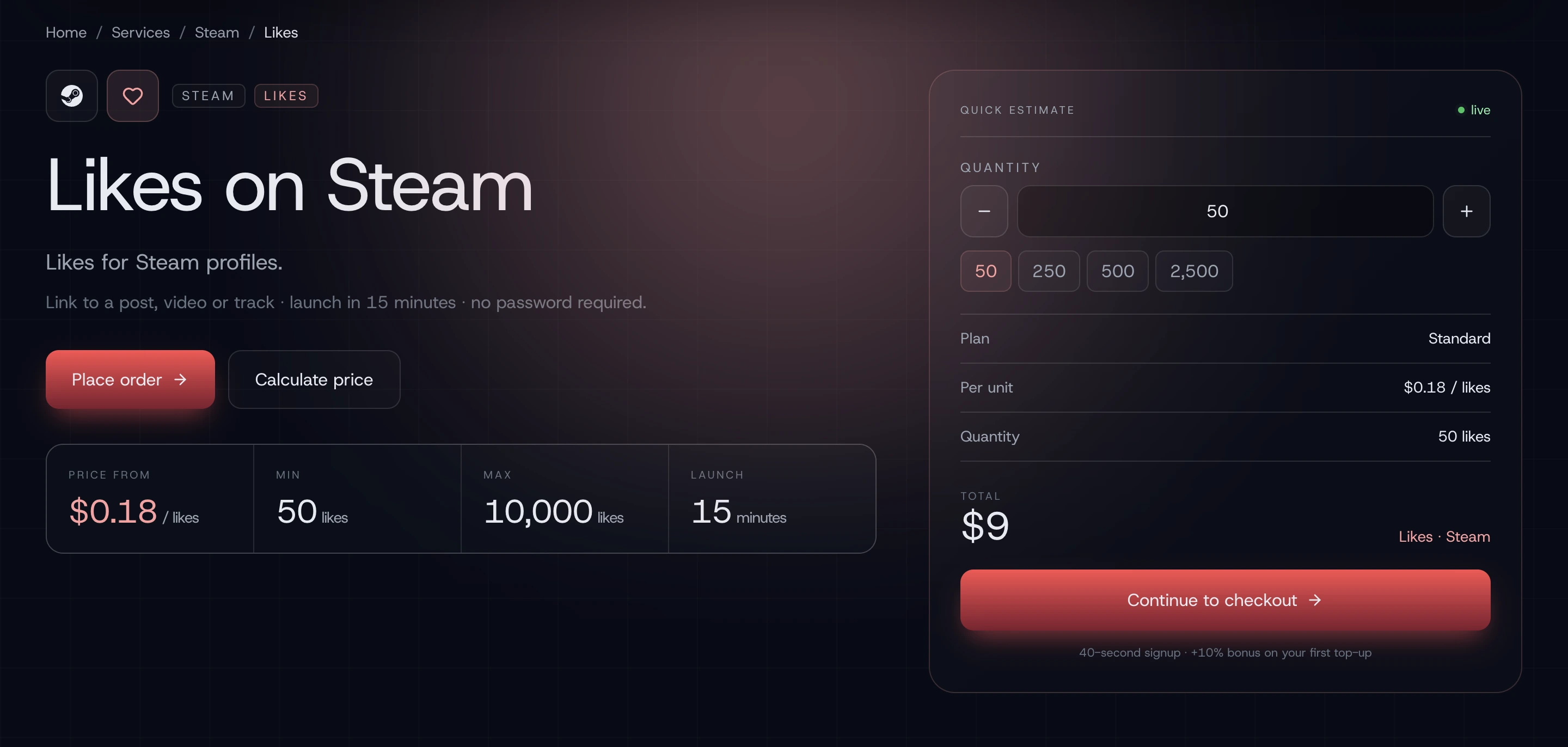
The platform covers the complete order lifecycle, from search-indexable service pages and account creation to checkout, fulfillment tracking, support, refunds and operational reporting.
Core product surfaces:
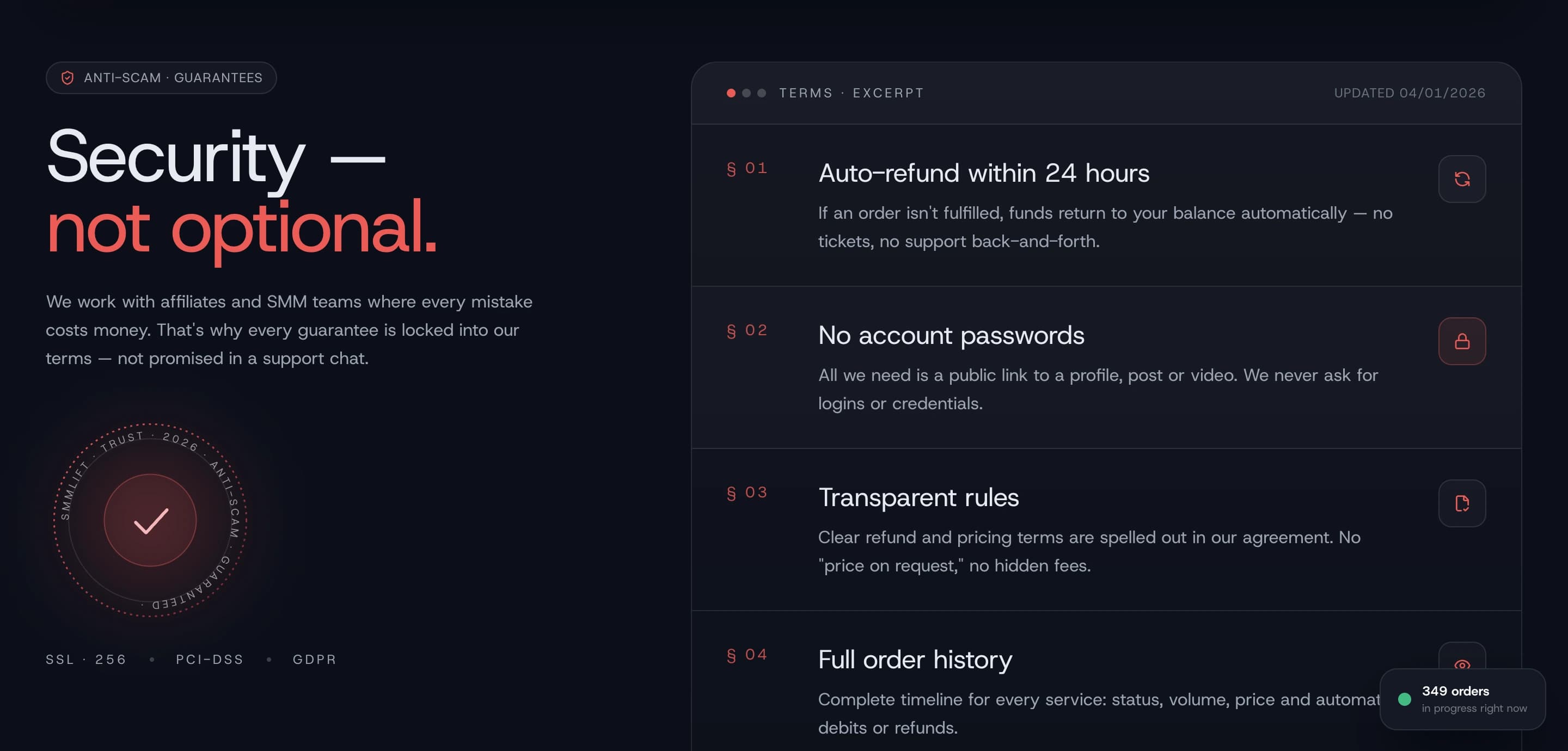
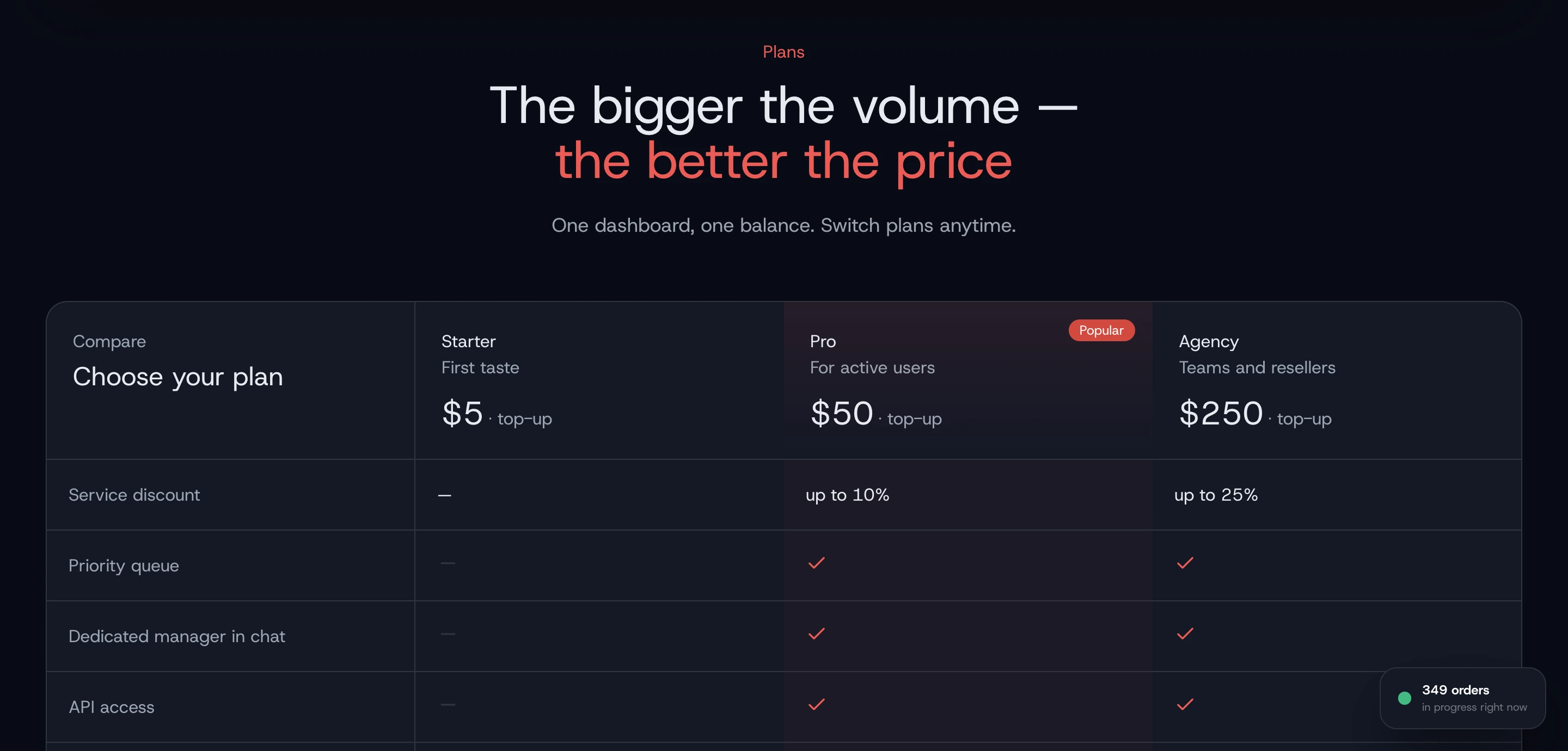
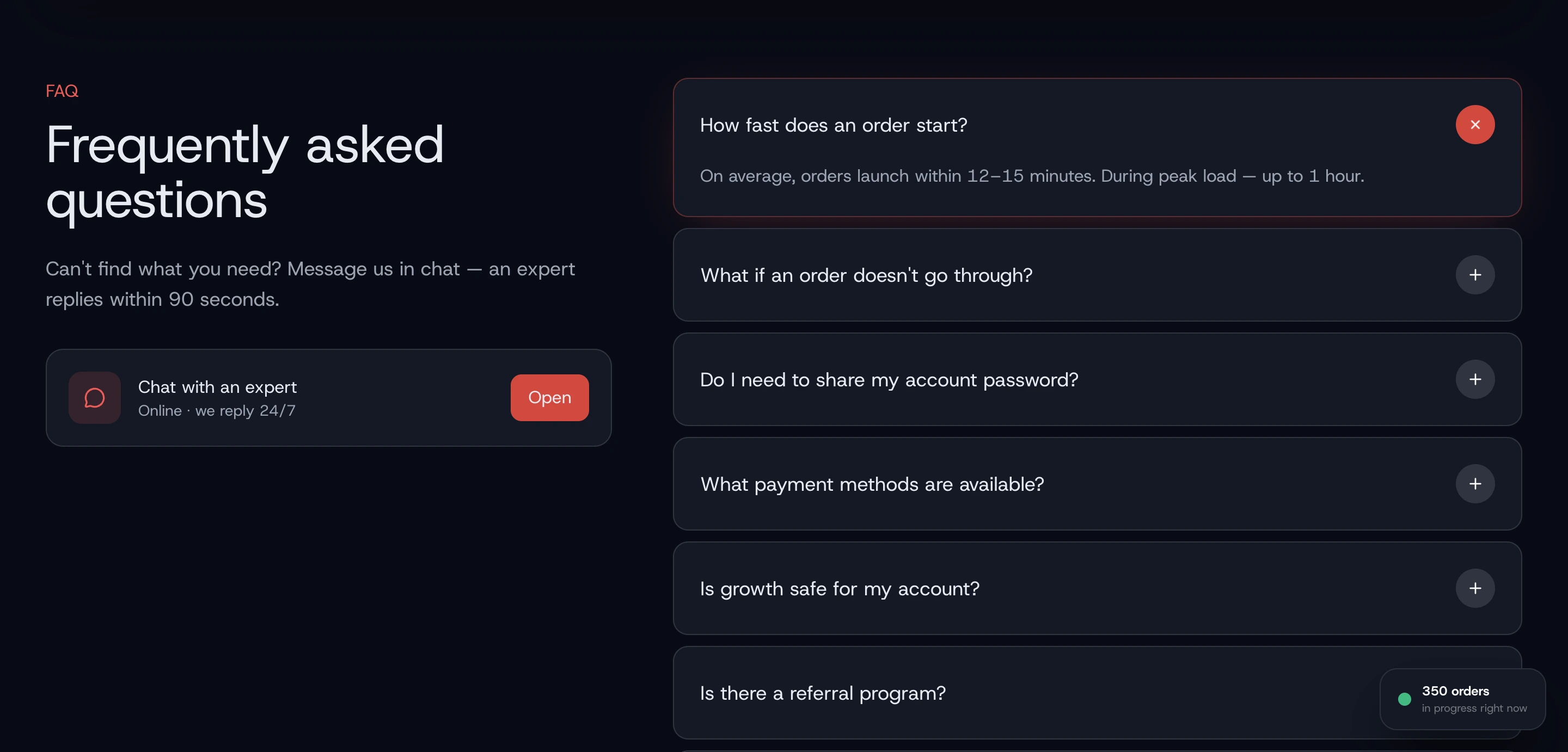
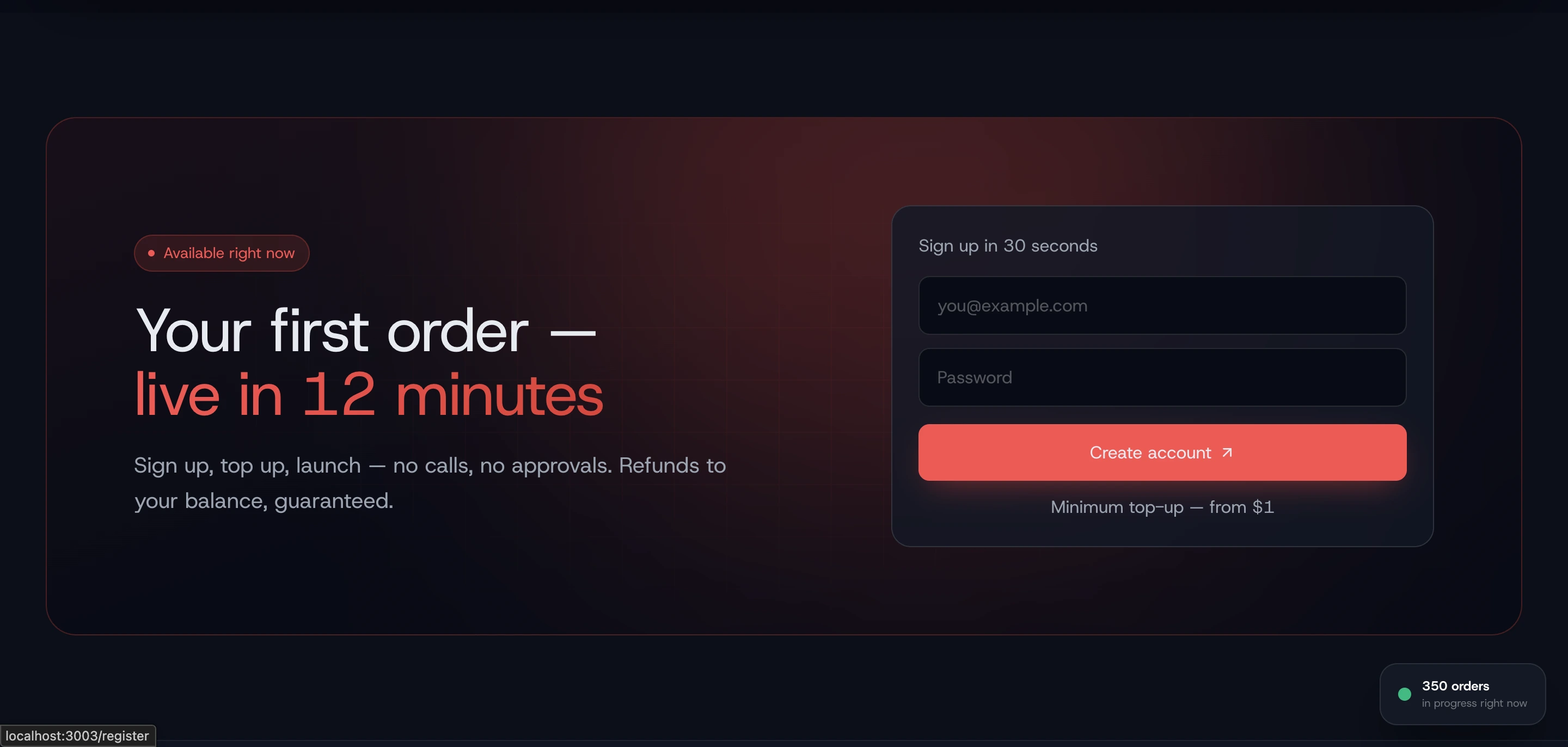
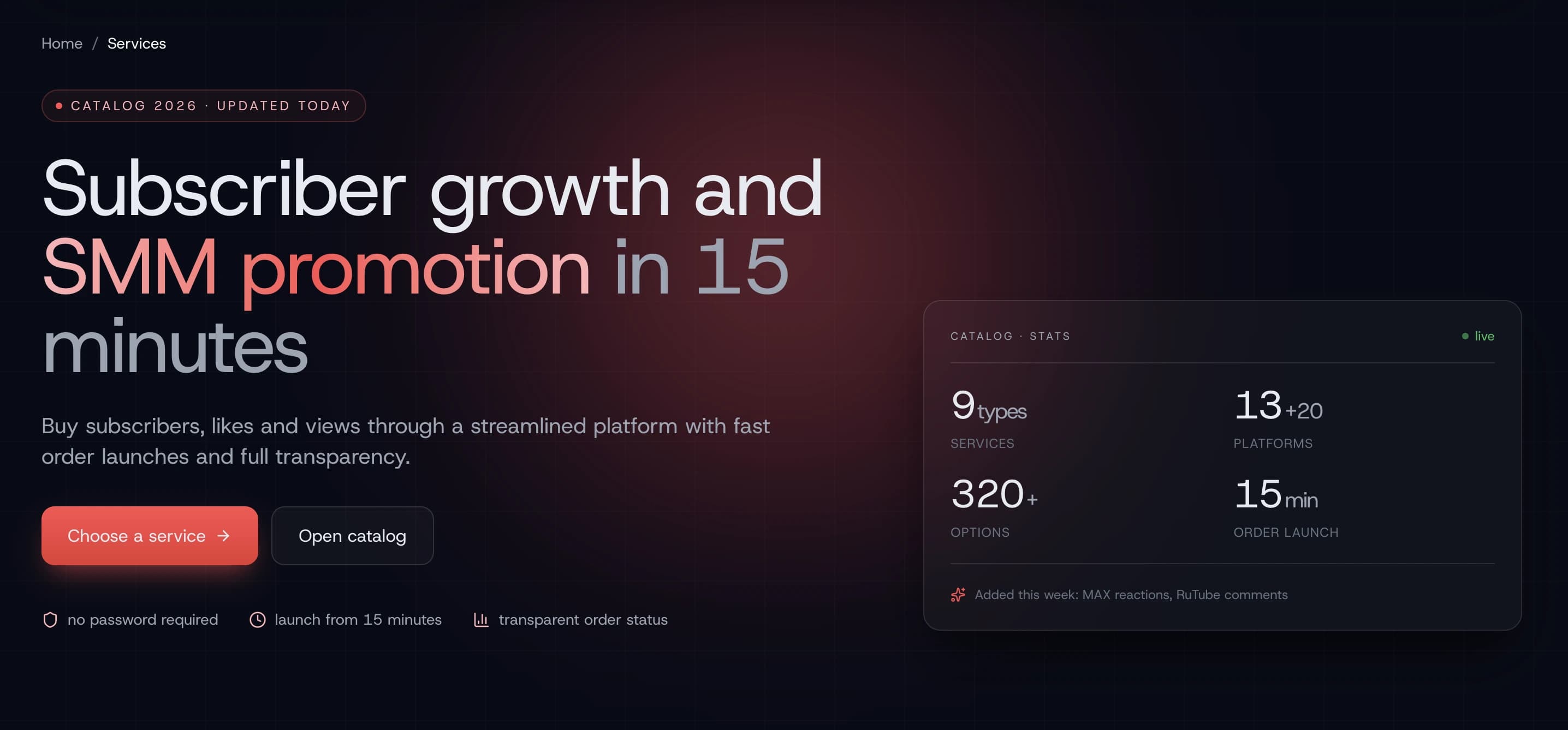
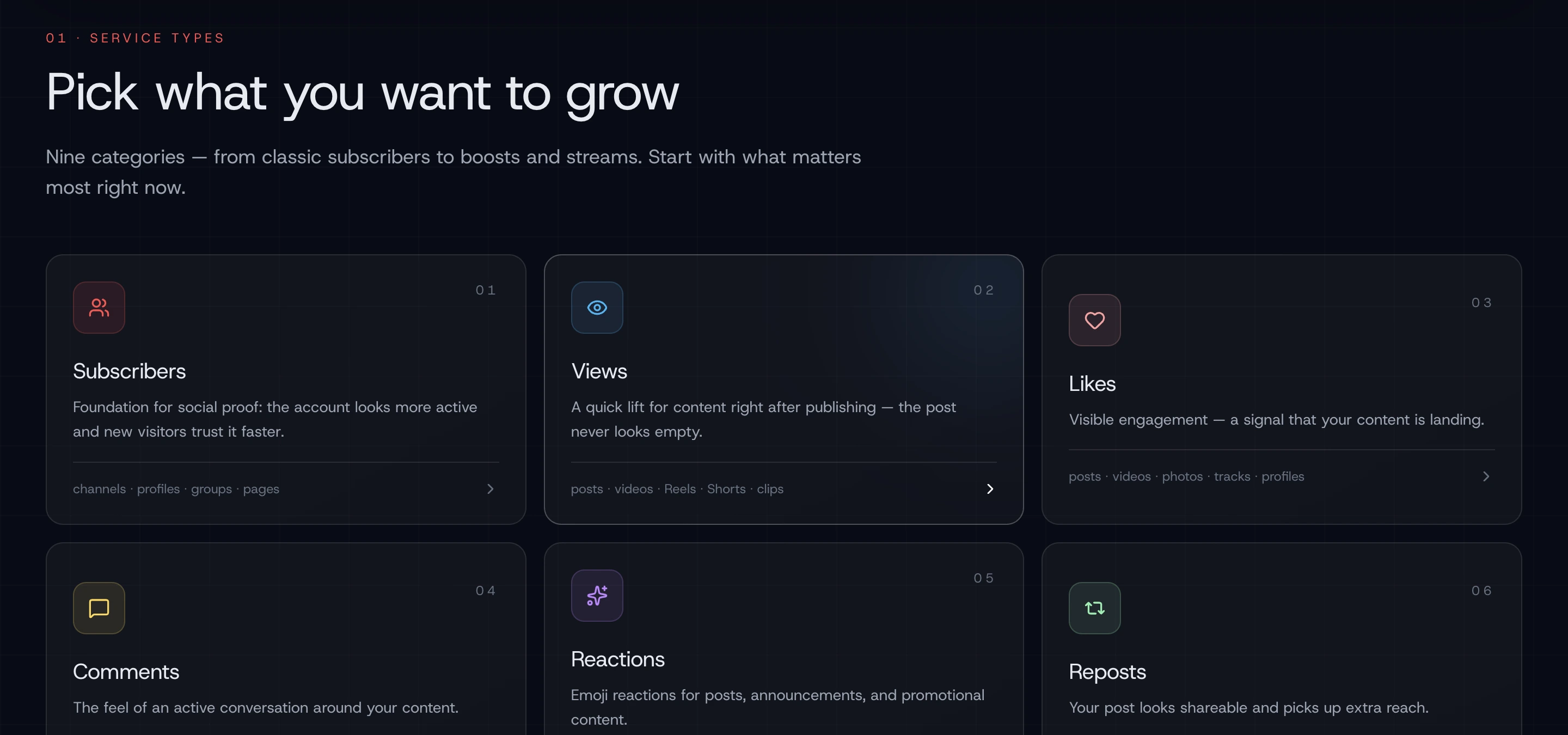
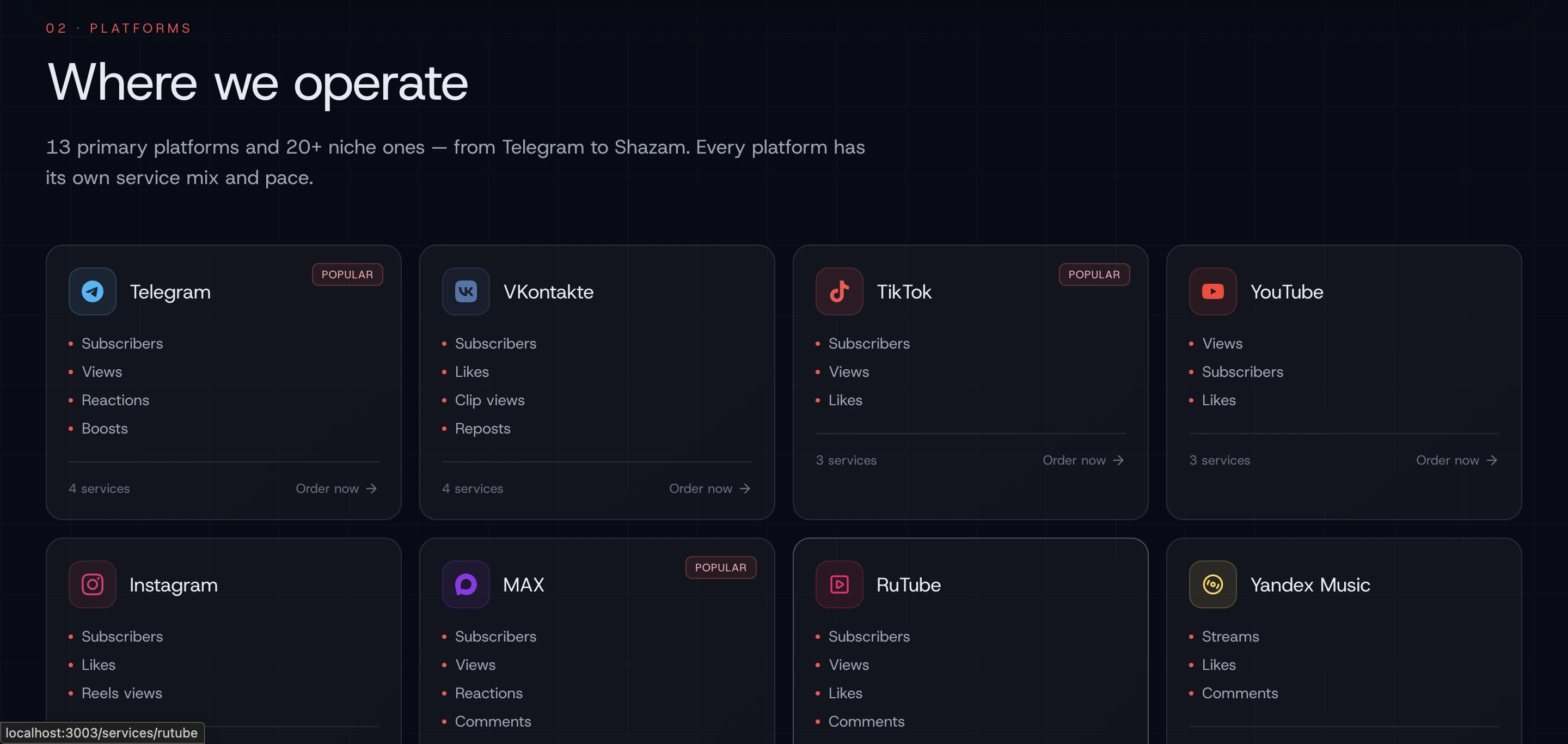
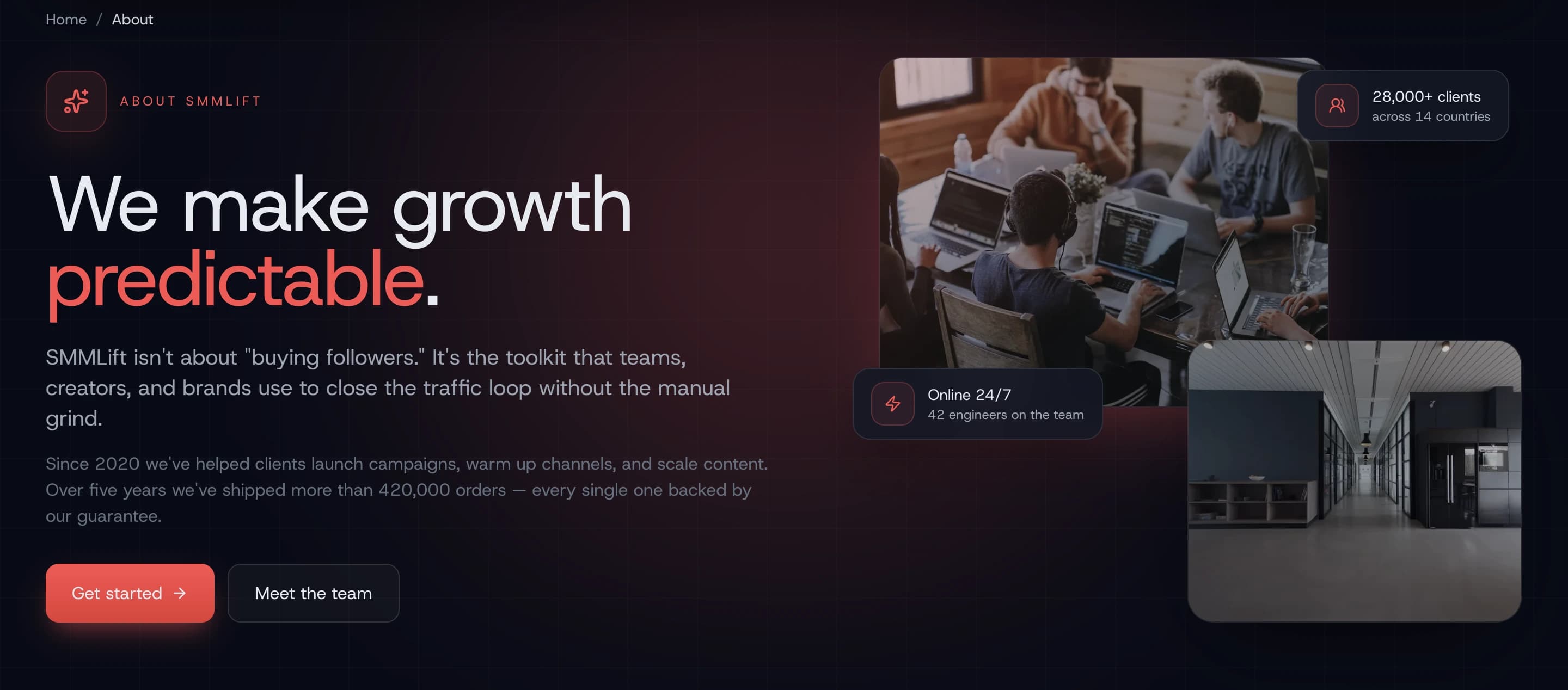
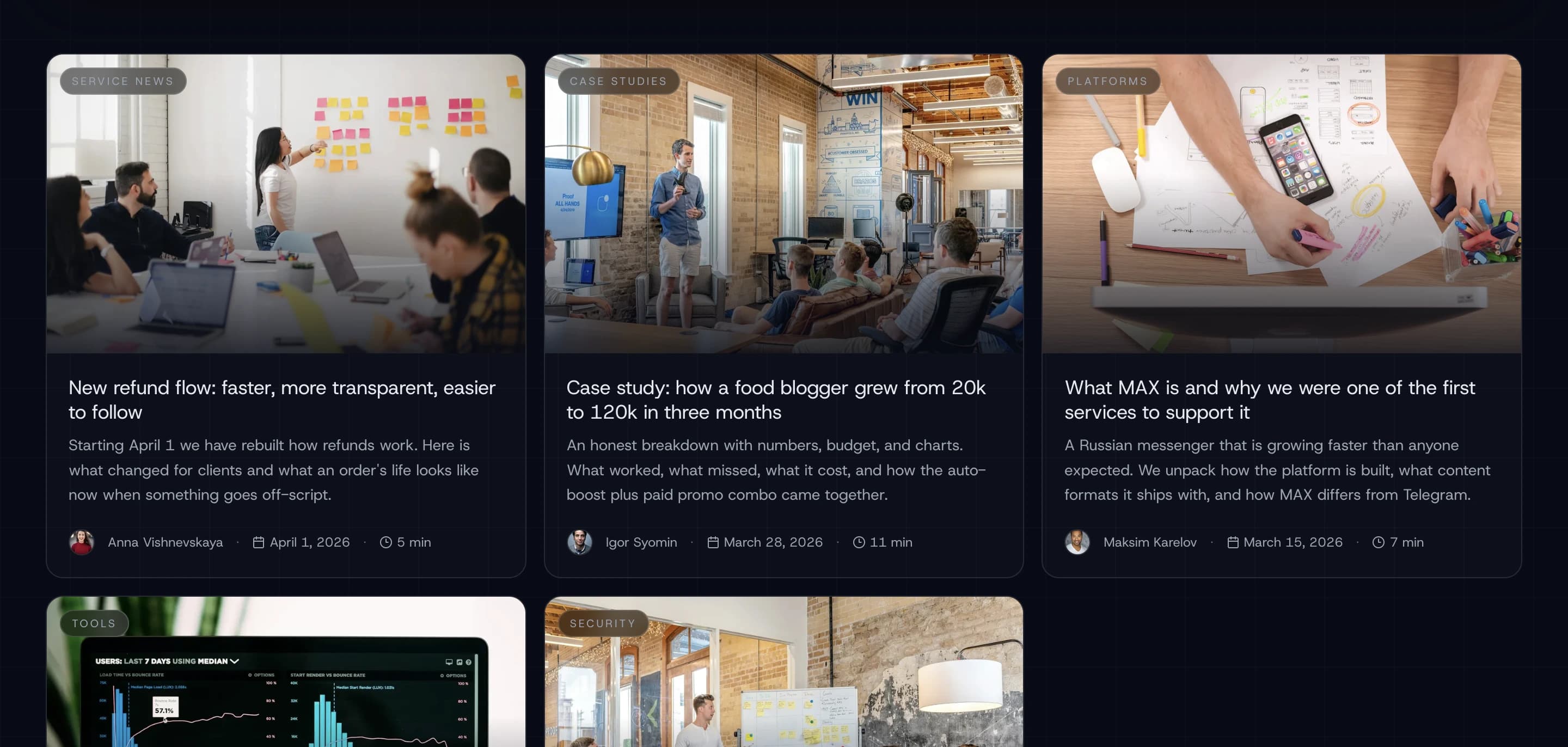
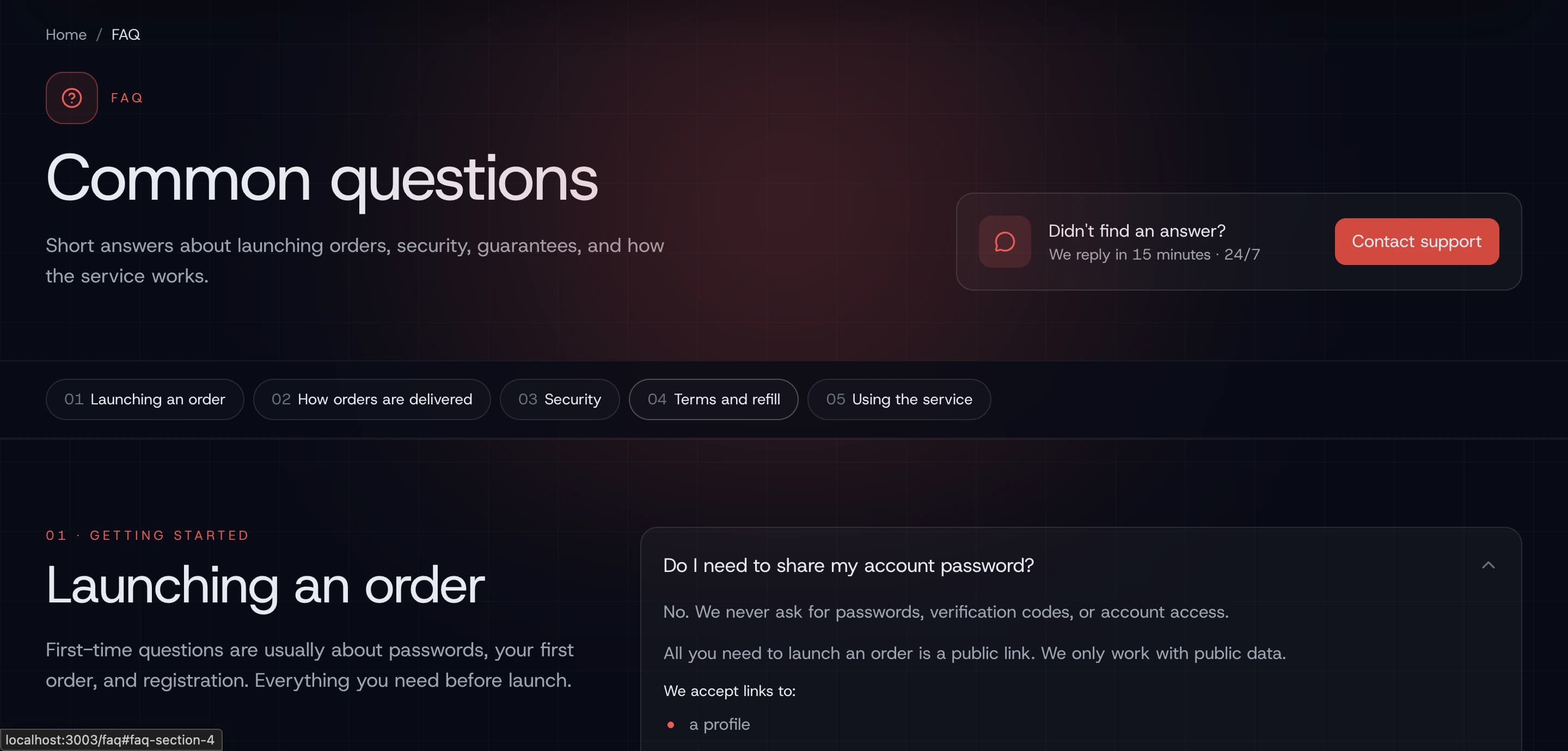
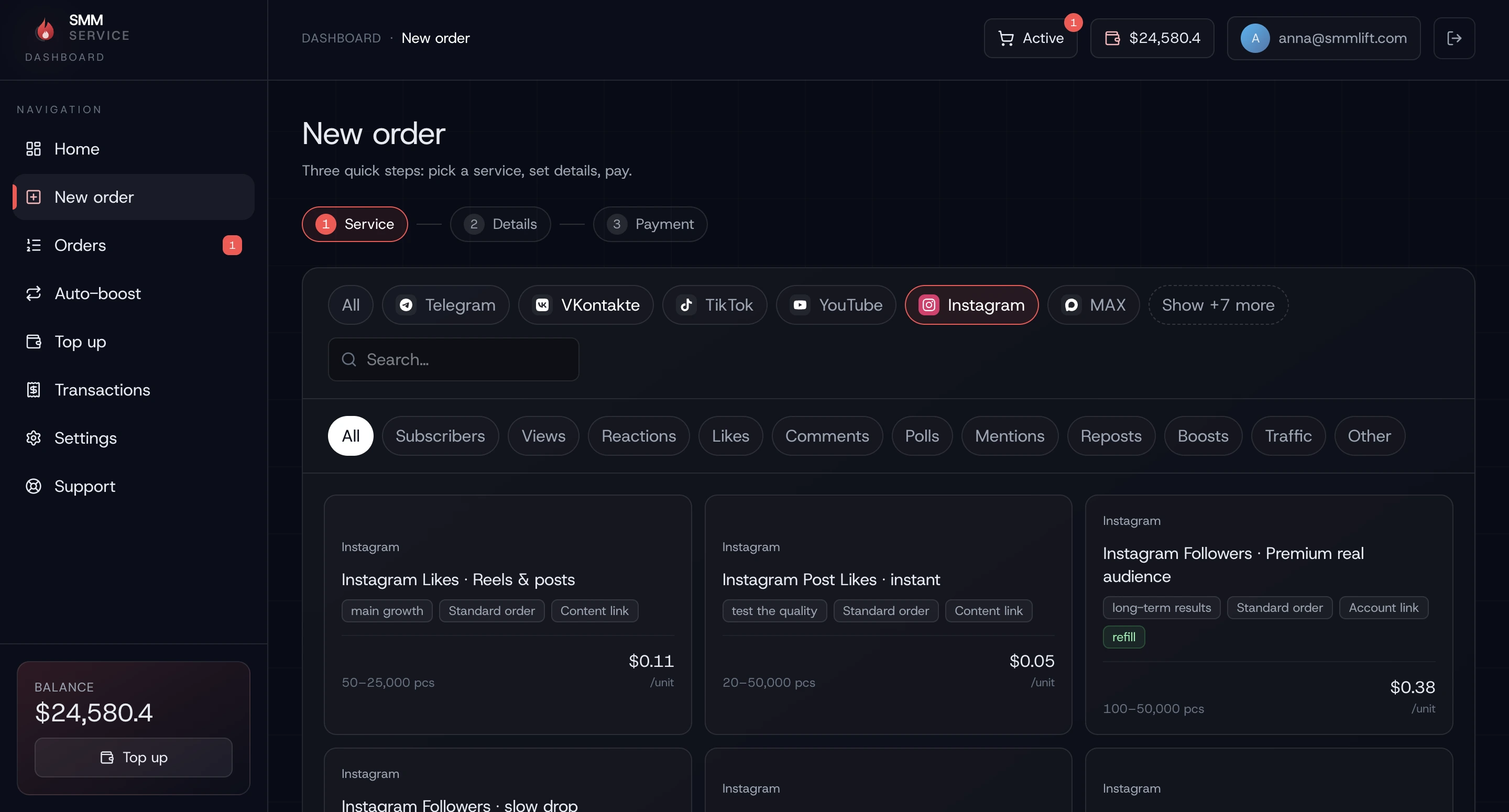
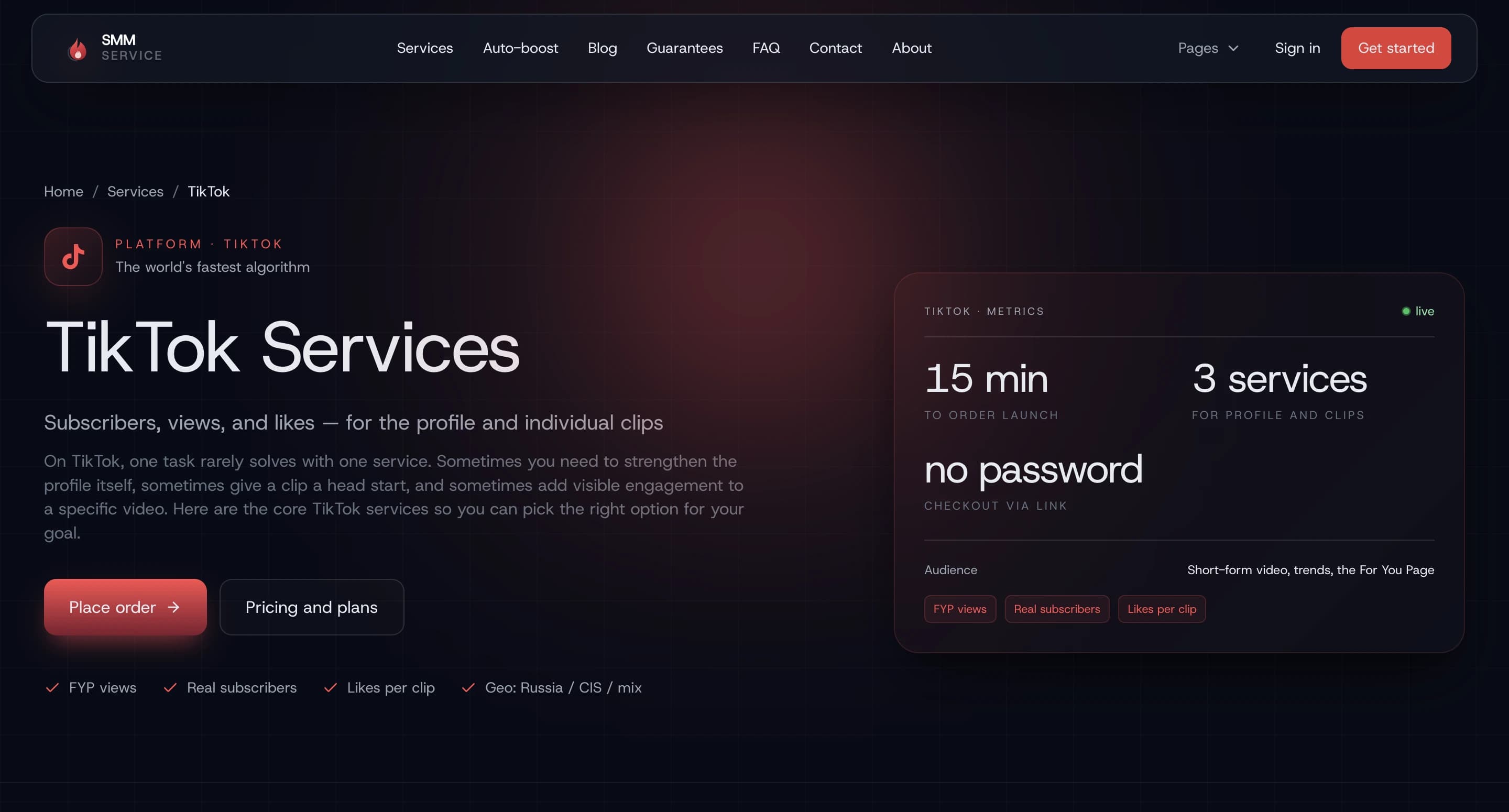
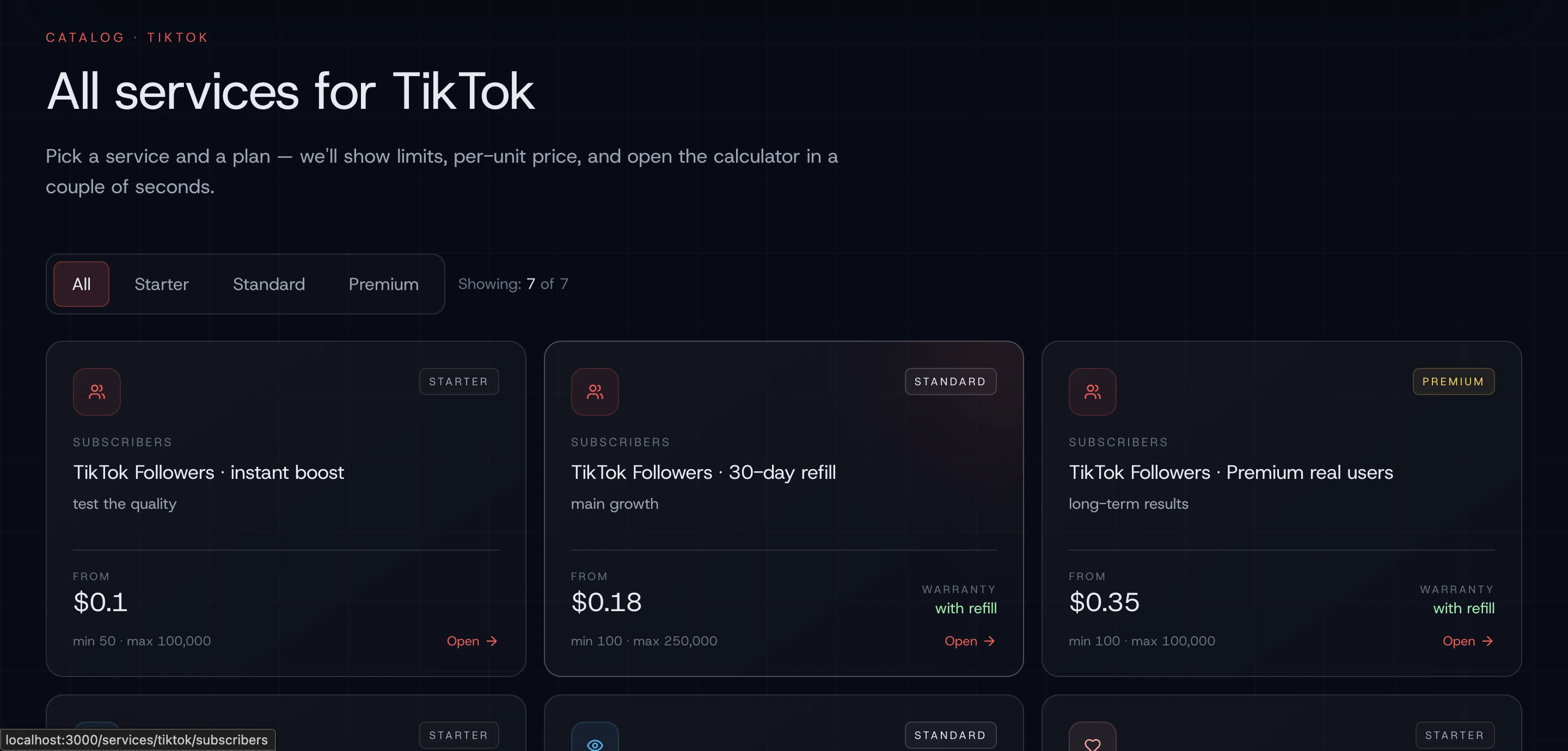
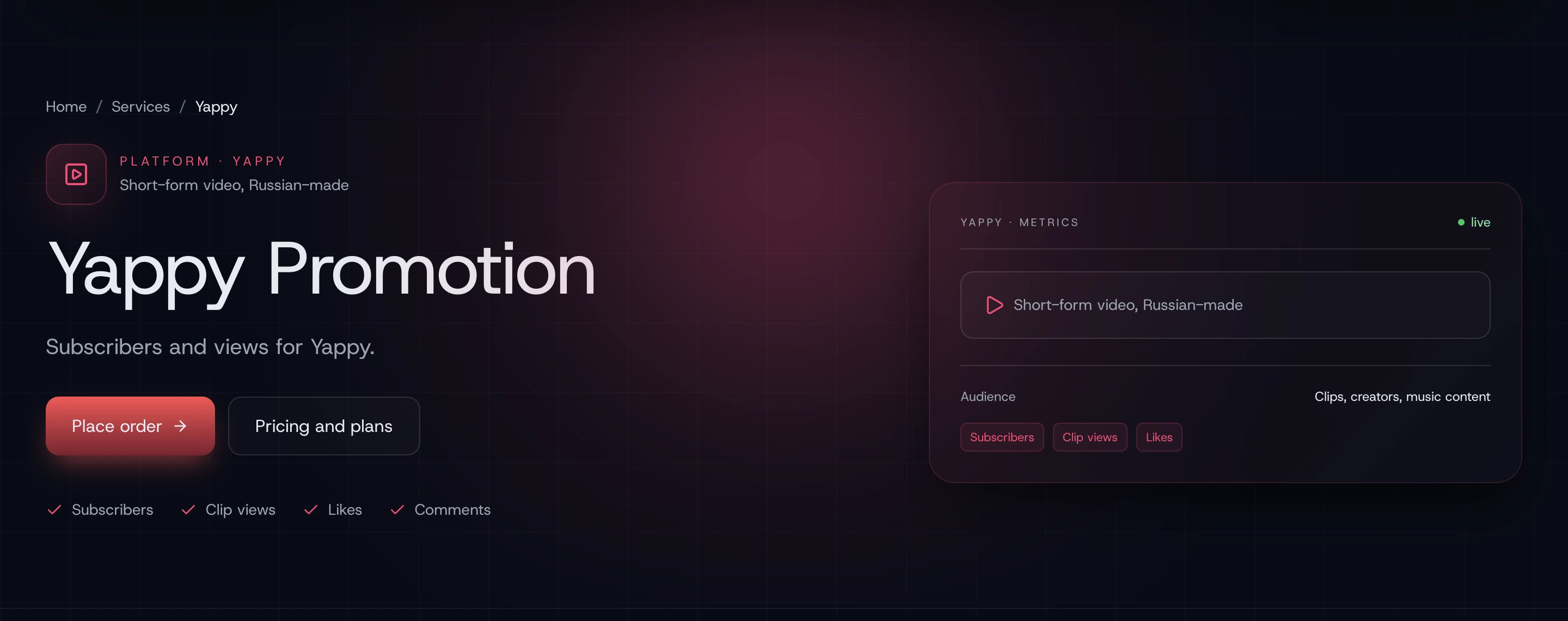
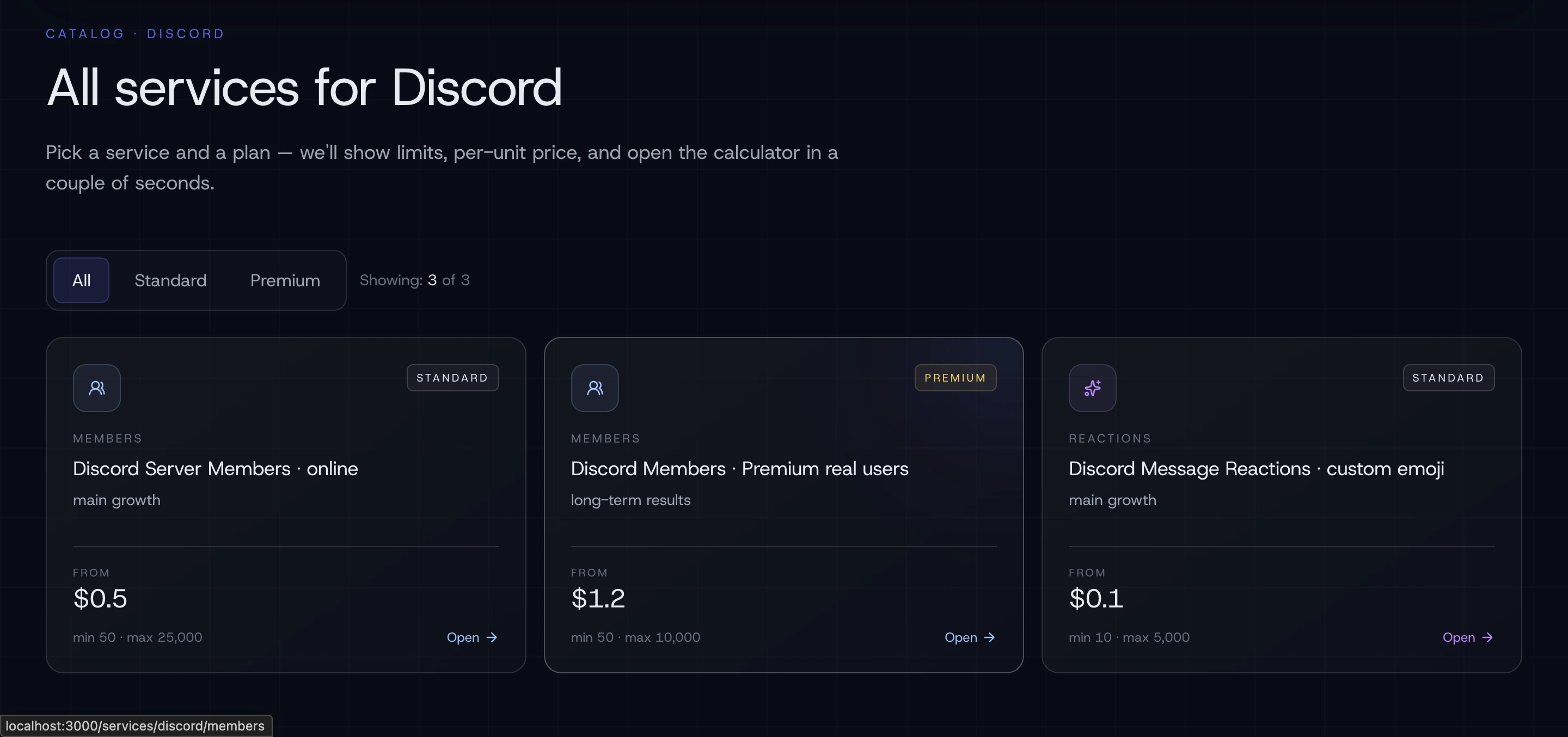
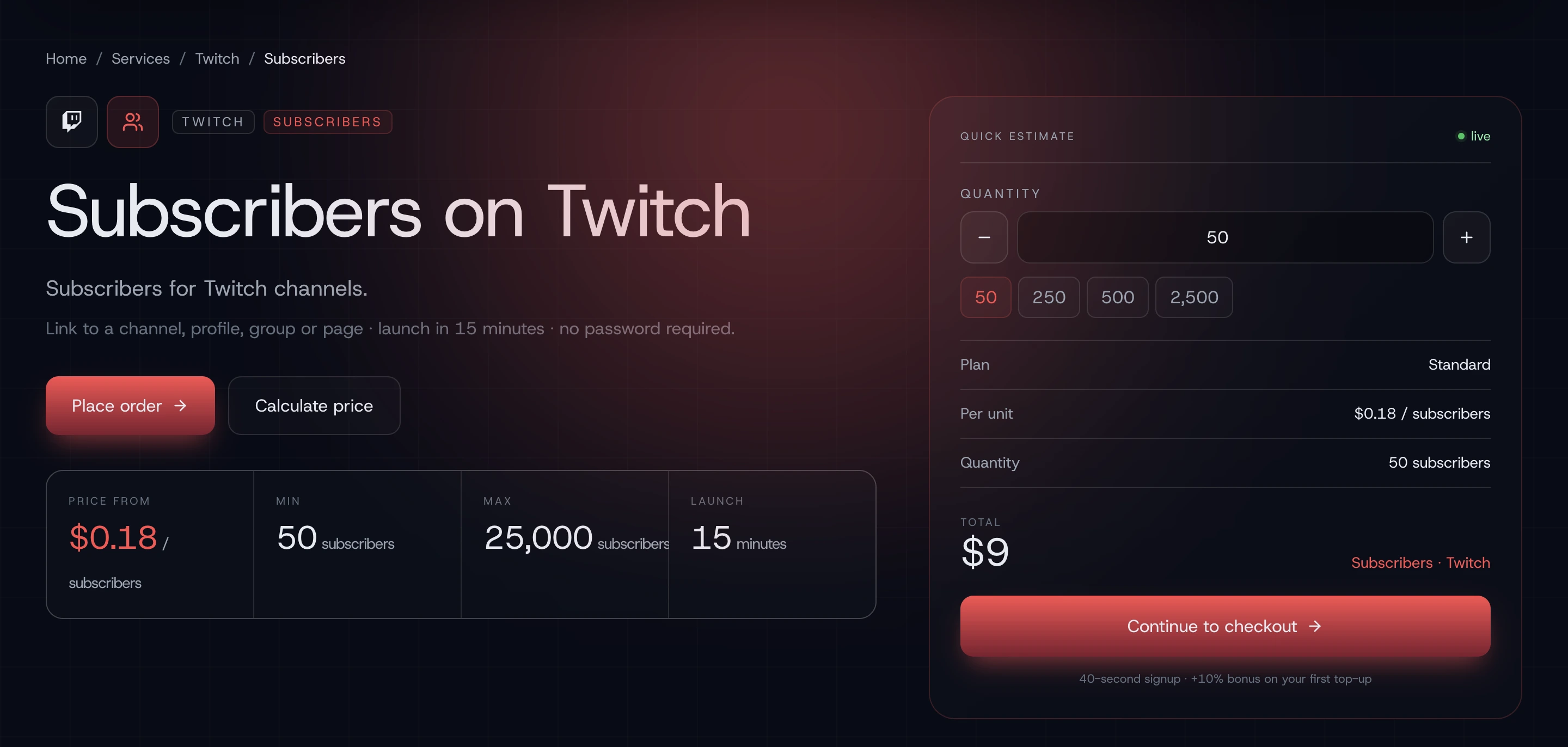
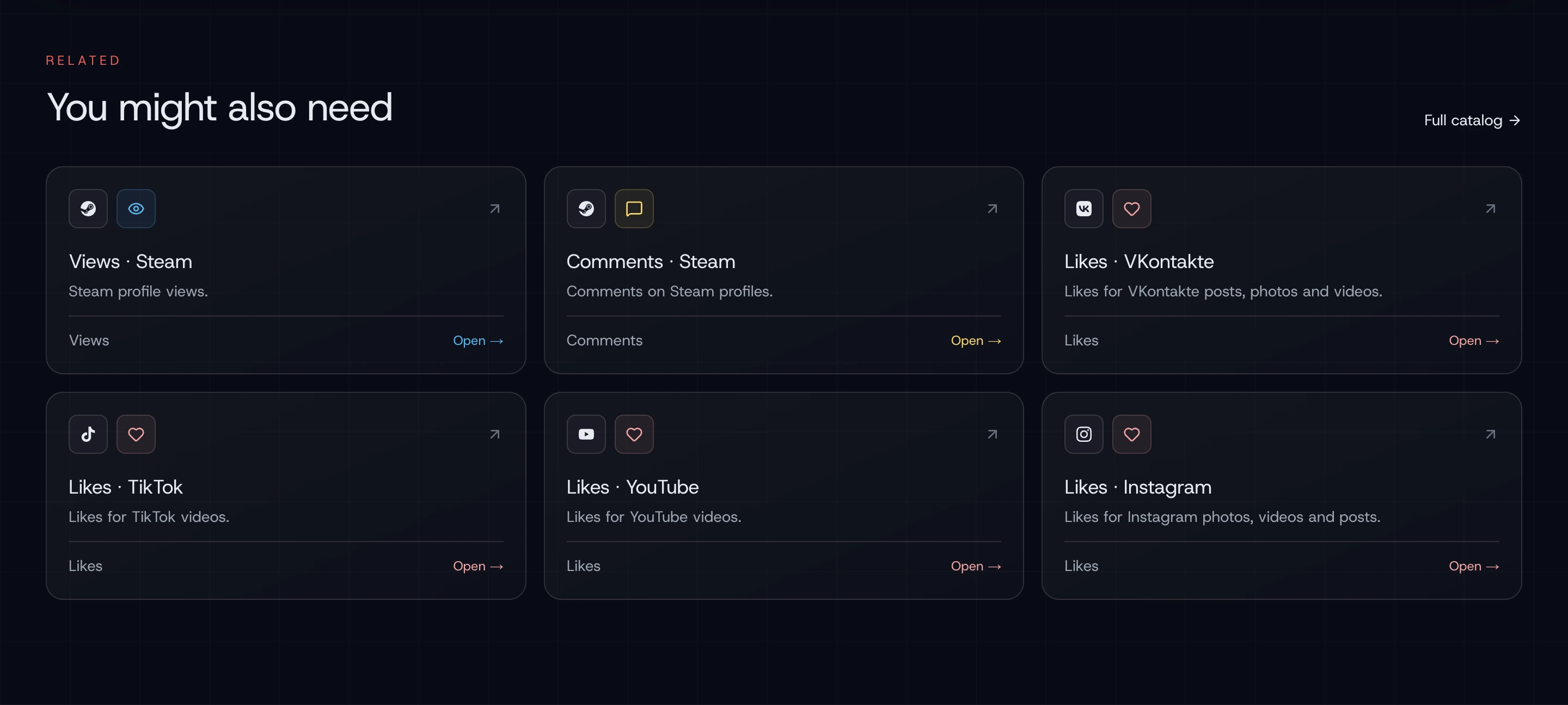
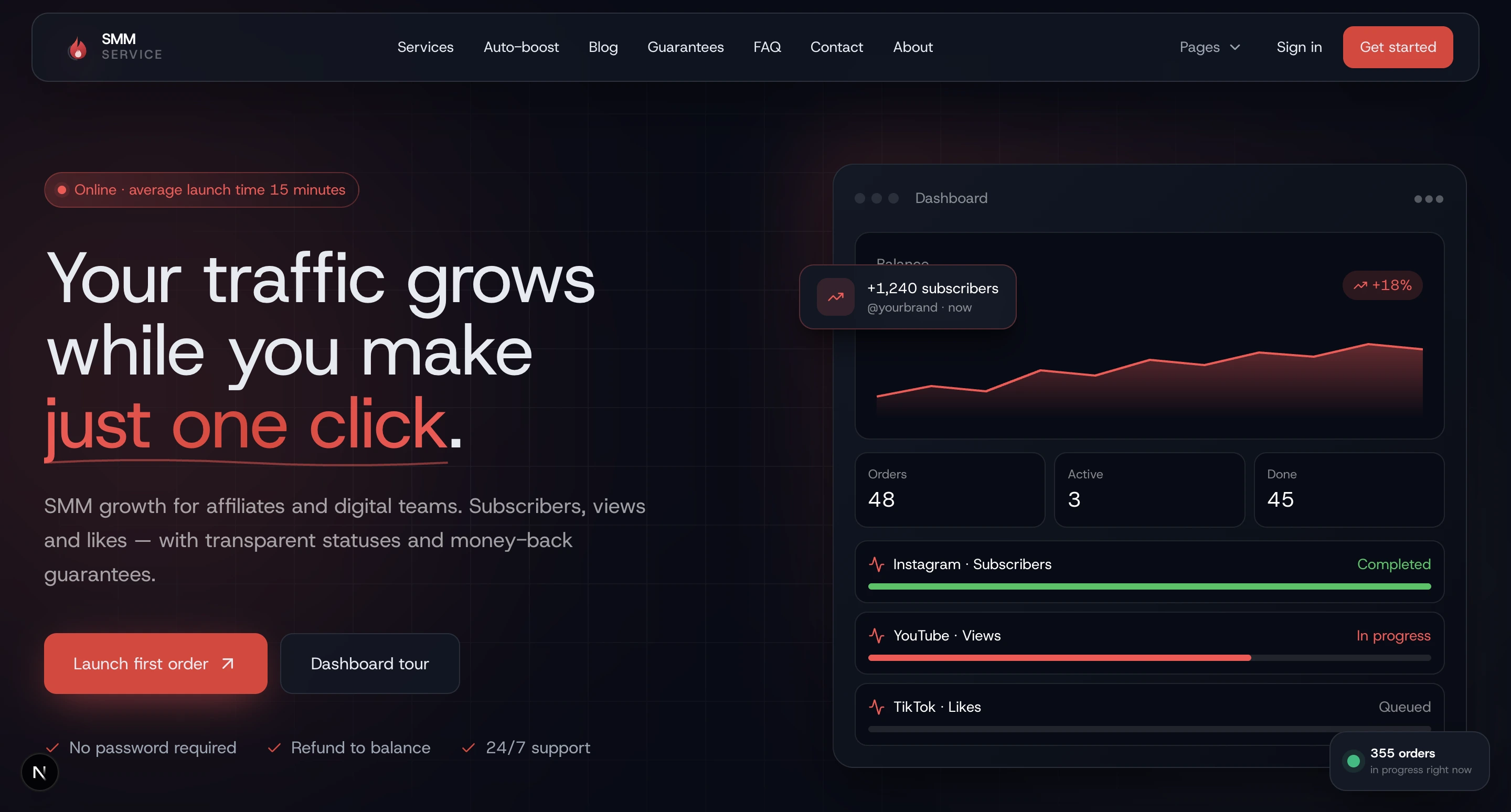
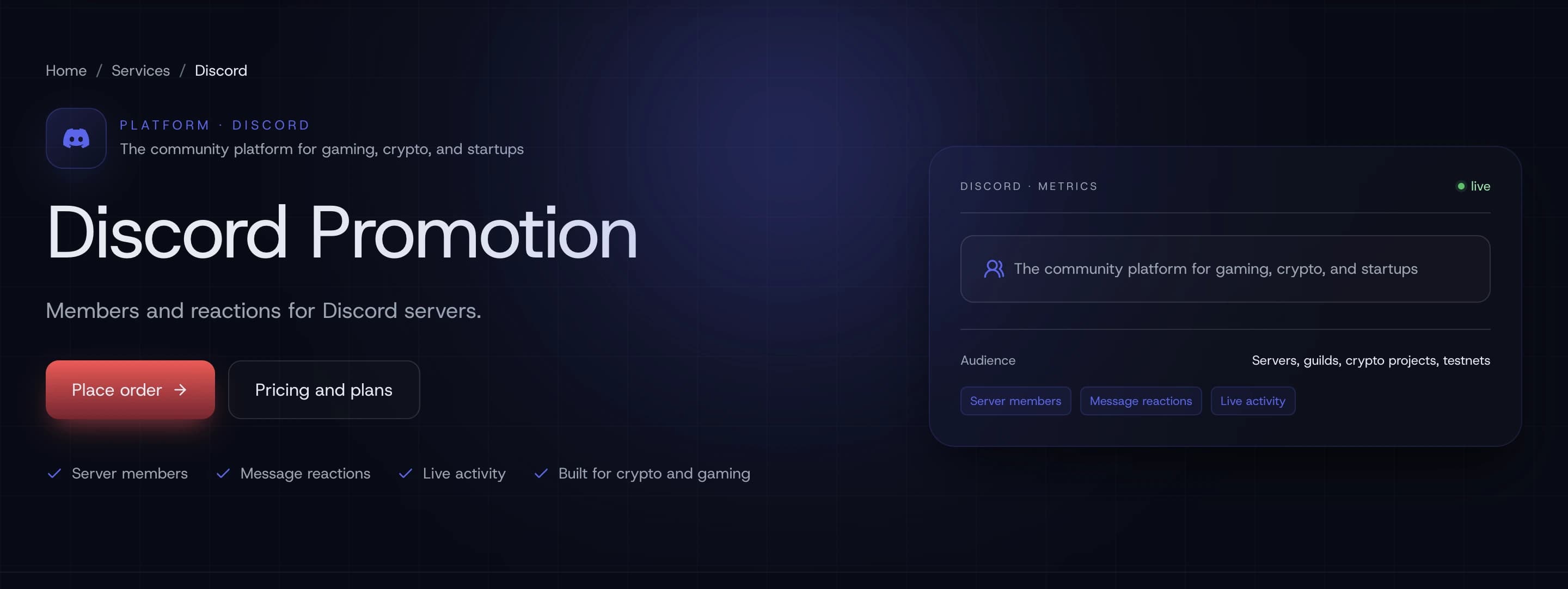
- Server-rendered public website with platform landing pages, service details and a structured, sitemap-indexed catalog
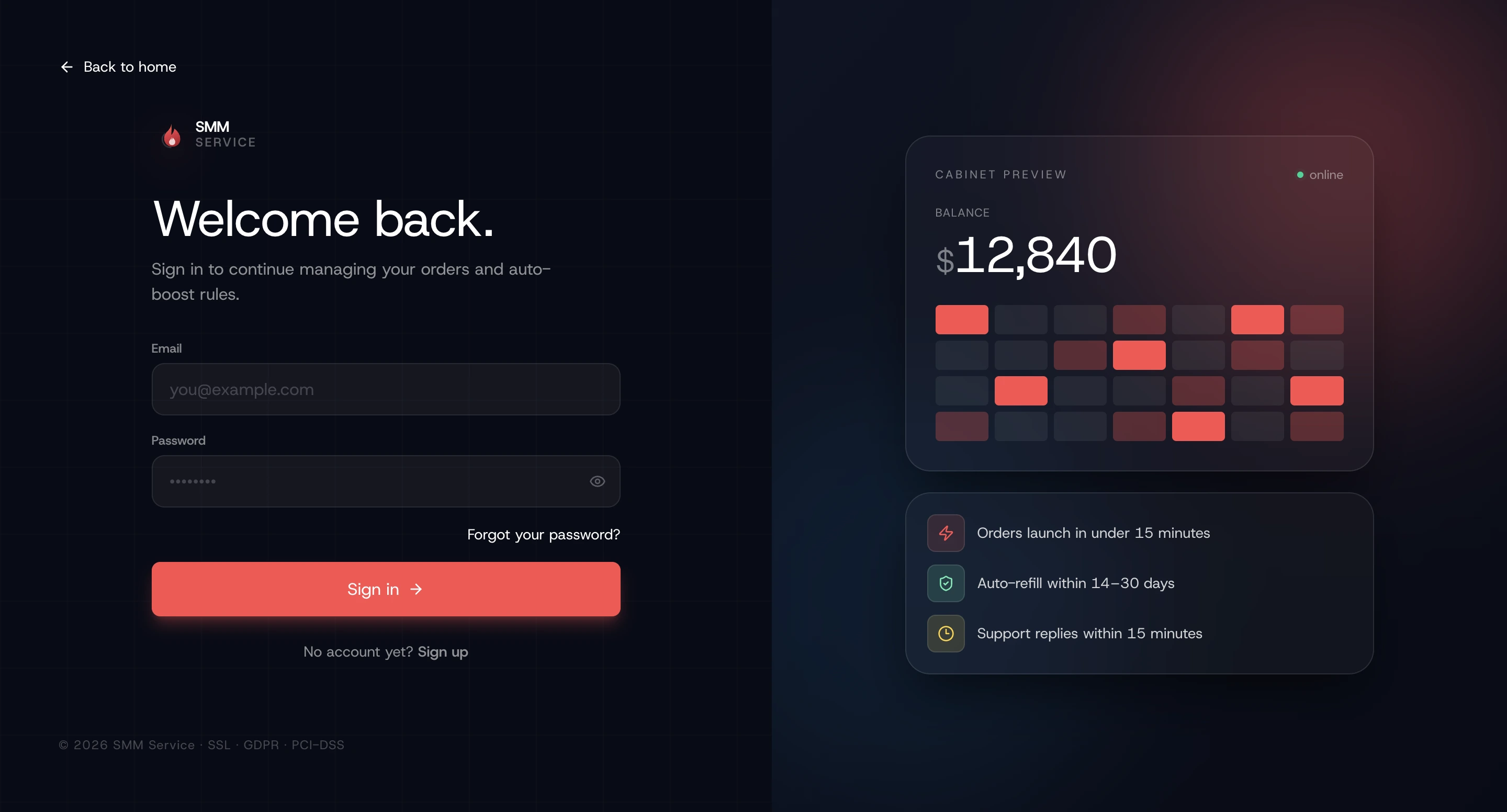
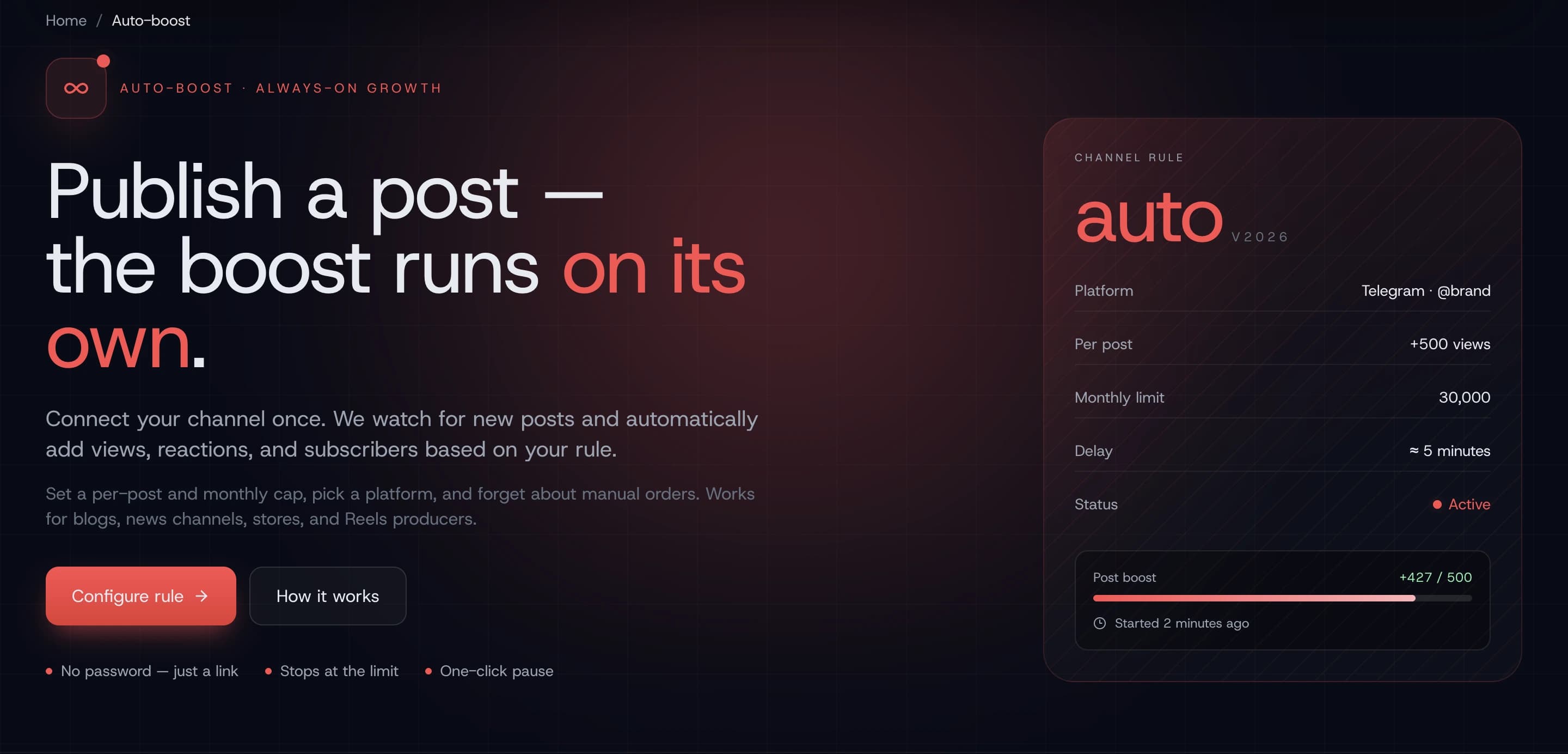
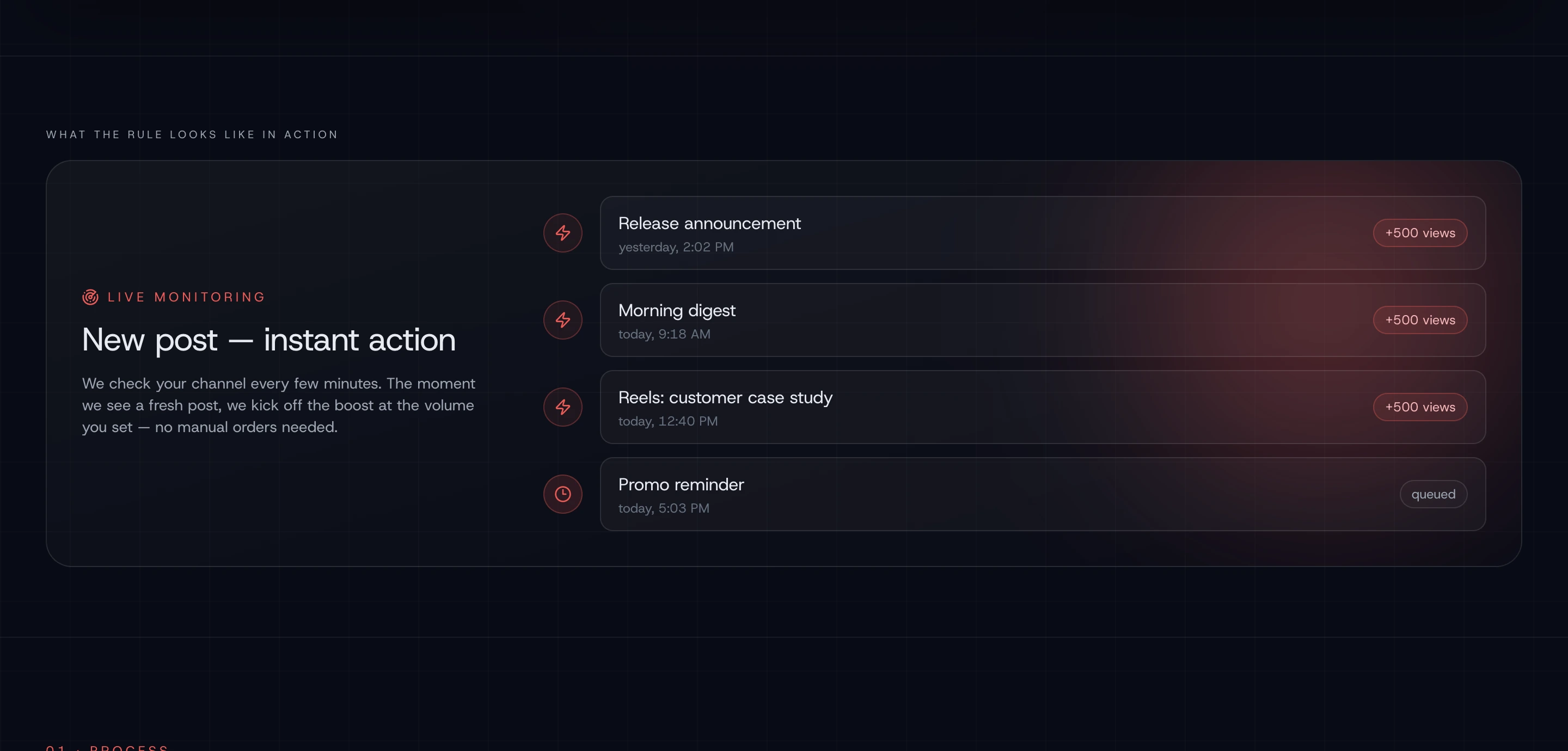
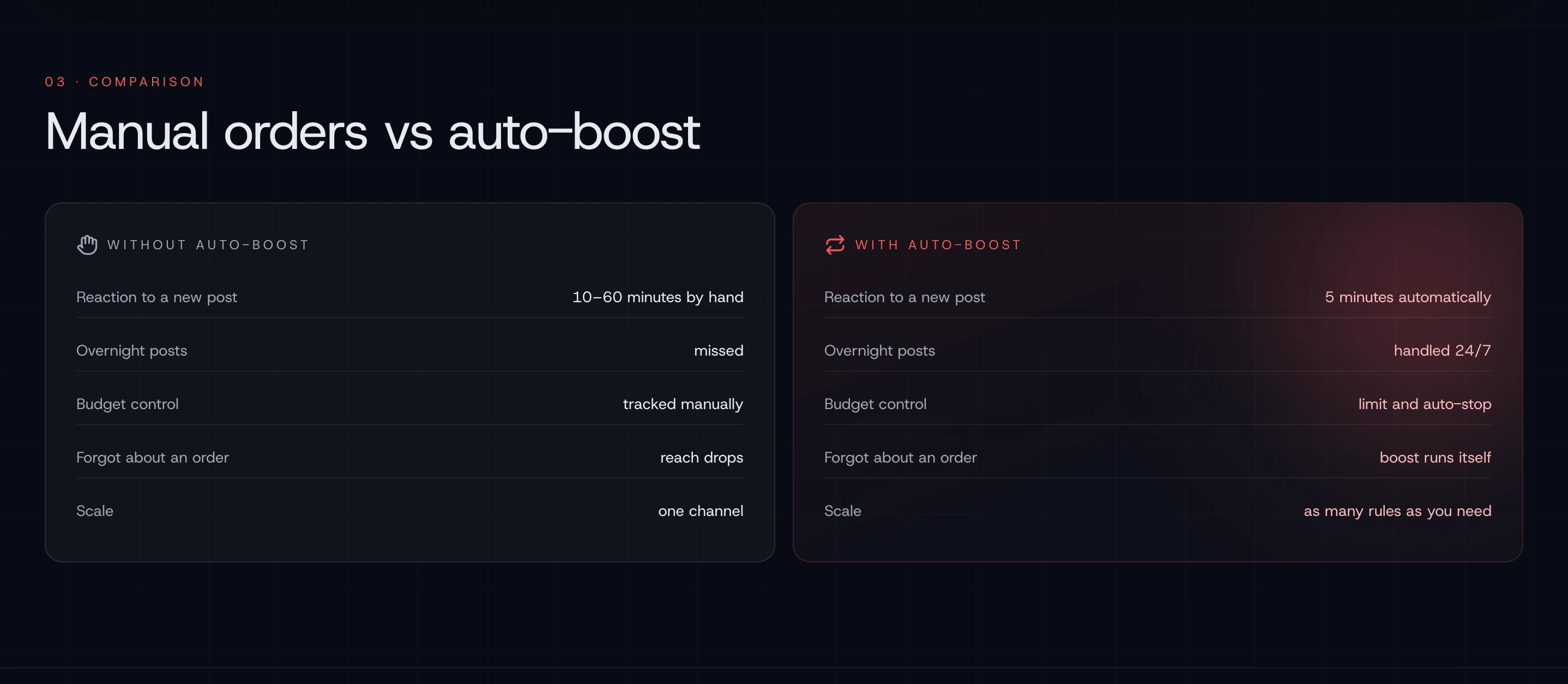
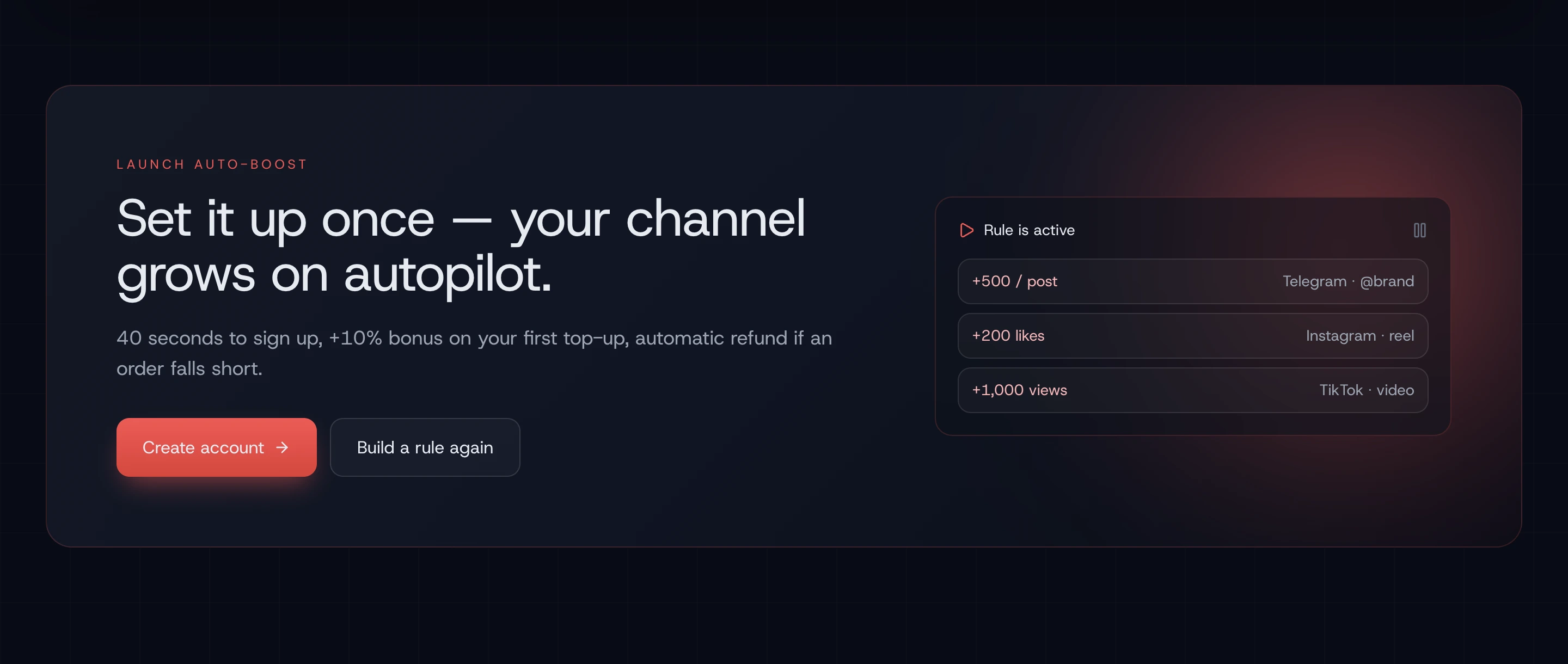
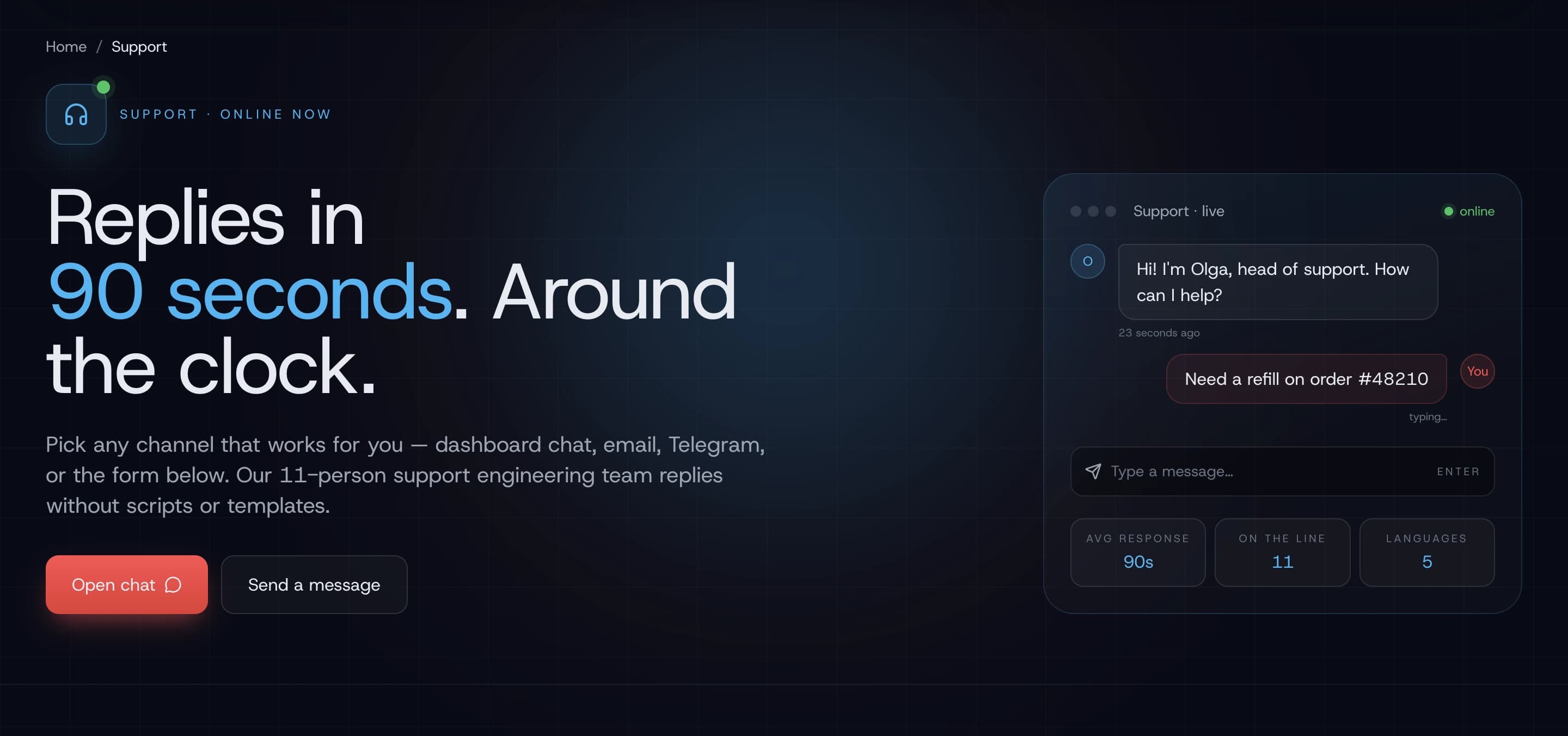
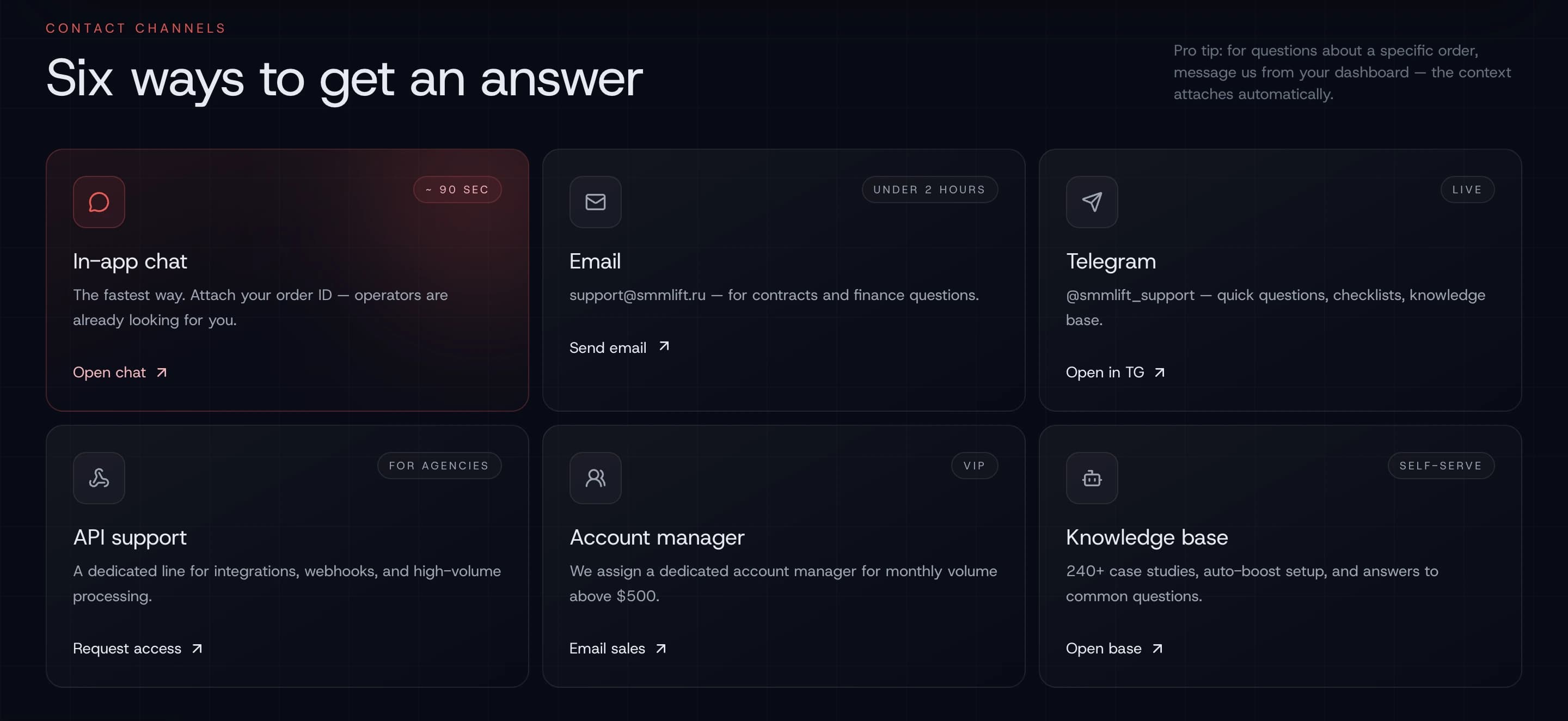
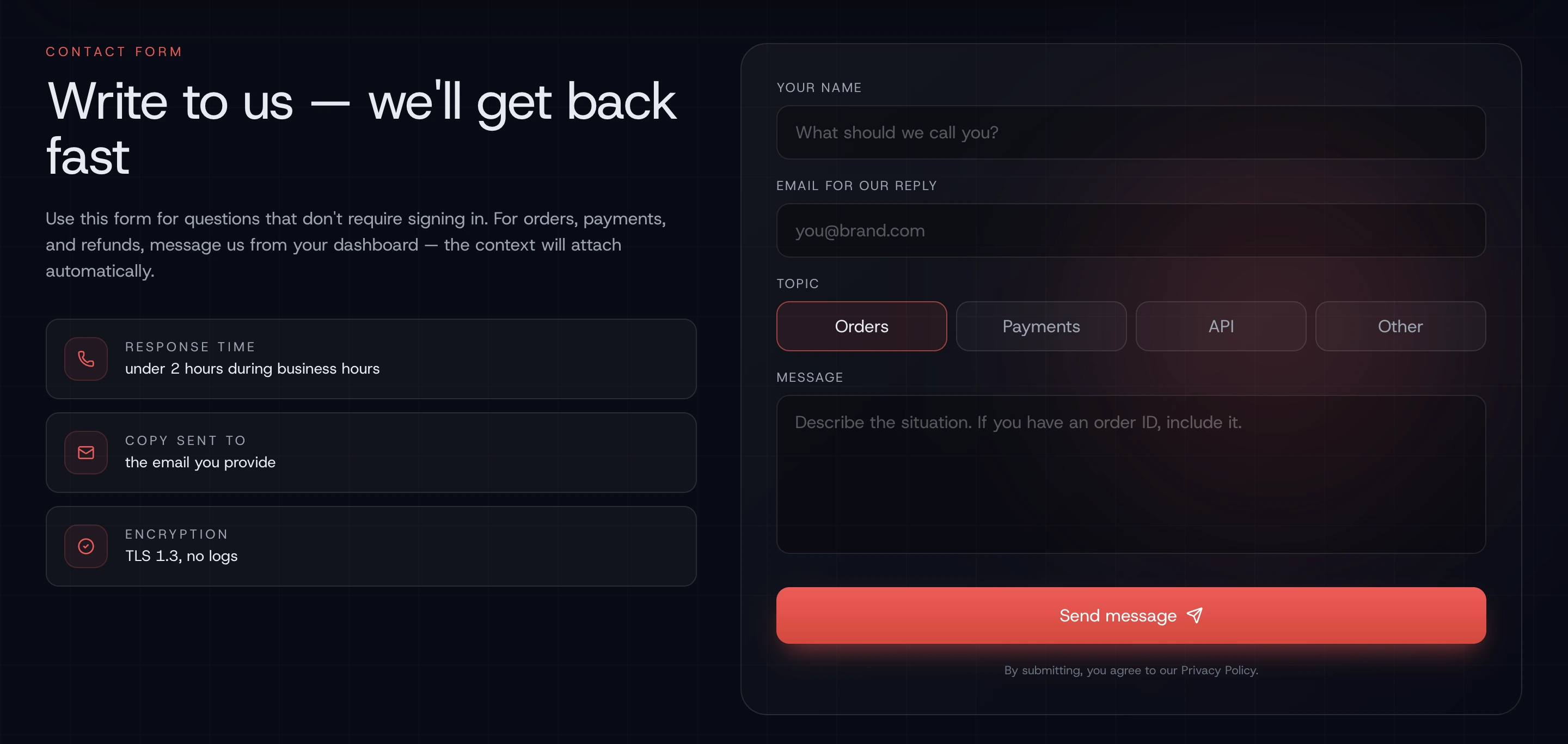
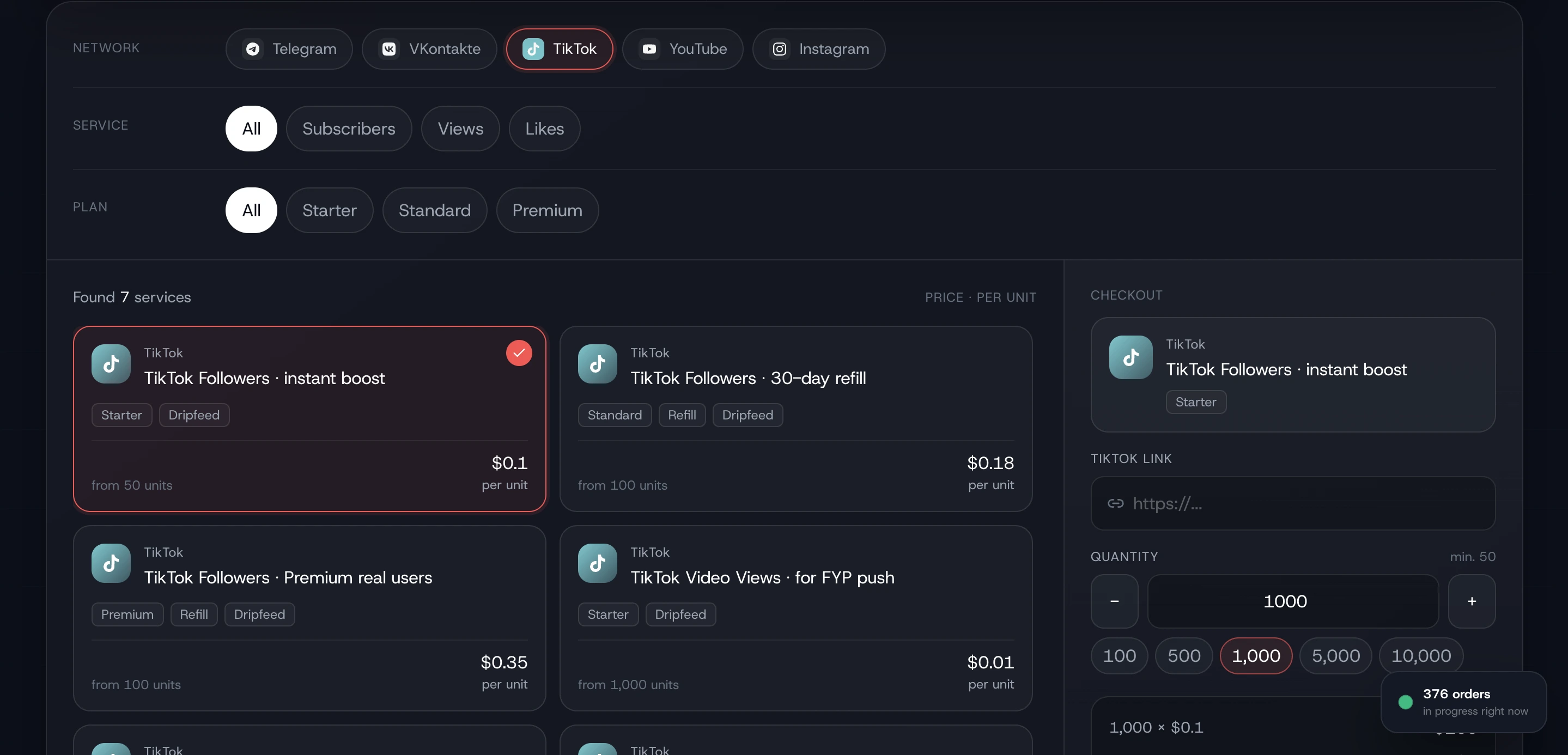
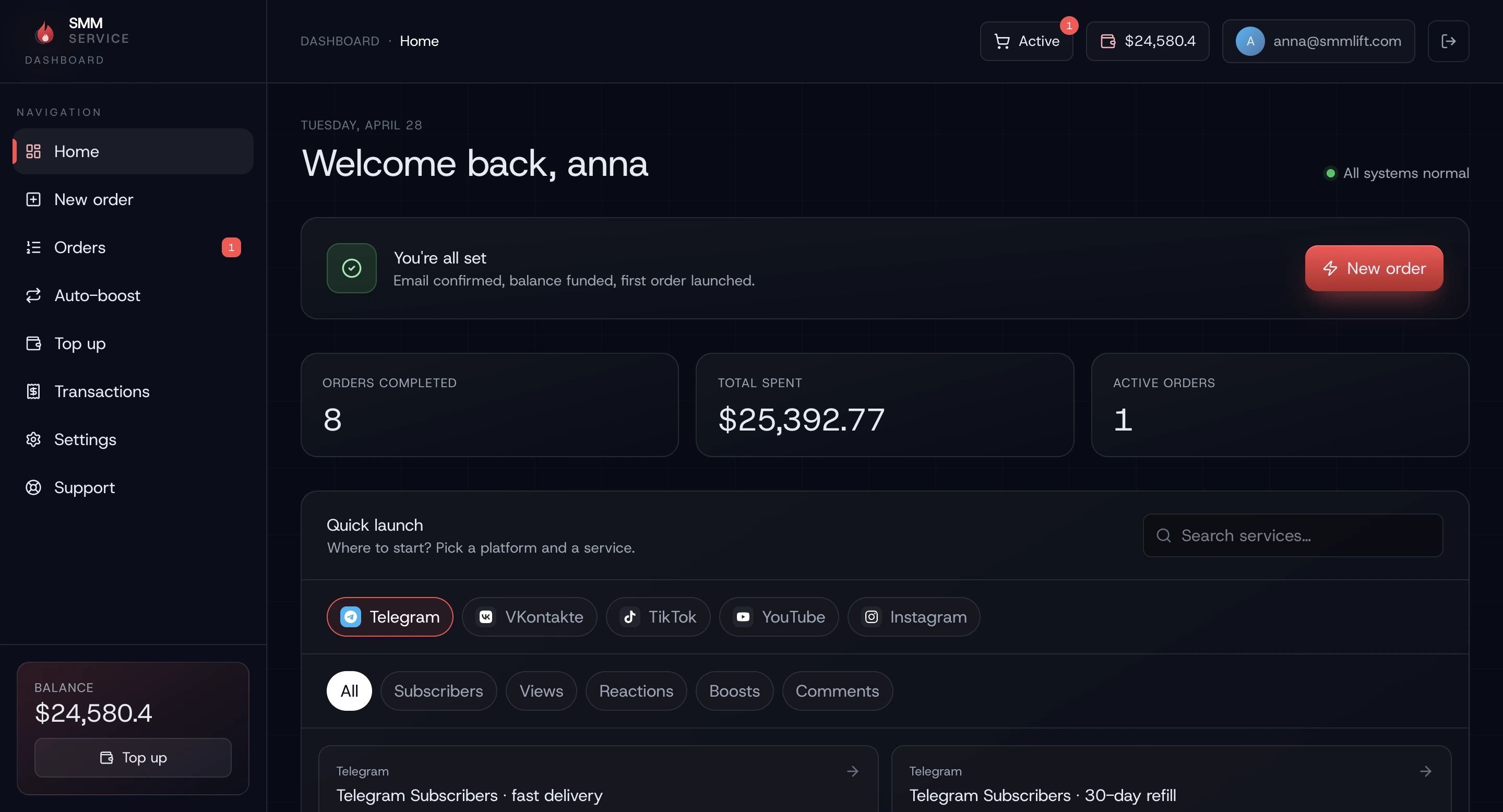
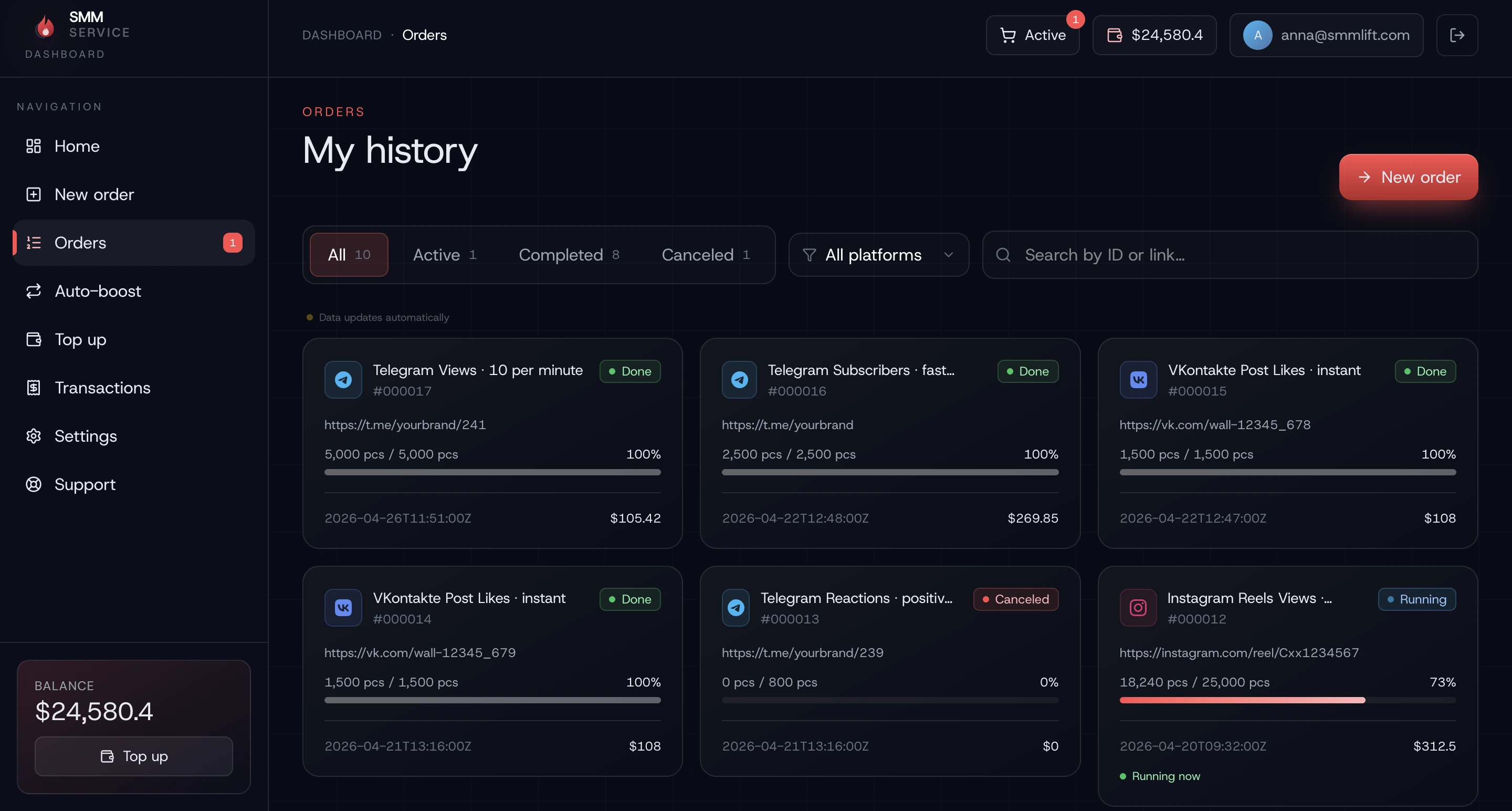
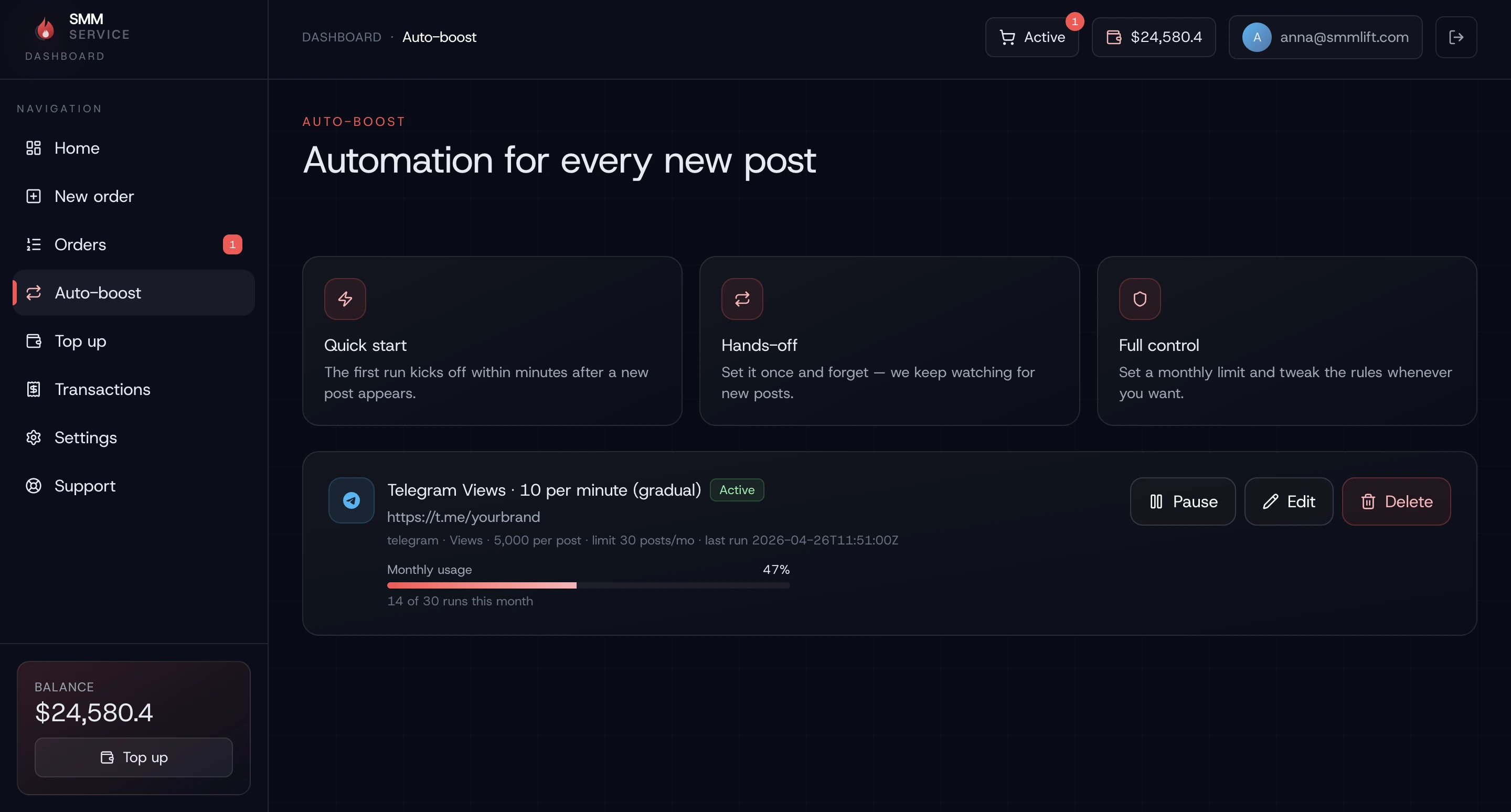
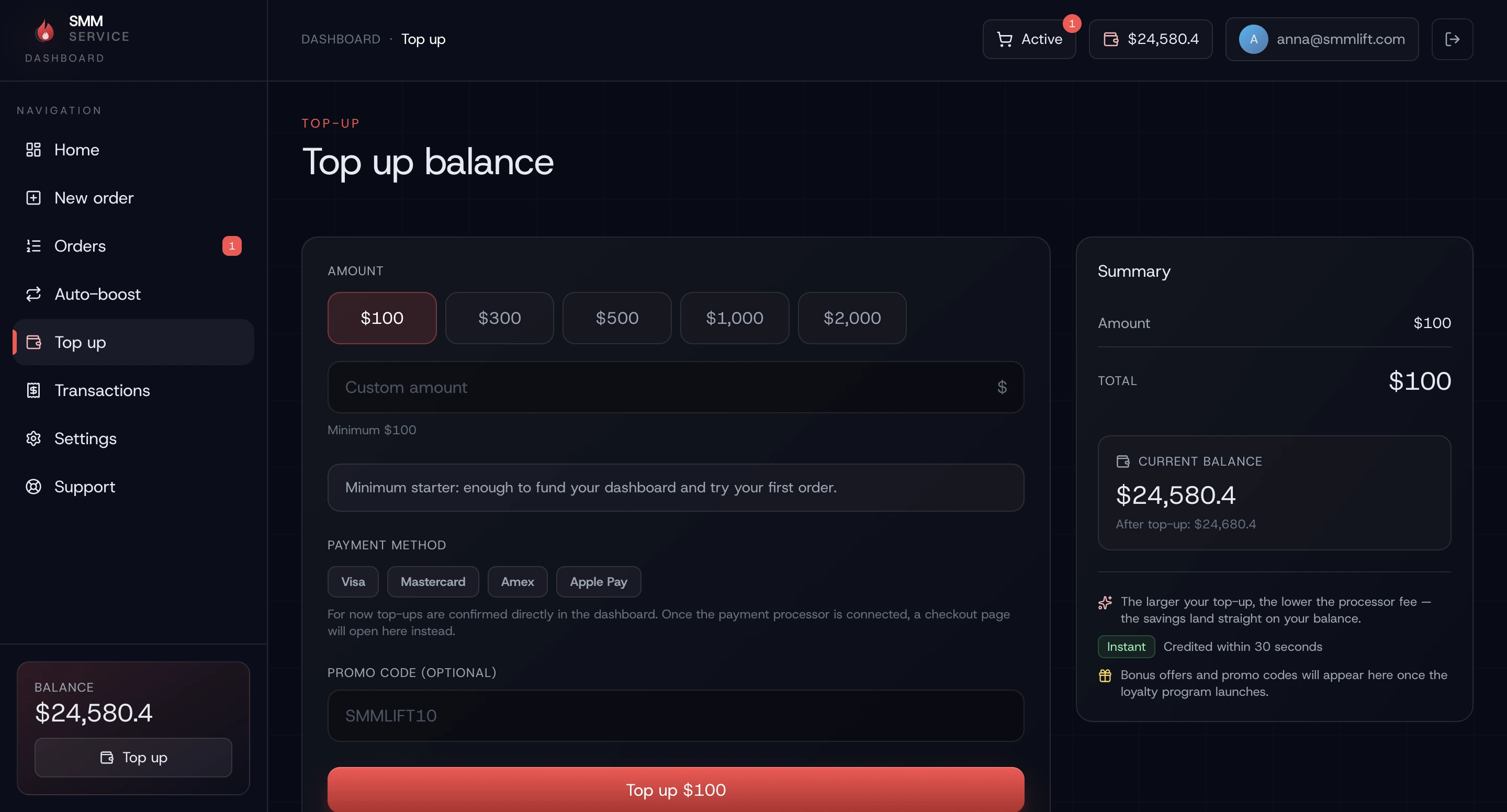
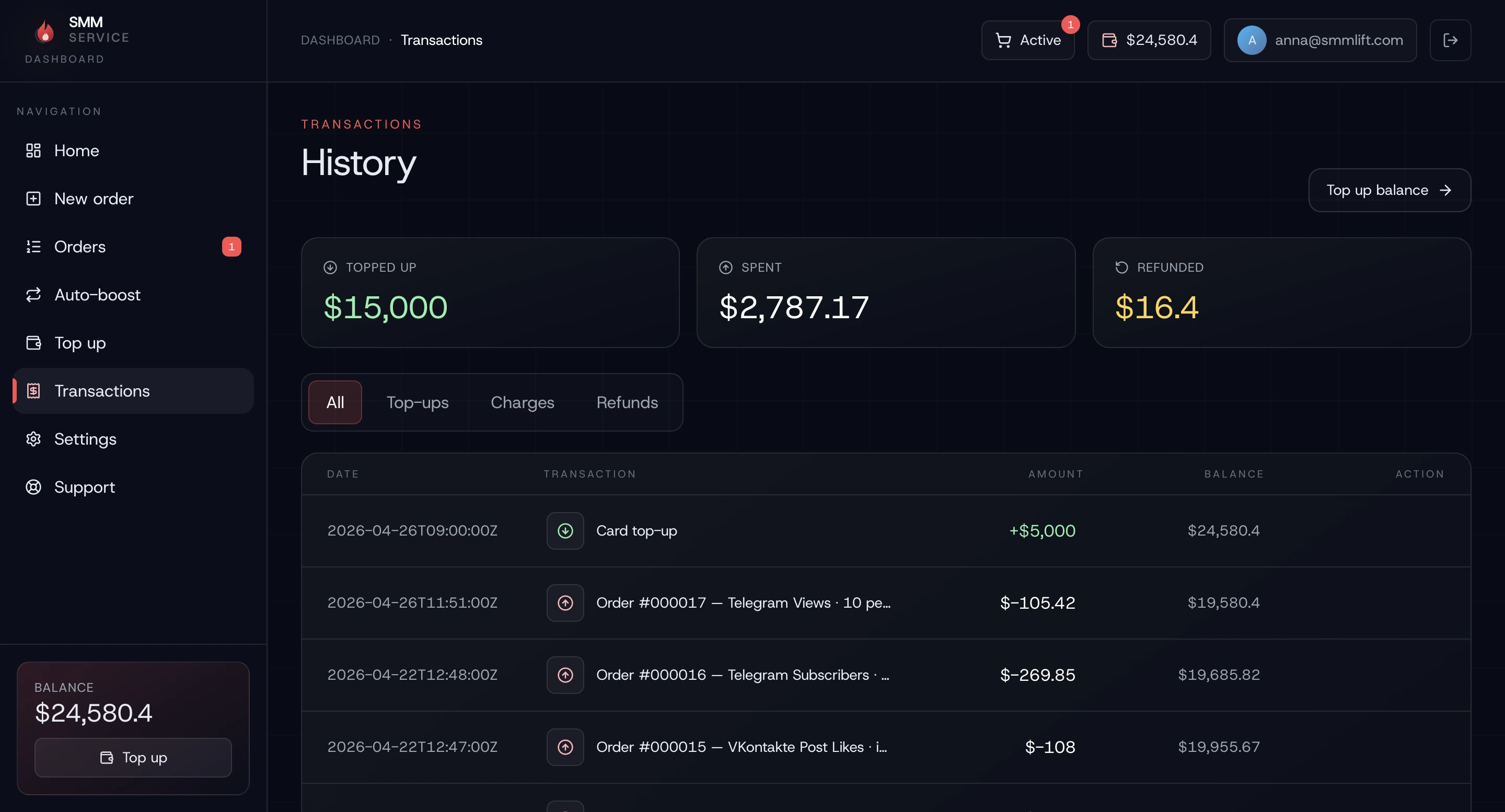
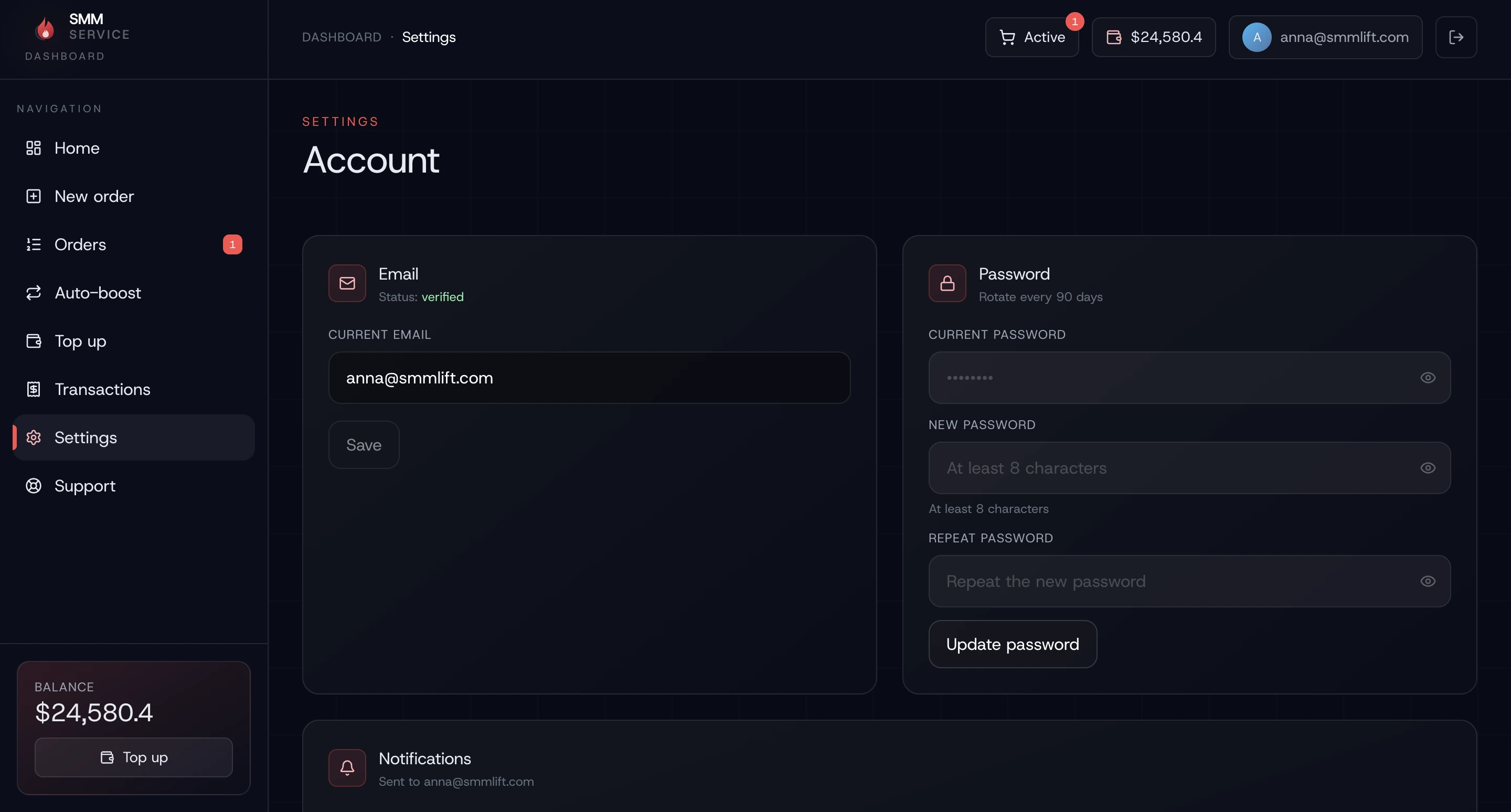
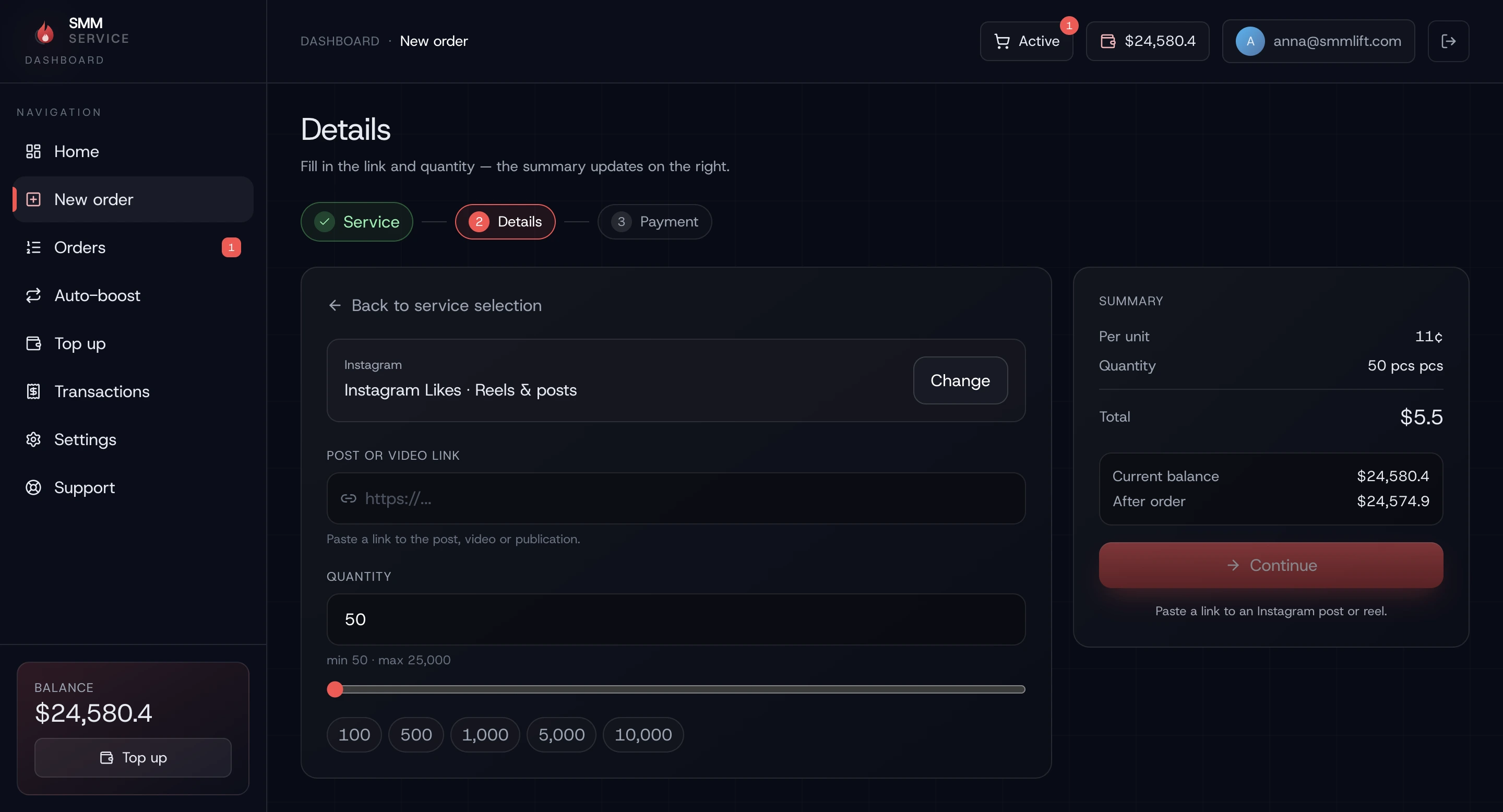
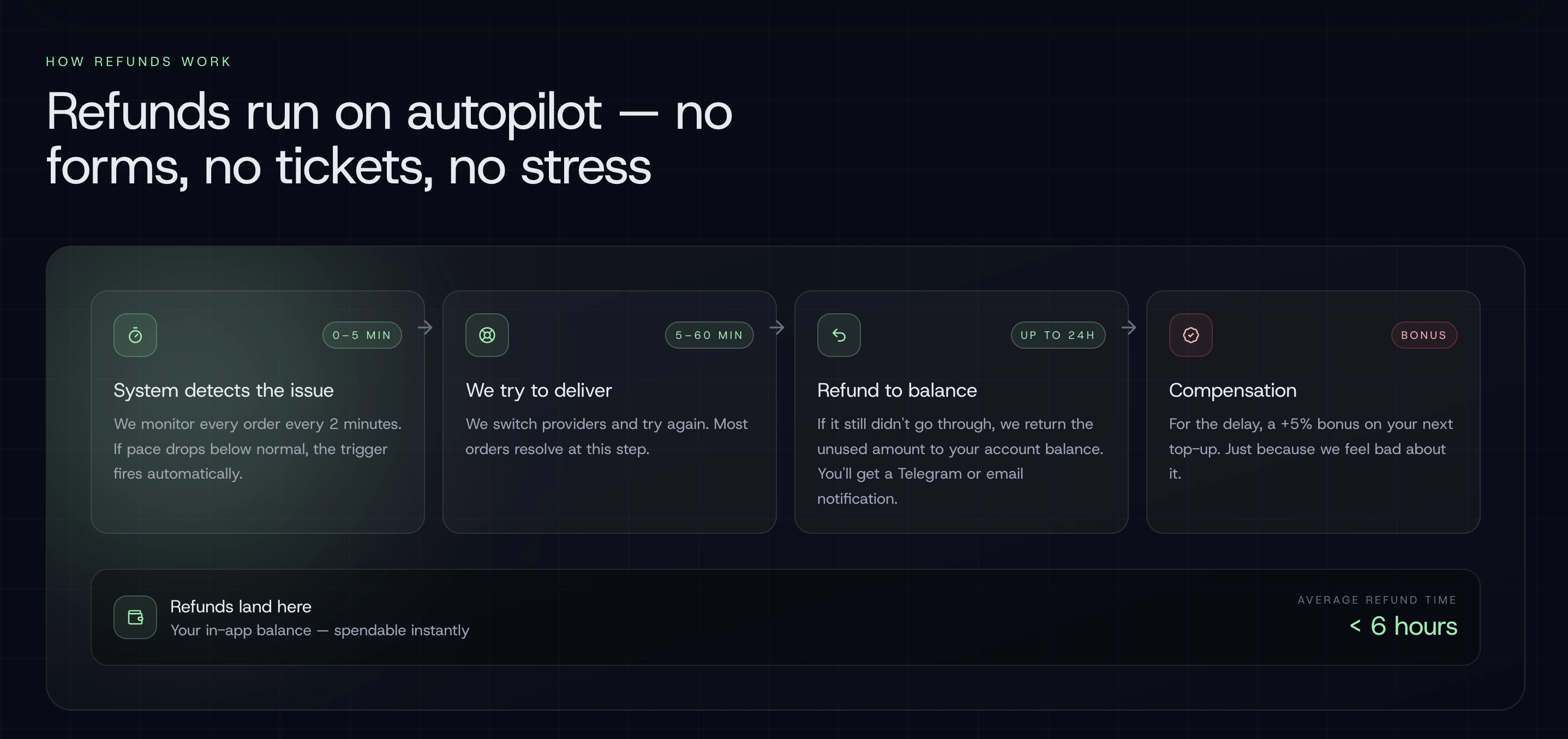
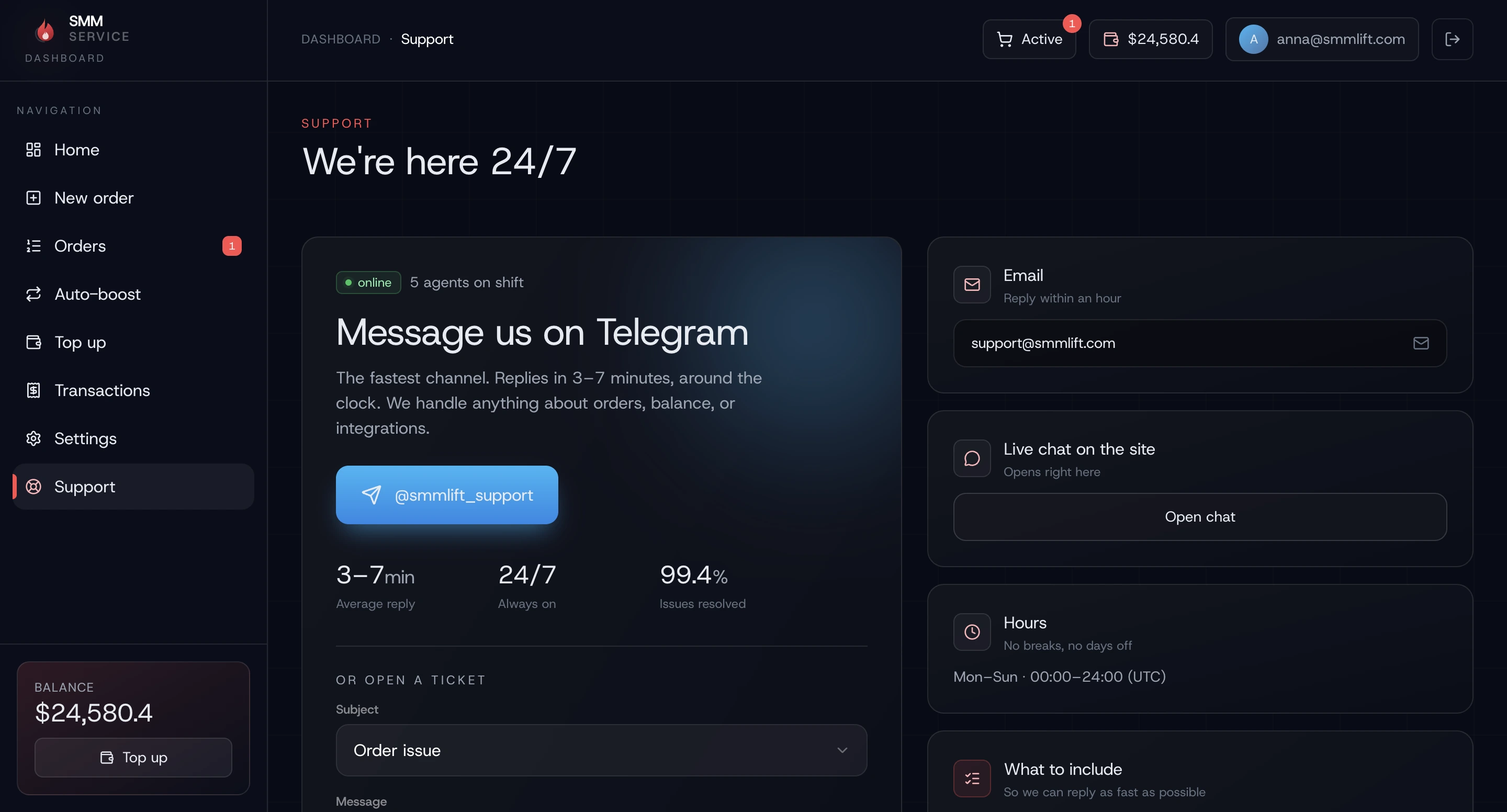
- Customer dashboard for ordering, balance top-ups, transactions, support requests, service adjustments and recurring order rules
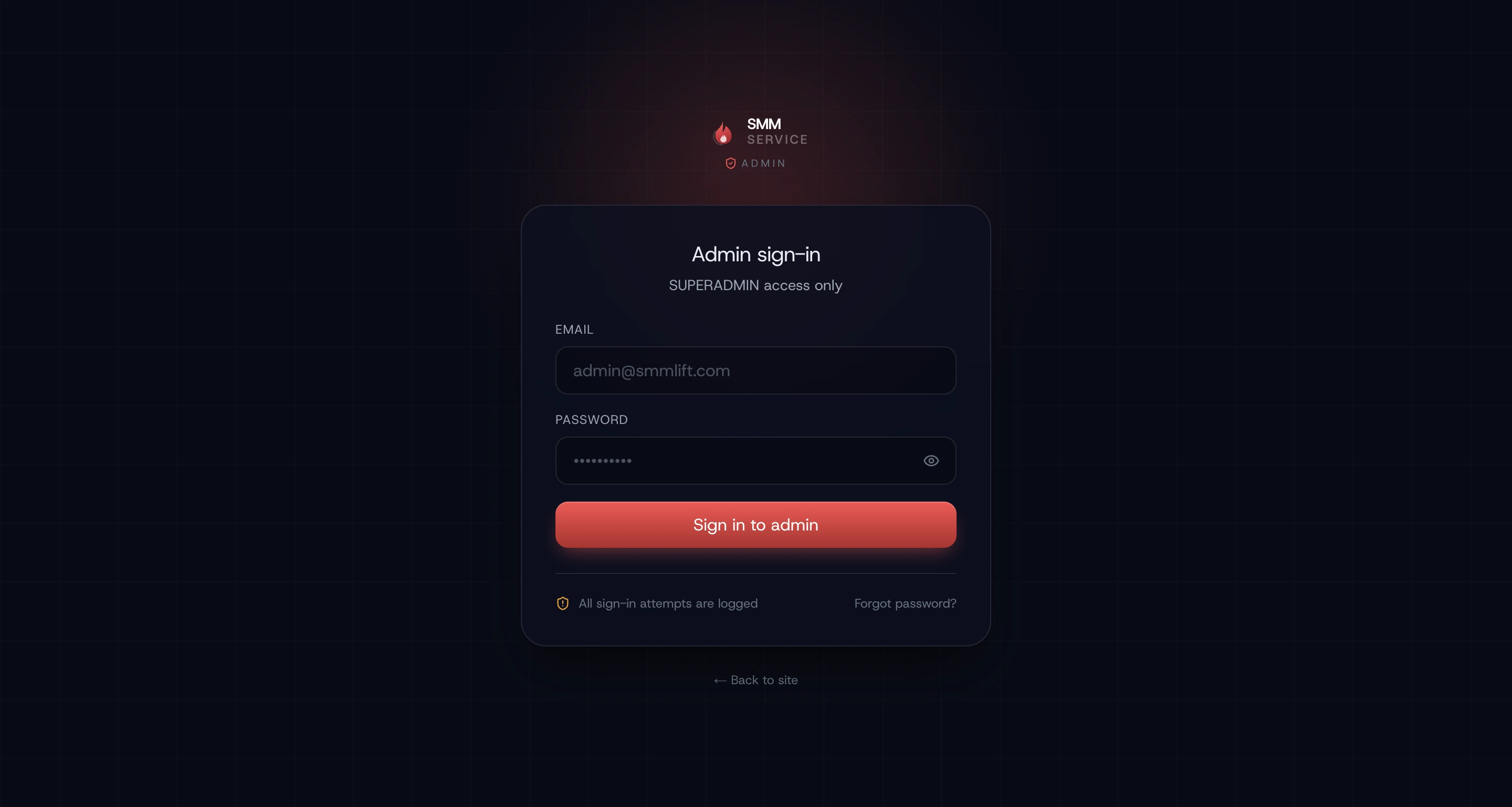
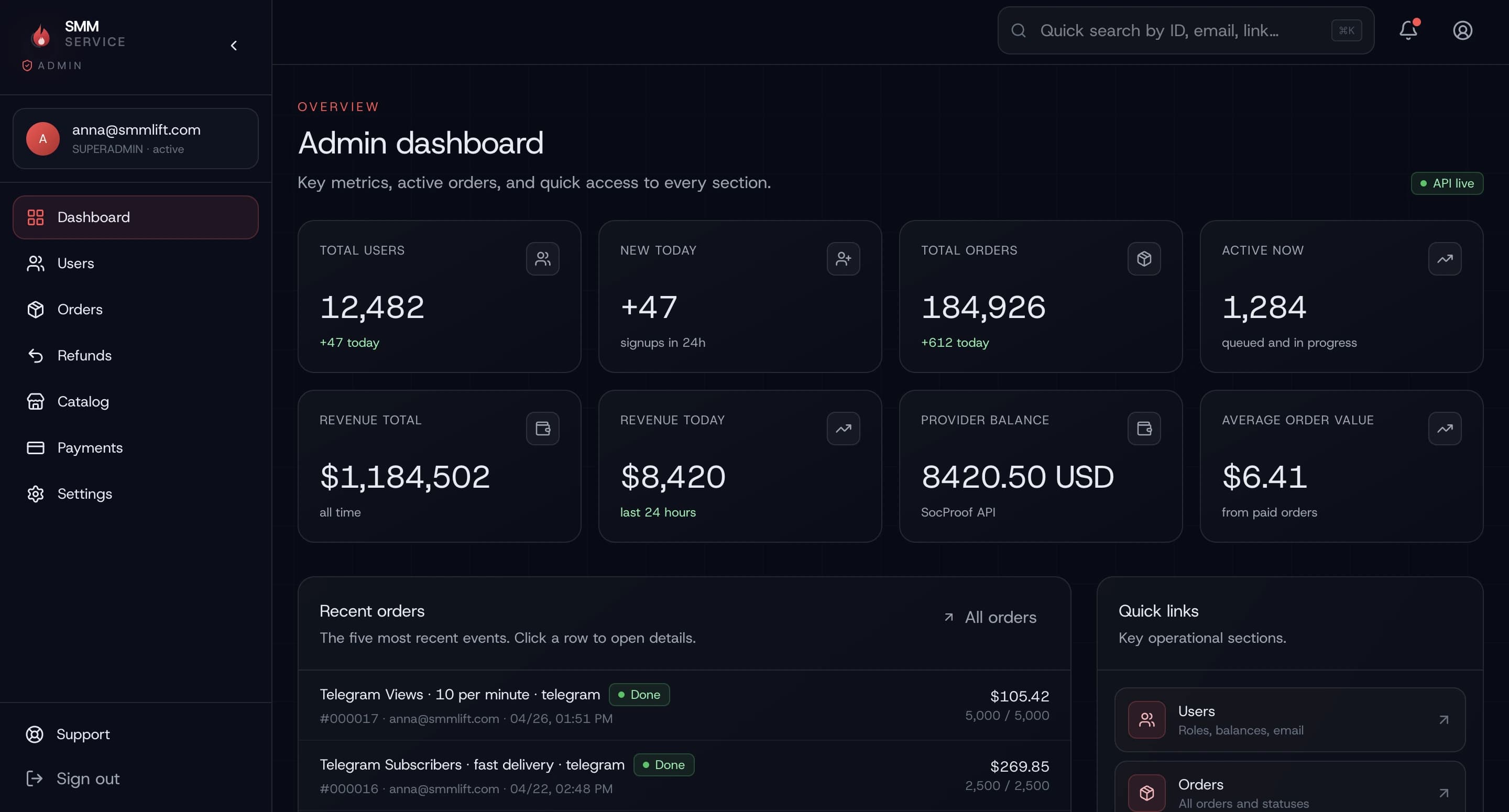
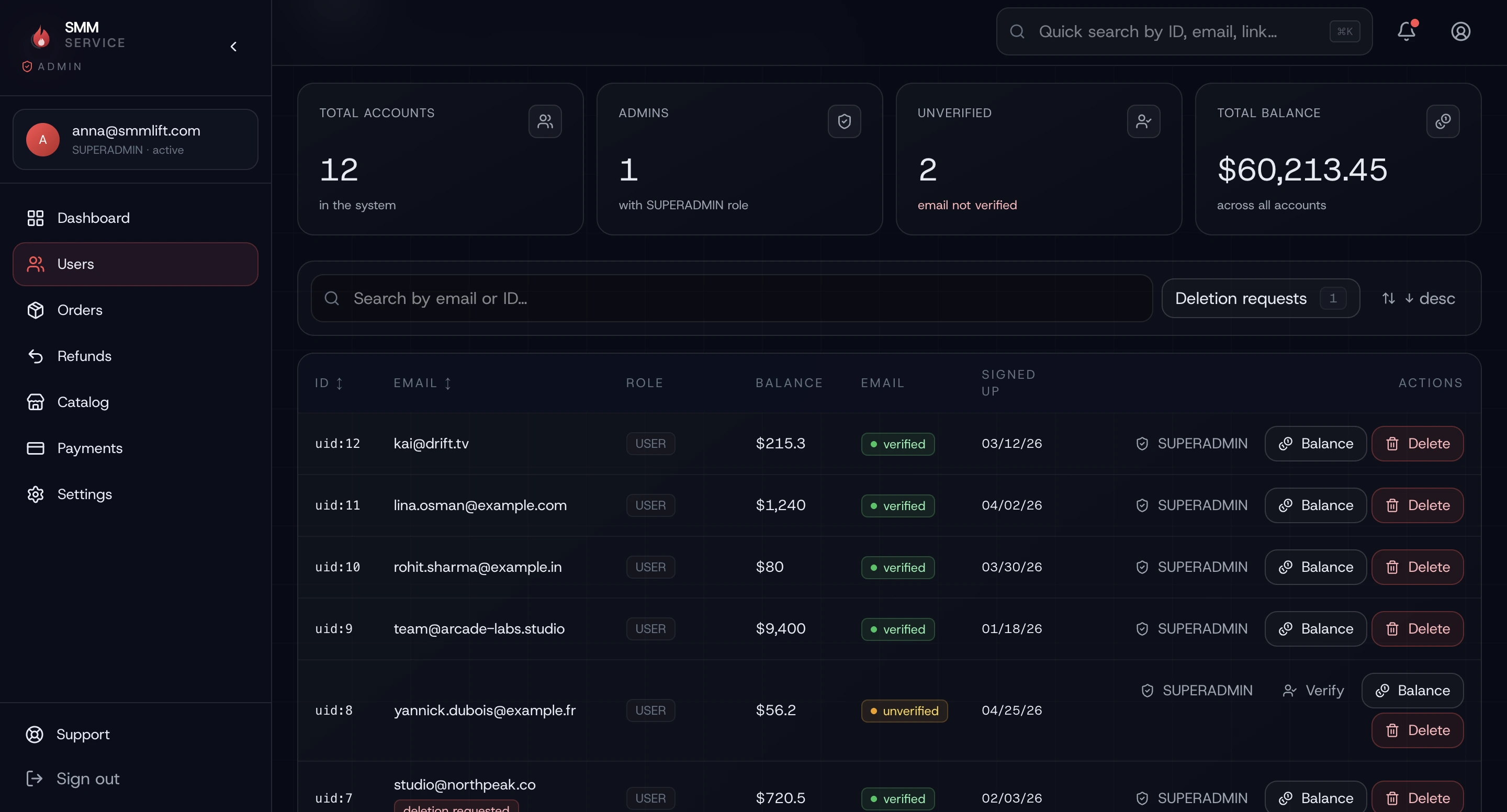
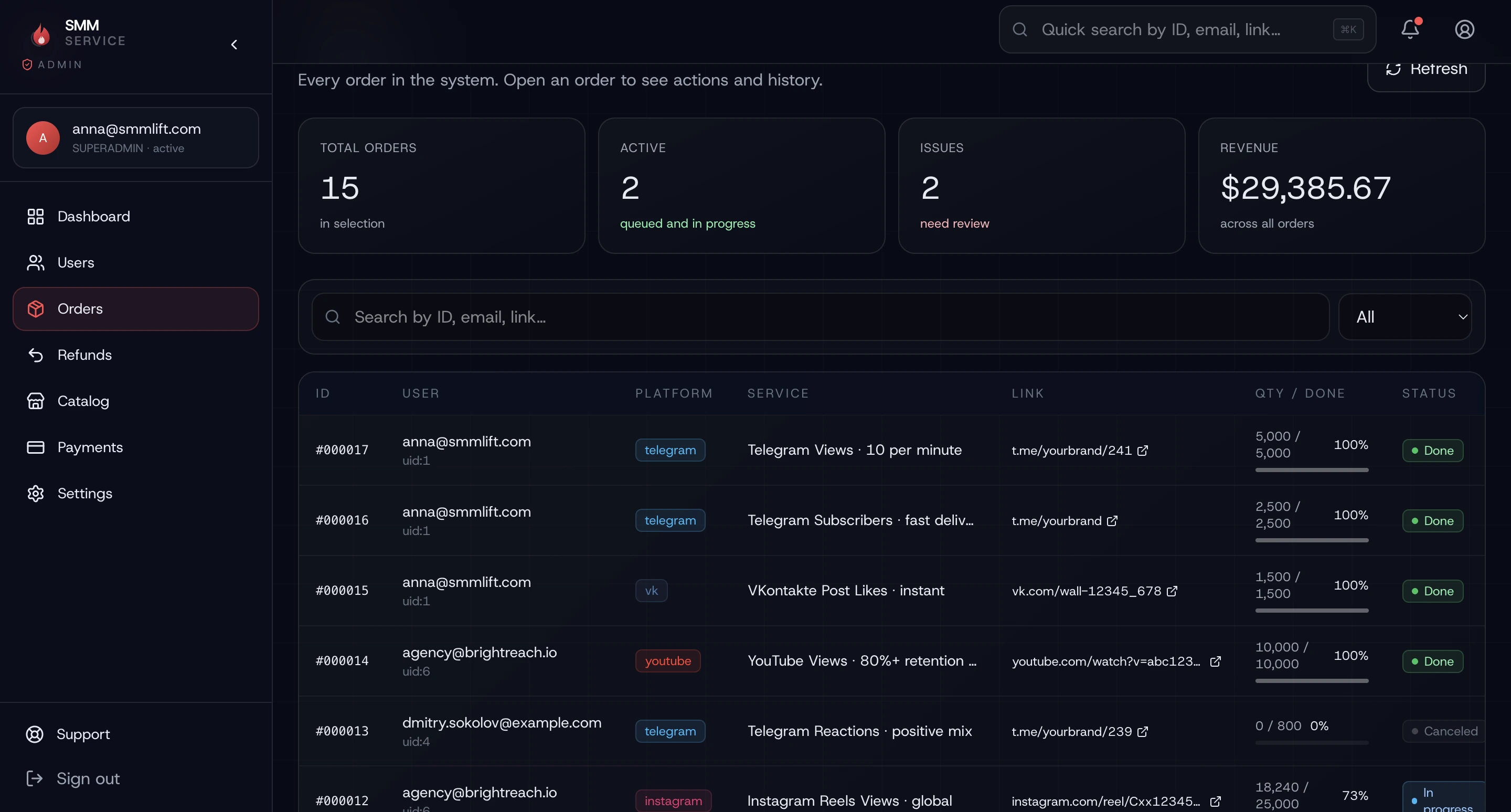
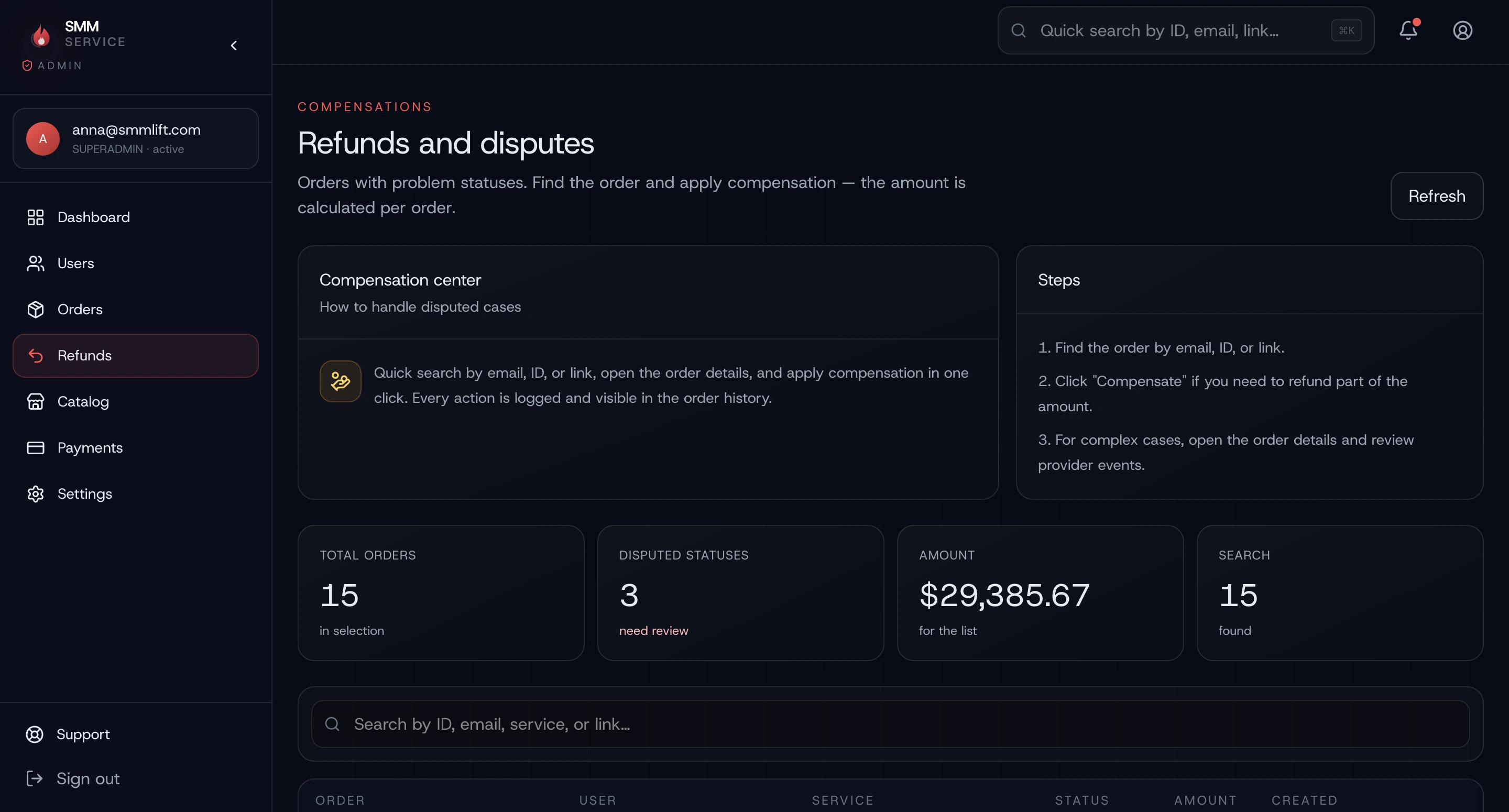
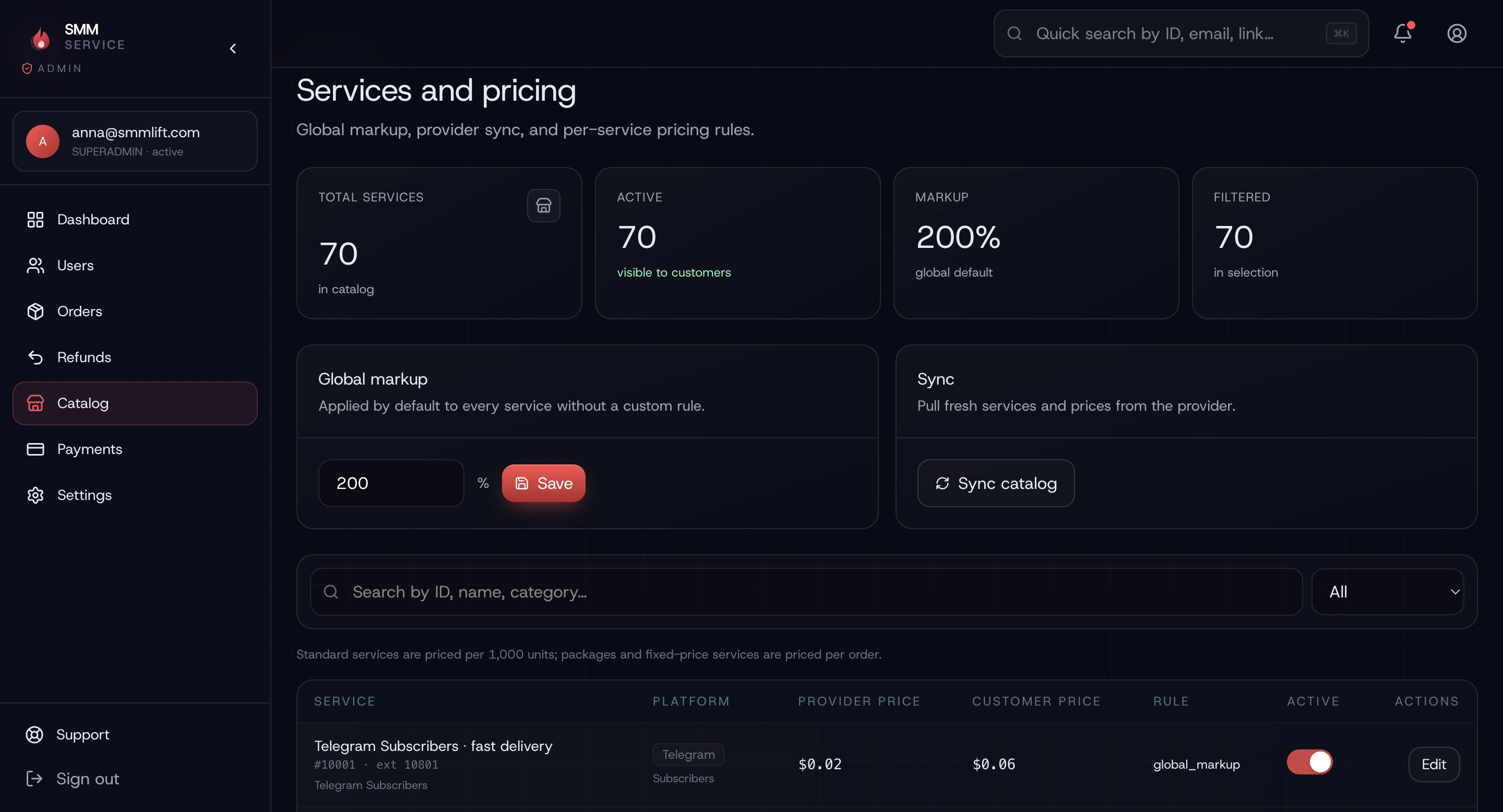
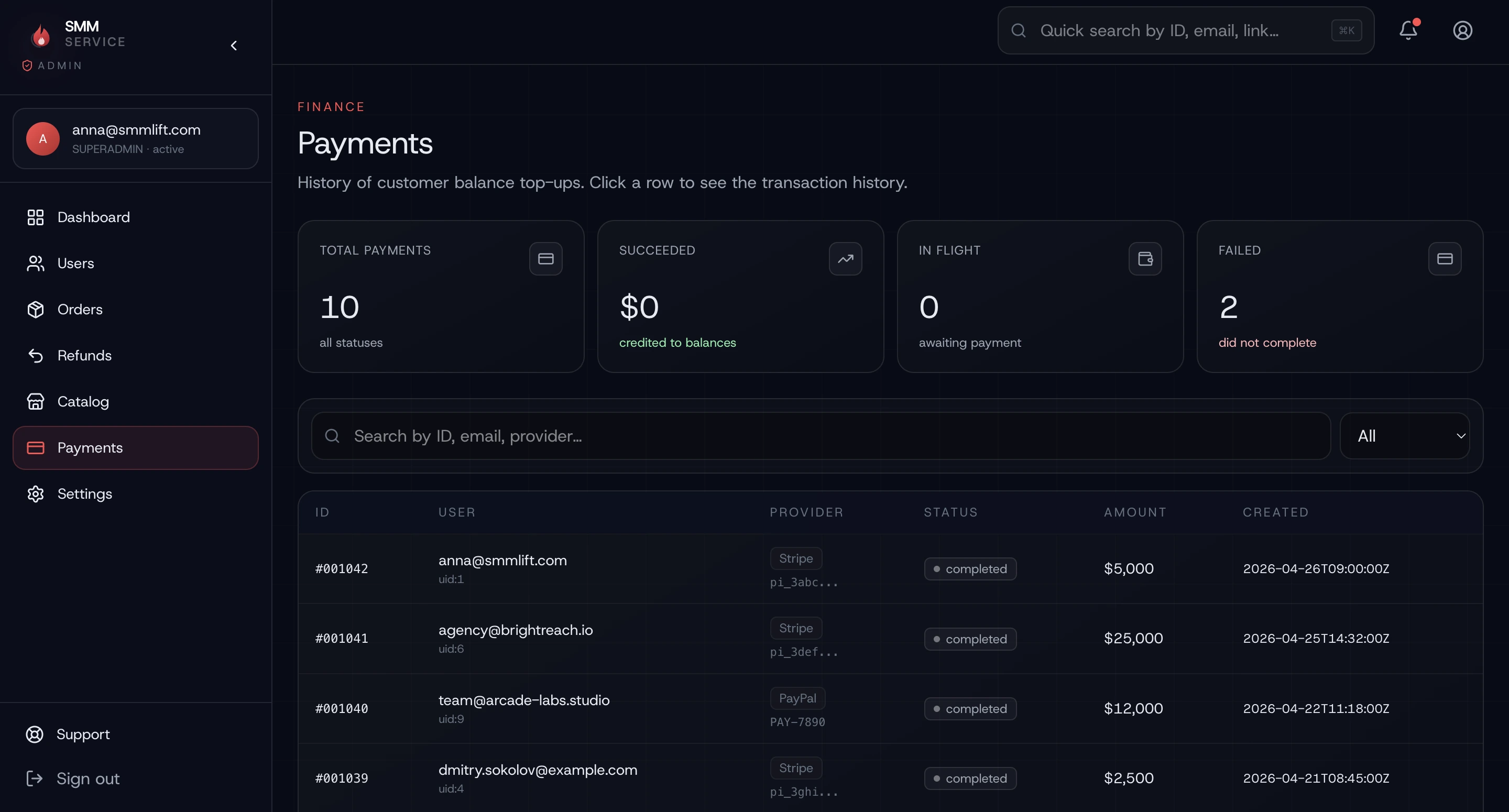
- Admin console for provider sync, pricing rules, users, orders, payments, cancellations, compensation and refunds
- Catalog integration layer that imports provider listings, normalises them into one internal model and exposes one read API
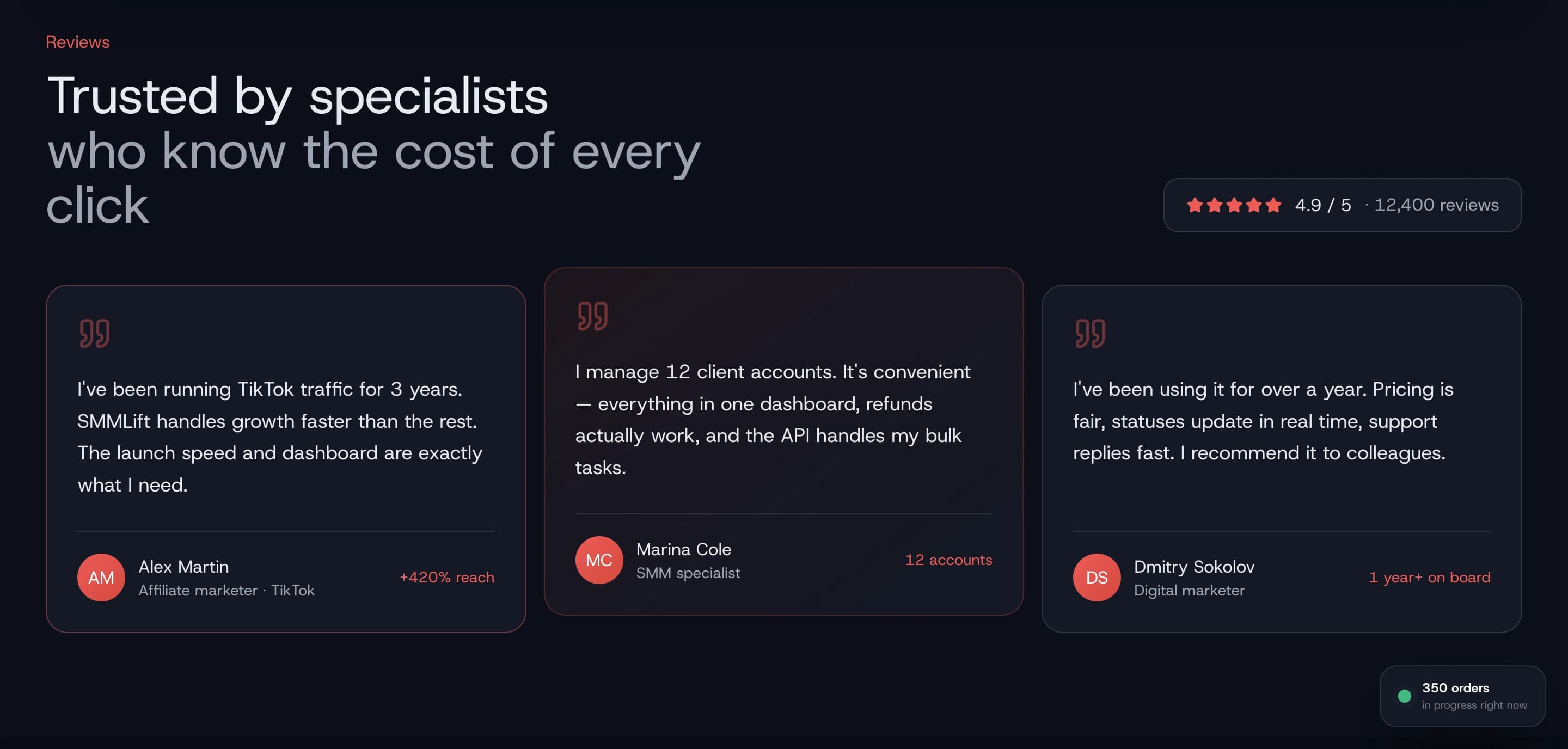
- Payment and refund workflows with idempotent processing, explicit confirmation and audit records
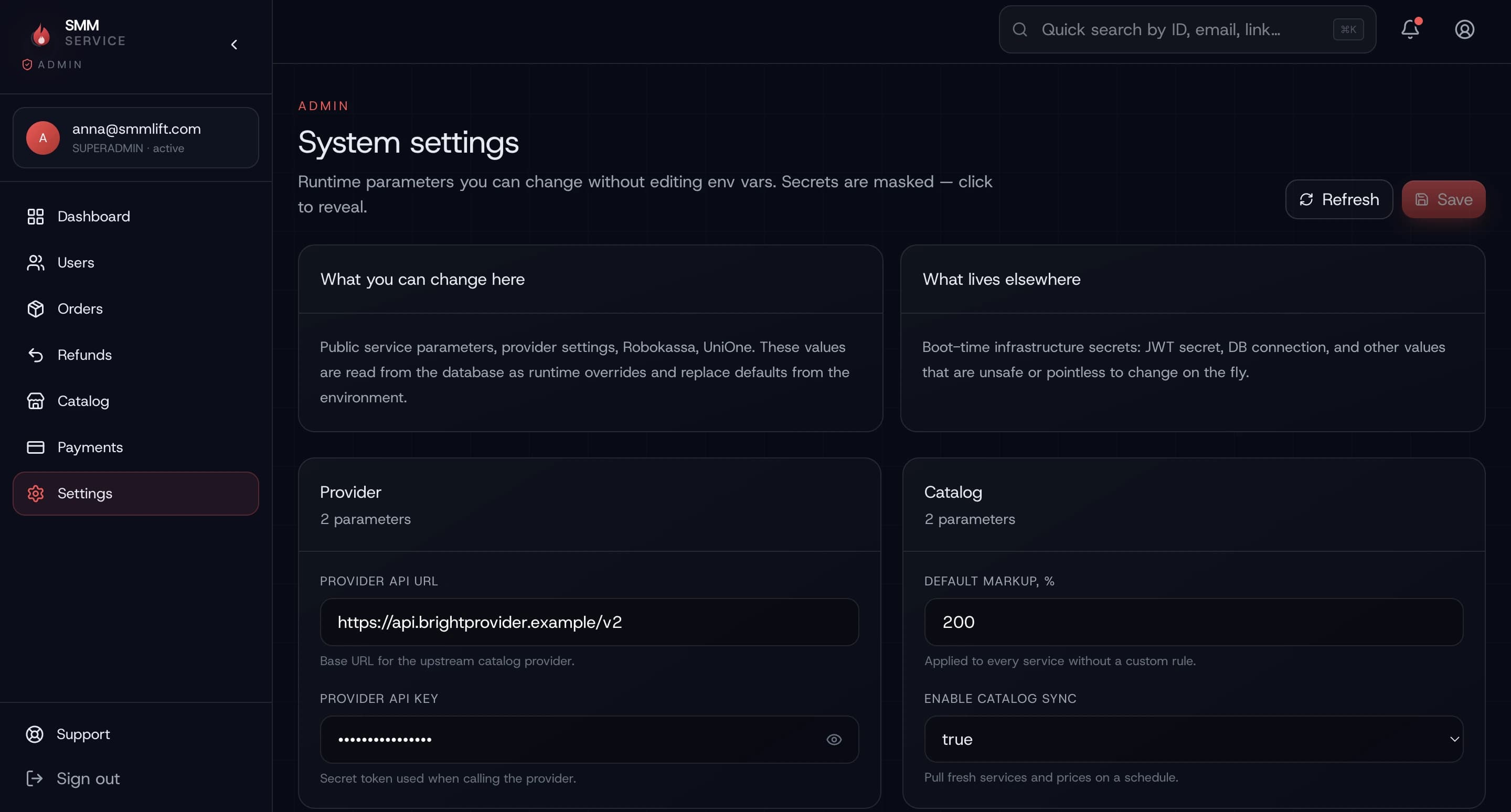
Routine provider, service and pricing changes can be managed from the admin console rather than through code changes. Relevant public catalog pages are regenerated on demand, keeping customer-facing information aligned with the internal service registry.
Architecture
Backend — Java and Spring Boot with PostgreSQL, Redis and a job queue for provider synchronisation, order polling and refund processing. A typed REST API exposes the shared service, order and payment model to all three product surfaces. Frontend — Next.js, React and TypeScript for the public site, customer dashboard and admin console. Public service pages are server-rendered for search visibility; authenticated surfaces load current operational data behind role-aware access controls. Infrastructure — asynchronous jobs isolate slow or unreliable provider operations from customer requests, while audit middleware records material state-changing calls.
Payments, Roles & Auditability
Money movement and order intervention require stronger controls than ordinary content updates. The platform provides:
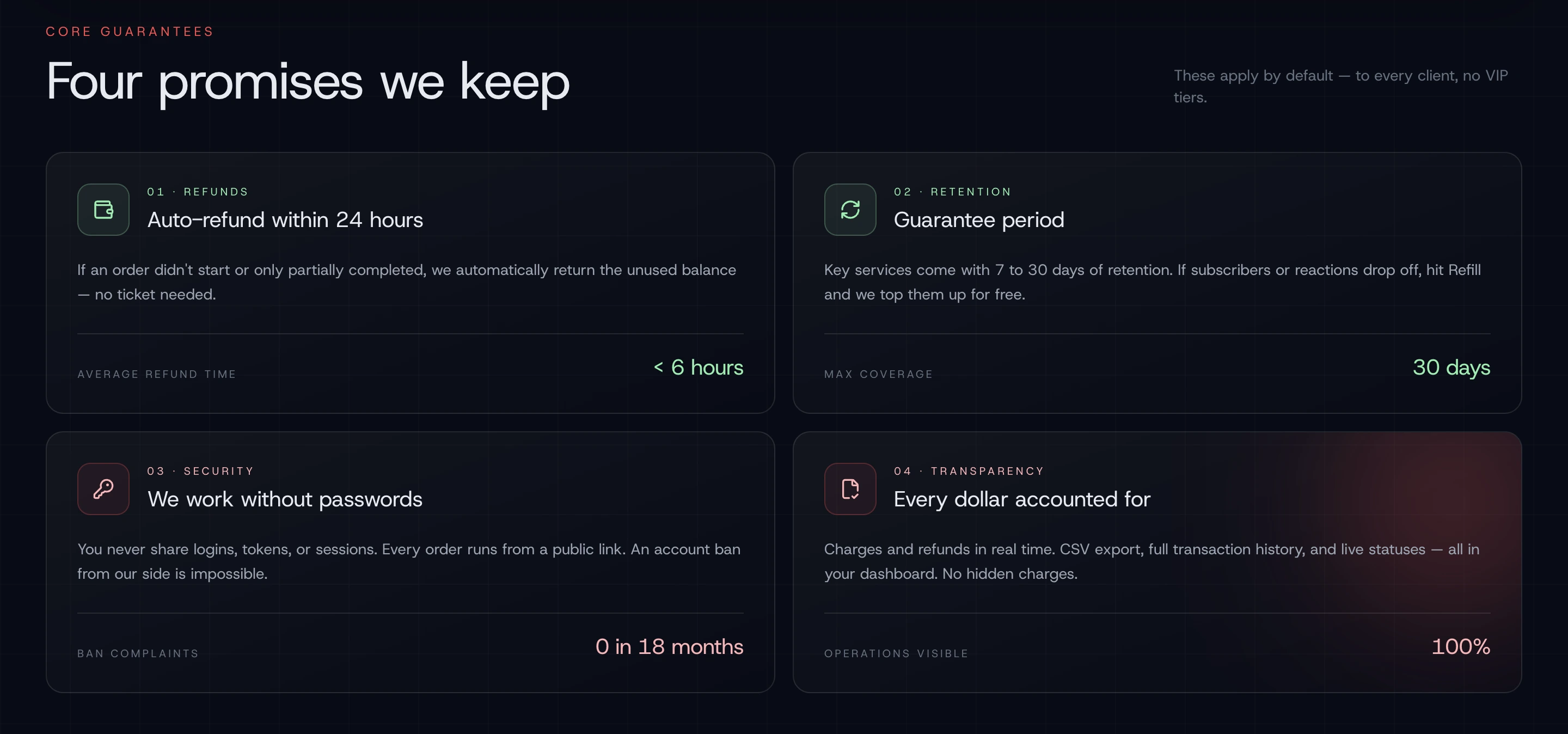
- Audit records for charges, refunds, balance top-ups and admin overrides, searchable by user, order and time window
- Idempotent payment and refund operations keyed to external payment identifiers
- Explicit confirmation for actions that change money, entitlement or order status
- Configurable checkout notices when a service requires additional customer information
- Role-based permissions for superadmin, admin and support teams, with a separate feed for sensitive actions
- An account deletion request flow with operator-controlled retention handling
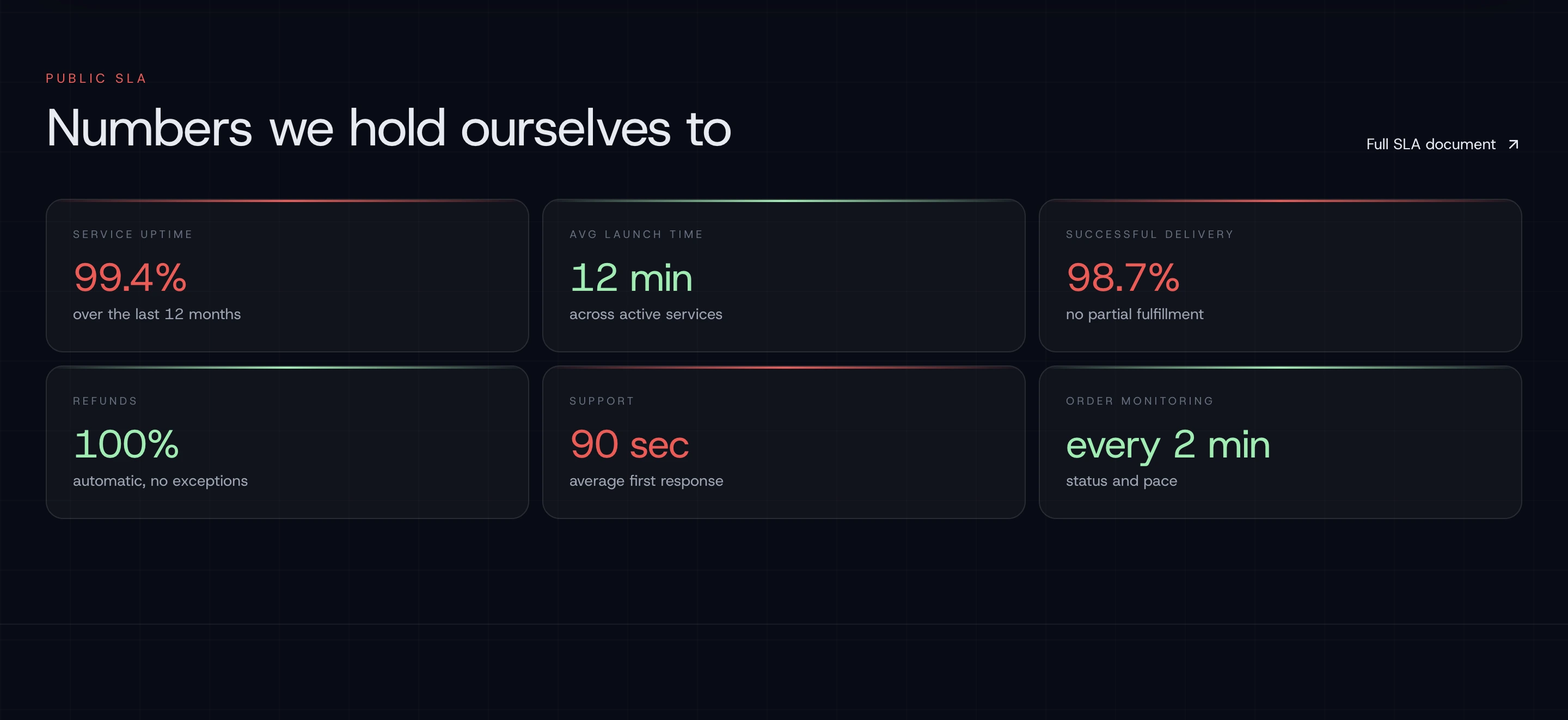
These controls make operational decisions visible and reviewable. They support the operator's process but do not replace its legal, payment-provider or third-party platform obligations.
Engineering Highlights
Catalog normalisation — a deterministic matcher maps changing provider records to a stable internal combination of platform, service type and plan. Clear matches update automatically; uncertain cases enter an admin review queue. Pricing integrity — provider cost and customer price are stored separately. Global, category, service and bundle rules can be overridden in the admin console, while checkout quotes are calculated and signed on the server. Operator UX — the admin console supports a searchable catalog of more than 1,200 records, keyboard-friendly pricing and balance controls, fast updates for low-risk actions and explicit confirmation wherever money or order status changes.
Project Context
H-Studio was the single technical delivery partner from initial scope and architecture through implementation, infrastructure setup and operator handover. The engagement covered the public product surface, authenticated workflows, backend services and the operational tools required to run the marketplace after launch.
What We Delivered
- Java Spring Boot backend with REST API, PostgreSQL, Redis, asynchronous jobs and audit middleware
- Next.js public website with platform landing pages, service catalog and search-indexable service details
- Customer dashboard for orders, balance, transactions, support and recurring rules
- Admin console for catalog sync, pricing, users, orders, payments, refunds and system settings
- Provider ingestion with deterministic matching and an exception review queue
- Server-side pricing engine with layered overrides and signed checkout quotes
- Idempotent payment, compensation and refund workflows
- Role-based access control and audit records for sensitive actions
- Operator documentation, infrastructure setup and technical handover
Result
The client launched one connected platform covering public discovery, customer ordering and the operations team's daily work. Routine catalog imports, pricing changes, user administration, order intervention, payments and refunds can now be handled through the admin console. Customer and operator actions use the same underlying service, order and payment records, reducing the risk of one surface drifting away from another.
Project Note
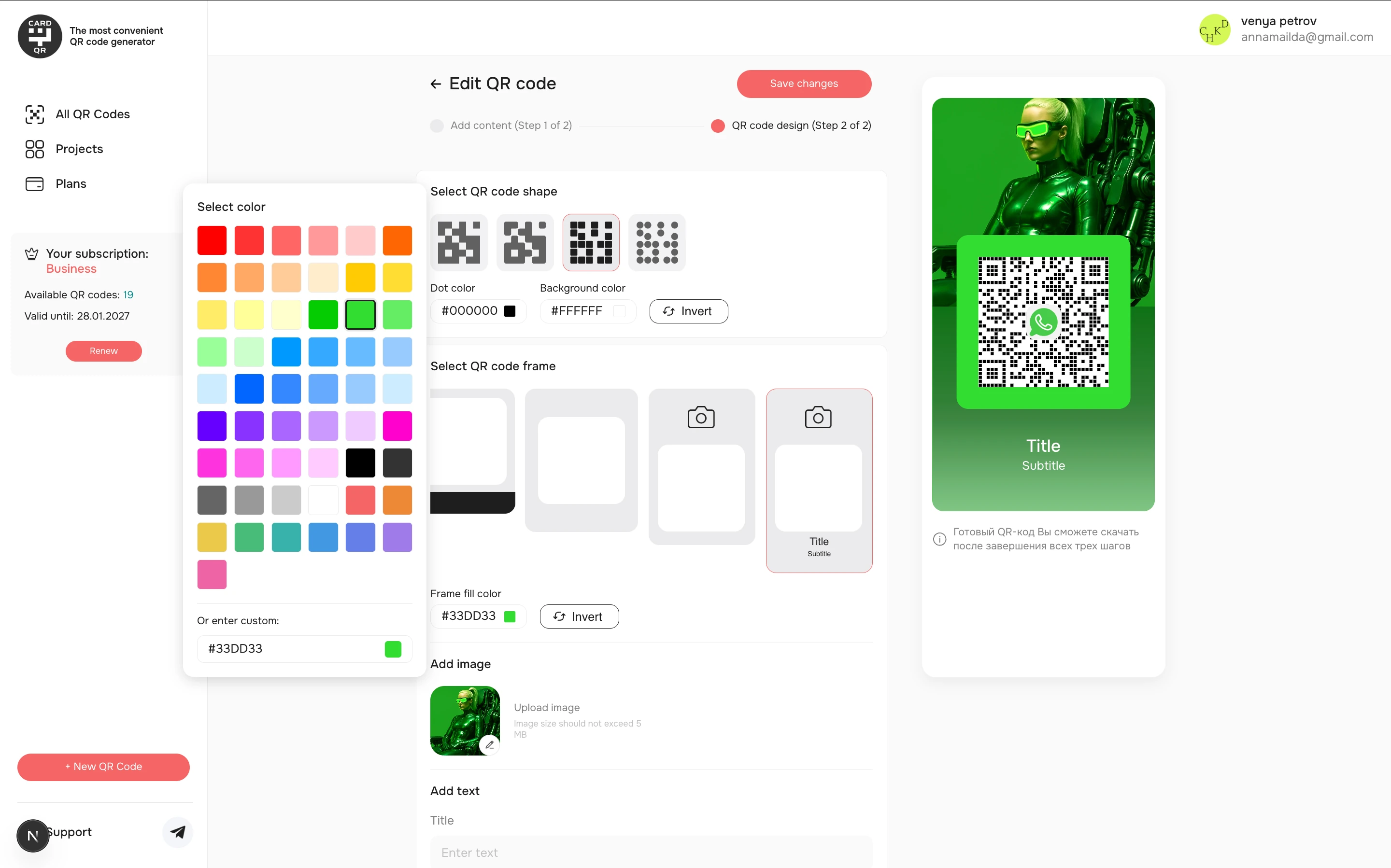
The platform is operated by an external client under a separate brand. H-Studio delivered the technical product specified by the client; business operations, third-party platform policies, payment-provider requirements and market-specific legal responsibilities remain with the operator. Screenshots were captured in a staging environment with mock data. Third-party names and marks, where visible, belong to their respective owners.
More platform screens
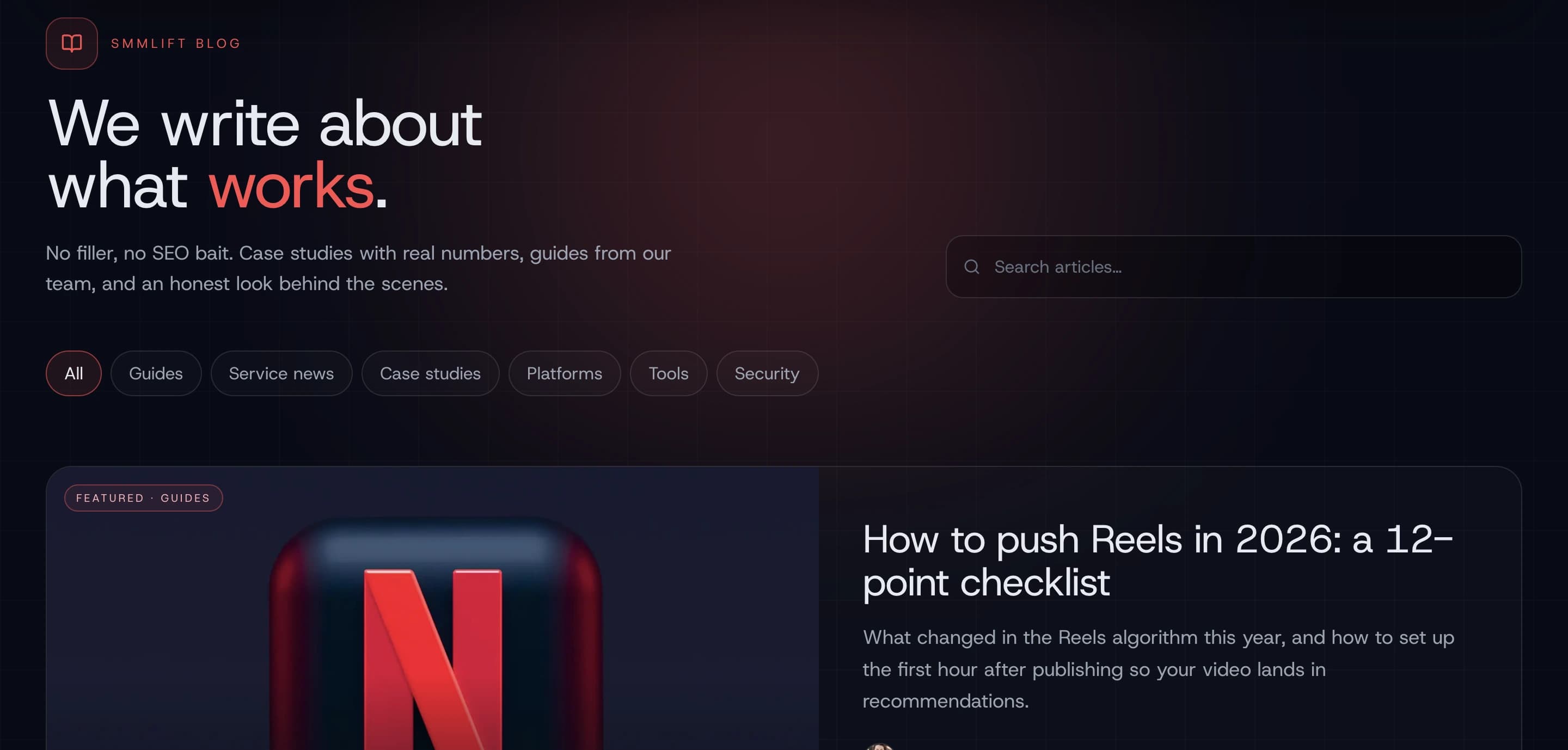
Selected views from editor, workflows, analytics and operations.