
01
Existing website migration with SEO risk
An indexed site needs to move platforms without losing organic visibility. We plan the URL inventory, redirect mapping and search-visibility continuity. Routes into SEO Migration & Relaunch.

Architecture-first website delivery for Hamburg-based B2B companies that need a more maintainable publishing platform, stronger lead-generation structure or a controlled SEO migration during a relaunch.
Where an existing TYPO3, WordPress or legacy CMS already carries valuable content and indexed URLs, we assess the safest path first: improve, upgrade, migrate or rebuild.
Hamburg's official business portal identifies logistics, maritime, and media & IT among the city's established economic clusters. Those sectors make complex publishing and enquiry journeys a relevant use case, although a company's actual CMS and migration needs must be assessed individually.
We deliver from Berlin and work with teams across the DACH region. Hamburg is relevant for us when a company needs a B2B website relaunch or a CMS migration handled with careful attention to existing content, URL structure and search visibility — not a generic redesign.
Most website projects begin with a specific problem rather than a wish for a "modern stack". Each path below routes into the service that actually does the work.
An indexed site needs to move platforms without losing organic visibility. We plan the URL inventory, redirect mapping and search-visibility continuity. Routes into SEO Migration & Relaunch.
A clearer structure for positioning, services and enquiries — built so the site can be edited and can generate qualified leads. Routes into Lead Generation Websites.
The content can stay, but the frontend is slow, hard to maintain or inconsistent. We address rendering, performance and the component layer. Routes into Frontend Development and React performance work.
Forms, portals or internal data need to connect to CRM and operational systems behind the site. Routes into Custom Platforms & Business Apps.
Hamburg B2B sites often run on a CMS that has carried content for years. TYPO3 v12 LTS reached the end of free community support on 30 April 2026, which forces a decision — but the next step is not automatically a headless rebuild. An in-place upgrade within TYPO3, extended support, or a migration to a different platform can each be the right answer, depending on the extensions you rely on, your editorial workflow, SEO risk, integrations and who needs to own the platform afterwards. If staying on TYPO3 is the better outcome, a specialist TYPO3 team may be the right fit, and we'll say so.
If the right answer is a TYPO3 upgrade rather than a platform change, we'll say so — and implementation may then be better handled by a TYPO3 specialist.
Before a relaunch touches live URLs, we work through the items that protect existing content and search visibility.
No responsible partner can guarantee zero ranking movement; this work is intended to reduce avoidable technical visibility loss.
Relevant H-Studio references for structured content, public-facing platforms and connected workflows. These are not presented as Hamburg CMS-migration case studies.
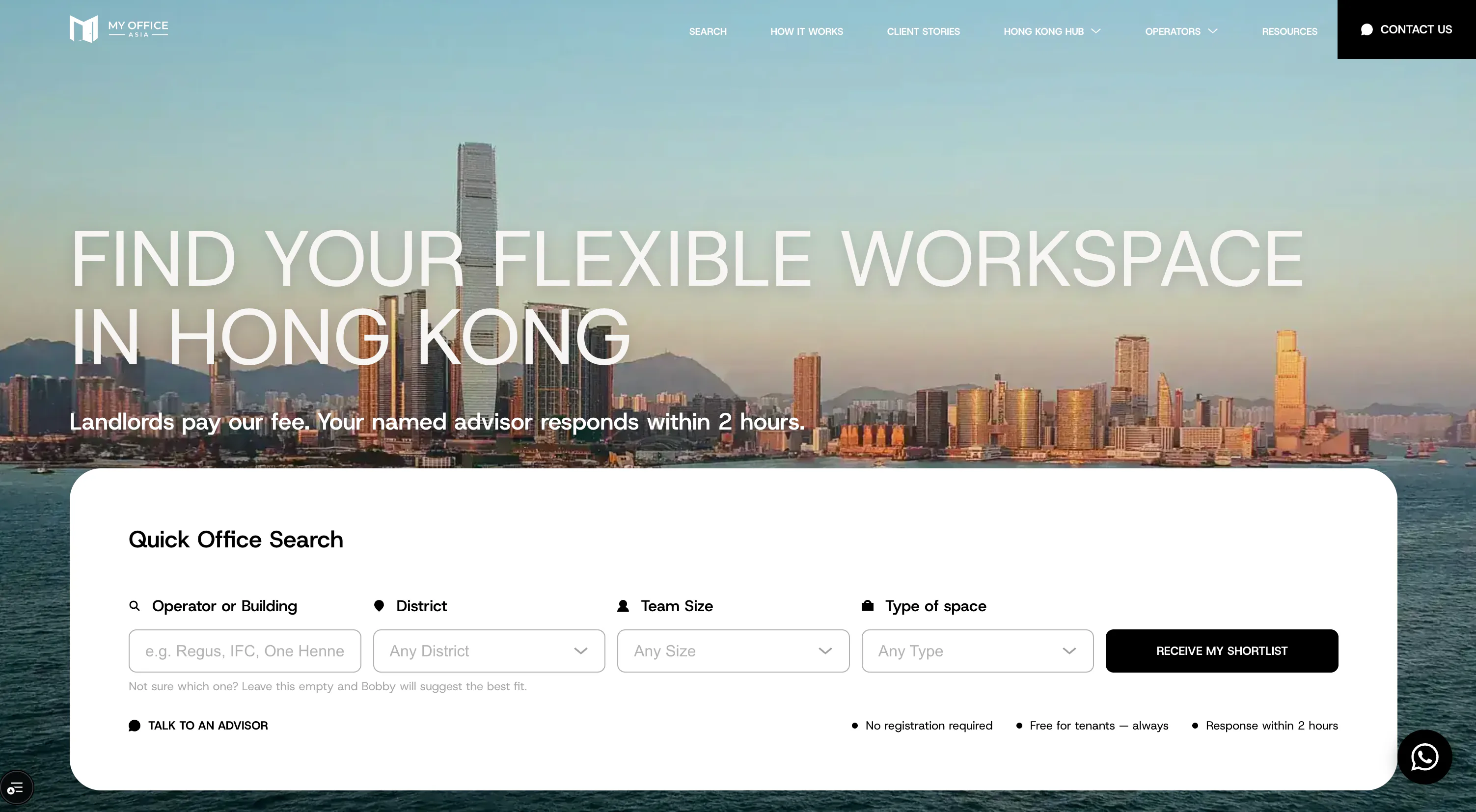 Digital Experience & Brand SystemsNamed client deliveryMy Office Asia - Flex Workspace Brokerage with Admin CMSBrokerage platform for Hong Kong's flex-office market with editorial catalogue, advisor positioning, white-label-ready architecture and a custom admin with AI-assisted editorial helper.Read case study →
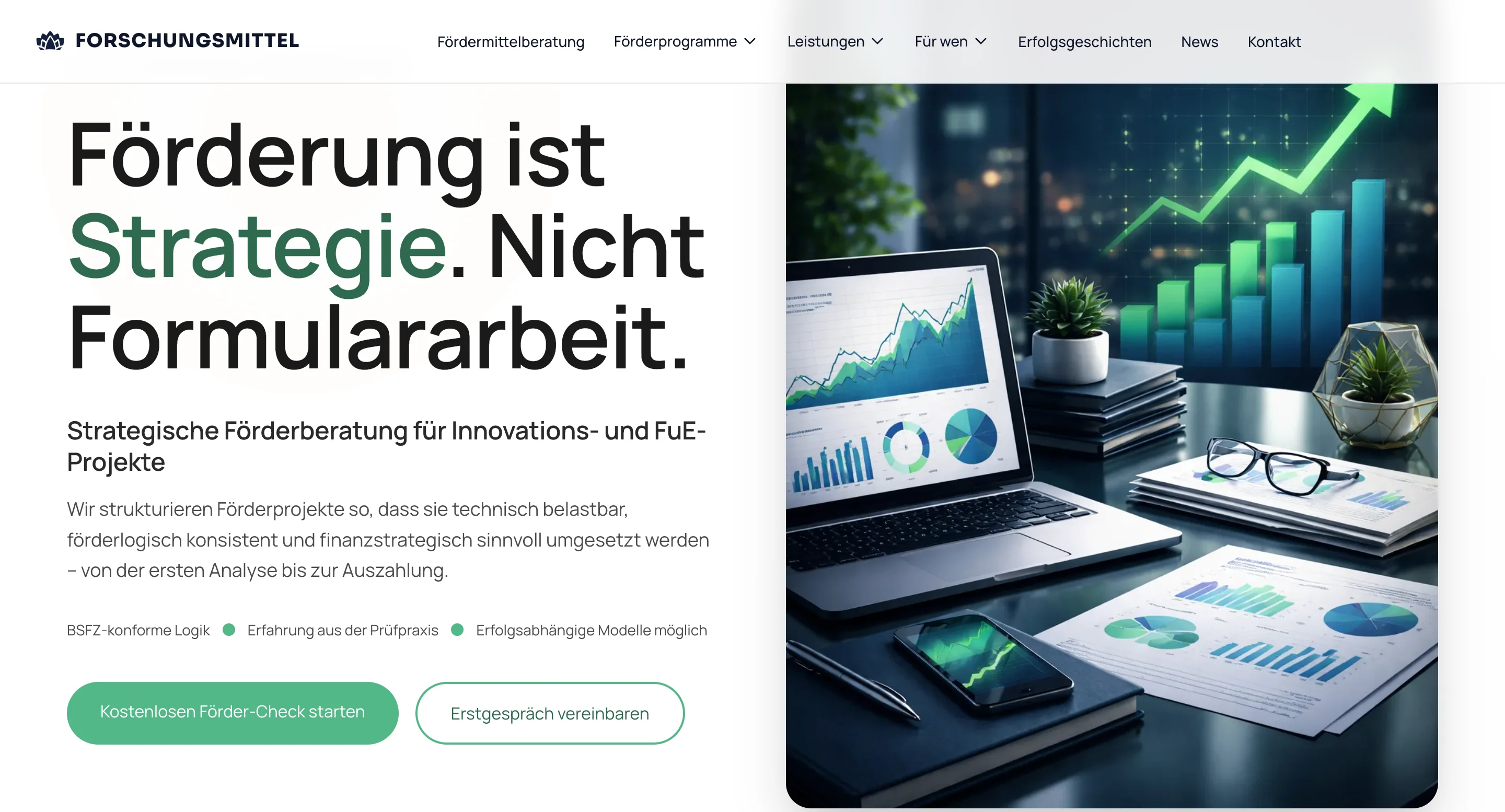 Digital Experience & Brand SystemsNamed client deliveryForschungsmittel.comB2B funding website and connected product platform with client dashboard, team workspace, document workflow, and operational command center.Read case study →
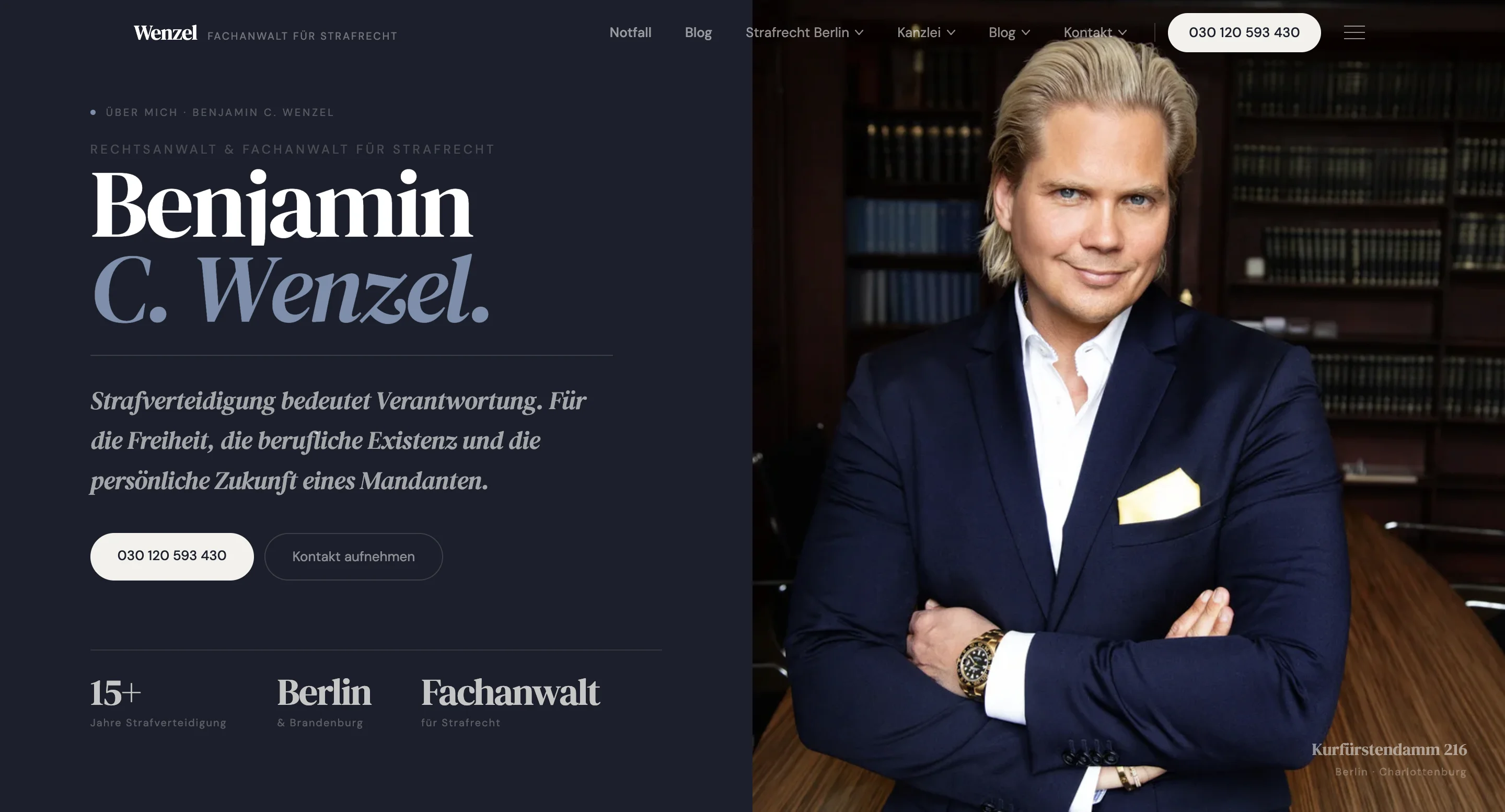 Digital Experience & Brand SystemsNamed client deliveryBenjamin C. Wenzel - Criminal Defense Digital PlatformCriminal defense digital platform with public authority layer, structured case intake, protected client portal, internal case workspace, document workflows, billing state and traceable case events.Read case study →
Yes. We're based in Berlin and work with B2B teams across the DACH region, including Hamburg. Discovery, reviews and delivery run remotely, with on-site sessions arranged where a project genuinely benefits from them.
Yes. We start by reviewing the current platform, content model, URL structure, integrations and editorial workflow, then recommend whether to improve the existing site, upgrade the CMS, migrate to a different platform or rebuild. The recommendation reflects your situation, not a fixed preference for any one stack.
We plan relaunches around a URL and indexed-page inventory, old-to-new URL mapping, redirect, canonical and sitemap handling, and post-launch monitoring in Search Console. This is intended to reduce avoidable technical visibility loss — but no responsible partner can guarantee zero ranking movement, and we don't claim to.
It depends on the extensions you rely on, your editorial workflow, integrations, SEO risk and who needs to own the platform afterwards. For TYPO3 specifically, an in-place upgrade, extended support or a migration can each be the right answer. If staying on TYPO3 is the better outcome, a specialist TYPO3 team may be a better fit than us, and we'll say so.
Yes. For genuinely multilingual sites we plan locale URL structure, hreflang continuity, translation workflow and the CMS fields and roles your editors need, so language expansion stays manageable rather than duplicated by hand.
Yes. We connect enquiry forms to CRM or operational systems — HubSpot, Pipedrive, Salesforce or a custom backend — with server-side validation, GDPR-aware data flows and structured lead state, so enquiries land somewhere your team can actually work them.
Tell us about the current site, the content it carries and what the relaunch needs to achieve. We'll assess the safest path — improve, upgrade, migrate or rebuild — and where the real work belongs. Based in Berlin, serving B2B teams across DACH including Hamburg.