
H-Studio logo
Start a project

Next.js frontends engineered for what comes after launch

Frontends with Core Web Vitals that survive content growth, SEO architecture that doesn't break under iteration, and accessibility-aware implementation prepared for future German / EU compliance review — not just for the demo.

01  ·  What We Build

What we build

01

React & Next.js application development

Next.js / React / TypeScript development · SSR, SSG, ISR or client-side rendering where appropriate · Component-driven architecture · Forms, tables, workflows and product screens · Accessibility-aware components · Frontend structure that future engineers can maintain
02

Product UI engineering

Tailwind CSS and custom design systems · Multi-step onboarding and advanced forms · Interactive dashboards, tables and filters · Rich content blocks and inline editing where needed · Responsive UI across desktop, tablet and mobile · Motion and micro-interactions where they support usability

03

Dashboards & client portals

Admin dashboards with operational data · Partner or client portals with secure access · Multi-role and multi-tenant interfaces · Charts, tables, filters and reporting views · Internal tools for operations, finance, support or sales · UI structure that can grow with the product

04

Frontend integrations

REST, GraphQL, WebSocket or SSE APIs · Authentication and session flows · Payment, CMS and analytics integrations · File upload flows for images, PDFs or documents · Responsive image and media optimisation · Integration with backend, CRM or internal systems

05

SEO & performance optimisation

Metadata and structured data setup · Dynamic sitemaps and routing logic · Core Web Vitals and Lighthouse improvements · Rendering strategy tuned for SEO and UX · Bundle size reduction and code splitting · Caching and image optimisation where needed

02  ·  Product surfaces

Typical product surfaces

01

Typical product surfaces

  • SaaS dashboards
  • Client and partner portals
  • Admin panels and internal tools
  • Marketplace interfaces
  • Lead-generation websites and landing systems
  • Editorial catalogues and content platforms
  • Data-heavy reporting interfaces
03  ·  When It Fits

When you need frontend development for product UIs

Choose this service if you need:

  1. A production frontend for a SaaS product, portal or internal platform

  2. A scalable component architecture and design system

  3. Complex UI state management and predictable data flows

  4. Dashboards, admin panels and role-based user interfaces

  5. Modernisation of a legacy frontend without a full rewrite

  6. A frontend codebase designed for long-term team velocity

  7. Frontend engineering tightly aligned with backend and API architecture

04  ·  Why Teams Choose Us

Why teams choose our frontend delivery

  • Product UI built around real workflows, not only static screens
  • Strong focus on performance, accessibility and Core Web Vitals
  • Senior React/Next.js engineering with direct collaboration
  • Frontend architecture aligned with backend, APIs and data models
  • Maintainable component structure for long-term product work
  • Clear communication, weekly demos and visible delivery progress
  • SEO-aware rendering and routing where the frontend is public-facing
  • No outsourcing chain or junior handoff
Default frontend stack

What we ship by default — and what we add where it's actually justified

Default stack
  • Next.js / React / TypeScript
  • Tailwind CSS
  • TanStack Query for server state
  • React Hook Form + Zod for complex forms
  • Custom design-system components, or shadcn/ui where it fits
Where justified
  • MUI, Radix or Mantine when an existing design system is already in place
  • Zustand or Jotai for local UI state where context is too heavy
  • Redux Toolkit only when complexity genuinely justifies it
  • Framer Motion or GSAP when motion supports usability — not for decoration
  • Playwright + Vitest + Testing Library where testing is in scope; Storybook for component documentation
Frontend modernization

Stuck on React 16, Vue 2, CRA or legacy jQuery? We modernize in place.

Common engagement: the previous team built on React 16 with class components, CRA's webpack 5 is failing, Vue 2 is reaching end of life, or a jQuery and server-rendered stack can't ship new features anymore. We modernize without rewriting from scratch — strangler-pattern migration where new pages ship on the modern stack while the old codebase keeps running.

  • React 16 / class components → modern hooks + functional components
  • CRA → Next.js (preferred) or Vite
  • Vue 2 → Vue 3 or Next.js migration
  • jQuery legacy → modern stack with shared session / auth
  • Frontend rescue after team departure
Performance targets we design for

Targets we design for, measured per project

  • LCP under 2.5s — official Core Web Vitals 'good' threshold
  • CLS under 0.1 — layout stability target
  • INP under 200ms — interaction-responsiveness threshold
  • Lighthouse 90+ on Performance, Accessibility and SEO where the project supports it
  • Bundle weight reduction proportional to the starting state — we measure first, then commit to an expected delta

These are targets we design for in strong-fit cases, not guarantees. Real outcomes depend on starting codebase, integrations, third-party scripts, content patterns and operational constraints. We share the realistic expected delta after the audit, not before.

Featured cases

Founder-relevant case studies

Full case library
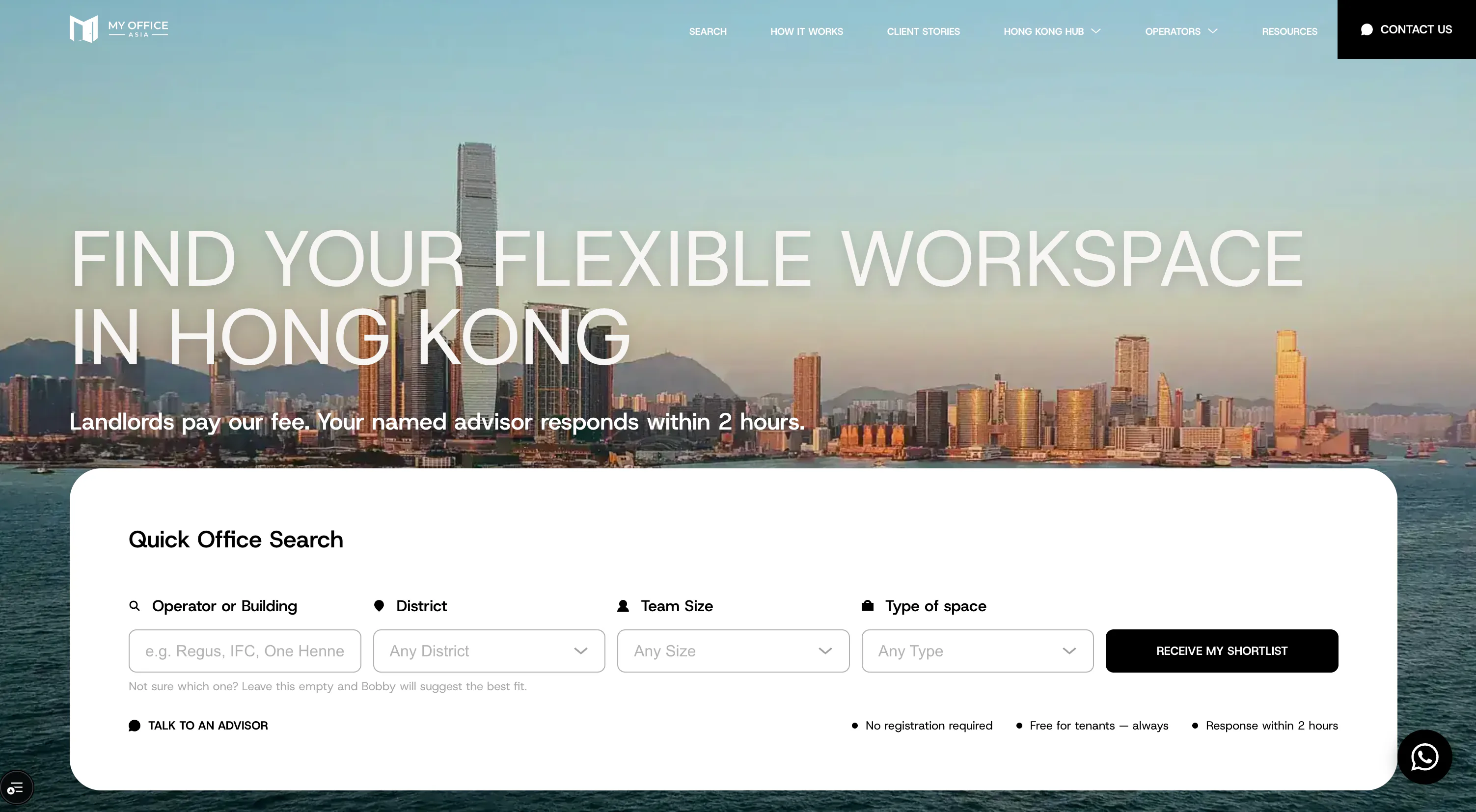
  1. 01My Office Asia  -  Flex Workspace Brokerage with Admin CMSDigital Experience & Brand SystemsMy Office Asia - Flex Workspace Brokerage with Admin CMSBrokerage platform for Hong Kong's flex-office market with editorial catalogue, advisor positioning, white-label-ready architecture and a custom admin with AI-assisted editorial helper.Read plate
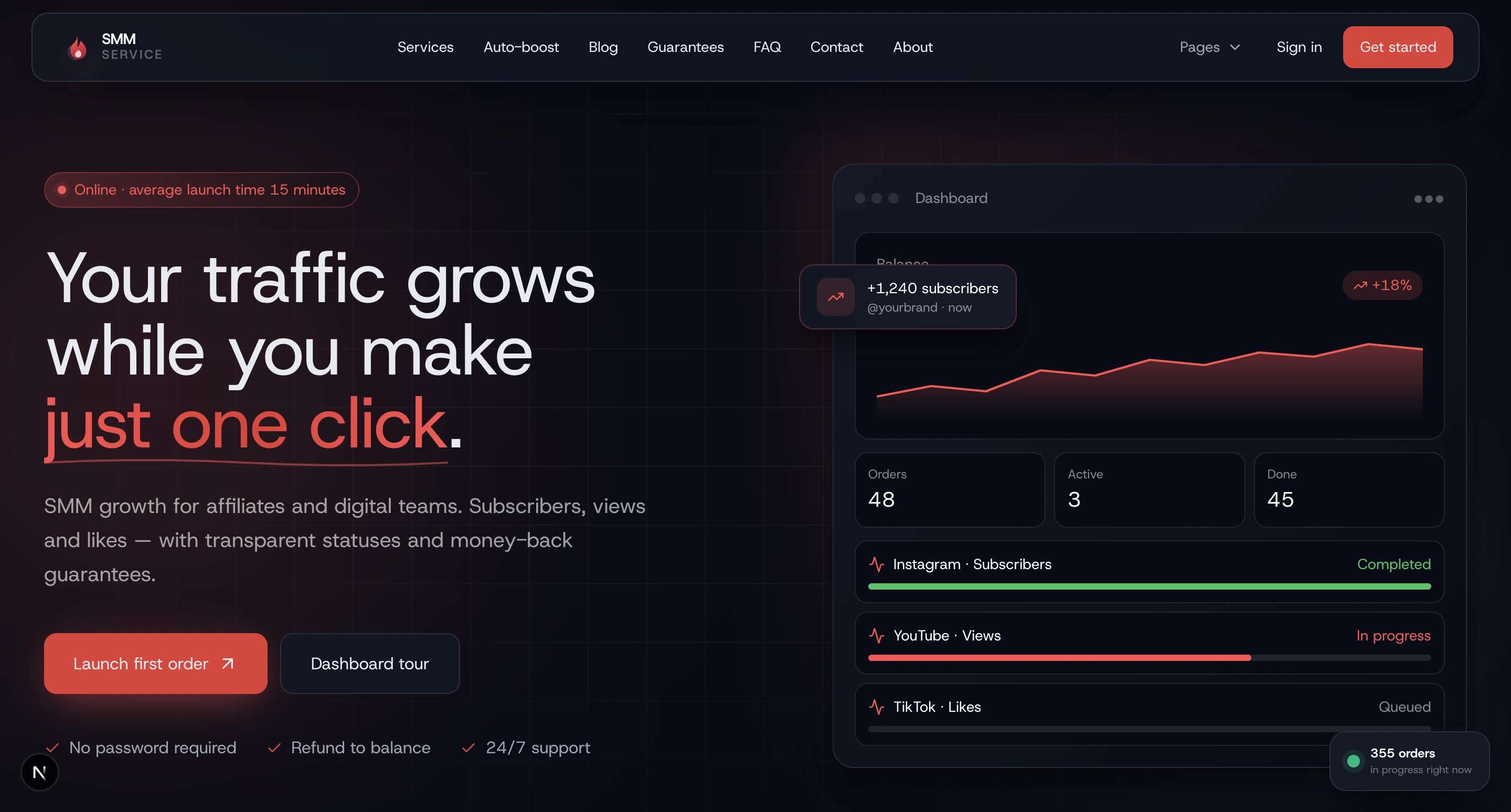
  2. 02Creator Marketing Platform  -  Engagement Services MarketplaceStartup EngineeringCreator Marketing Platform - Engagement Services MarketplaceEnd-to-end engineering for a multi-tenant creator marketing platform: Java Spring backend, Next.js dashboard, admin console, and a provider-aggregated catalog of 1,200+ services across thirteen platforms.Read plate
  3. 03Web Page Generator  -  SaaS Publishing Platform for QR & URL CampaignsStartup EngineeringWeb Page Generator - SaaS Publishing Platform for QR & URL CampaignsSaaS publishing platform for generating dynamic web pages connected to QR codes and custom URLs, with structured page management, campaign logic, and admin-controlled publishing workflows.Read plate
  4. 04Forschungsmittel.comDigital Experience & Brand SystemsForschungsmittel.comB2B funding website and connected product platform with client dashboard, team workspace, document workflow, and operational command center.Read plate
Frontend in crisis?

If the React app is broken in production and the team is gone

Conversion dropped, no senior React engineer left, the codebase is in a state nobody can debug — that's a rescue, not an optimisation sprint. See Software Rescue for the 48-hour triage flow.

Software Rescue & Take-over
FAQ

FAQ

  1. React, Next.js and TypeScript are our main frontend stack. We can work with other frontend environments when needed, but we usually recommend React/Next.js for SaaS products, portals, dashboards and SEO-sensitive product surfaces where maintainability and performance matter.

  2. Yes. We build dashboards, client portals, admin panels and internal tools with role-based access, complex tables, forms, reporting views, charts, filters and backend/API integration.

  3. Yes. We can improve Core Web Vitals, bundle size, rendering strategy, image handling, caching, data fetching and expensive component render paths. We measure before changing architecture, so optimisation work is tied to real bottlenecks.

  4. Yes. We integrate frontends with REST, GraphQL, WebSocket or custom APIs. We can also help clarify API contracts when the frontend and backend are not aligned.

  5. Yes. We can build multilingual frontend structures with locale-based routing, translated content models, hreflang, metadata and CMS workflows. This is especially useful for DACH/EU websites, portals and content-heavy platforms.

  6. Yes. We can refactor or rebuild frontend layers gradually: component structure, routing, state management, data fetching, performance and design-system consistency. A full rewrite is not always necessary.

  7. Next.js (default for SaaS, portals and SEO-sensitive products), Astro for content sites, React Native only when offline support or push notifications justify it. Vue, Svelte and Angular: consultative review only, not implementation — we're React-first and won't pretend otherwise.

  8. Yes. Figma-to-code workflow, Storybook component documentation, design tokens implemented from your design system. We expect a working component spec; we don't replace the design team.

  9. Common engagement. Strangler-pattern migration: new pages ship on the modern stack (Next.js + functional components) while the old codebase keeps running. Class components convert to hooks page-by-page. See the Frontend modernization section above for typical migration paths.

  10. We work from your Figma. Design tokens, components and flows live in your design system; we implement them into Next.js / React with Storybook for component documentation. We don't replace the design team — we expect a working component spec, and we collaborate on edge cases, micro-interactions and accessibility decisions where the spec doesn't reach yet.

  11. Yes — this is a common path. We build the new frontend against the existing backend API contract, often improving the contract incrementally (OpenAPI schema, error model, pagination) alongside the rebuild. The backend stays in production while the new frontend ships page-by-page or area-by-area, and the old frontend is decommissioned once parity is reached.

  12. Often yes. The first step is measurement — Web Vitals from real user monitoring, bundle analysis, render-path review, image and asset audit. Many CWV issues are solvable with targeted fixes (lazy loading, code splitting, image strategy, caching, render-path cleanup) rather than a rebuild. We commit to a realistic expected delta after the audit, not before.

  13. We're a senior product engineering team, not staffing. We design the frontend architecture (component model, state strategy, data fetching, routing, performance budget) and ship it as a coherent system. A solo frontend developer is a hire — they execute features within the architecture someone else owns. We're the right fit when the architecture itself needs senior thinking; we're the wrong fit when you just need a pair of hands for a defined backlog.

Adjacent plates

Related services

  1. 01Web development agency for B2B websites and lead systemsWeb development agency for B2B websites and lead systems with Next.js, headless CMS, CRM-routed forms, SEO architecture ...Open
  2. 02Client Portals & Dashboard DevelopmentSecure client portals, admin dashboards and internal systems for teams that need role-based access, operational clarity ...Open
  3. 03MVP development services for SaaS, portals and platformsMVP development services for SaaS, portals and platforms: backend logic, billing, admin workflows, deployment and clean ...Open
  4. 04Backend development for products that need reliable foundationsBackend development for SaaS products, portals and custom platforms — Java, Spring Boot and Node.js architecture, APIs, ...Open
  5. 05API development for products and partner integrationsREST API and GraphQL schema development for products and partner integrations — clear contracts, access models, document...Open
Related articles

Keep reading from the blog.

More insights and best practices on this topic.

View all articles

H-Studio builds React, Next.js and TypeScript frontends for SaaS products, dashboards, client portals, internal tools and content-heavy platforms. We focus on product UI architecture, performance, accessibility, data flow, backend integration and maintainable component systems that teams can continue to build on.