H-Studio logo
Start a project
H-Studio Berlin

Analytics that the founder, head of sales and product manager all agree with

Analytics & reporting architecture for B2B products and operations — event tracking, source-of-truth decisions, CRM/product/payment data flows and dashboards that give product, sales, marketing and operations a single version of the numbers. GDPR-aware, EU-hosted. Default focus is reporting reliability, not enterprise data engineering.

Where most analytics problems live

Most analytics problems are not engineering — they are source-of-truth

Different teams measure 'active users' differently. Sales reports €500k MRR; product reports €480k. Marketing thinks 60% of leads come from organic; CRM data says 40%. Before we build anything, we map which system owns which metric — usually CRM for revenue, product DB for usage, payment provider for cash, marketing-automation for engagement. After that, dashboards stop arguing because everyone agrees on the rules.

  • Per-metric source-of-truth decisions documented and enforced in the schema
  • Audit trail for metric definitions (what 'active' means, when it changed)
  • Reconciliation jobs that surface mismatches loudly, not silently
  • Clear ownership per metric across product, sales, marketing, finance
01  ·  What we build

What we build

01

Event tracking & product analytics

A structured tracking setup for websites, SaaS products, portals and internal tools. · Page views, sign-ups, onboarding and feature usage · Funnel and conversion events · User journey and product behaviour tracking · Error and performance signals where useful · Marketing source and campaign data where consent allows · Clear event naming and tracking documentation · Tools: GA4, Plausible, PostHog, Supabase / Postgres events, Vercel Analytics, Sentry, Custom event tracking · You get documented events and tracking logic your team can maintain.

02

Data pipelines & integrations

We connect product, CRM, payment, website and operational data into reliable reporting flows. · CRM data from HubSpot, Pipedrive, Salesforce or custom systems · Payment and subscription data from Stripe, Paddle or other providers · Website and product analytics · PostgreSQL, Supabase or other application databases · Scheduled or near-real-time sync where needed · Data cleaning, mapping and validation rules · Other systems (e.g. Zoho, SugarCRM, Odoo) integrated where the client uses them · Your team gets reporting data that is easier to trust, trace and maintain.

03

Reporting database or warehouse setup

We choose the right place for reporting data based on product stage, query needs and team ownership — default to the simplest option that works. · Default: PostgreSQL for early-stage reporting (often enough until ARR is material) · ClickHouse for fast analytics workloads when row volume justifies it · BigQuery EU multi-region where serverless warehouse infrastructure makes sense · Supabase where it already fits the product stack · Data modelling for dashboards and reports · Access control and backup considerations · Where justified: dbt for SQL transformations and reporting models · Where justified: reverse ETL (Hightouch / Census) for data → tool activation · Snowflake or Databricks only for enterprise scale that we don't typically serve — usually a redirect, not our scope · Reporting data lives in a place that matches the team and the product, not a default trend. Heavy ELT vendor consolidation (Airbyte / Fivetran / Stitch at scale) is specialist territory.

04

Dashboards & reporting systems

Dashboards for founders, product, sales, marketing and operations teams. · Founders · Product teams · Operations · Sales · Marketing · Tools: Metabase, Looker Studio, Grafana, Custom dashboards in Next.js where BI tools are not enough · Metrics: Usage metrics and activation funnels, Conversion and lead-quality reporting, Retention, cohorts and revenue metrics, Operational KPIs and workflow reporting · Dashboards answer specific product, sales, marketing or operations questions.

05

Automated reports & alerts

Automation on top of reliable data — only where the underlying tracking is good enough. · Automated weekly or monthly reports · Alerts for unusual changes in key metrics · Simple forecasts where data quality supports them · Revenue or pipeline summaries · Product usage digests · Human-readable explanations for operators or founders · Automation built on data the team can already trust.

06

Data governance & access control

Data systems should be understandable, restricted and maintainable. · Clear source-of-truth decisions · Access control for dashboards and datasets · GDPR-aware tracking and retention logic · Consent-aware analytics where needed · Logging for important data jobs · Documentation for events, pipelines and reports · Data systems your team can maintain after handover.

02  ·  Process

How we work

  1. Step 01

    Step 01 — Audit & mapping

    We review current tracking, databases, CRM, analytics tools, dashboards and the business questions the data should answer.

  2. Step 02

    Step 02 — Data architecture

    We define events, sources of truth, pipeline logic, reporting models, warehouse or database structure and dashboard requirements.

  3. Step 03

    Step 03 — Implementation

    We implement tracking, integrations, pipelines, dashboards and validation checks.

  4. Step 04

    Step 04 — Automation & monitoring

    We set up automated reports, alerts, job monitoring and error visibility where needed.

  1. 05
    Step 05 — Handover & iteration

    We document events, pipelines, dashboard logic and ownership so the setup can evolve as the product grows.

03  ·  Why it matters

Why data engineering matters

  • Key product and business events are defined before they are tracked
  • Metrics are calculated consistently instead of differently in every dashboard
  • Teams can trace where important numbers come from
  • Product, marketing, sales and operations can work from shared reporting logic
  • Data issues become visible earlier, before decisions are made on broken numbers
Where you are right now

Five buyer states for data engineering

01

Early-stage SaaS

PostHog + Supabase events, no warehouse needed yet. Don't over-engineer.

02

Growth-stage SaaS

ClickHouse or BigQuery, dbt for transformations, first reverse-ETL flows.

03

B2B with sales + marketing

CRM + product + payment unification, attribution focus, server-side tracking under EU consent.

04

Operations-heavy business

Operational dashboards, not product analytics. Inventory, dispatch, capacity planning.

05

Inherited mess

Tracking audit + cleanup before automation. Often the right starting point — most analytics rebuilds skip this and rebuild the mess.

Data engineering work we shipped

Where source-of-truth decisions shaped the architecture

Selected builds where event tracking, source-of-truth decisions or reporting architecture defined the project.

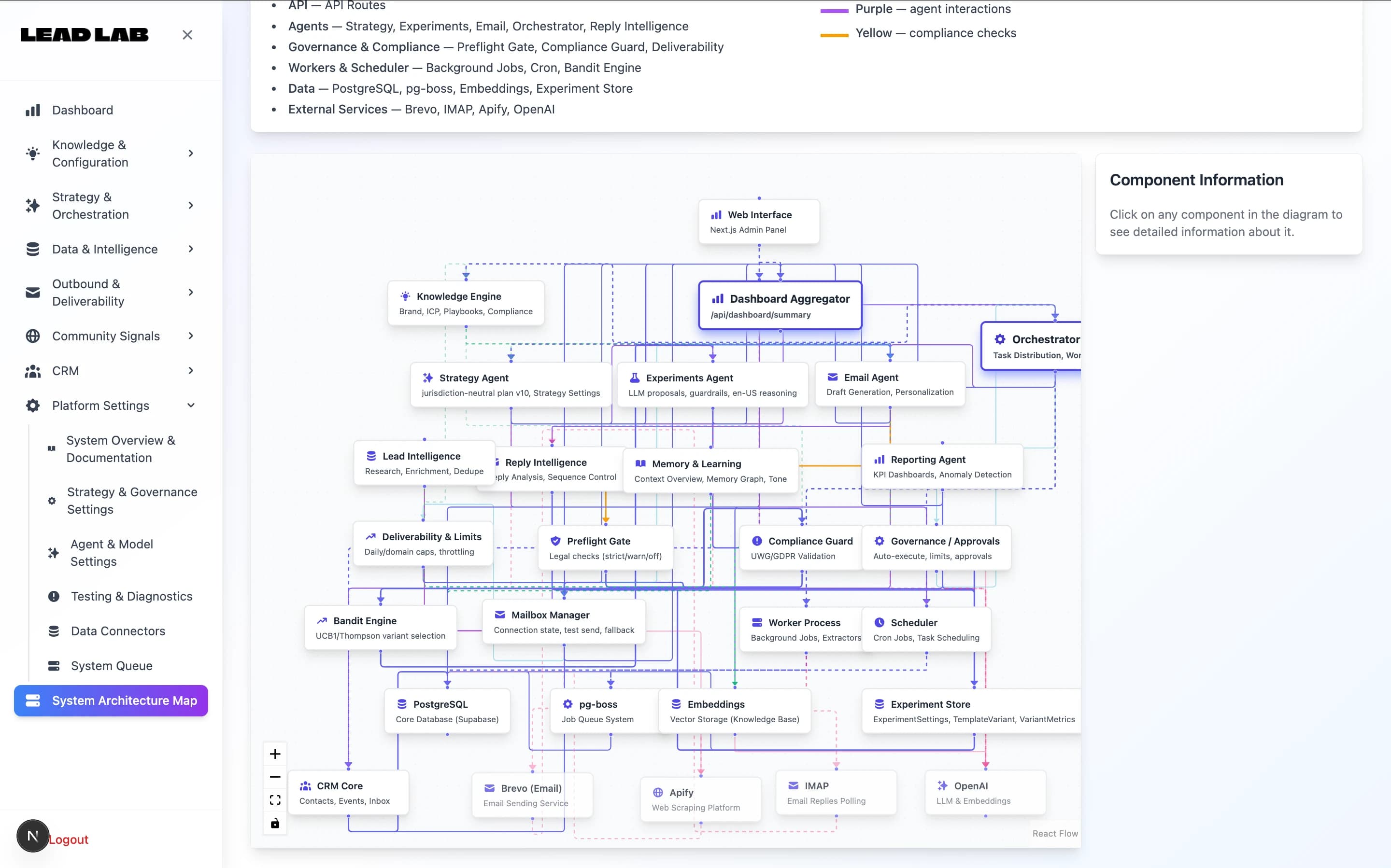
Lead Lab  -  B2B Revenue Operations Platform with Automation & Intelligence FeaturesStartup Engineering

Lead Lab - B2B Revenue Operations Platform with Automation & Intelligence Features

  • Starting point

    B2B revenue ops with no source of truth — sales numbers, product usage and finance reports disagreed across systems.

  • What we did

    Built a unified data layer where CRM owns revenue, product DB owns usage, payment provider owns cash — and the operational platform reconciles them with explicit decisions about which system is authoritative per metric.

  • Result

    Reporting stopped arguing. Operational reporting moved off manual spreadsheet reconciliation. Analyst time reallocated from data wrangling to actual analysis.

Read full case
Vulken FMEnterprise-Grade Foundations

Vulken FM

  • Starting point

    Field operations and admin reporting depended on fragmented inspection workflows and disconnected data sources.

  • What we did

    Built operational data layer with structured asset records, mobile-captured inspection events and admin reporting. Single data model from field to admin.

  • Result

    Operational data queryable and reportable; field decisions backed by data instead of memory.

Read full case
Forschungsmittel.comDigital Experience & Brand Systems

Forschungsmittel.com

  • Starting point

    Client-facing workflows, internal operations and public marketing tracking lived in disconnected analytics tools with conflicting numbers.

  • What we did

    Built a unified operational platform with consistent event tracking across public site, client portal and internal workspace — same identity model, same data warehouse, single source of truth per metric.

  • Result

    Team operations consolidated into a unified data layer with audit trail and clear metric ownership.

Read full case
DACH analytics specifics

EU consent and data residency change analytics fundamentals

Low or uneven consent rates often leave cookie-based dashboards incomplete. Privacy changes in browsers and mobile platforms make campaign attribution less reliable. Consent requirements still apply regardless of where tracking runs — server-side tracking can improve reliability and control, but it must be designed around GDPR/TTDSG consent rules, not as a way around them. EU data residency matters for warehouse choice when sensitive data is involved — BigQuery EU multi-region, Hetzner-hosted PostgreSQL or ClickHouse, EU-hosted analytics providers.

  • Server-side tracking via your own infrastructure where it improves reliability — not as a consent workaround
  • First-party data captured at form submit and product events, not inferred from URL parameters alone
  • BigQuery EU multi-region or Hetzner-hosted ClickHouse / PostgreSQL where data residency matters
  • Consent-aware analytics that don't break under GDPR-strict configurations
  • Honest reporting that flags missing data instead of imputing it
Engagement shape

Typical analytics & reporting engagement

Event tracking audit + cleanup2–4 weeks · typically €5–15k
Data pipeline + reporting setup6–12 weeks · typically €20–50k
Warehouse + dashboards build8–16 weeks · typically €30–70k
Custom analytics platform12–24 weeks · from €50k
Ongoing analytics partnershipfrom €3,000/month

Indicative B2B ranges, plus VAT where applicable. Custom analytics platforms with reporting UI, multi-source pipelines and operational dashboards typically scope above €50k; smaller setups (warehouse + dashboards on existing tools) sit in the lower tiers.

When this is not the right service

Where we redirect rather than take the project

  • Just GA4 setup

    If you only need someone to set up Google Analytics 4 properly, that's a €2–5k task — freelance territory, not consultancy scope.

  • Enterprise Snowflake migration with $500k+ contract

    Not our scale. Big 4 consultancies or specialist data-engineering shops are better positioned for that procurement and team size.

  • Real-time streaming with sub-100ms latency

    Heavy Kafka / Flink territory. We redirect to specialist streaming consultancies.

  • Custom ML / AI predictive analytics

    Predictive modelling and ML training is specialist work. We build the data foundation ML projects need, but not the models themselves — see AI Automation for AI features inside platforms.

FAQ

FAQ

  1. Not always. Under roughly €1M ARR or low data volume, PostgreSQL with materialised views + PostHog/Plausible/Metabase covers most needs. A dedicated warehouse (BigQuery, ClickHouse) pays back when product analytics + finance + CRM need to join data, when row volume saturates PostgreSQL query speed, or when reporting complexity justifies it. We help you decide in the architecture sprint.

  2. A focused tracking and dashboard setup can take 2–4 weeks. More complex data pipelines, warehouse setup or multi-source reporting usually take 4–8+ weeks depending on data sources, event quality, integrations and dashboard scope.

  3. Yes — tracking audit + cleanup is a common entry engagement (2–4 weeks, typically €5–15k). We document what is instrumented, identify gaps and conflicts (missing events, duplicates, misleading definitions, stale fields), and propose either a fix-in-place or a clean restart depending on how broken the current setup is.

  4. It depends on the product stage and team. Common options include GA4, Plausible, PostHog, Sentry, PostgreSQL, Supabase, ClickHouse, BigQuery, Metabase, Looker Studio and custom Next.js dashboards. We choose tools based on maintainability, cost and who will own the setup after handover.

  5. We can design GDPR-aware tracking, consent logic, retention rules and EU-friendly hosting choices where relevant. The exact setup depends on the data collected, analytics tools used and legal requirements of the business.

  6. Yes. We can connect CRM, payment, subscription, product and website data where API access and project scope allow it. The key is deciding which system is authoritative for each metric before building dashboards.

  7. Yes. We can build dashboards in tools like Metabase or Looker Studio, or create custom dashboards in Next.js when the reporting needs to be part of the product or internal platform.

  8. Internal Tools are operational software (admin panels, ops workflows). Analytics & reporting architecture is the data layer underneath — event tracking, pipelines, source-of-truth decisions, reporting architecture. Some engagements touch both.

  9. Depends on team and budget. PostHog (EU option) is generous on the free tier and good for early-stage; Amplitude has the deepest product-analytics features at enterprise tier; Mixpanel sits between. We're vendor-neutral; we pick based on your situation, not partner economics.

  10. We don't build custom ML models for prediction or forecasting — that's specialist territory. We do build the data architecture that ML projects need (clean event data, feature engineering pipelines, source-of-truth decisions) and integrate with cloud ML services (Vertex AI, SageMaker) where applicable.

Get started  ·  011

Let’s build what
moves you forward.

From product idea to production system — we help you define, build and hand over software your team can run.

Studio
H-Studio Berlin
Senior delivery · DACH region
Contact
hello@h-studio-berlin.de
+49 176 41762410
Office
Schmidstraße 2F-K
10179 Berlin