Payment, billing and transaction architecture — without becoming a bank
Backend systems for payment flows, billing, marketplace transactions and operational records — for SaaS and platforms that need transaction integrity without becoming a regulated bank.
Five shapes cover most payment, billing and transaction-workflow engagements:
01Payment & PSP integrationsPayment flows with Stripe, Adyen, Mollie or other PSPs, designed with clear transaction state, webhook handling, idempotent retries and reconciliation logic. Money-related events are modelled explicitly, so refunds, failed payments, subscriptions and booking payments do not become hidden side effects.
02Billing, subscriptions & invoicing logicRecurring billing, usage-based pricing, invoice workflows, payment status tracking, customer account states and admin-side financial operations for SaaS, portals and marketplaces. We design billing as part of the product model, not as an afterthought attached to checkout.
03Marketplace transaction workflowsMulti-role transaction flows for platforms where customers, vendors, creators, operators, agencies or internal teams interact around money, fulfilment and approvals. Includes payment intent logic, transaction records, payout preparation, role-based visibility, dispute states and operational dashboards.
04Audit trails, reporting & operational recordsStructured records for money-adjacent workflows: who changed what, when, why, and how the system state moved. Useful for investor review, partner due diligence, internal finance, GDPR review and operational handover — without pretending every project is a regulated bank.
05PSP migration — Stripe → Adyen, Mollie → StripePSP migration planning and execution where provider capabilities allow — with parallel run, customer record mapping, historical data preservation and a clear fallback plan. Payment method and mandate portability depends on PSP, scheme, region, card-network rules, SEPA mandate consent and token portability, so we scope what is actually movable up front rather than promising 'no losses' as a universal. Most teams attempt this once their original PSP no longer fits volume, cross-border or regulatory needs.
Audience
Who this is for
We're a fit when:
01You are building a SaaS product, marketplace, portal or business platform where payment, billing or transaction logic is central
02Your current payment or billing setup works, but reconciliation, refunds, failed payments or admin visibility are becoming messy
03You need clear transaction states, audit trails and reporting that finance, operations and engineering can all understand
04You are integrating PSPs, invoicing tools, CRM, booking systems or marketplace workflows and need clean backend boundaries
05You want an EU-friendly architecture with documented data flows, access control and handover — without overbuilding a bank-grade system
✕ Not a fit
✕You only need a Checkout button or a one-off Stripe setup on a template site — that's freelance / Upwork territory
✕You're a regulated bank, lender or BaFin-licensed entity — you need bank-grade consulting, not us
✕You need a PCI-DSS audit or certification — that's an auditor's job. We design to minimise PCI scope through PSP-hosted checkout, hosted fields or tokenisation, but we do not provide PCI-DSS audits or certification
✕You only need a simple checkout setup or one-off PSP configuration under €15k — a freelancer or PSP implementation specialist is usually a better fit
Outcomes
What you walk away with
01A clear payment, billing or transaction model your team can understand and extend
02Webhook, refund, failure and retry handling that does not rely on guesswork
03Reconciliation and reporting flows that support finance and operations, not just developers
04Documented data flows, access logic and handover materials for future audits, investors or internal teams
Final scope depends on PSP setup, transaction volume, multi-currency needs, marketplace structure and reconciliation requirements.
Vendor-neutral on PSPs
Vendor-neutral on payment providers
Stripe, Adyen, Mollie and other PSP partners can be the right fit when the provider choice is already clear. We are useful earlier — when the architecture, PSP choice, migration path or multi-provider strategy still needs to be decided. We help you compare Stripe, Adyen, Mollie, Checkout.com or a multi-PSP setup based on your volume curve, cross-border footprint, marketplace structure and exit costs, before lock-in becomes expensive to undo.
→PSP selection decision: Stripe vs Adyen vs Mollie vs Checkout.com — based on your numbers
→Migration paths between PSPs (Stripe → Adyen, Mollie → Stripe, etc.) where provider capabilities allow — with parallel run, customer record mapping and a documented fallback plan
→Multi-PSP orchestration where one provider isn't enough (cross-border, redundancy, market-specific rails)
→Independent architecture review of an existing PSP setup before scale
Where things break
Where payment and billing systems break
Five patterns we keep seeing in transaction-heavy platforms — each one survives the first launch and surfaces during reconciliation, refunds, reporting or partner review.
01Payment logic implemented as side effectsPayment state changes happen as by-products of HTTP calls, webhook handlers or admin actions. Later, nobody can explain why the PSP says one thing and the product database says another.
02No clear transaction state modelThere is no canonical answer to 'what is the status of this payment, refund, subscription or booking?'. Every support case becomes manual reconstruction from logs and dashboards.
03Billing added after the product modelPlans, invoices, usage, refunds and access rights are patched onto an existing product. This creates edge cases every time pricing or permissions change.
04Integrations without boundariesPSP, CRM, invoicing and booking tools are wired directly into product logic. One partner outage or webhook issue cascades into billing, onboarding or reporting failures.
05No idempotency on critical pathsRetries duplicate webhook processing, refund actions, subscription updates or order states. The bug surfaces under load, during a launch, or when finance tries to close the month.
Where the real cost hides
Reconciliation eats finance teams alive
Most transaction-heavy teams we meet spend 2–5 finance days every month-end on manual reconciliation — matching PSP dashboards to product state by hand, chasing failed webhooks, fixing refund mismatches in spreadsheets. In strong-fit cases, better transaction modelling and reconciliation jobs can reduce manual month-end work materially. The actual result depends on transaction volume, PSP setup, finance process and existing data quality.
→PSP webhooks treated as evidence, not as source of truth — with idempotent processing and dead-letter queues
→Product-side transaction record / operational ledger that owns transaction state, independent of any single PSP dashboard — this is not a replacement for statutory accounting or PSP settlement records
→Automated reconciliation jobs with explicit mismatch surfacing — not silent skip
→Refund / dispute / chargeback flows modelled as state machines, not booleans
→Month-end close as a scheduled workflow with audit-friendly trails
We do not sell finance software and we do not replace your accounting system. We architect the transaction layer that finance software depends on so the numbers reconcile cleanly without manual heroics.
Marketplace billing decision
Stripe Connect vs custom marketplace billing
Marketplace architecture is launch-speed-now vs unit-economics-later. Both can be valid — the fit depends on volume, exit options and lock-in tolerance.
01
Stripe Connect
Timeline:2–4 week launch
Investment:Low upfront, transactional fee
→Fast to launch — embedded onboarding, KYC and payouts out of the box
→Additional platform fees may apply depending on plan, region and setup
→Migration needs planning once seller balances and onboarding data live inside Connect
02
Custom marketplace billing
Timeline:8–12 weeks build
Investment:€20–60k B2B upfront, unit economics depend on volume
→Interchange++ pricing can improve unit economics in some volume bands
→Full control over payout timing, KYC vendor choice, multi-PSP support
→More upfront work — KYC integration, payout rails, compliance posture
At lower volumes, Stripe Connect or a PSP marketplace product often wins on speed and operational simplicity. At higher volumes or complex cross-border flows, custom billing or multi-PSP architecture may become worth modelling. We run the numbers rather than applying a fixed threshold — the right answer depends on country mix, fee model, risk, KYC/KYB, seller geography and payout flow. We document the migration off-ramp from day one if you start with Connect.
How we deliver
From architecture sprint to a traceable production release
Four phases, predictable cadence, weekly demos. Payment, billing and reporting logic are designed into the system — not patched on at the end.
01 · 1 week
Architecture sprint
We map the product, payment or billing flows, transaction states, integration boundaries and reporting needs. The output is a short technical plan your founder, product lead and engineer can all understand.
02 · 2–3 weeks
System design
API contracts, transaction model, reconciliation approach, PSP or invoicing boundaries, data flows and deployment setup. The output is a buildable spec reviewed before production implementation starts.
03 · 8–16 weeks
Implementation
Vertical slices behind feature flags, regular demos and production-minded delivery. Webhooks, retries, access states and reporting paths are tested as part of the build.
04 · 1–2 weeks
Handover & operational readiness
Documentation, runbook, admin workflows, known edge cases, deployment notes and handover for the team that will own the platform after launch.
What we actually did
Relevant shipped work
These are not bank or lending platforms. They are shipped systems where payment logic, audit trails, operational records, secure admin flows or money-adjacent workflows shaped the architecture.
A facilities operation where inspection records, asset state changes and operational reporting were scattered across paper and spreadsheets — difficult to search, reconstruct or hand over. The same architectural pattern applies to transaction records: when operational state lives in disconnected tools, reconciliation becomes manual reconstruction.
What we did
Mobile inspection flows, QR-linked asset records, offline queueing and structured reporting inside a web admin system. Operational records became searchable and tied to the same source of truth as the field workflow — the exact pattern we use for treating PSP data as evidence against a product-side ledger.
Result
A single operational record for inspections, assets and state changes — easier to review, report and maintain without screenshot forensics. The same architecture pattern moves month-end reconciliation from days to hours for transaction-heavy platforms.
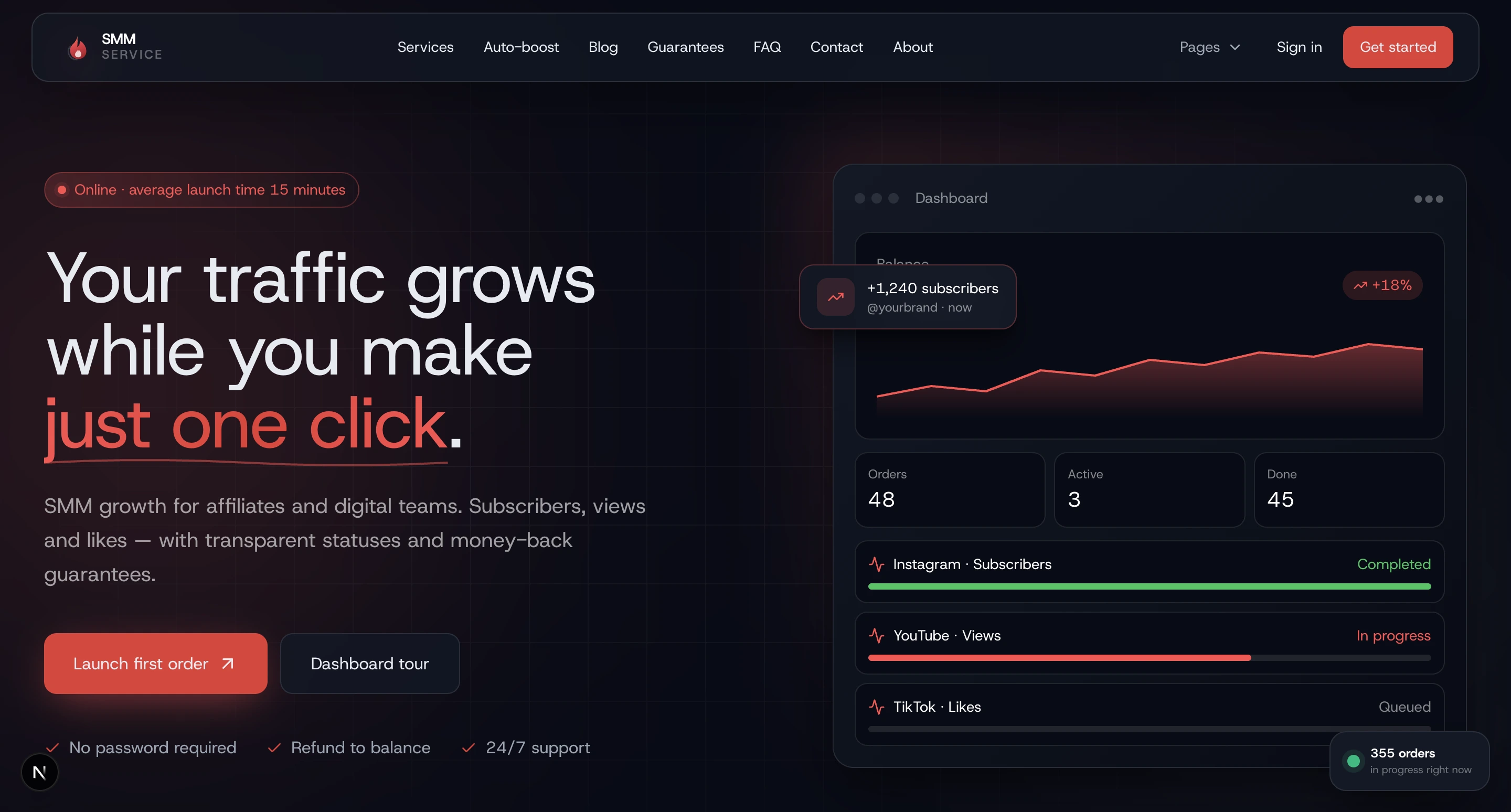
A multi-tenant B2B marketplace where campaigns, providers, customers and billing-related admin operations needed clear transaction states and role-based visibility. Payment intent, payout preparation and admin-side financial visibility were diverging across surfaces.
What we did
Java Spring backend with explicit workflow states for transaction-adjacent actions, idempotent handling on critical paths, structured campaign and billing-related admin flows, per-role data isolation and audit-tagged events for who changed what, when and why.
Result
Multi-role marketplace operations became queryable and manageable without manual reconciliation across disconnected tools. Transaction records and admin-side financial operations sit in one queryable model — the foundation finance and operations need to close cleanly.
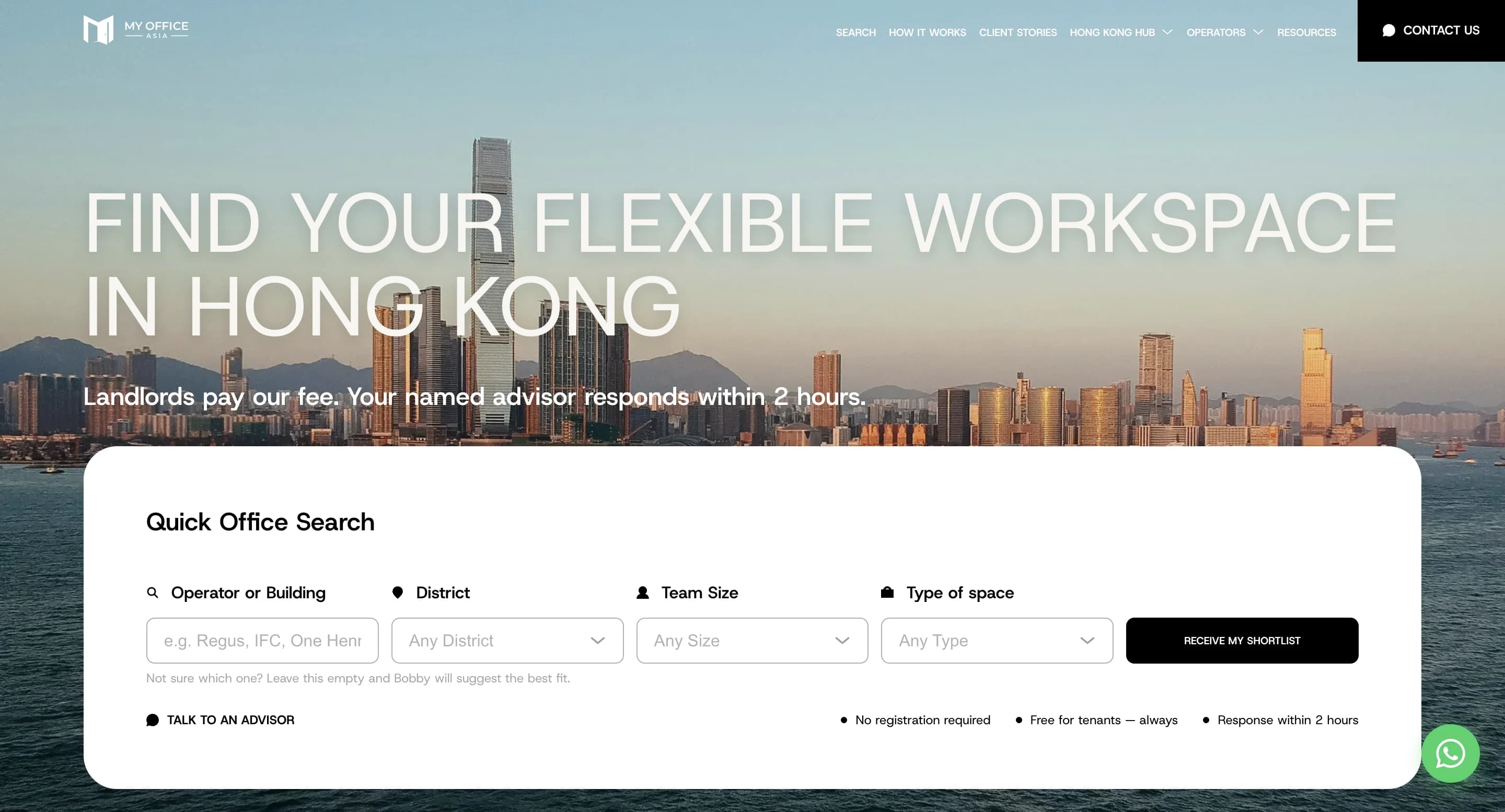
My Office Asia - Flex Workspace Brokerage with Admin CMS
What was broken
A B2B brokerage platform entering a market where partner trust, controlled admin access, clean data handling and operational records mattered from day one — including how inquiry, listing and broker-side records would later support transaction handoff and partner review.
What we did
Server-side auth, admin access control, GDPR-aware data flows, protected public forms, structured listing management, audit-friendly operational records and production handover documentation — the same posture we apply to payment-adjacent admin surfaces.
Result
A platform foundation ready for partner review, operational handover, controlled growth and the future addition of structured transaction records without re-architecting the core admin and access model.
Payment and financial-workflow architecture considerations
The decisions we expect to discuss in an architecture sprint for transaction-heavy platforms — and the questions your PSP, finance team, investor or future technical reviewer may ask later.
01
Transaction state model
Payment, refund, invoice and subscription states should be explicit transitions, not scattered flags or webhook side effects.
Canonical transaction state in your own domain model
PSP data treated as external evidence, not the only source of truth
Reconciliation as a scheduled workflow, not a panic task
02
PCI-DSS scope minimisation
Default to PSP-hosted fields, tokenisation and provider-side card handling so sensitive card data does not touch the application unless there is a clear business and compliance reason.
PSP-hosted fields or checkout where possible
Tokenised payment methods for stored credentials
No PAN storage unless explicitly required and separately scoped
03
Partner and verification workflows
When KYC, KYB, CRM, invoicing or verification providers are involved, they should be isolated behind clear integration boundaries.
Vendor-specific logic kept out of the product core
Statuses and review outcomes stored in your domain model
Manual review paths documented where automation is not enough
04
Integration isolation
PSP, invoicing, CRM and verification partners should not share uncontrolled state with the product core.
Anti-corruption layer between partners and the domain
Idempotency keys on critical external writes
Dead-letter handling for failed webhooks and partner instability
05
EU data flows & hosting posture
EU-friendly hosting, documented subprocessors, encryption, access control and incident handling should be clear before a serious customer or partner asks.
EU hosting options with documented subprocessors
Encryption in transit and at rest
Documented incident and access-control process
06
Observability & operational readability
Observability should help product, engineering, finance and operations understand what happened without digging through raw logs.
Per-tenant transaction and error metrics
Audit-tagged events queryable by actor, time and resource
Operational runbook written in business-readable language
07
Backend stack defaults
Backend stack defaults to Java/Spring or Node depending on what your enterprise customers will require for security audits. Java/Spring is the default for funded B2B SaaS planning enterprise sales in DACH financial services or regulated verticals — vendor and library posture, mature audit and observability ecosystem, predictable hiring market.
Java/Spring for enterprise-sales-bound B2B SaaS in DACH financial services or regulated verticals
Node / TypeScript where development velocity and a JavaScript-fluent team are the main constraints
Database and queueing choices documented alongside the stack so future audits and integrations are not a surprise
“
A typical pattern: finance teams spending two to five days every month-end on manual reconciliation — PSP dashboards matched against product state by hand, refund mismatches fixed in spreadsheets. When the architecture moves to explicit transaction state, idempotent webhook handling and scheduled reconciliation jobs, manual month-end work tends to shrink materially. The exact gain depends on volume, PSP setup and existing data quality — we don't promise a specific 'days-to-afternoon' jump.
—Composite reconciliation scenario · H-Studio·Typical pattern we see in payment-architecture engagements — not a single client testimonial.
Future-proof integration points
Architecture that doesn't bet the product on a single payment surface
New payment surfaces, checkout flows and settlement options keep appearing — embedded-finance offerings inside SaaS, partner-led marketplace billing, additional EU rails. We don't recommend chasing every trend or betting the product on unproven rails. The architecture choices you make now should leave clean integration points for the ones that turn out to matter — and clean exits from the ones that don't.
FAQ
Payment, billing and transaction architecture questions, answered
If your question isn't here, it's almost certainly the first thing we'll discuss in a 30-minute call.
Different situation? We answer the actual question, not the brochure version.
Default answer: no. We usually design payment flows with PSP-hosted checkout, hosted fields or tokenisation so cardholder data does not touch the application. If a use case requires handling sensitive payment data directly, we treat that as a separate compliance and architecture track, not a normal feature.
We isolate third-party providers behind clear integration boundaries. The product should store its own transaction, invoice or verification state instead of depending entirely on external dashboards. Failed webhooks, retries, manual review and reconciliation paths are designed explicitly.
We use explicit event histories where they add value, but we do not force event sourcing into every project. The important part is that payment, refund, invoice and subscription states are traceable, queryable and not hidden in side effects.
We can support regulated or regulated-adjacent teams on architecture, backend systems, integrations and documentation, but we do not present ourselves as a bank compliance advisor. For licensed financial products, legal and regulatory responsibility stays with the client and their specialist advisors.
A focused architecture sprint usually takes 5 days. A payment, billing or transaction-workflow build often takes 8–16 weeks depending on integrations, admin logic, reporting needs and existing system complexity.
We make states, permissions, data flows and integration boundaries explicit. Critical actions are logged, admin workflows are documented, and handover includes the reasoning behind architecture decisions — so future reviews do not depend on one developer remembering how the system works.
We're not certified partners. That's deliberate: it keeps us vendor-neutral on PSP choice. Certified partners can be the right choice when you are already committed to one PSP; we help you compare Stripe, Adyen, Mollie, Checkout.com or a multi-PSP setup based on your volume, cross-border footprint and exit costs before lock-in becomes expensive to undo.
Yes. PSP migration is one of our most common engagements. We plan the parallel-run period, migrate active subscriptions, payment methods, mandates and historical transaction records, and shut down the old PSP cleanly. Typical timeline: 6–12 weeks depending on subscription volume and integration depth.
For many SaaS architectures you can minimise PCI-DSS scope by keeping card data inside the PSP (tokenisation, hosted fields, Checkout sessions). Your PCI scope may reduce to SAQ-A in many cases, but the final assessment belongs with your PSP, auditor or compliance advisor. We architect this from day one so PCI scope does not expand unnecessarily as you grow.
Under ~€5M annual GMV, Connect often fits better for launch speed and operational simplicity. Above ~€20M, custom billing may fit better for unit economics and flexibility. Between those, it depends on your business model and exit options. We help you run the numbers and document the migration off-ramp from day one if you start with Connect.
PSP dashboards drift from product state — refunds processed manually, webhook failures, retroactive corrections, account state changes. If your product believes the PSP dashboard, you reconcile by hand every month. If your product owns its own transaction ledger and treats PSP data as external evidence, reconciliation becomes a scheduled job instead of a panic task.
PSP data residency depends on the provider — Stripe and Adyen offer EU-resident processing options, Mollie is EU-native. Your product side can be EU-hosted independently. We architect the data-residency boundary explicitly: which data crosses, where it lives, and what your DPA needs to say.
Yes — we architect the system so audit preparation is structured rather than an excavation. We don't run the audit (that's an auditor's job) but we ship audit logs, access controls, sub-processor documentation and data-flow diagrams an auditor may expect to see.
Two natural moments: (1) you're hitting reconciliation pain or billing edge cases that internal engineering can't solve cleanly, and (2) you're planning a PSP migration or marketplace expansion. Earlier involvement is often less disruptive and easier to plan because payment architecture problems tend to compound over time.