

Why Core Web Vitals Still Decide Who Wins in Google (2025 Edition)
And why 'good enough' performance is no longer enough. In 2025, Core Web Vitals are no longer a ranking trick—they are often a filter. Fast, stable sites tend to win. Slow, unstable sites can quietly disappear.
And why "good enough" performance is no longer enough
Every year, the same claim appears:
"Core Web Vitals don't matter anymore." "Content is everything." "Google doesn't care about performance now."
And every year, the same pattern repeats:
Fast, stable sites tend to win. Slow, unstable sites can quietly disappear.
In 2025, Core Web Vitals are no longer a "ranking trick". They are often a filter.
The Big Shift: Core Web Vitals Are No Longer a Bonus
When Google first introduced Core Web Vitals, many treated them as:
- a tie-breaker
- a minor ranking factor
- something to "fix later"
That phase is over.
Today, CWV work like this:
If your site fails them consistently, it's hard to compete — no matter how good your content is.
You may still get indexed. You may even rank temporarily. But you're unlikely to win.
What Changed by 2025 (And Why It Matters)
Three important shifts happened.
1. Performance Became a Trust Signal
Google increasingly optimizes for:
- user satisfaction
- predictability
- stability
A site that:
- loads slowly
- jumps visually
- reacts late
…signals low quality, regardless of content depth.
This is especially true in:
- competitive B2B niches
- SaaS
- services
- high-intent queries
2. CWV Are Now Measured in the Real World
Lab scores don't decide rankings.
Field data does.
That means:
- real users
- real devices
- real networks
- real locations
You can "green-score" Lighthouse and still lose — because your real users experience something else.
This is why so many teams are confused:
"But Lighthouse says 95+…"
Google cares less.
3. Frameworks Are Faster — Bad Architecture Is Not
Modern stacks (Next.js, React, edge, streaming) are no longer the bottleneck.
Architecture is.
In 2025, poor CWV often come from:
- blocking data flows
- over-fetching
- bad caching strategy
- layout instability
- JS doing backend work
Not from the framework itself.
The Metrics That Actually Decide Outcomes (2025 Reality)
Let's be precise.
LCP Is Still the Gatekeeper
Largest Contentful Paint decides:
- perceived speed
- first impression
- bounce probability
If your LCP is slow:
- many users leave
- Google notices
- rankings suffer
Most LCP problems today come from:
- server latency (TTFB)
- unoptimized images
- blocking data dependencies
Not CSS or animations.
INP Replaced FID — And It Changed Everything
Interaction to Next Paint (INP) measures:
- how fast the site reacts
- under real interaction load
This punishes:
- heavy client-side logic
- oversized JS bundles
- frameworks used without discipline
Sites that "feel" slow often lose — even if they load fast.
CLS Can Still Hurt Trust
Cumulative Layout Shift is not cosmetic.
Layout jumps:
- break user focus
- cause misclicks
- destroy perceived quality
In 2025, CLS issues often come from:
- dynamic content injection
- late-loaded components
- ad / consent / tracking layers
CLS is a business problem, not a visual one.
Why "Content-Only SEO" Fails at Scale
Many teams still believe:
"If content is good enough, Google will forgive performance."
This sometimes worked in:
- low-competition niches
- early SEO stages
It rarely works in:
- SaaS
- B2B services
- local competitive markets
- Germany / EU
Because competitors already have:
- good content
- good structure
- good authority
Performance often becomes the differentiator.
The Silent SEO Killer: Performance Inconsistency
One overlooked issue in 2025:
Average performance matters less. Worst-case performance matters more.
Google sees:
- slow sessions
- overloaded pages
- degraded mobile experiences
Common causes:
- no performance budget
- no monitoring
- deployments without regression checks
- analytics and scripts added uncontrolled
Teams "fix CWV once" — then slowly break them again.
What Actually Works in Practice (Not in Blog Checklists)
High-performing sites in 2025 share the same traits.
1. Performance Is Designed, Not Optimized
- data flow is intentional
- SSR boundaries are clear
- caching is explicit
- async is controlled
No "we'll optimize later".
2. Backend Matters More Than Frontend
Most CWV issues start on the server:
- slow APIs
- unbounded queries
- no edge strategy
- bad cache invalidation
Frontend teams can't fix backend latency.
3. Performance Is Continuously Enforced
- budgets
- monitoring
- alerts
- regression detection
Without this, CWV often decay.
Why Clients Hate This (But Pay for It)
Performance work is:
- invisible
- unsexy
- technical
- unforgiving
Clients don't see it — they only see:
- traffic drop
- conversions drop
- rankings stall
Then suddenly:
"Can you fix performance?"
Yes. But only if architecture allows it.
The H-Studio Approach: Performance as a System Property
At H-Studio, we don't treat Core Web Vitals as a checklist.
We treat them as:
- an architectural outcome
- a product quality signal
- a long-term SEO multiplier
That means:
- SSR and data design from day one
- backend performance ownership
- CWV monitoring in production
- no "temporary" performance debt
This is why our projects tend not to slowly decay in Google.
Final Thought
In 2025, Core Web Vitals don't just help you win.
They often decide who is allowed to compete.
If your site fails them consistently, you're often not losing to better content — you're losing to better systems.
Get a Core Web Vitals Audit
If your site is losing rankings or conversions, performance is often the hidden cause. Google measures real user experience—not Lighthouse scores.
We provide Core Web Vitals audits that identify what's actually breaking in production, not just what looks good in labs. For technical SEO and architecture, we fix the root causes: data flows, caching, and backend performance. For backend infrastructure, we address TTFB, API latency, and edge strategies that impact CWV.
Join our newsletter!
Enter your email to receive our latest newsletter.
Don't worry, we don't spam
Popular Articles

Evolutionary Architectures: Ho
Anna Hartung

Scalable Backend Systems: Arch
Anna Hartung

Building Production-Ready SaaS
Anna Hartung
Continue Reading
Why Lighthouse Scores Lie (And What Actually Matters)
The performance metrics Google actually uses—and why your 98 score often means little. Lighthouse measures a controlled fantasy. Google measures reality. Learn why high Lighthouse scores often correlate with bad SEO decisions.
Why WordPress SEO Breaks at Scale
And why it works well—until it suddenly doesn't. Many SEO problems with WordPress don't appear at launch. They appear after growth—when traffic, content, integrations, and expectations increase. Learn when migration makes sense.
SSR, Edge, Streaming: What Google Actually Sees
And why many 'modern' setups silently hurt SEO. Google doesn't just rank promises—it ranks what it can reliably see, render, and evaluate. Learn how SSR, Edge, and Streaming affect indexing and what Google really sees.
The SEO Cost of JavaScript Frameworks: Myth vs Reality
What actually hurts rankings—and what doesn't. JavaScript frameworks don't kill SEO, but undisciplined use does. Learn where the real SEO cost comes from: complexity, rendering uncertainty, and performance volatility.
SEO Has Changed. Many Approaches Haven't.
Why modern search visibility is no longer a marketing-only discipline. Over the last few years, many companies have come to the same conclusion: 'SEO doesn't work like it used to.' In reality, SEO has fundamentally changed—but much of the market has not fully adapted.
Do We Need Separate Websites, or Should Everything Live on One Site?
Multiple sites only make sense when positioning truly differs. Otherwise, one strong, well-structured domain wins.
See how we implement this in practice
Explore our case studies demonstrating these technologies and approaches in real projects

Frigate Surfboards
E-Commerce Platform for a Premium Surf Brand - Bringing craftsmanship and storytelling online.
Learn more →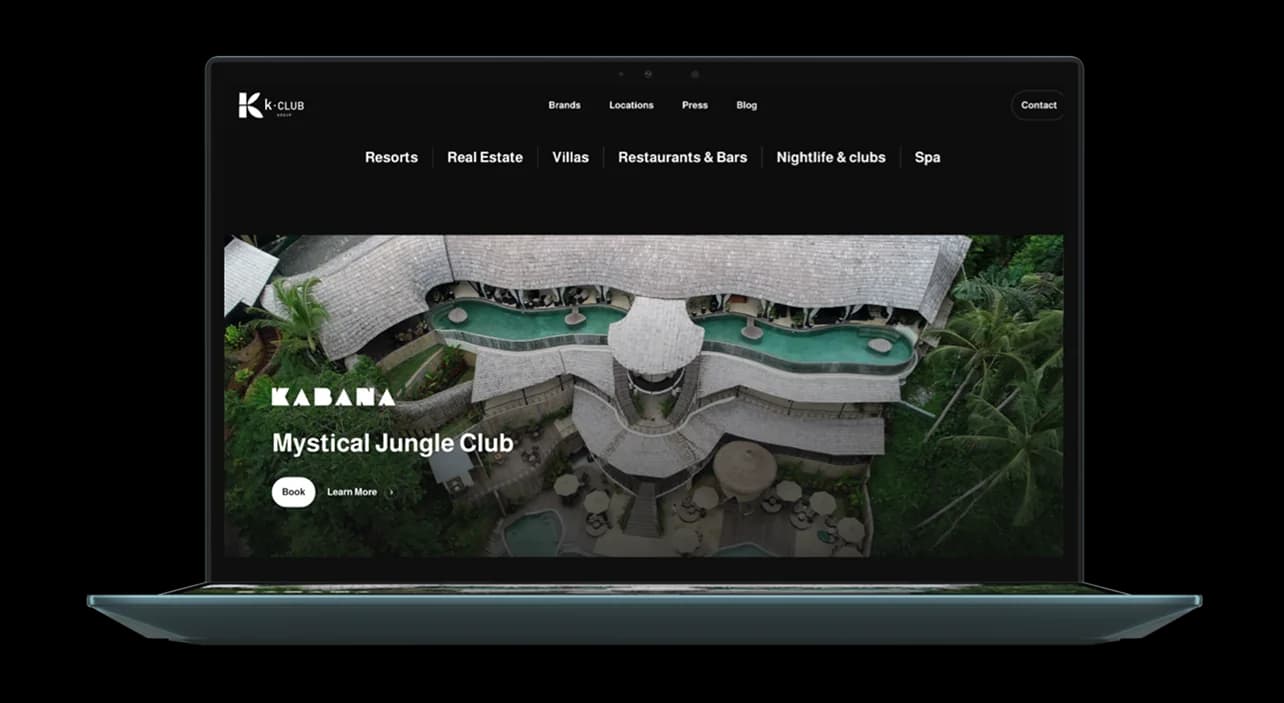
K Club Group
Digital Platform for Barefoot Luxury Experiences - From place to platform.
Learn more →
Forschungsmittel.com
B2B funding website and connected product platform with client dashboard, team workspace, document workflow, and operational command center.
Learn more →