

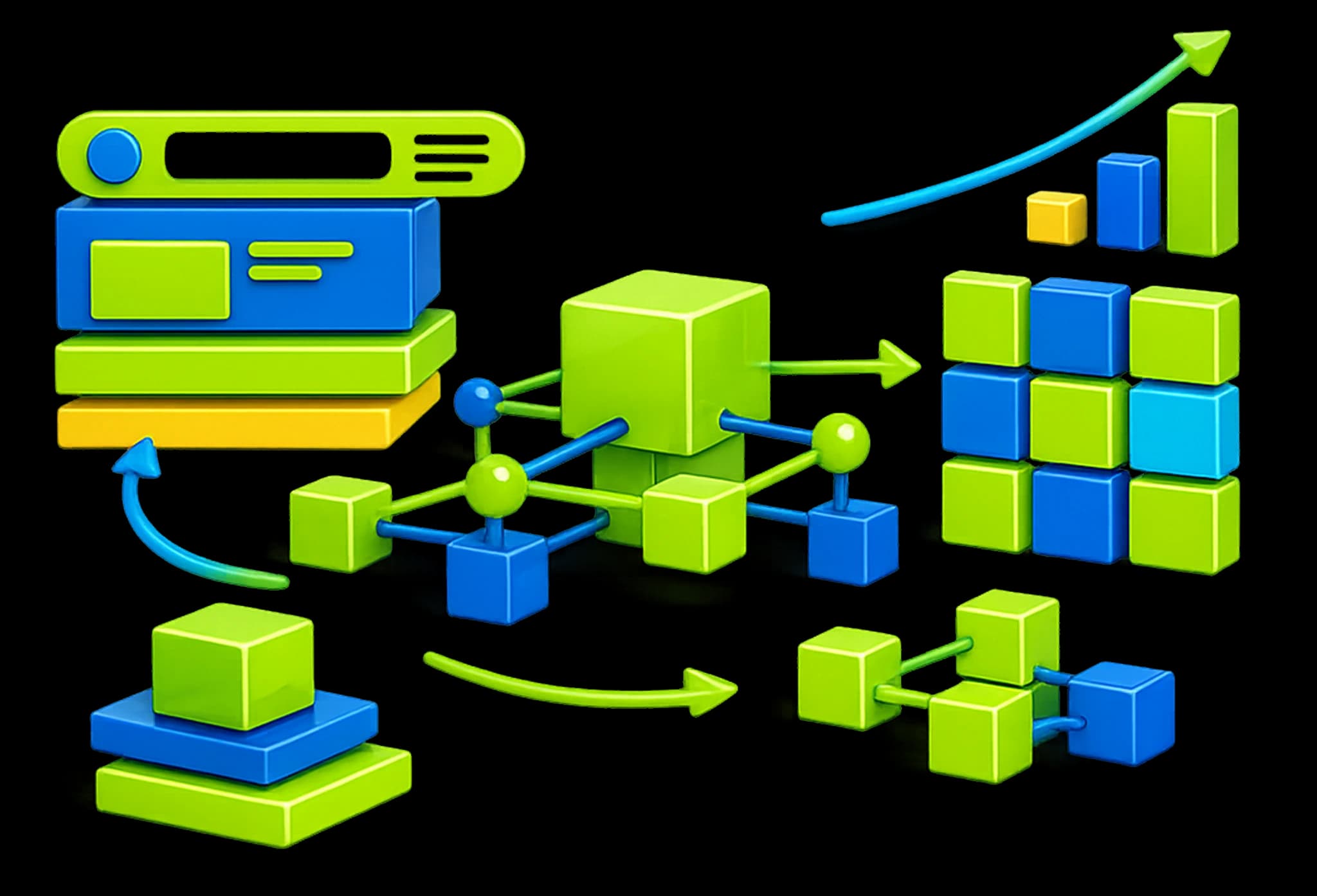
Modern SEO is no longer about keywords or backlinks — it is about architecture, semantic structure, machine readability, and performance in an AI-indexed web. SEO Engineering is the discipline that defines how websites become interpretable systems for search engines and AI crawlers. This hub explains the approach and points to focused services for implementation, audits, and enterprise consulting.
What is SEO Engineering?
SEO Engineering combines technical architecture, semantics, and measurable performance. The goal is not keyword tuning, but a machine-readable, crawlable, and scalable website structure so search engines and AI crawlers can understand, index, and rank content reliably.
SEO in 2025–2026 is not marketing. It is engineering.
Search engines have shifted from keyword indexing to entity-based, AI-driven interpretation. Today, your website must:
- expose clean and connected structured data
- provide crawlable, predictable information architecture
- respond fast (FCP/LCP/INP) in real rendering conditions
- define clear entity relationships via schema with custom IDs
- support LLM agents, Googlebot + "AI Crawlers"
- offer stable URLs, canonical graphs, and intent-based pages
- deliver semantically consistent German & English versions
What You Get
Every engagement begins with an Architecture Sprint
Five working days. One senior engineer. A clear map of system boundaries, scaling risks, stack decisions, and a delivery roadmap — before a single line of production code.
- 01Day 1
Discovery: domain, constraints, growth targets
- 02Day 2
System mapping: services, data, integrations
- 03Day 3-4
Stack decisions and risk model
- 04Day 5
Roadmap & costed delivery plan
Ready to start with architecture, not features?
Five days. One senior engineer. A clear path forward.
Or talk to us first Get in touch
SEO Engineering Services
Each service below covers a specific execution or consulting scope
FAQ
SEO Engineering focuses on architecture, structured data with IDs, AI-ready systems, and technical foundations — not just keyword optimization. We build machine-readable knowledge graphs that search engines and AI crawlers understand, ensuring long-term ranking stability.
Yes — we specialize in Next.js 15, React 19, RSC, and modern SSR architectures. We understand how server components, caching, streaming, and edge delivery affect SEO and indexing.
Yes — we design hreflang-safe architectures that avoid duplicate content issues while maintaining semantic consistency across German and English versions.
Core Web Vitals are a core deliverable. We optimize LCP, INP, CLS, and ensure your site meets Google's performance thresholds for ranking.
Technical improvements (indexing, Core Web Vitals, structured data) may lead to measurable technical and indexing improvements within several weeks. Full authority building and ranking improvements typically take 3-6 months, with continuous optimization over 12 months.
Keep reading from the blog
More insights and best practices on this topic.
Technical SEO for companies operating production websites. We support organizations with structured data, Web Vitals optimization, and SEO architecture based on the specific technical and regulatory context of each project. SEO outcomes depend on multiple external factors. All services are delivered individually and depend on system requirements and constraints.