

HVAC- & Energieinfrastruktur
Dies ist ein Systemarchitektur-Prototyp, der Infrastruktur-Logik, Compliance-Strukturen und operative Steuerungsebenen abbildet.
Enterprise-Architektur für HVAC- und Energieinfrastruktur — mit Energieverteilungsebenen, OT/IT-Integrationsmodellen, Echtzeit-Performance-Intelligenz, Lifecycle-Service-Frameworks und regulatorischer Compliance-Governance.
Sechs produktionsreife Systemebenen, die zeigen, wie komplexe HVAC- und Energieumgebungen entworfen, integriert, überwacht und im Enterprise-Maßstab betrieben werden.
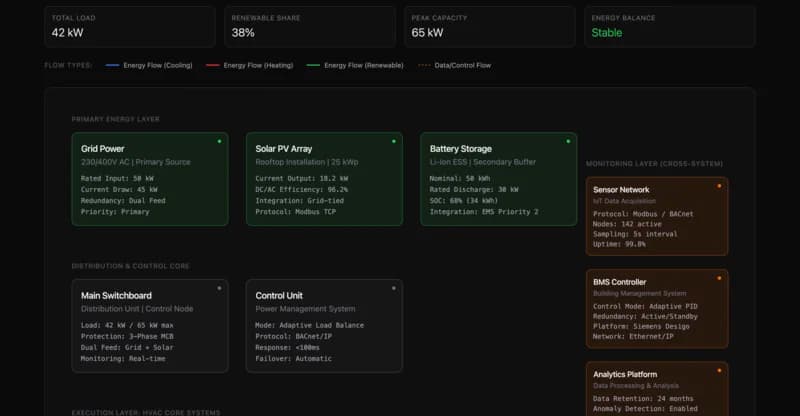
System-Architektur
Layered Energy & HVAC Core Architecture
Multi-layer power distribution, thermal flow modeling, EMS/BMS orchestration, control loop segmentation, and HVAC execution logic
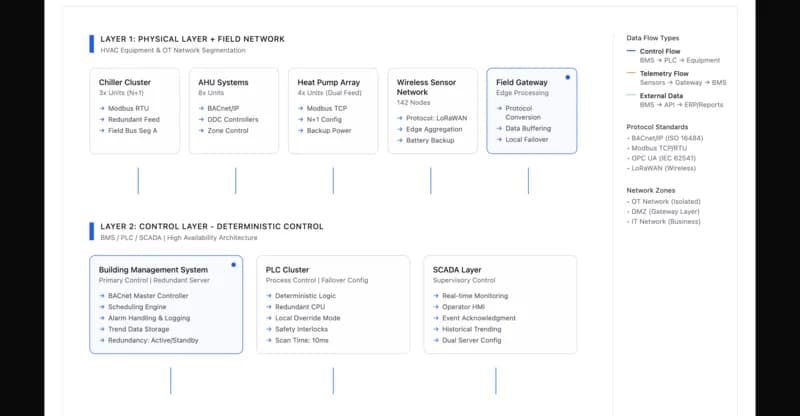
OT/IT-Integration
Enterprise-Integrationsarchitektur
Fieldbus segmentation architecture, secure OT/IT demilitarized gateway (DMZ), zero-trust access model, protocol translation layer (Modbus, BACnet, OPC UA)
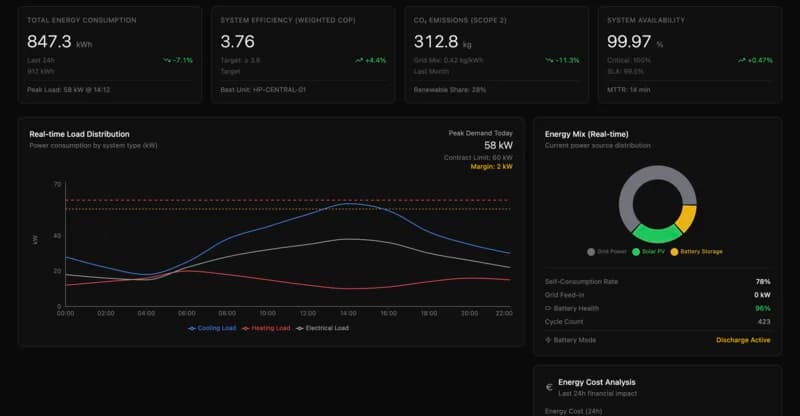
Performance-Intelligenz
Echtzeit-Monitoring & Optimierung
Real-time telemetry analytics covering COP/EER performance baselines, anomaly detection, predictive maintenance modeling, IAQ and comfort compliance validation
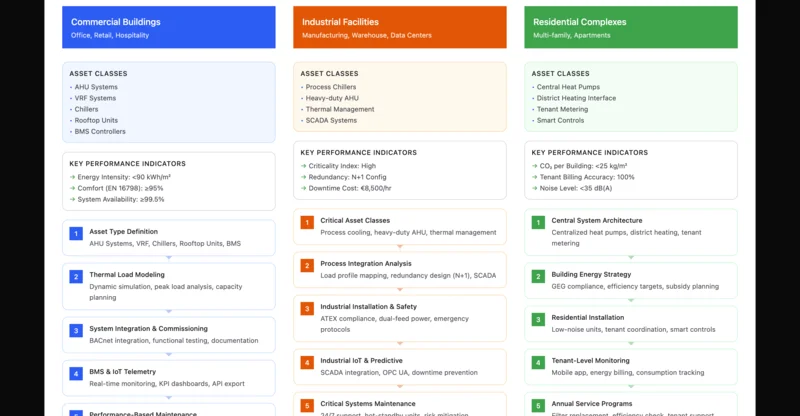
Lifecycle- & Service-Architektur
Segment-basierte Service-Architektur
Asset lifecycle modeling, SLA orchestration, retrofit prioritization matrix, energy transition roadmapping, and decarbonization sequencing strategy
Compliance-Steuerung
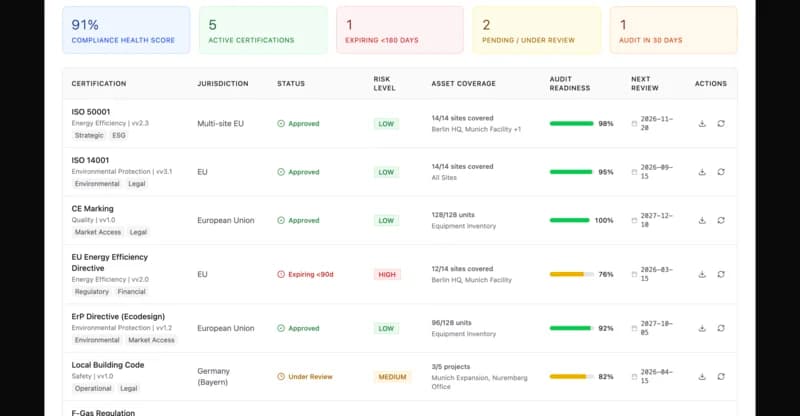
Zertifizierungs- & Compliance-Matrix
Certification registry architecture, regulatory gap analysis, audit readiness framework, ISO alignment matrix, and multi-site governance control mapping
SEO-Blueprint
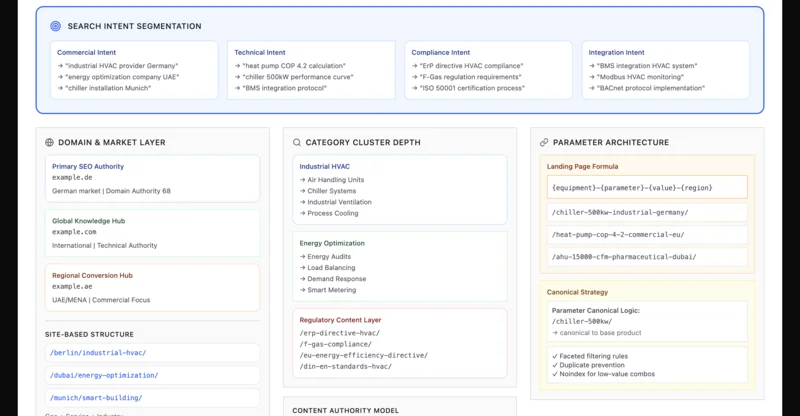
Enterprise HVAC SEO Control
Intent-driven HVAC authority architecture including geo-segmented service clusters, entity-structured schema graph, compliance content mapping, and multi-market rollout governance
Diese Modelle spiegeln reale HVAC- und Energie-Deployments in Industrieanlagen, Gewerbegebäuden und standortübergreifenden Infrastrukturumgebungen wider. Jede Systemebene ist darauf ausgelegt, Integrationsrisiken zu senken, die operative Leistung zu verbessern und regulatorische Bereitschaft vor dem Rollout sicherzustellen.