Engineered
for motion,
structured for scale.
Digital platforms for mechanical engineering companies building high-precision systems, advanced components and performance-driven machinery.
Structured architecture. Export-ready infrastructure. Industrial-grade SEO.
Movement Defines
Mechanical Engineering.
Mechanical engineering companies operate in environments where performance is measurable, tolerances are minimal and failure is not an option. Yet many companies struggle to communicate this complexity online.
Industry characteristics:
Common digital problems:
Built for Mechanical
Engineering Companies.
This platform architecture is designed for companies producing complex mechanical systems and precision components.
Precision Component Manufacturers
Companies producing high-tolerance parts for aerospace, automotive and industrial applications.
CNC & Automation Companies
Manufacturers of machine tools, robotics and process automation systems.
Tooling & Machinery Builders
Engineering firms designing and producing industrial equipment and tooling systems.
Robotics Manufacturers
Companies building industrial robots and collaborative automation systems.
Mechanical System Integrators
Firms assembling complex mechanical systems from multiple technical components.
Export-Focused Maschinenbau Firms
German-tradition engineering companies competing in global technical markets.
Digital Platforms for
Mechanical Systems.
Mechanical engineering companies require platforms capable of structuring complex product portfolios and technical documentation.
Product System Architecture
Mechanical product portfolios are rarely simple lists. We structure platforms around:
- Machine families & component systems
- Application sectors
- Technical parameters
- System capabilities
Technical Documentation
Engineering buyers require access to detailed technical information. Documentation becomes searchable and structured — not hidden inside PDFs:
- Technical specifications
- Parameter comparison
- Application documentation
- Configuration options
Global Market Visibility
Mechanical engineering companies typically compete internationally. Platforms support:
- Multi-language product structures
- International SEO architecture
- Industry keyword clusters
- Structured data for engineering entities
Designed for Technical
Decision Processes.
Industrial purchasing decisions involve multiple stakeholders, each requiring different levels of technical detail. We design layered information journeys that allow buyers to move naturally through complex evaluation processes.
Typical stakeholders:
Layered information journey:

Infrastructure Built
for Engineering Companies.
Mechanical engineering platforms require long-term maintainability and technical performance. Scalability as product portfolios evolve.
Engineering Platform
Development.
Our approach mirrors the structured logic of engineering systems.
Performance Mapping
Product systems, market positioning and competitive analysis — fully understood before any architecture decisions are made.
Structural Modeling
Information hierarchy, navigation architecture and international SEO structure — designed for engineering-grade clarity.
Platform Engineering
Development of modular product systems and structured documentation architecture — built to scale with your portfolio.
Continuous Optimization
Search visibility expansion, content scaling and technical refinement — compounding authority over time.
Machines compete
on performance.
Brands compete
on visibility.
If your systems are built for performance, your digital presence should be engineered the same way.
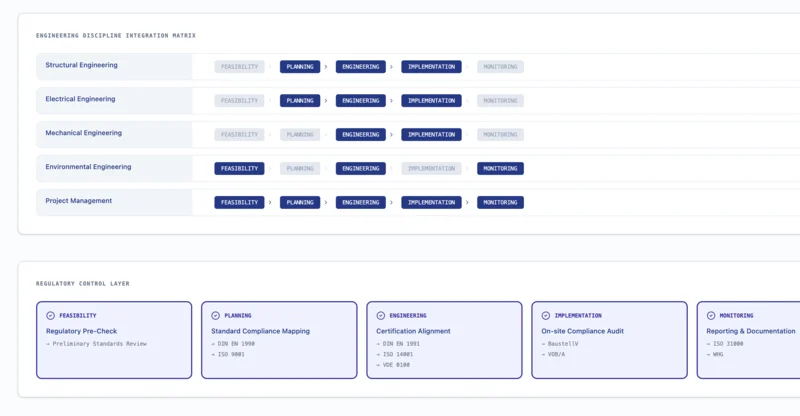
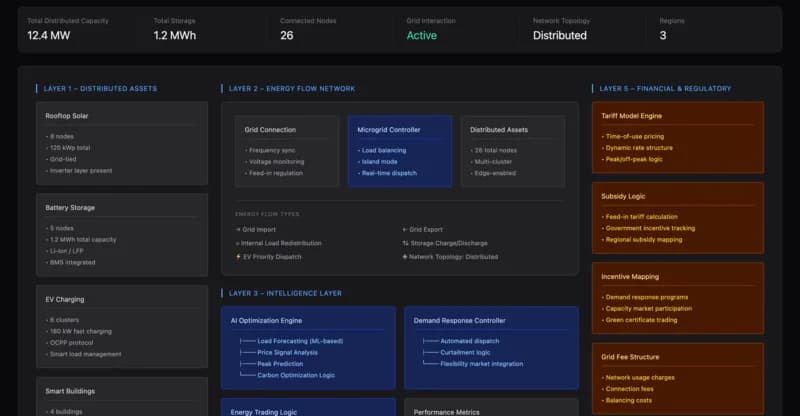
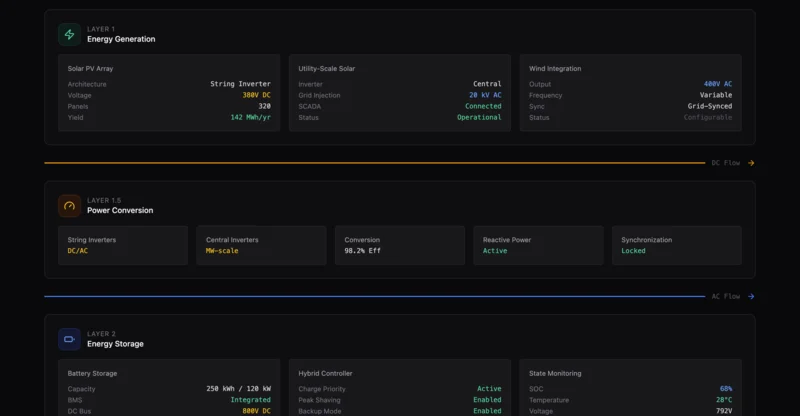
Engineering Architecture Blueprint
Before implementation begins, we model the system architecture: project governance, stakeholder qualification frameworks, compliance control systems, portfolio intelligence, and digital authority infrastructure.